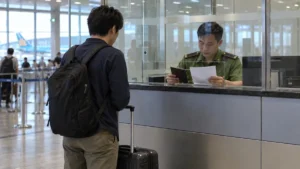
Is Vietnam's "digital arrival card (PAI)" mandatory? The 5 airports covered and how to registerThe "digital arrival card (PAI)", a pre-arrival declaration filed before entering Vietnam, went into pilot operation at Ho Chi Minh City (Tan Son Nhat) on April 15, 2026 and expanded in June to the airports at Hanoi, Da Nang, Phu Quoc and Nha Trang (Cam Ranh). Vietnam's Ministry of Public Security and the Japanese embassy say it is not mandatory, while the U.S. Embassy describes it as mandatory. Registration is free from three days before your scheduled date of entry, and you can also file it at the airport after you arrive.
Money (exchange, cards, prices)
Payment is basically a mix of cash and card. Cash for street stalls and markets, cards are handy at hotels and large stores. Exchanging only what you need after arriving reduces wasted rates, and since high-denomination notes are hard to use, breaking plenty of small notes gives peace of mind.
Related articles
Recommended ways to exchange money in Vietnam! A complete guide to getting a good rateA clear explanation of how to exchange money at a good rate in Vietnam. We compare the rate differences and fee differences between airports, banks, in-city exchange counters, and hotels, and introduce exchange spots that are actually easy to use in Ho Chi Minh City and Hanoi. A complete guide covering how to use Japanese yen and US dollars and cautions to avoid trouble.
Related articles
Can you use credit cards in Vietnamese cities? Where they can be used and points to noteA detailed explanation of how far credit cards work in Vietnam's major cities. Centering on Ho Chi Minh City, Hanoi, and Da Nang, we lay out whether they can be used at hotels, restaurants, shopping malls, taxis, and ride-hailing apps. A practical guide covering fees, whether a PIN is needed, what to do when they can't be used, and points on using them alongside cash.
Related articles
[Latest 2026] Are prices in Vietnam cheap? A resident explains food, hotel, and souvenir costsWe explain whether Vietnam's prices really are cheap, based on the latest 2026 local prices. While showing rough figures for food, transport, lodging, and living costs and a comparison with Japan, we organize concrete money-saving tricks and seasonal and booking tips to keep costs down locally. A practical guide gathering real price information useful for both travelers and long-term residents.
Connectivity (SIM, eSIM, WiFi)
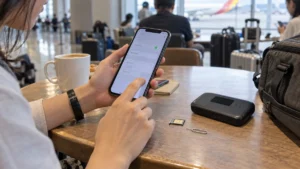
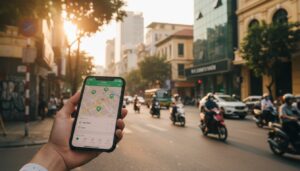
Maps, ride-hailing, translation, QR payments, and your smartphone are the lifeline of the trip. Ideally, arrange one of a SIM, eSIM, or WiFi router before departure so you can use it the moment you arrive. An eSIM suits short trips, while a WiFi router suits use by several people.
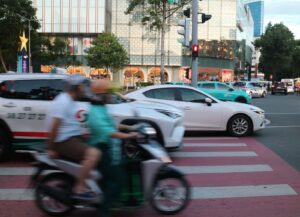
Domestic flights are fast between distant cities, with Hanoi to Ho Chi Minh City about 2 hours. In town, a ride-hailing app that shows the fare in advance gives more peace of mind than hailing a taxi. Day tours are also an option for nearby sights.
Complete guide to using ride-hailing apps in Vietnam's cities | 10 easy steps even for beginnersA beginner-friendly, 10-step explanation of how to use ride-hailing apps in Vietnam's major cities. To get around Ho Chi Minh City, Hanoi, and Da Nang with peace of mind, we organize how to register the app, set up payment, typical fares, and tips to avoid trouble. A complete guide also covering the differences from taxis and cautions for first-time use.
Related articles
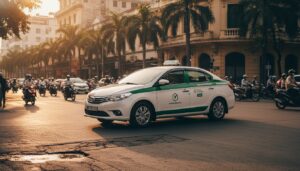
How to use taxis in Vietnamese cities! The complete guide to riding safelyA clear explanation of how to use taxis in Vietnam's major cities. To get around Ho Chi Minh City, Hanoi, Da Nang, and elsewhere with peace of mind, we organize how to spot legitimate taxis, how to use ride-hailing apps, typical fares, tips to avoid overcharging, and cautions for late-night and airport use. A safety-focused complete guide.
Season and clothing
Vietnam, long from north to south, has very different weather in the north, center, and south at the same time of year. In particular, the coastal center sees more rain and typhoons from September to December, so prepare clothing and rain gear to match the region and timing of your visit. The highlands are cool year-round and require a layer.
Related articles
A Complete Guide to Vietnam's Rainy and Dry Seasons: How to Pick the Best Time by RegionA clear, region-by-region explanation of the difference between Vietnam's rainy and dry seasons. We organize the climate traits, rainfall, and temperature trends of the north, center, and south, and introduce how to choose the best season for sightseeing, the beach, and walking around town. A practical guide also covering cautions and clothing guidelines so you don't misjudge the timing of your trip.
Safety and health (insurance, water, security)
Since medical care at hospitals for foreigners can get expensive, travel insurance offers peace of mind. Avoid untreated water and choose mineral water, and as a rule stay in areas with good security. Keep valuables spread across different places.
Is tap water drinkable in Vietnamese cities? How to secure safe water, and points to watchA clear explanation of whether tap water is drinkable in Vietnam's urban areas. Based on the water situation in major cities like Ho Chi Minh City, Hanoi, and Da Nang, we introduce how to secure safe drinking water. A practical guide covering how to choose mineral water, how to use a water purifier, and cautions about brushing teeth and ice.
Related articles
A complete guide to safe areas in Vietnamese cities! How to choose where to stayA detailed explanation of safe areas where you can stay with peace of mind in Vietnam's major cities. City by city, for Ho Chi Minh City, Hanoi, Da Nang, and more, we organize the features of relatively safe districts, areas to avoid, and points for choosing hotels and apartments. A practical guide to choosing where to stay without going wrong, even on a solo or family trip.
What to pack and power
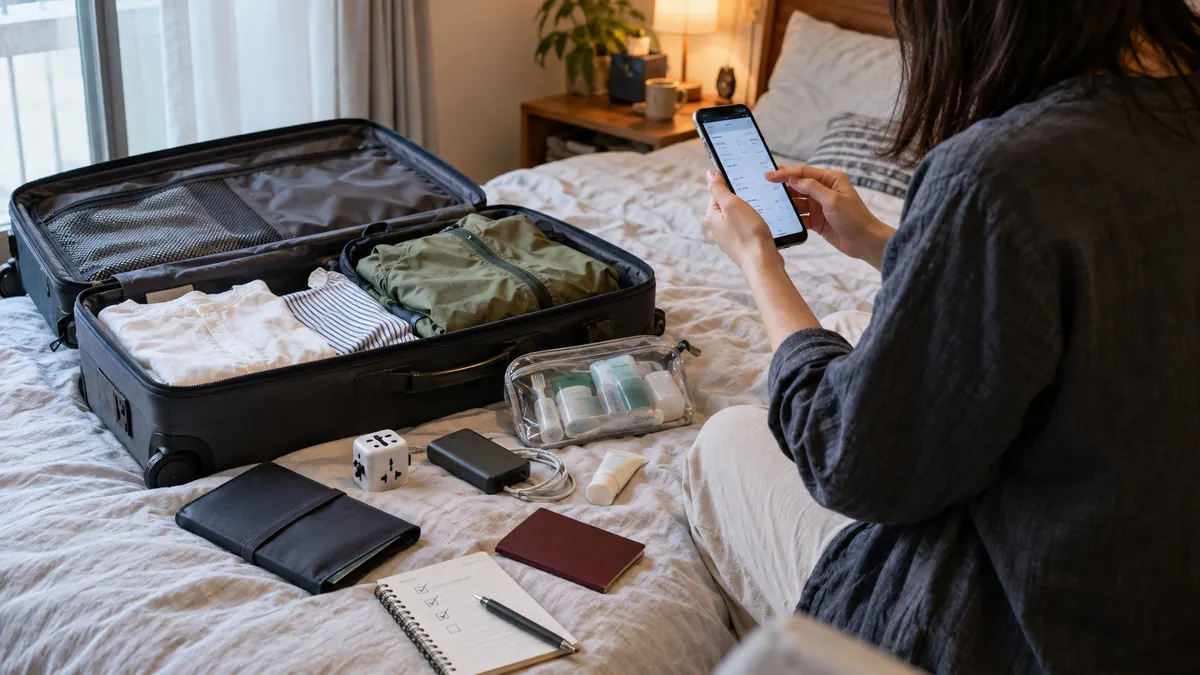
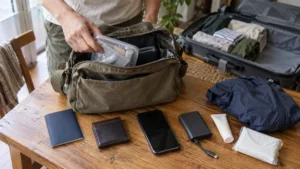
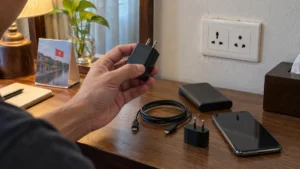
Check the essentials, the handy extras, and the items that change with the season on a checklist. The power is 220V and A/C-type, and devices like smartphone chargers rated "100-240V" work without a transformer. Having an adapter plug and a power bank gives peace of mind.
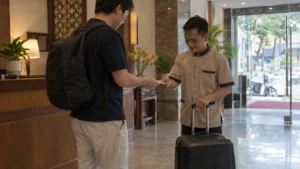
Tipping is basically unnecessary, but giving a small amount to hotel porters or at spas is appreciated. English gets through at tourist sites and hotels but is harder to use in local settings, so a translation app helps. Knowing it along with dining etiquette gives peace of mind.
Related articles
Do you need to tip in Vietnam? Going rates and how to give by situationTipping in Vietnam is basically unnecessary, but there is a custom of giving a little as a thank-you. We break down the going rates by hotel, spa, restaurant, and tour, plus smart ways to hand it over without double-paying.
Related articles
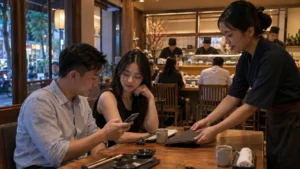
What are the dining taboos in Vietnam? Table manners and points to watchA clear explanation of dining etiquette in Vietnam, easy to follow even for first-time travelers. We organize how to use chopsticks, the etiquette of sharing dishes, cautions at street stalls and with home cooking, and things you shouldn't do. A practical guide to enjoying meals with peace of mind while respecting the local food culture, covering ordering at restaurants and the flow of paying the bill.
Related articles
Does English work in Vietnam? English conditions by area and how to cope while travelingAn area-by-area explanation of how far English gets through on a Vietnam trip. We organize the difference in English conditions between major cities like Ho Chi Minh City, Hanoi, and Da Nang and regional cities, and introduce the reality at hotels, restaurants, and when using taxis. A practical guide covering how to cope when English doesn't get through and the minimum expressions worth learning.
Tips for prep that won't go wrong
Think in order— use the flow of "book -> prepare in advance -> right before -> on the ground" to prevent gaps
Work backward from the season— clothing, rain gear, and the best season change with the timing and region you visit
Set up assuming you'll use your smartphone— prepare SIM/eSIM, ride-hailing, maps, translation, and QR payments before departure
Keep your money spread out— separate cash and cards, and exchange only what you need after arriving
Frequently asked questions
Where should I start preparing for a Vietnam trip?
Start by booking flights and accommodation about three to four months before departure, then check whether you need a visa (Japanese nationals are exempt for tourist stays of up to 45 days) and sort out travel insurance. After that, line up a SIM or eSIM, clothing to suit the season and ride-hailing apps before you go.
What do I need to use my smartphone on the ground?
Prepare one of a local SIM, an eSIM, or a WiFi router. Since you'll use it for maps, ride-hailing, translation, and QR payments, it's best to be able to get online right after arriving.
For money, which is better, cash or card?
Using both for different situations gives peace of mind. Cash for small payments, cards are handy at hotels and large stores. Exchanging only what you need after arriving reduces wasted rates.
Is tipping necessary in Vietnam?
It's basically unnecessary, but giving a small amount to hotel porters or at spas is appreciated. Upscale establishments may include a service charge, in which case no extra is needed.
Popular hotels in Da Nang, Hoi An, and Ho Chi Minh City are bookable at discounted prices. Many properties offer same-day booking and free cancellation, so you can adapt flexibly to last-minute changes of plan on the ground.
#Check the lowest price →
Advertisement (A8.net)
Overseas travel booking “NEWT”
Arrange flights and hotels together
Book your Vietnam-bound flights and accommodation all at once in the app. Earn up to 5% in points, with 24-hour Japanese-language support, so even first-time overseas travelers can prepare with peace of mind.
#Book travel the easy way →
Advertisement (A8.net)
From flights and tours to eSIMs and travel insurance, see where to book each in the order you need them in theVietnam travel bookings summaryas well.
In my third year living in Ho Chi Minh City, Vietnam. I launched this specialist Vietnam travel information site hoping to share local knowledge you simply can’t get by visiting as a tourist — the kind of thing you only understand by being here.