You may sometimes feel anxious, wanting to grasp the differences in Vietnamese dining manners and customs and not wanting to be embarrassed at your travel destination.
 Vietnam traveler
Since you're going all the way to Vietnam, you'd like to learn the local table manners.
Knowing the locals' etiquette lets you enjoy Vietnam's food culture more deeply.
In this article, we explain the no-go manners in Vietnam, tipping, and dining scenes often seen in Vietnam.
ベトナムでの食事マナーは場に合わせる
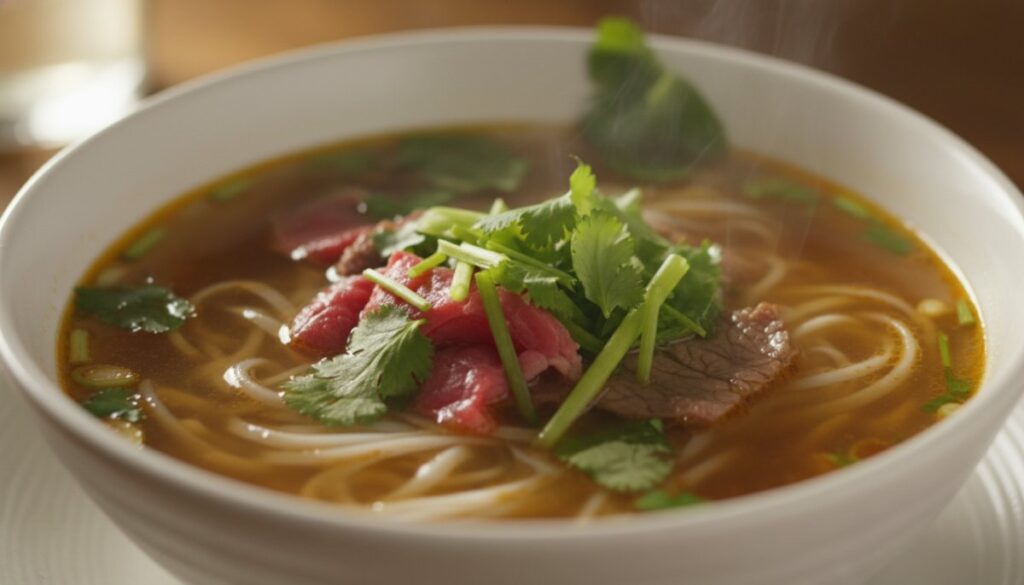
麺の音は周囲に合わせる
- There's no custom of slurping noodles with a sound
- Take the noodles with chopsticks and eat them off a spoon
- Drink soup using a spoon too
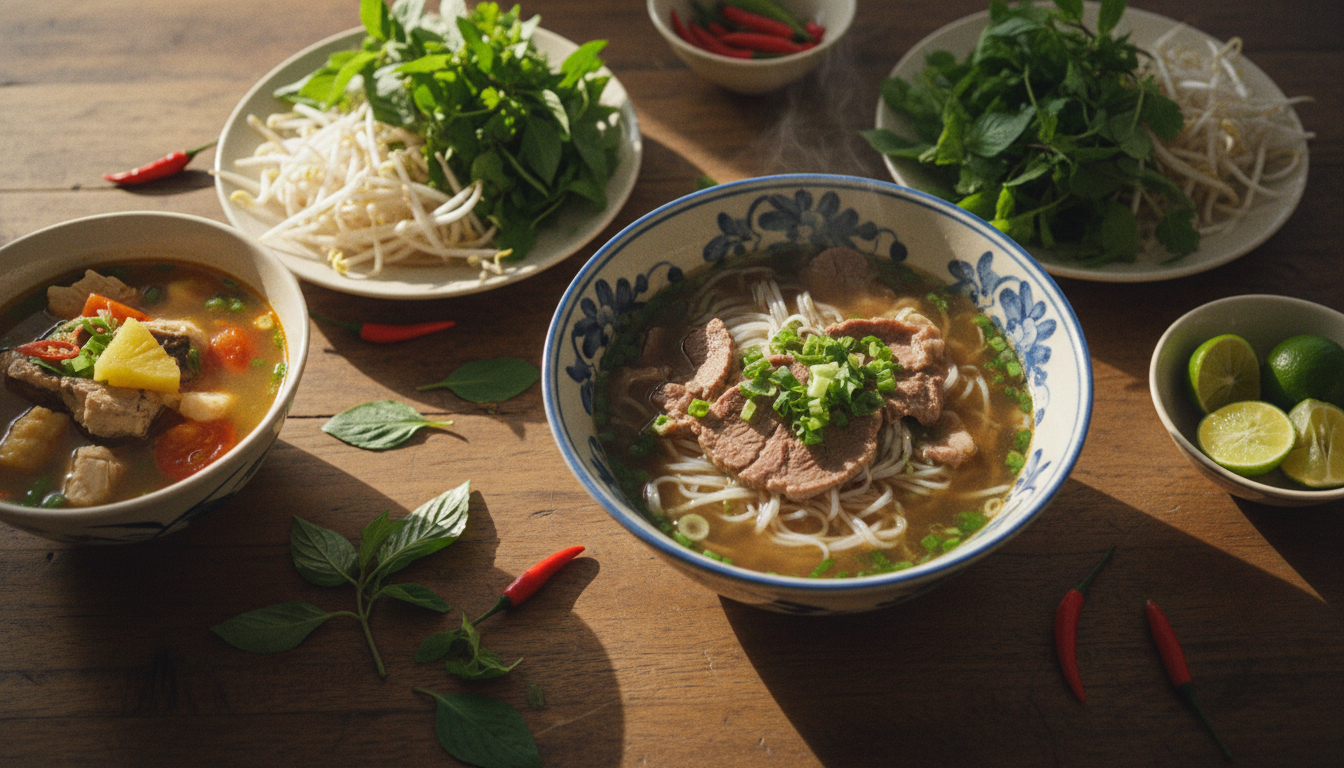
Basically don't put your mouth to the vessel
- Avoid lifting the vessel and putting your mouth to it
- Eat rice and side dishes with chopsticks or a spoon
- Don't drink soup directly from the vessel either; use a spoon
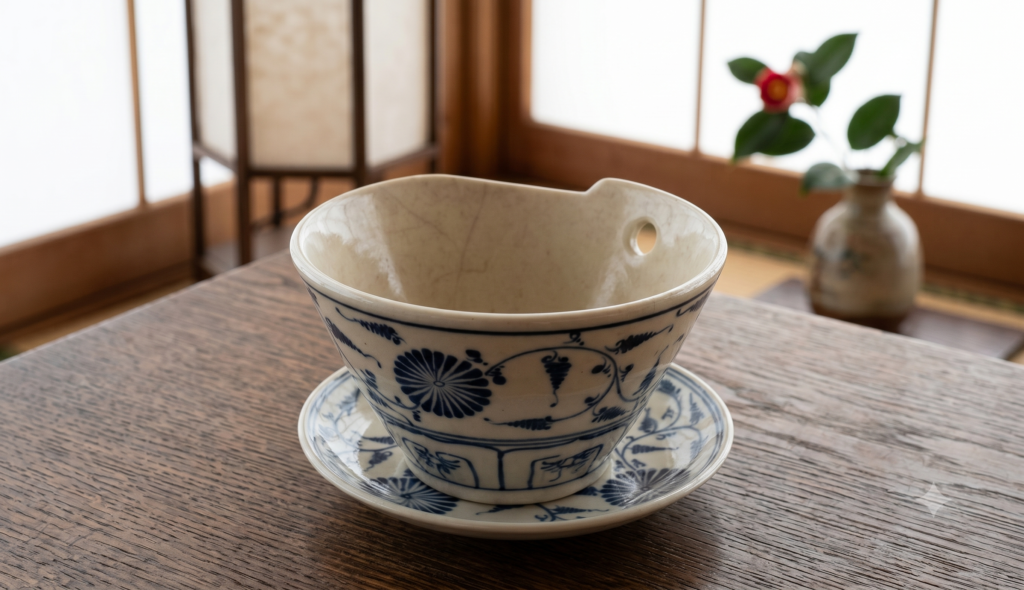
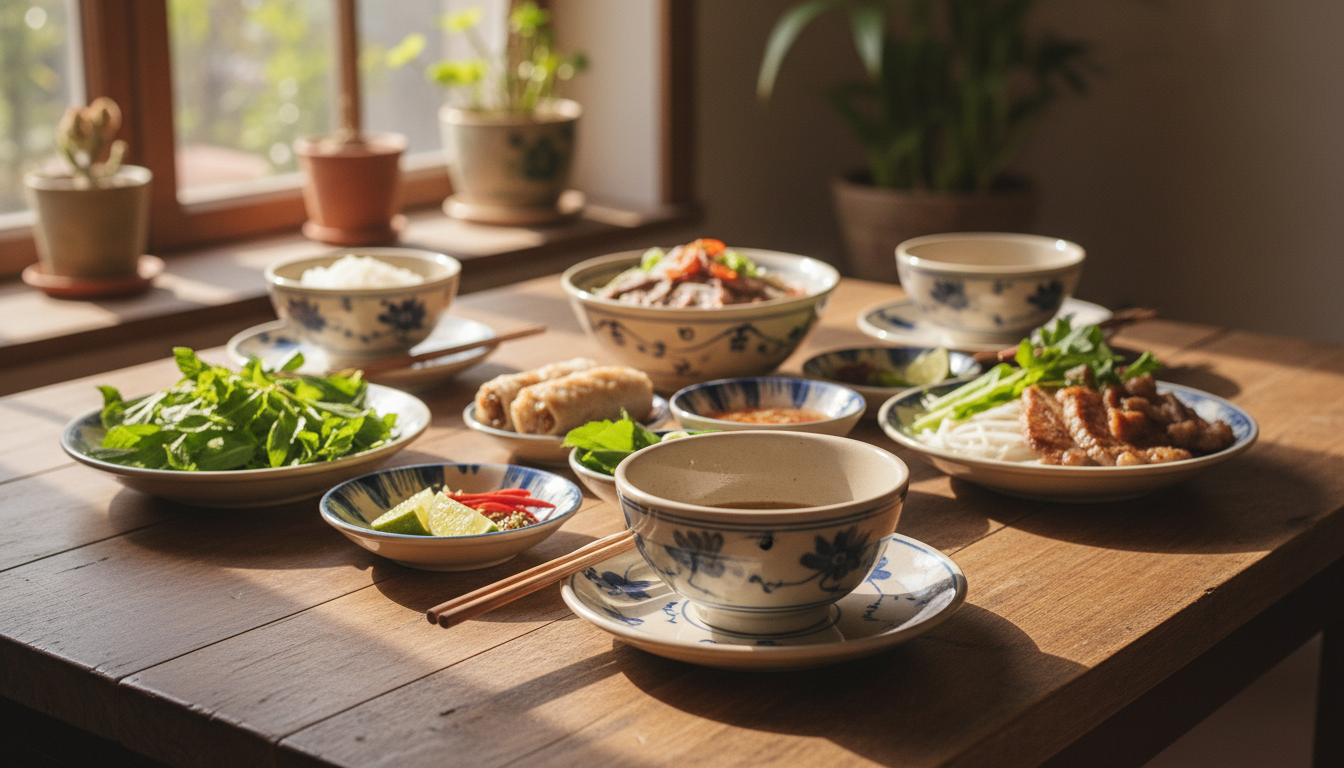
Use the saucer and vessel as a set
- A vessel with a small dish may be served
- Handle it together with the saucer, not just the vessel
Dining in Vietnam has no rules as strict as Japan's.It also seems to differ from person to person.
But there are some rules to watch out for. Knowing them in advance lets you dine comfortably.
音の受け止め方は家庭・店で異なる
In Vietnam there's no culture of slurping noodles.
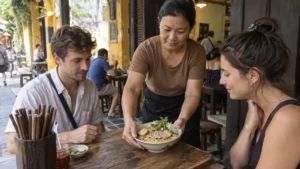
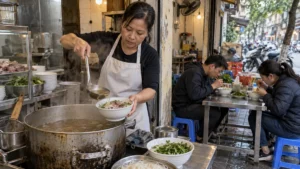
When you order noodles like pho or bun, a spoon is placed along with the chopsticks. Once you place the noodles on the spoon, you can eat them without slurping.
Don't put your mouth to the vessel
In Vietnam, there isn't much of a culture of eating by putting your mouth to the rice bowl. In Vietnam you basically scoop and eat with a spoon.
The spoon is often placed on the table.
The correct way to use the rice bowl and saucer
A rice bowl and a plate (saucer) may be placed stacked on the table. This is said to be a remnant of the French colonial era.
There's no problem putting food on both the bowl and the saucer, but Vietnamese people basically put food in the bowl to eat.
Points to note about tipping and restaurants
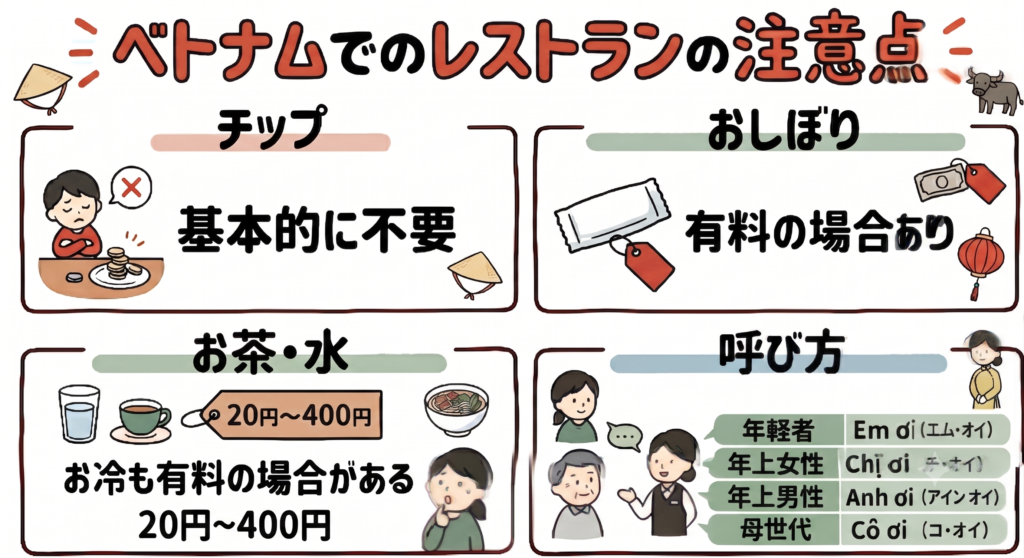
Tipping is basically unnecessary
At Vietnamese restaurants, tipping is basically unnecessary.
If you think a restaurant's service is very good, you may leave a tip, but it's not required.
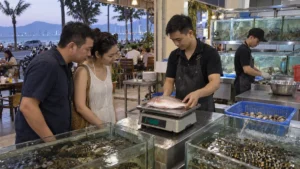
There's no need to force a tip, and a service charge is often included, so it's a good idea to check when paying.
The oshibori (wet towel) is a paid service
At some eateries, a paid paper wet towel may be placed on the table.
The price is often not written, so you may use one unwittingly.
おしぼりの料金は店で異なり、円換算も変動します。未使用なら返せるか、開封時に課金されるかを確認してください。
Tea and water are also provided for a fee
At some restaurants, tea and water may be paid.If you order water thinking in Japanese terms, you may be charged, so be careful.
水の価格は店と容量で違います。開栓前に必要かとVND価格を確認すれば、会計時の行き違いを減らせます。
Vietnamese for calling a staff member
In Vietnam, "Excuse me" isn't used much; instead, there are various words that express respect while addressing someone as "you" with affection.
Learn to use the following honorifics by age.
- A man or woman younger than you: em ơi (em oi)
- A woman who looks a little older than you: chị ơi (chi oi)
- A man who looks a little older than you: anh ơi (anh oi)
- A woman about the same age as your mother: cô oi (co oi)
Using these honorifics greatly narrows the distance with the locals.
Dining Scenes Commonly Seen in Vietnam
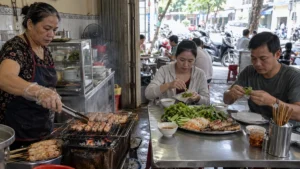
You may see dining scenes in Vietnam that are rarely seen in Japan.Some behaviors considered inappropriate in Japan are perfectly fine in Vietnam.
Vietnam travelerI was surprised by a scene at a local restaurant.
You may be bewildered at first, but take it as a "cultural difference" and enjoy the local food culture.
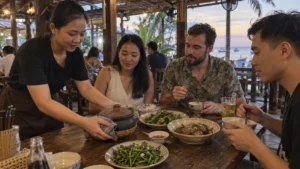
Toasting is repeated many times
In Japan the toast is only for the first drink, but in Vietnam you toast many times during the meal.
The common chant during the meal is "mot hai ba yo."
Translated literally it means "1, 2, 3, drink (pour it in)!"—similar to Japan's "1, 2, 3, cheers!"
It's a scene often seen at casual restaurants and is full of energy.
"Two-person chopsticks" is no problem
日本では二人箸を避ける習慣がありますが、ベトナムでも衛生面や取り分け方への配慮は必要です。「現地では問題なし」と決めつけず、共用箸や取り分け用スプーンを使います。
But in Vietnam it's a commonly seen scene with no problem.
There's no need for Japanese to deliberately do "two-person chopsticks," but even if you see it, it's best to take it as a cultural difference.
Wipe your spoon and chopsticks with paper before eating
It's not seen much at high-end places, but at local restaurants it's common to wipe your spoon and chopsticks with the paper napkins on the table.
When passing cutlery to someone far away, wiping it before handing it over is thoughtful.
迷ったときに優先する配慮
- 年長者や招待者の合図を見てから食べ始める
- 箸をご飯に立てず、共用皿は取り分け用具を使う
- 乾杯や飲酒を無理に勧めず、断る人を尊重する
- 料金、注文数、有料のおしぼり・水を会計前に確認する
- 「ベトナム人は皆こうする」と一般化せず同席者に合わせる
Summary: enjoy Vietnam's dining manners
Vietnam's dining manners aren't as strict as Japan's, but understanding the etiquette that locals value lets you enjoy the food culture more deeply.
The most important thing is to observe how the locals eat and try to imitate it with respect.
Even if you can't do it perfectly, if your attitude of trying to respect the local culture comes across, the Vietnamese people will welcome you warmly.
Master Vietnam's dining manners and fully enjoy the authentic flavors and culture.