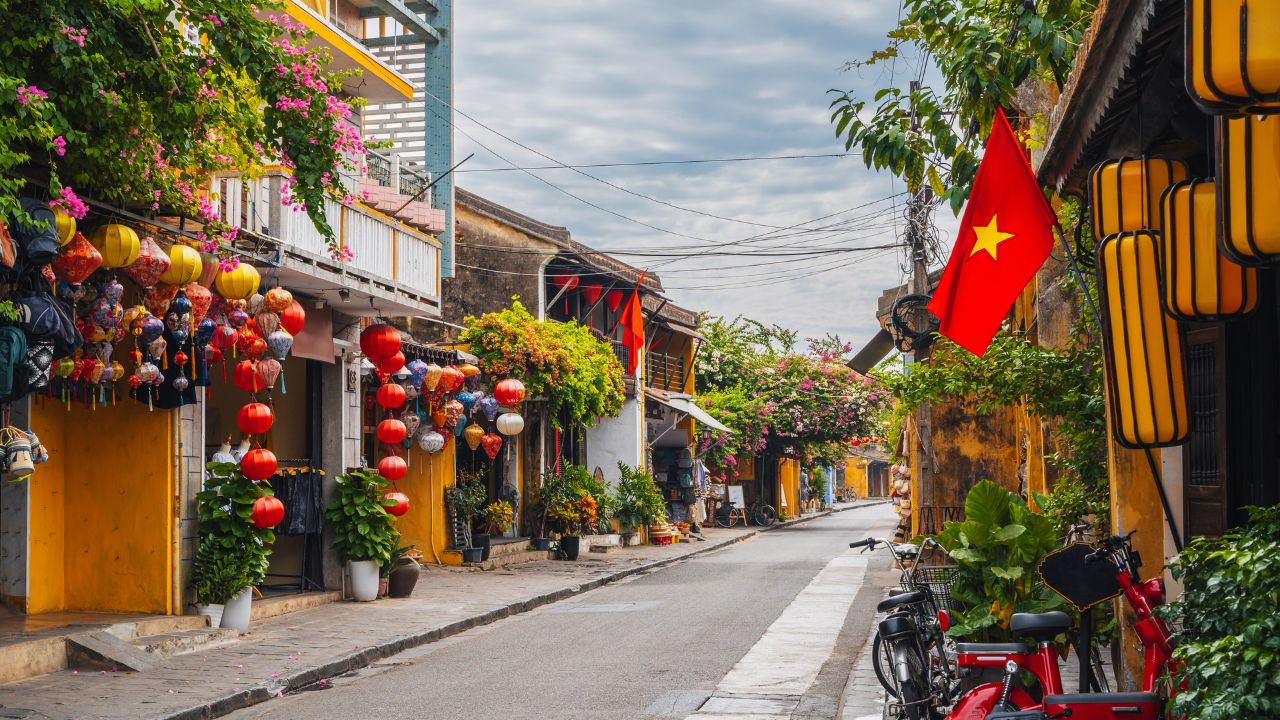
Hoi An is a central port town, an ancient city whose UNESCO World Heritage old quarter remains intact. At night, countless lanterns light up and paper lanterns drift across the river. With tailored clothing, local food, and artisan strolls to enjoy, it is one of Vietnam's most atmospheric towns. This page covers everything from an overview of the town to how to get around, must-see spots, model courses, food, souvenirs, and the latest topics, and guides you to individual articles on cafés, news, and souvenirs.
| Location | Da Nang City in central Vietnam (merged with Quang Nam Province in 2025) |
|---|---|
| Population | About 120,000 people |
| Best season | February–April |
| Suggested days | 1–2 days |
| Language | Vietnamese (English also understood in tourist areas) |
| Currency | Vietnamese dong (VND) |
| Time difference from Japan | -2 hours |
What kind of town is Hoi An
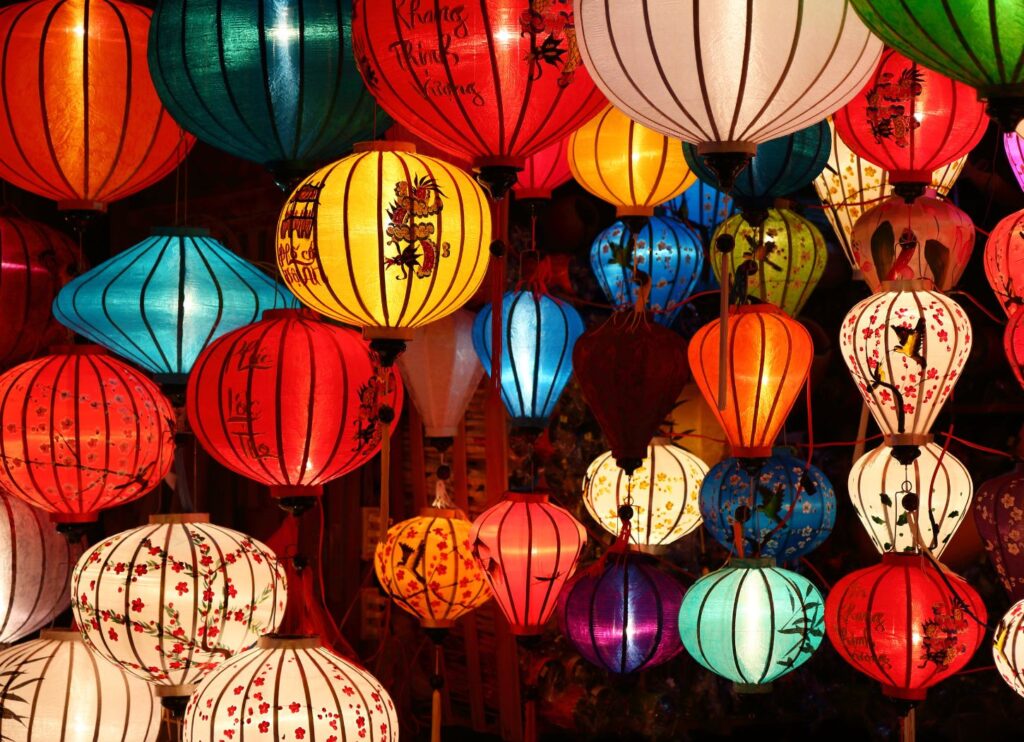
Hoi An is a small city of about 120,000 people within Da Nang City (merged with Quang Nam Province in 2025). It flourished as a hub of East Asian trade from the 15th to 19th centuries, and its Old Town — where Chinese, Japanese, and Vietnamese architectural styles blend together — has been preserved intact and listed as a World Heritage Site. Highlights cluster around the Japanese Bridge, a relic of the old Japanese quarter, along with merchant houses and Chinese assembly halls. At night the whole town glows with colorful lanterns, and a "Lantern Festival" is held on the 14th day of the lunar month. Hoi An's Old Town packs over 200 historic houses, temples, and assembly halls into an area just 1–2km square, and its World Heritage core is easy to explore on foot. It thrived as a relay port for East Asian trade from the 15th to 19th centuries, and the Japanese quarter of the time is said to have numbered around 1,000 people. The Japanese Bridge (Lai Vien Kieu) is a remnant of that era — a uniquely shaped covered bridge with a small shrine at its center. Lit up by lanterns at night, the Old Town takes on an otherworldly atmosphere, and on the full moon night of the 14th lunar day each month, the "Lantern Festival" fills the town with countless lanterns and lantern boats floated down the river.
Getting to Hoi An and getting around
It's common to take a car about 40 minutes from Da Nang International Airport. Since there's no airport with direct service from Ho Chi Minh City or Hanoi, you go via Da Nang. Within town, sightseeing is mainly on foot, and taxis or rental bicycles are handy.
The old quarter has vehicle restrictions, and strolling on foot is the norm. The Japanese Bridge (Lai Vien Kieu), old merchant houses, and lantern shops gather in a compact area. By day, the artisan streets and tailors are the highlight; from evening, the lantern lights and night market shine. A bicycle is handy for reaching the suburban beaches and rural villages.
Hoi An's classic sightseeing spots
We've summed up the representative spots in a quick-reference table. Use it as a guide when planning your route.
| Spot | Notes |
|---|---|
| Old Quarter and the Japanese Bridge (Lai Vien Kieu) | A 16th-century roofed bridge |
| Fujian Assembly Hall | A guardian temple of seafaring for overseas Chinese |
| Tan Ky Old House | A merchant house fusing Japanese, Chinese, and Vietnamese styles |
| An Bang Beach | Within cycling distance of the old quarter |
| The nighttime lantern streets and the Thu Bon River | A scene lit up from dusk |
| Strolling the old quarter's alleys | Yellow walls and shopping streets |
Old Quarter and the Japanese Bridge (Lai Vien Kieu)
This roofed bridge, said to have been built by the Japanese quarter in the late 16th century, is the core of Hoi An's old quarter and a World Heritage site symbolizing the town. A small hall (Cau Temple) is enshrined at the middle of the bridge, and with statues of a dog and a monkey guarding each end and old photos displayed inside, you can sense the memory of a port town where Japan, China, and Vietnam intersected. It's even depicted on Vietnam's 20,000-dong note. The bridge itself is free to pass through, but entering the interior hall requires the old-quarter combination ticket. Early morning, when tourists thin out, or after dusk when the lanterns light up, is best for photos. It sits in the central area along the Thu Bon River, with other sights gathered within walking distance.
Fujian Assembly Hall
This assembly hall was built by overseas Chinese from Fujian Province for gatherings and worship among people from their home region, enshrining Thien Hau (Mazu), the guardian goddess of seafaring. Highlights include the vermilion-lacquered gate tower, the decorative dragon-adorned roof, and the courtyard hazy with incense smoke, conveying the lives and prayers of people who crossed the sea to trade. It's covered by the old-quarter combination ticket; the interior is easy to photograph and worth taking time to admire the fine details of the decorations. Since it gets crowded with tour groups during the day, right after opening is the calmest time to visit.
Tan Ky Old House
Built more than 200 years ago, this merchant house is notable for a construction that fuses Vietnamese, Chinese, and Japanese architectural styles in a single building. Fine woodcarving on the beams and transoms, poems inlaid with mother-of-pearl, and a rear entrance facing the Thu Bon River preserve the lifestyle of merchants who prospered through trade. Marks on the walls showing past flood levels reached during river rises also reveal the town's history of living alongside floods. You can enter with the combination ticket, and staff may guide you through the layout and furnishings. With a narrow frontage and long depth, the route can get congested when crowded, so allow plenty of time to be safe.
An Bang Beach
About 20 to 30 minutes by bicycle east from the old quarter lies a quiet beach. Tourism development is modest, with a white sandy shore, rustic beach bars, and eateries serving fresh seafood dotting the area, letting you relax away from the bustle of the old quarter. From morning to early afternoon, when the sea breeze feels pleasant, is comfortable, and at dusk the crowds thin and the mood turns calm. Since you can get there easily by rental bike or ride-hailing app, it's good for a change of pace between old-quarter sightseeing.
The nighttime lantern streets and the Thu Bon River
As the sun sets, colorful lanterns light up the streets of the old quarter, wrapping the whole town in a soft glow. On the Thu Bon River, you can take a small boat and set paper lanterns adrift on the water, and the sight of wish-filled lights swaying on the surface is uniquely Hoi An. On the full-moon night each month, the old quarter dims its electric lights to make the lanterns stand out in the Lantern Festival, turning even more magical. Arriving at the riverside before sunset to secure a spot lets you enjoy both the darkening sky and the lanterns.
Strolling the old quarter's alleys
The narrow alleys connecting the Japanese Bridge and the assembly halls are themselves highlights of Hoi An's old quarter. Yellow-plastered townhouses line up, with tailors, leather-goods shops, lantern shops, and general stores side by side, and a photogenic streetscape continues. The old quarter restricts vehicles for set hours during the day and at night, and the charm is being able to walk slowly on foot. Rather than midday when the sun is strong, a stroll in the morning or evening, when the light softens, is comfortable and makes for better photos.
Hoi An model courses
Day 1: In the morning, stroll the old quarter and visit the Japanese Bridge (Lai Vien Kieu), the Fujian Assembly Hall, and Tan Ky Old House with the combination ticket. Aim for right after opening to avoid crowds. For lunch, savor specialties like cao lau and white rose, and in the afternoon wander the yellow-townhouse alleys, peeking into tailors and general stores. From evening, move to the Thu Bon riverside and enjoy the lantern-lit nighttime old quarter and floating paper lanterns.
Day 2: In the morning, head by bicycle to An Bang Beach and relax on the quiet sands with seafood. Return to the old quarter for lunch and try untasted local dishes like mi Quang and com ga, and in the afternoon go on a food crawl of banh mi and che while souvenir hunting. If you can stay during the full moon, cap it off with the nighttime Lantern Festival.
Hoi An's food and specialties
Here's a table of the local flavors worth trying in Hoi An.
| Dish | Characteristics |
|---|---|
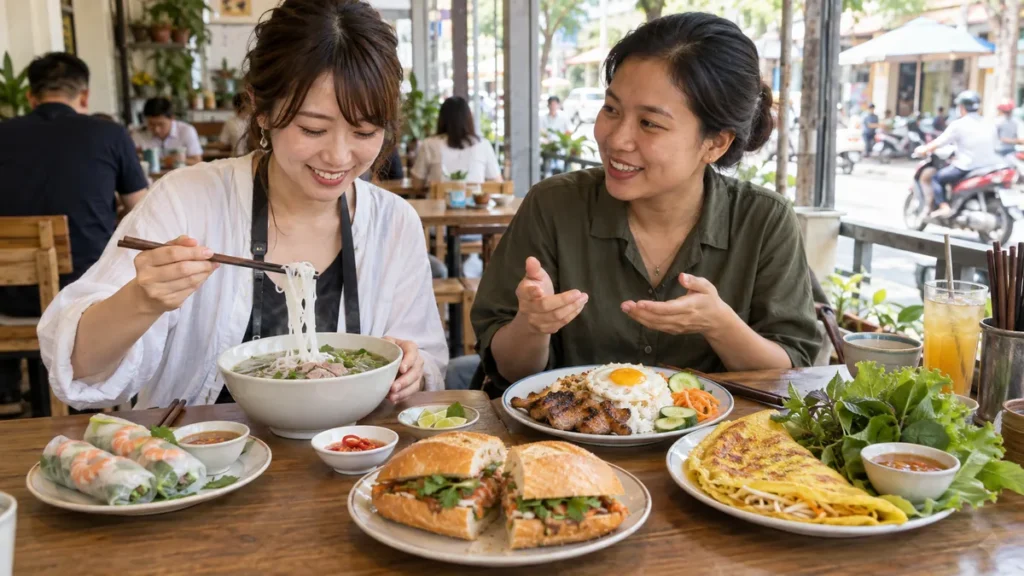
| Cao Lau | A specialty noodle that originated in Hoi An, with firm, thick noodles topped with braised pork, raw vegetables, and crispy fried crackers, tossed with a small amount of sauce. Well water and local methods are said to support the flavor, making it a bowl to savor between town strolls. |
| White rose (banh vac) | A dim sum wrapped in thin rice-flour skins around a filling of shrimp and the like, shaped like a flower and steamed. Finished with a scattering of fried garlic, it's eaten refreshingly with a dipping sauce. Served at many shops as a Hoi An specialty, its charmingly adorable appearance is also part of the appeal. |
| Mi Quang | A representative low-broth tossed noodle of central Vietnam, with turmeric-tinted noodles topped with shrimp or chicken, peanuts, and rice crackers, mixed and eaten. Beloved locally, it's a dish enlivened by herbs and the crunch of crushed nuts. |
| Banh mi | A Vietnamese-style sandwich with liver pâté, meat, herbs, and pickled vegetables in a baguette, popular in Hoi An as a food-crawl staple. Loaded with fillings and easy to eat, it also suits a light bite between sightseeing. |
| Com ga (Hoi An-style chicken rice) | A local dish of rice cooked in chicken broth, topped with shredded steamed chicken, herbs, and raw vegetables. Simple yet full of the chicken's savory flavor, it's easy to enjoy at local eateries. |
| Che (Vietnamese-style sweet soup) | A cold dessert combining beans, agar, fruit, and the like with sweet syrup or coconut milk. Perfect for a break during a town stroll in the hot season, it's easy to enjoy at street stalls and eateries. |
Cafés in Hoi An
Here's a table of cafés worth stopping by in Hoi An (the shop names link to individual pages).
| Shop name | Genre | Characteristics |
|---|---|---|
| Maison Marou | Chocolate | Bean-to-bar chocolate from Vietnamese cacao. Thick hot chocolate |
Souvenirs to buy in Hoi An
We've summed up distinctly Vietnamese souvenirs by item (item names link to individual pages).
| Item | Genre | Notes |
|---|---|---|
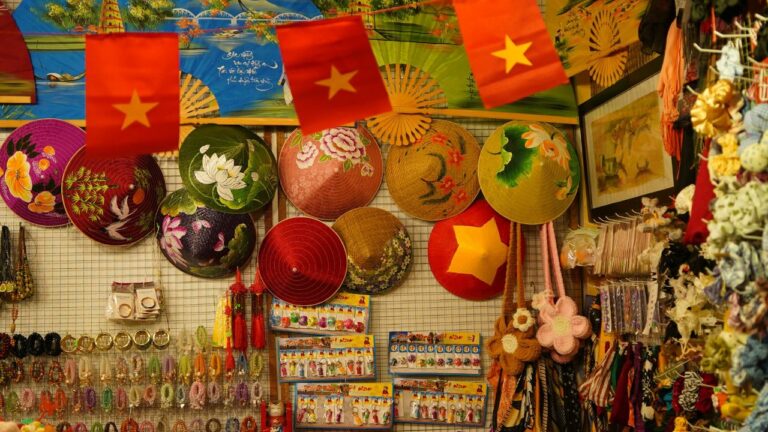
| Embroidery | Goods / crafts | Lanterns, embroidery, and tailored clothing are specialties. At specialty shops in the old quarter, |
| Non la (conical hat) | Goods / crafts | Available at markets, supermarkets, and the airport |
| Lacquerware | Goods / crafts | Available at markets, supermarkets, and the airport |
| Vietnamese coffee beans | Food | Available at markets, supermarkets, and the airport |
| Basket bags | Goods | Available at markets, supermarkets, and the airport |
Latest topics from Hoi An
Recent topics related to Hoi An are covered in detail in separate articles.
- An All-In Mr. Bean Café in Hoi An's Old Quarter, Discovered by Chance by a French Traveler
- Finding a "departed family member" in a 1997 photo remaining in Hoi An — a Dutch photographer bridges a 28-year connection
Best season, budget, and trip preparation
The best season is the dry season, February to April. September to November is the rainy season, when the old quarter can flood. For sea bathing, May to August is best.
Budget 600 to 1,500 yen a day. Entry to the old quarter uses a five-ticket booklet (about 1,000 yen), a system where you choose five spots to visit. A day trip is possible, but staying overnight is recommended to experience the nighttime lantern streets. There are many tailors, and custom-made ao dai and suits tailored in 24 hours are popular, priced at around 5,000 to 30,000 yen. Since the Hoi An old quarter is closed to vehicles, sightseeing is mainly on foot, and having a rental bicycle (150 to 300 yen a day) is handy for reaching the surrounding countryside and beaches too.
Points to note
The old-quarter sights use a combination-ticket system. Nights get crowded, so early evening is easier to walk. Tailored clothing takes time to finish, so place your order on the first day of your stay. In the rainy season (October to November), the river rises and flooding can occur.
Hoi An hotels and where to stay
Hoi An divides between the lantern-lit old town, seaside resorts, and hideaways along the river and rice fields. Where you stay changes the feel of the trip.Hoi An hotel guideFrom luxury resorts to hideaways, we cover the best places to stay by area, with a quick-reference table and individual notes alongside their actual Google Maps ratings.
Hoi An on the map