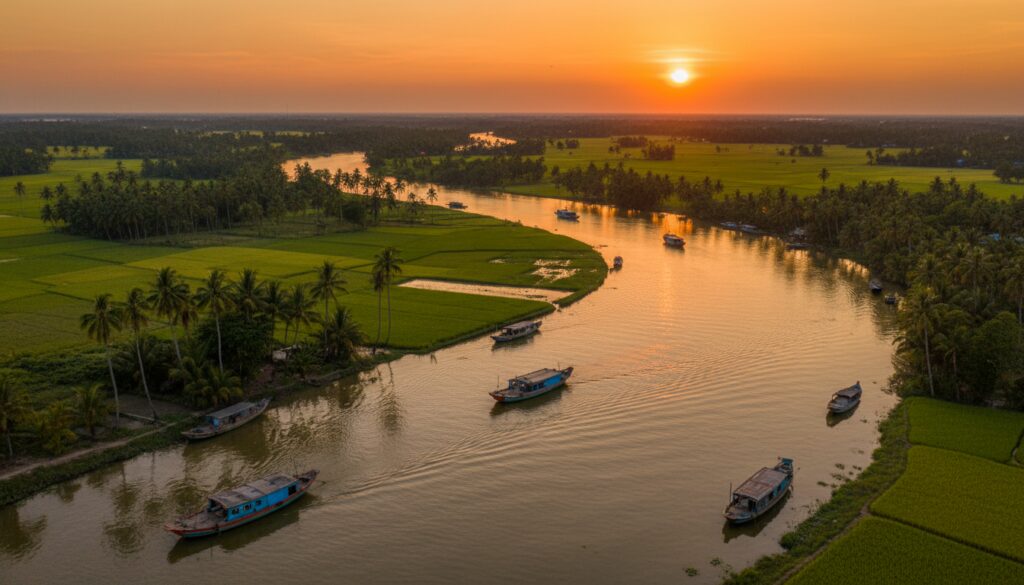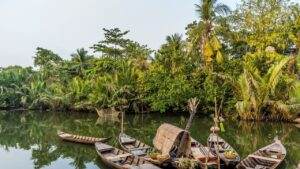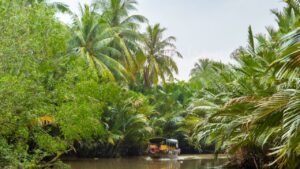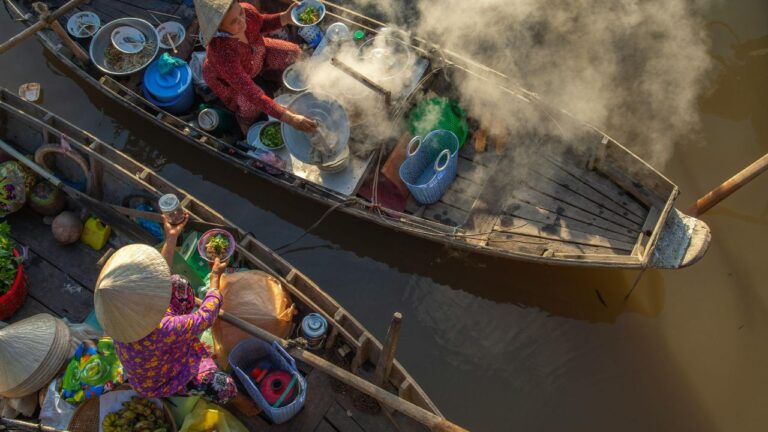
Can Tho is the largest city in the Mekong Delta and a base for delta tourism. Its specialty is the Cai Rang floating market that opens in the early morning, where small boats floating filling the river buy and sell fruit and ingredients—a scene emblematic of the delta. The area around Ninh Kieu Wharf bustles with cafés and a night market. This page rounds up the big picture of the city, how to get around, classic spots, model courses, food, souvenirs, and the latest topics, and guides you to individual articles on cafés, news, and souvenirs.
| Location | The largest city in the southern Mekong Delta |
|---|---|
| Population | About 1.6 million people |
| Best season | December–April |
| Suggested days | 1–2 days |
| Language | Vietnamese (English also understood in tourist areas) |
| Currency | Vietnamese dong (VND) |
| Time difference from Japan | -2 hours |
What kind of city is Can Tho?
Can Tho City is the largest city in the Mekong Delta, with a population of around 4.2 million (expanded in 2025 after merging with Soc Trang and Hau Giang provinces). It's a water town about 170km southwest of Ho Chi Minh City, on the Hau River, a branch of the Mekong. The sightseeing highlight is the early-morning Cai Rang floating market, where small boats piled high with fruit and vegetables gather on the water — one of the Mekong Delta's iconic sights. The area around Ninh Kieu Wharf is lively at night too, with a night market, making it an ideal base for sightseeing. Can Tho City spreads along the Hau River, a Mekong branch, as the largest city in the delta and the economic hub of this water-bound region. The sightseeing highlight is the Cai Rang floating market, held from around 5 to 8am, where boats of all sizes loaded with fruit, vegetables, and rice gather on the river to trade — a scene that epitomizes the Mekong Delta. Ninh Kieu Wharf also bustles with a night market after dark, where you can enjoy a Mekong evening among food stalls, riverside night views, and an illuminated bridge. On the outskirts, the tropical orchards of the Mai Dam and Cai Rang areas are popular for tasting durian, mango, and rambutan.
Getting to Can Tho and getting around
4 hours by car from Ho Chi Minh City (3.5 hours by express bus), or 50 minutes by domestic flight (Can Tho International Airport). 30 minutes by taxi from the airport to the city. A 2-day, 1-night tour from Ho Chi Minh City is the standard.
The center is Ninh Kieu Wharf, where a riverside promenade and the night market gather. You board a boat here to reach the floating market. Since the market is at its best in the early morning, the trick is to stay the night before and set out at dawn.
Classic sightseeing spots in Can Tho
We've summed up the representative spots in a quick-reference table. Use it as a guide when planning your route.
| Spot | Notes |
|---|---|
| Cai Rang floating market | The peak of activity is early morning, 5–7 a.m. |
| Ninh Kieu Wharf | City center; boat departures & night market |
| Khmer Buddhist temples (such as Botum Temple) | Vividly colored Khmer style |
| Can Tho Bridge | A cable-stayed bridge over the Hau Giang River; night views |
| Suburban tropical orchards (such as My Khanh Folk Village) | Fruit-picking along the canals; rural experiences |
Cai Rang floating market
The highlight of Can Tho sightseeing, and the largest floating market in the Mekong Delta. From before dawn, boats large and small gather on the river, buying and selling fruit, ingredients, rice, and daily goods from boat to boat. It’s the custom for sellers to indicate the goods they handle with a “beo hang (sign pole)”—holding the item at the tip of a long pole—so you can tell what’s being sold even from a distance. The peak of activity is early morning, 5–7 a.m., and since shops start packing up after 8, the trick is to set a boat out from Can Tho’s Ninh Kieu Wharf before sunrise. Having breakfast on the river at a “moving stall boat” selling noodles or coffee is also part of the experience. Chartering a boat the day before (1–2 hours) makes the day go smoothly.
Ninh Kieu Wharf
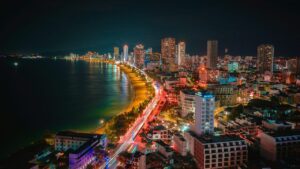
A promenade and boat landing along the Hau Giang River (a tributary of the Mekong main stream) that flows through central Can Tho. The boats for the floating-market tour depart from here. In the evening it bustles with locals seeking cool air, and at night a night market sets up along the river with stall food and goods. The pedestrian-only Ninh Kieu Bridge is illuminated, and the light reflecting on the river surface is beautiful. It’s a convenient area as a base for the night before a market tour.
Khmer Buddhist temples (such as Botum Temple)
Many Khmer (Cambodian-descended) people live in the Mekong Delta, and vividly colored Khmer Buddhist temples are dotted around Can Tho city too. The golden spires, naga (serpent-deity) carvings, and intricate decorations differ in character from Vietnamese-style temples, letting you feel the delta’s multiethnicity firsthand. For worship, take off your shoes and dress to cover shoulders and knees. The quiet grounds are also good for a rest during a town walk.
Can Tho Bridge
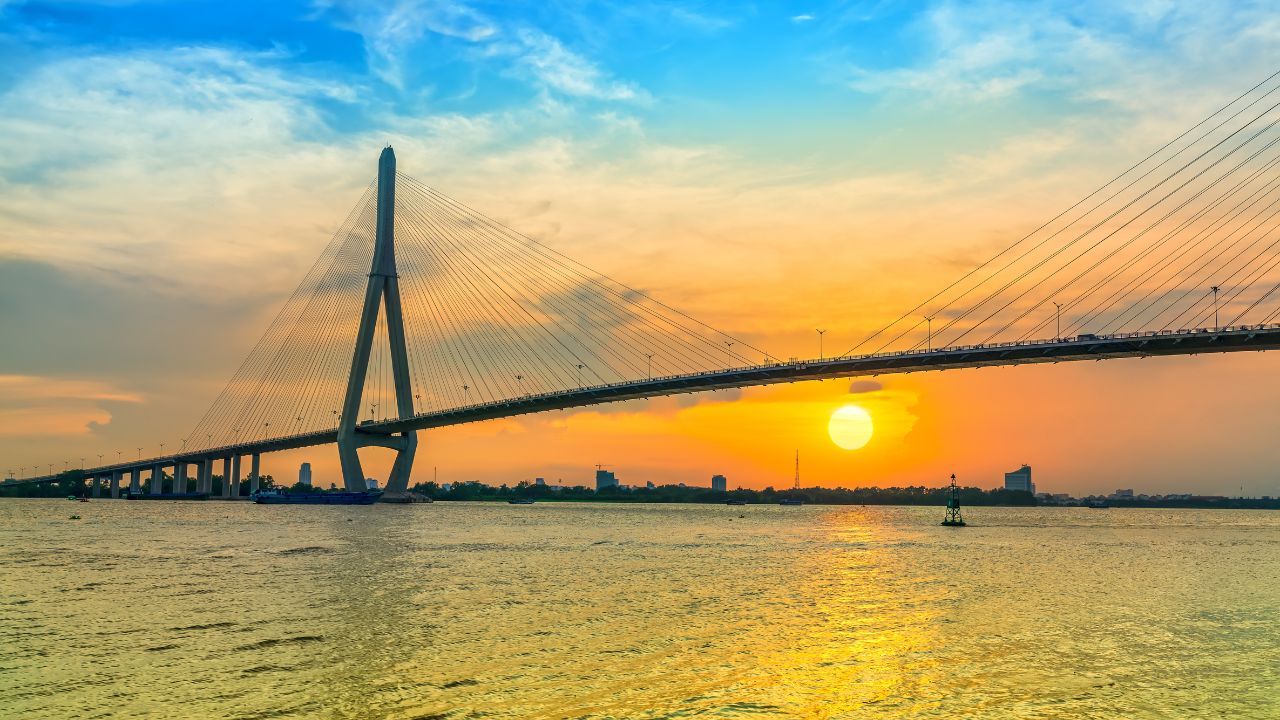
A cable-stayed bridge over the Hau Giang River that, at its opening in 2010, boasted one of the largest main-tower spans even in Southeast Asia. A major artery connecting the delta’s towns, it’s illuminated at night. Viewing it from the opposite bank, Ninh Kieu Wharf, or aboard a river cruise is recommended. It’s a landmark symbolizing the delta’s modernization.
Suburban tropical orchards (such as My Khanh Folk Village)
In the outskirts of Can Tho, tropical orchards spread along the canals. Depending on the season, you can enjoy picking and tasting fruits such as durian, mango, rambutan, and longan, and there are also tourist orchards that combine hand-rowed boats, traditional-music performances, and rural experiences, like the My Khanh Folk Village. It’s easy to work into a half-day course together with the floating market.
Sample courses for Can Tho
Day 1: Arrive in Can Tho in the afternoon. Stroll the Ninh Kieu Wharf promenade, and in the evening spend time at the riverside night market and cafés.
Day 2: In the early morning, head by boat to the Cai Rang floating market and experience breakfast on the river. After the market, stop by the orchards along the canals.
Food and specialties of Can Tho
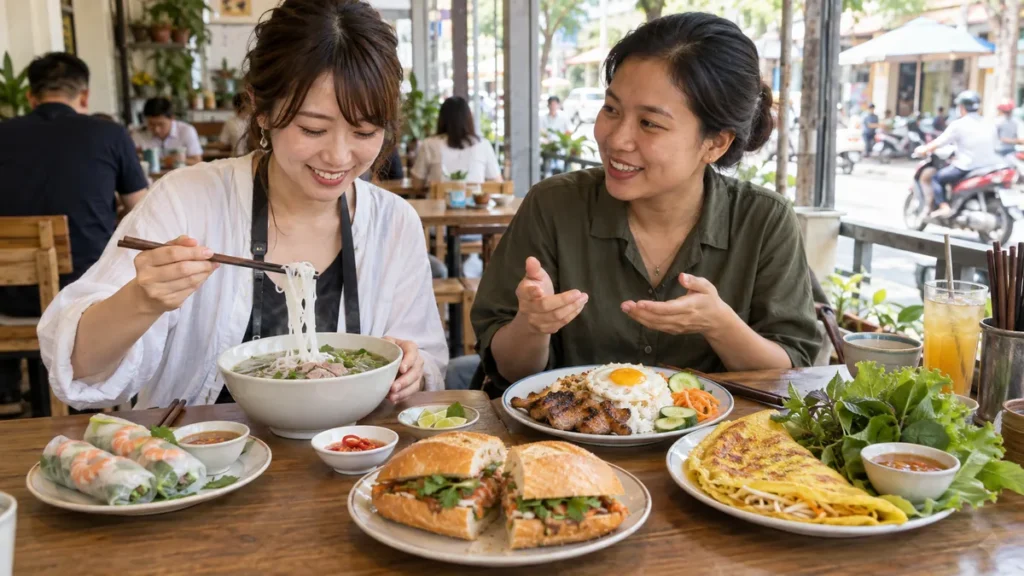
Can Tho strongly reflects the Mekong Delta’s river-fish and fermented-food culture, with local dishes you can’t taste in other cities. Here’s a table of representative dishes.
| Dish | Characteristics |
|---|---|
| Banh xeo | A southern-style savory pancake in which a batter of rice flour and turmeric is grilled crisp and packed with plenty of shrimp, pork, and bean sprouts. In Can Tho, many shops offer extra-large sizes, and you wrap it in leafy vegetables and herbs and eat it with a sweet-and-sour nuoc cham sauce. |
| Bun mam | A rich soup noodle based on fermented fish sauce (mam), a representative local dish of the Mekong Delta. Containing shrimp, squid, river fish, pork, and eggplant, it’s strongly aromatic and filling. It’s the bowl that most strongly reflects the delta’s river-fish culture. |
| Nem nuong (Cai Rang-style grilled pork patties) | Skewered grilled pork patties, known as a specialty of the Cai Rang area. You wrap them in rice paper together with vegetables and herbs and eat them with a special sauce. The fragrant charcoal aroma pairs well with the refreshing condiments. |
| Deep-fried whole river fish, elephant-ear fish | “Ca tai tuong (elephant-ear fish),” a Mekong river fish deep-fried whole, is a bold dish where you flake the flesh and wrap it in rice paper. It’s a staple you can savor at delta eateries. |
Cafés in Can Tho
Here’s a table of cafés to stop by in Can Tho (from the shop name to the individual page).
| Shop name | Genre | Characteristics |
|---|---|---|
| Yakishime | Matcha | Japanese-flavored drinks and sweets starring matcha |
| Phuc Long Coffee & Tea | Tea | Local chain with a strong tea lineup. Golden lotus tea and phin sua da |
| Trung Nguyên E-Coffee | Coffee | A small Trung Nguyen outlet. Robusta blends and ca phe sua da |
| Milano Coffee | Coffee | Cheap by the cup, no frills. Ca phe sua da and drip |
Souvenirs to buy in Can Tho
We've summed up distinctly Vietnamese souvenirs by item (item names link to individual pages).
| Item | Genre | Notes |
|---|---|---|
| Coconut oil | Food | Available at markets, supermarkets, and the airport |
| Cashew nuts | Food | Available at markets, supermarkets, and the airport |
| Vietnamese coffee beans | Food | Available at markets, supermarkets, and the airport |
| Nuoc mam (fish sauce) | Food | Available at markets, supermarkets, and the airport |
| Basket bags | Goods | Available at markets, supermarkets, and the airport |
The latest topics in Can Tho
Recent topics related to Can Tho are covered in detail in their own individual articles.
- A couple in their 60s in Can Tho runs a free eatery for poor workers
- A French couple in their 60s spends two months at their in-laws’ home in the Mekong Delta—the viral “Vietnamese in-law life” videos on social media
- Mekong Delta Cai Rang Floating Market guide | Experience the 100-year-old 5 a.m. market in April, the final month of the dry season
Best season, budget, and trip preparation
The best season is the dry season, December to April. The climate is stable, ideal for viewing the floating market. The rainy season, May to November, is the flood period and water levels rise, but it’s the bountiful season for orchard visits, so you can enjoy them.
Budget 500–1,200 yen a day. The floating-market tour requires an early-morning departure (the 5 o’clock hour), and boat arrangements should be booked at the hotel the day before. For 1,500–3,000 yen per boat, you can do a 2–3-hour market tour, in a standard plan that also combines a fruit orchard and a rice-noodle workshop. From Ho Chi Minh City, you arrive in 3.5 hours by express bus or 4 hours by car, and the standard route is a 2-day, 1-night trip combining the floating market and the Ben Tre canals.
Points to note
The floating market’s peak of activity is around 5–7 a.m. Arranging a boat the night before makes it go smoothly. Since mornings can be chilly from the river breeze, bring a light jacket. On a small boat, you’ll want to keep valuables in a waterproof bag.
Can Tho on the map