Da Nang is the largest city in central Vietnam, a base for stays that combines long beaches and resorts with nearby World Heritage sites. With the white sands of My Khe Beach, the sacred sites of the Marble Mountains, and Ba Na Hills, famous for the Golden Bridge, it's also a starting point for Hoi An and Hue. This page sums up the overall picture of the city, how to get around, classic spots, model courses, food, souvenirs, and the latest topics, and guides you to individual articles on cafés, news, and souvenirs.
| Location | Largest central city |
|---|---|
| Population | About 1.2 million people |
| Best season | February–August |
| Suggested days | 2–3 days |
| Language | Vietnamese (English also understood in tourist areas) |
| Currency | Vietnamese dong (VND) |
| Time difference from Japan | -2 hours |
What kind of city is Da Nang?
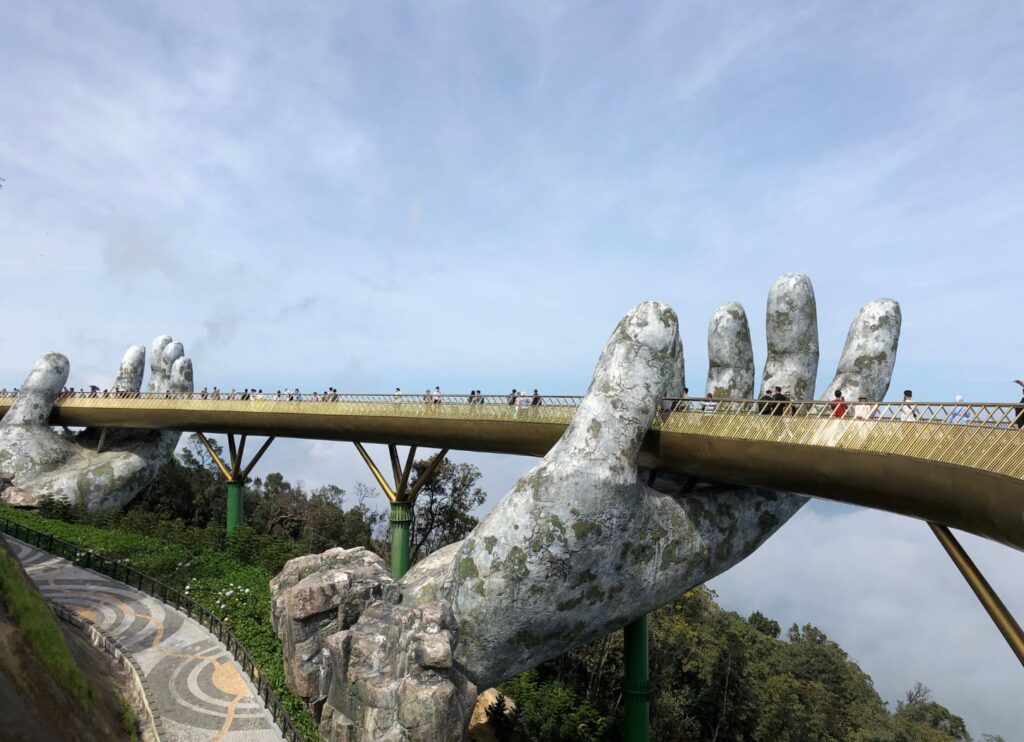
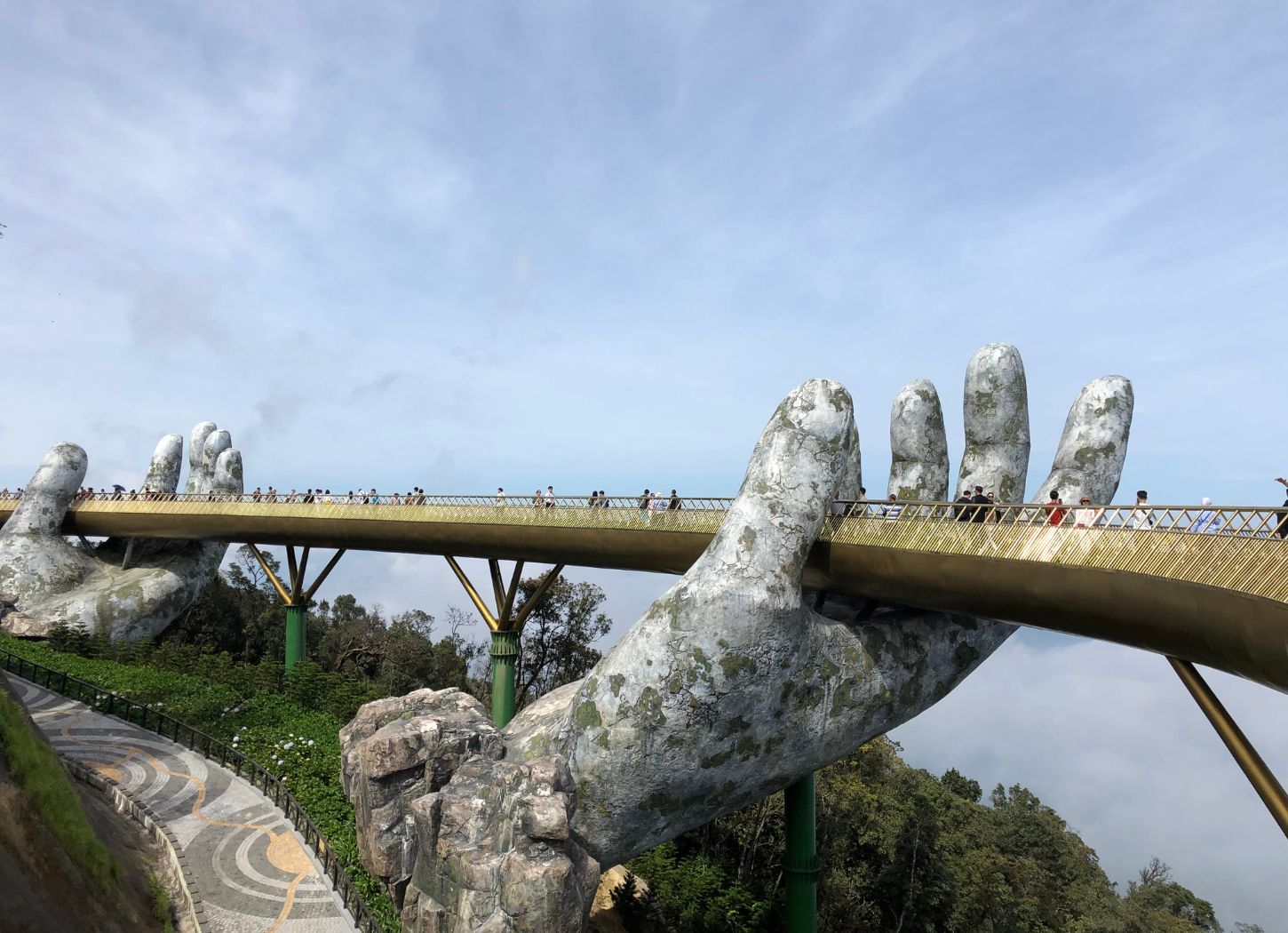
Da Nang is the largest city in central Vietnam, with a population of about 1.2 million. It's one of Southeast Asia's leading resort destinations, having been named a "world's most livable city." My Khe Beach is a popular white-sand beach (the coastline including nearby beaches runs over 30km, with My Khe Beach itself around 8km) and has also been named one of the "world's best beaches." The illuminated Dragon Bridge (Rong Bridge) spans the Han River running through the city center, and on weekend nights it even breathes fire and water. On the outskirts stands the "Golden Bridge" at Ba Na Hills, world-famous as a giant pair of hands holding up a bridge amid a sea of clouds. The city center sits near the mouth of the Han River, with the east bank as the tourist-oriented resort area (along My Khe Beach) and the west bank as the residents' living area. Seven bridges link the two banks of the Han River, each with its own distinctive design — the Dragon Bridge, Sail Bridge, Tien Son Bridge, and more — making them tourist attractions in their own right. The cable car to Ba Na Hills on the outskirts climbs 1,300m in elevation over 5km, the longest of its kind in the world and Guinness-certified. With the old capital of Hue and Hoi An just 1-2 hours away by car, it's the classic base for exploring central Vietnam.
Access to Da Nang and how to get around
From Japan, Vietnam Airlines direct flights from Narita take about 5.5 hours. From Kansai, connecting flights are common. From Da Nang International Airport to downtown is 10 minutes by taxi. Hoi An is 40 minutes by car, Hue 2 hours by car—a starting point for central sightseeing.
The city splits into a beach district along the sea and a center along the Han River, and at night the lit-up Dragon Bridge is a sight. The beach is a short walk from hotels. To the Marble Mountains, Ba Na Hills, Hoi An, or Hue, extend your reach by car or motorbike.
Da Nang's classic sightseeing spots
We've summed up the representative spots in a quick-reference table. Use it as a guide when planning your route.
| Spot | Notes |
|---|---|
| My Khe Beach | 8 km of white sand, very near the city |
| Ba Na Hills & Golden Bridge | Giant hand bridge, mountaintop retreat |
| Dragon Bridge | Fire and water show on weekend nights |
| Marble Mountains | Sacred site of cave temples |
| Linh Ung Pagoda | A 67m-tall white statue of Avalokiteshvara |
My Khe Beach
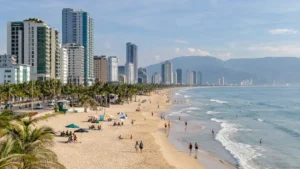
A long beach of white sand stretching about 8 km on the east side of central Da Nang, accessible right from coastal Vo Nguyen Giap street. With gentle waves and a shallow shelf, it suits swimming, and bases for marine activities like parasailing and jet skiing line up. April–September, when the sea is stable and clear weather continues, is the best season for swimming and water sports; in other months the waves can be high on some days. There are few people in the morning and you can watch the sunrise, so an early-morning walk is recommended for those who want to avoid crowds.
Ba Na Hills & Golden Bridge
A French-style mountain resort spread out atop a mountain at about 1,500m altitude, whose top attraction is the "Golden Bridge," a golden bridge supported by giant stone hands. Ascend all at once on one of the world's longest cable cars, and amid the cool of a retreat, enjoy the Flower Garden and the indoor amusement park Fantasy Park too. To shoot the hand bridge over a sea of clouds, the early morning before the first cable car arrives is the time to aim for. The weather at the top changes easily, so prepare a layer, and budget half a day to a day if you'll tour the bridge, gardens, and amusement park.
Dragon Bridge
A bridge in the shape of a dragon, about 666m long, spanning the Han River, beloved as a Da Nang landmark. As a rule, on Saturdays, Sundays, and holidays at 9 p.m., a roughly 30-minute show is held free of charge, breathing fire from the dragon's head and then spraying water. The view is good from the Tran Hung Dao side near the dragon's head or from the Love Bridge across the river, so to secure a good spot, arrive 30 minutes before the start. It's lit up at night on weekdays too, even without a show, enjoyable along with a riverside stroll.
Marble Mountains
A sacred site of five marble crags, where the sightseeing center is the largest, Thuy Son. Buddhist halls in caves carved from the rock and viewpoints overlooking the city and sea from the summit are scattered about, and you can climb the stone steps or take a shortcut by elevator. About 20 minutes by car from the city, midway to Hoi An, so it's easy to combine both. The main spots alone take 1–2 hours, and touring the whole thing thoroughly takes several hours, so a morning visit, avoiding the heat, is easier on the feet.
Linh Ung Pagoda
A temple standing on a height of the Son Tra Peninsula, known for a white statue of Avalokiteshvara about 67m tall standing as if watching over the sea. From the base, the inside of the statue is layered, and from the lookout in the grounds you can overlook Da Nang's coastline toward My Khe Beach. About 20 minutes by car from the city with good access, many people combine it with a drive on the peninsula. The sun is strong during the day, so the time of viewing the statue and sea in the soft evening light suits photos.
Da Nang model course
Day 1: After arriving in Da Nang in the morning, enjoy the sea and a beach stroll at My Khe Beach. In the afternoon, taste local noodles like bun cha ca and mi quang in the city, and head to the Han riverside at night. On a weekend, stroll the riverside timed to the Dragon Bridge fire and water show (9 p.m. Sat/Sun).
Day 2: Set out early for Ba Na Hills. Go up the mountain by cable car, photograph the sea of clouds and giant hand bridge at the Golden Bridge, and tour the Flower Garden and Fantasy Park. Return to the city and cap the night with a dinner wrapping banh xeo and nem lui.
Day 3: In the morning, tour cave temples and views at the Marble Mountains, then head south to Hoi An's Old Quarter. Walk the lantern-lit streets and savor Hoi An specialties like cao lau. Combine it with the white Avalokiteshvara statue at Linh Ung Pagoda, near the city, and you can fully enjoy culture and scenery in one day.
Da Nang's food and specialties
We've summed up the local flavors to taste in Da Nang in a table.
| Dish | Characteristics |
|---|---|
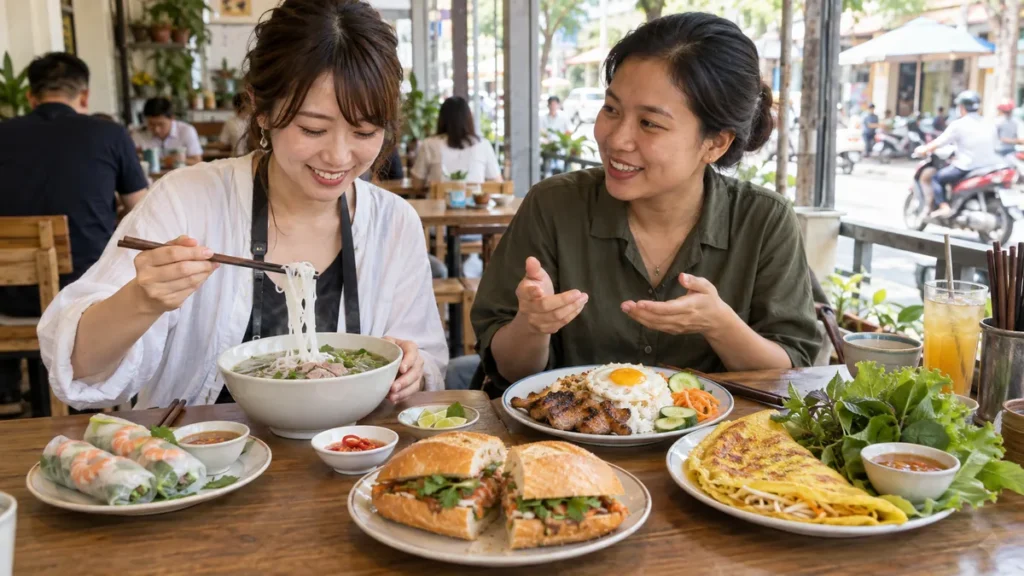
| Mi Quang | A mixed noodle originating in the Da Nang area (the former Quang Nam region), with wide rice noodles colored yellow with turmeric as its feature. A small amount of sweet-savory seafood-based sauce is tossed with the noodles, topped with toasty peanuts and crushed crisp rice crackers (banh trang). The toppings—chicken, pork, shrimp—differ by shop, and comparing them is fun. |
| Banh xeo | A central-style savory pancake of rice batter baked yellow with turmeric, folded in two around shrimp, pork, and bean sprouts. The local way is to wrap it in rice paper or leafy greens and dip it in a sweet-and-sour sauce. There are popular shops listed in the Michelin Guide too, letting you experience a distinctly Da Nang way of eating. |
| Bun Cha Ca | A rice-noodle soup with fried fish cake as the topping, beloved locally as a Da Nang breakfast standard. Eaten with herbs added to a light seafood broth, specialty shops dot the city. A bowl you can casually savor at street stalls too. |
| Banh mi | A Vietnamese-style sandwich tucking ham, liver pâté, pickled vegetables, and herbs into a crisply baked, crunchy French baguette. Central banh mi has a good balance of fillings, suiting breakfast or a light takeout meal. Since the filling combinations differ by shop, it suits eating around too. |
| Cao Lau | A brothless mixed noodle originating in Hoi An, eaten with firm, medium-thick noodles combined with thinly sliced char siu, herbs, and fried toppings. Shops serving it within Da Nang are limited, so it's a dish to be sure to taste when you visit Hoi An's Old Quarter. Good to combine with a day trip to Hoi An. |
| Nem Lui | A central specialty skewer of ground pork wrapped around a skewer and grilled, wrapped in rice paper with vegetables and herbs and dipped in a rich sauce. With little quirk, it's easy to eat even for those not used to Vietnamese cuisine. A dish everyone can enjoy wrapping together. |
Da Nang's cafés
We've summed up cafés to drop by in Da Nang in a table (store names link to individual pages).
| Shop name | Genre | Characteristics |
|---|---|---|
| Maison Marou | Chocolate | Bean-to-bar chocolate from Vietnamese cacao. Thick hot chocolate |
| Phê La | Tea | A tea-led café using oolong from Da Lat. Milk tea is the mainstay |
| Trung Nguyên Legend | Coffee | Vietnam's biggest coffee brand. Serves weasel coffee and the G7 blend |
| Cong Ca Phe | Coffee | Retro interior modeled on the ration era. Known for coconut coffee |
| Phuc Long Coffee & Tea | Tea | Local chain with a strong tea lineup. Golden lotus tea and phin sua da |
| Trung Nguyên E-Coffee | Coffee | A small Trung Nguyen outlet. Robusta blends and ca phe sua da |
| Gong Cha | Tea | Taiwanese bubble tea shop. Brown sugar pearl milk tea |
| King Coffee | Coffee | Robusta-led blends. Beans to take home as well |
| Aha Cafe | Coffee | Budget chain you see on street corners everywhere. Vietnamese-style ca phe sua da |
| Starbucks Vietnam | Coffee | Has a phin coconut latte sold only in Vietnam |
| Milano Coffee | Coffee | Cheap by the cup, no frills. Ca phe sua da and drip |
Souvenirs to buy in Da Nang
We've summed up distinctly Vietnamese souvenirs by item (item names link to individual pages).
| Item | Genre | Notes |
|---|---|---|
| Nuoc mam (fish sauce) | Food | Available at markets, supermarkets, and the airport |
| Cashew nuts | Food | Available at markets, supermarkets, and the airport |
| Vietnamese coffee beans | Food | Available at markets, supermarkets, and the airport |
| Vietnamese pepper | Food | Available at markets, supermarkets, and the airport |
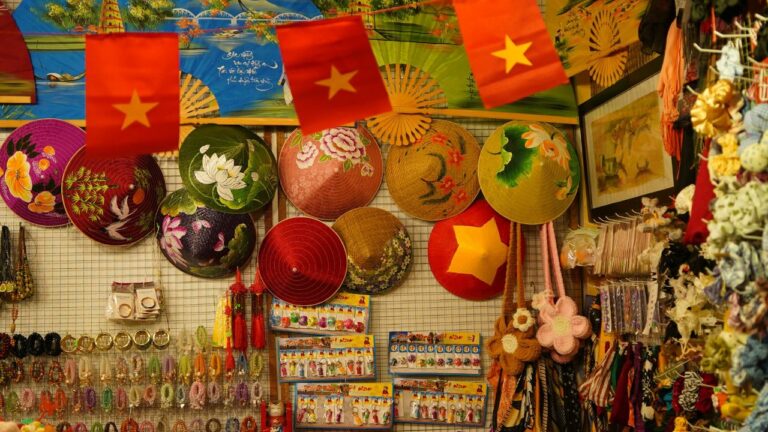
| Non la (conical hat) | Goods / crafts | Available at markets, supermarkets, and the airport |
Da Nang's latest topics
Recent topics related to Da Nang are covered in detail in their own separate articles.
Best season, budget, and trip preparation
The best season is the dry season, February–August. Swimming is best from May to August. September–December is the rainy season, overlapping with typhoon season, so take care.
Budget around ¥600-1,500 a day for food, with beach resort hotels mostly in the ¥6,000-20,000 range. Ba Na Hills is a bit pricier at around ¥6,000-6,300 including admission and the cable car (1,000,000 dong for adults, as of 2026), but the early morning rides (starting around 9am) offer the best odds of catching the sea of clouds. My Khe Beach is free to swim at, though it faces east and gets strong morning sun, so after 3pm is more comfortable. Exchange currency at local banks in the city or gold shops along the beach. Grab is widely used, making taxis easy to arrange.
Points to note
Ba Na Hills is cool at the summit and prone to fog, so bring a jacket. The weekend Dragon Bridge show is around 9 p.m. and crowded. Watch for rip currents at the beach and follow the flags. For day trips to Hoi An and Hue, an early start is efficient.
Da Nang hotels and where to stay
Da Nang ranges from city hotels along the Han River to mid-range spots on My Khe beach and top-end resorts on the Son Tra peninsula. Where you stay changes the feel of the trip.Da Nang hotel guideFrom luxury resorts to dormitories, we cover the best places to stay by area, with a quick-reference table and individual notes alongside their actual Google Maps ratings.
Da Nang on the map