
In September 2026, four changes to Vietnam's social insurance (BHXH) and health insurance (BHYT) systems took effect in quick succession: faster issuance of insurance cards for children under 6, the switch from social insurance numbers to personal identification numbers, new administrative penalties for violations, and benefit payments through the digital ID app VNeID. For Japanese nationals working in Vietnam, or anyone hired locally and enrolled in social insurance, this brings together a set of changes to how the paperwork works. We'll go through all four in turn, keeping an eye on how they differ from Japan's social insurance system.
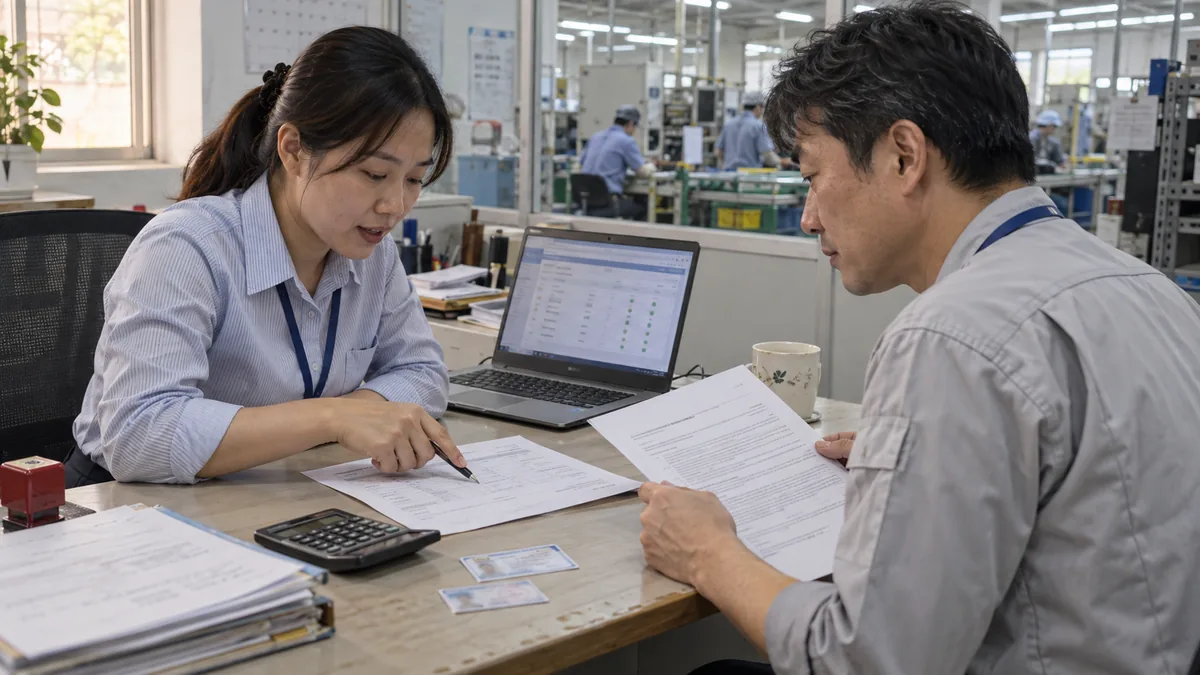
Four changes that landed together in September
The four changes each take effect on a different date. The child-related change and the number switch start September 1, the administrative penalties start September 10, and VNeID benefit payments start September 28. Getting the full picture at a glance first makes it easier to work out which ones apply to you.
| Change | Effective date | Main target |
|---|---|---|
| Faster issuance of health insurance cards for children under 6 (linked to birth registration and residence registration) | September 1 | Families with children under 6 |
| Switch from social insurance numbers to personal identification numbers | September 1 | All participants |
| New administrative penalties for social insurance violations (Decree 283) | September 10 | Employers, employees, and foreign workers |
| Receiving pensions and social benefits via VNeID payment accounts | September 28 | Pension and benefit recipients |
Foreign workers with contracts of 12 months or longer face mandatory enrollment too
As a starting point, it's worth understanding the enrollment obligation for foreign workers. Foreigners working under a labor contract of 12 months or longer with a Vietnamese company are, in principle, required to enroll in mandatory social insurance and health insurance. Exceptions apply for intra-company transfers, cases where the worker has already reached retirement age at the time of the contract, or where a treaty Vietnam has signed provides otherwise—but most locally hired staff and expatriate assignees fall under the enrollment requirement.
The underlying framework has also changed. Since July 1, 2025, the new 2024 Social Insurance Law has been the main legal framework, so judging things by the old Decree 143/2018 alone no longer matches reality. It helps to see this September's changes as the practical rollout happening on top of that new legal framework.
It's also worth understanding how this differs from Japan's social insurance system. In Japan, once the company handles the paperwork, enrollment largely runs on its own; in Vietnam, even though the process also goes through the employer, there's an established culture of enrollees checking their own records through an app called VssID. This September's number switch and stricter penalties both push in the direction of making that self-checking matter more. The more someone has come to Vietnam on a company assignment, the more it's worth checking their own enrollment and payment status directly, rather than leaving everything to the company the way they might in Japan.
Social insurance numbers are being replaced with personal identification numbers
The second change replaces the social insurance number (so so BHXH) in employer systems with each citizen's personal identification number. Data migration begins September 1 and proceeds in two stages. Benefits and enrollment procedures themselves don't change, but going forward, insurance records will be managed tied to the personal identification number.
For foreign workers, what this means in practice is the unification of identification numbers. Once insurance is managed under the same ID number used for work permits and residence registration, any mismatch in names or numbers becomes easier to spot. When checking your own enrollment status through the VssID app or similar, it's worth confirming that it's linked to the correct identification number. The digitization of identity information is moving inthe expansion of VNeID to cover all foreignersthe same direction.
From warnings to deportation: Decree 283's heavier administrative penalties
The third change is Decree 283, which redefines the penalties for social insurance violations. Taking effect September 10, it lays out a range of possible penalties: warnings, fines, confiscation of assets, suspension of licenses, suspension of operations, and even deportation for foreign workers. Replacing the previous regulations, it makes the response to violations a notch stricter.
This doesn't just affect employers dodging enrollment. Under the system, foreign workers themselves are included as well. It's now more worthwhile for employees to check whether insurance premiums are being deducted correctly from their pay, and whether the company has actually completed enrollment procedures. It shouldn't be overlooked that unpaid premiums or false filings have become a concrete risk to one's residence status.
Enrollment procedures tend to get pushed aside especially at small local companies or under sole proprietors. Now that numbers are tied to personal identification and data is easier to cross-check between agencies, unenrolled cases are more likely to surface than before. For employers, the cost of skipping enrollment has gone up; for employees, checking whether their own records are being built up correctly matters more than before. It's fair to say this has become a system that's harder to leave ambiguous, for employer and employee alike.
Children's insurance cards and VNeID benefits push daily life further online
The remaining two changes are closer to daily life. For children under 6, birth registration, residence registration, and insurance card issuance are now combined into a single process, and issuance has been shortened to a maximum of three business days (five days if verification is needed). Once processing is complete, data syncs between agencies within 10 minutes. A design that lets a child's registration get handled all at once isan ID card for babies that can be applied for alongside the birth registrationconnected to the same underlying idea.
The fourth change, VNeID benefit payments, lets pensions and social benefits be received through the payment account in the national digital ID app, starting September 28. Once the payment channel goes digital, it assumes a link to a bank account or e-wallet. Including how fees move,the quick-reference table of bank fees for residentschecking your own payment route there makes it easier to keep up with the digitization of benefits.
Procedures worth confirming in September if you work in Vietnam
What all four changes have in common is that social insurance is now starting to run on personal identification numbers and digital ID. Numbers get linked, violations become easier to catch, and benefits go digital. For foreign workers, it's a signal to check their own enrollment status directly rather than leaving it entirely to the company.
Concretely: check your BHXH and BHYT enrollment and premium payment status in the VssID app, verify that the premium deductions on your payslip match reality, and keep your personal identification number and residence information up to date. Taking care of these three things within September means you won't be caught off guard as the number switch and stricter penalties move forward.
Sources:
Soha — Four BHXH and BHYT changes starting September 2026
Vietnam Briefing — Working in Vietnam as a Foreign Employee(2026)