On September 1, 2026, it became possible to apply for a căn cước (ID card) for children under six years old as part of the same procedure as birth registration. This is based on Decree 301 (Nghị định 301/2026/NĐ-CP), which took effect the same day, merging paperwork that previously had to be handled separately. For resident families raising young children, it's one less trip back and forth between government and police counters.
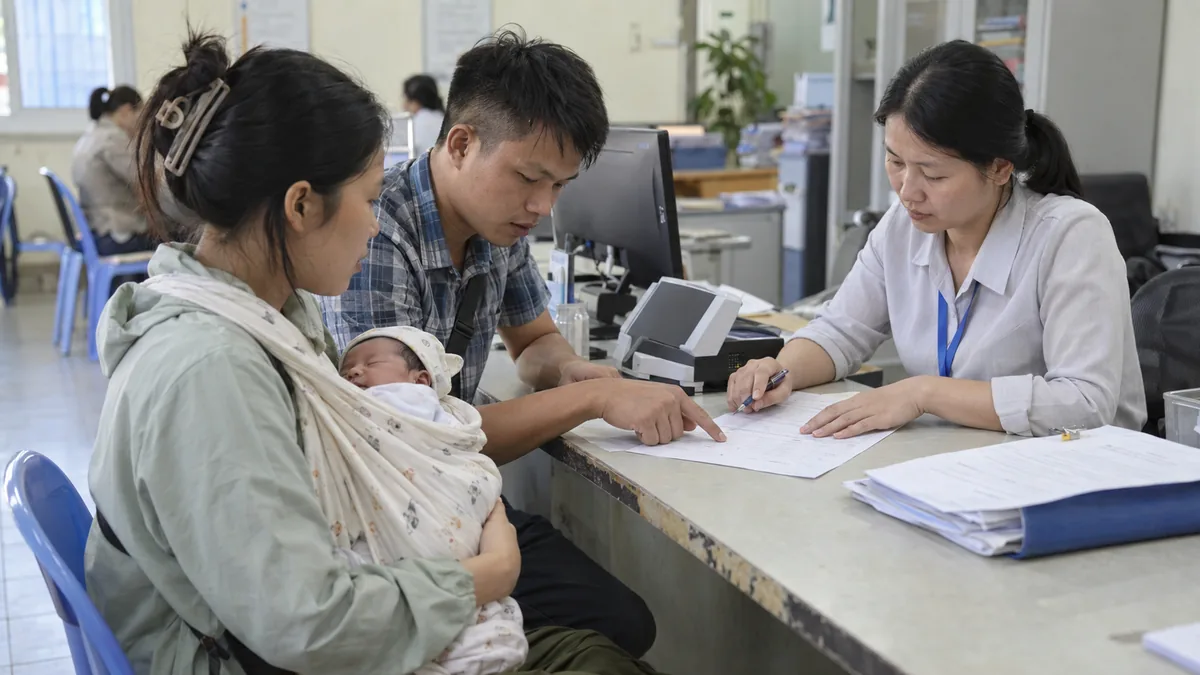
Effective September 1: ID cards can now be applied for together with birth registration
What Decree 301 adds is this: when processing the three procedures of birth registration, permanent residence registration, and health insurance card issuance, the parent acting as legal representative can now request the child's ID card at the same time. According to Vietnamese state media, for children under six, parents can request the ID card as part of the same flow as these registrations. It's requested as part of the linked online birth registration procedure (khai sinh liên thông).
In other words, there's no longer any need to file a separate application just for the ID card. Birth certificate and health insurance information is automatically carried over to the child's ID card and electronic identity account. Not having to enter and submit the same information repeatedly is the practical core of this change.
Four Procedures Now Bundled Under Decree 301
To sum up, the procedures covered are as follows.
| Procedure | Details |
|---|---|
| Birth registration | Reporting a child's birth and obtaining a birth certificate |
| Permanent residence registration | Registering the child as a household resident |
| Health insurance card issuance | An insurance card issued free of charge to children under six |
| ID card request | Can now be added to the flow above starting September 1 |
The fourth item, the ID card request, is what's newly added this time; the other three had already been part of the linked procedure in many areas. It's much like one extra box to check when a parent processes the initial registration online.
Until Now, ID Cards for Under-Sixes Went Through a Separate Window
The fact that children under six can hold an ID card at all isn't new. Under the Law on Identification (Luật Căn cước), which took effect in July 2024, children under 14 have been able to receive a card if they wish. However, that request had to be filed as a separate procedure from birth registration, requiring a new application.
For parents, this meant finishing birth registration and residence registration, then having to go through the process again just for the ID card. Decree 301 folds this "one more time" into the initial registration, aiming to cut the number of separate procedures itself.
Where Vietnam's căn cước (National ID Card) Fits In
A căn cước is a chip-embedded ID card carried by Vietnamese citizens. Besides basic information like name, date of birth, and address, it's tied to a number that identifies the individual. Those 14 and older have their photo and fingerprints taken, but children under six are issued a card based on documentary information only, without biometric collection. Biometric registration begins once the child turns six.
This number is linked to the same identifying information used for residence registration and health insurance, and it also connects with VNeID (the electronic identity app), described below. A child's card is designed to have information added to it as the child grows.
Information Carries Over to VNeID and the Electronic Identity Account
In Vietnam, the Ministry of Public Security's VNeID app is increasingly used to bring identification and various documents together electronically. The ID card for children under six is said to be processed entirely online through VNeID. Under Decree 301's design, birth certificate and health insurance information automatically transfers to the child's ID card and electronic identity account.
The move to consolidate administrative paperwork into VNeID is spreading across other areas too. Eliminating the need to resubmit documents at government offices,the 206 documents that Decree 320 folds into VNeID— moves in the same direction, and children's ID cards have now become part of that picture. Behind it is a design aimed at cutting down on paper documents and consolidating the entry point for procedures into a single app.
Who Qualifies: Children with Vietnamese Citizenship
This is a point resident families can easily misread, so let's be clear. A căn cước is an ID for Vietnamese citizens, and it applies to children who hold Vietnamese citizenship. If a Japanese couple's child does not hold Vietnamese citizenship, they are not eligible for this ID card.
On the other hand, for international families of a Vietnamese and Japanese couple who register their child with Vietnamese citizenship, this consolidation applies directly. Since you can proceed all the way to the ID card at the birth registration stage, there's no need to make a separate trip to a police counter afterward. As for procedures for foreign parents or foreign residents,the move to bundle foreigners' procedures into VNeID— is proceeding separately, so it helps to keep in mind that which system applies depends on the child's nationality.
What Actually Changes for Families with Young Children
Parents make fewer trips right after childbirth. Previously, the flow was: complete birth registration and residence registration, receive the health insurance card, and then file a separate application for the ID card. From September 1 onward, you can request the ID card all at once as part of the linked online birth registration procedure.
Going back and forth to government offices and police stations with a young child in tow is a burden in itself. When procedures are split across different counters, mismatched paperwork and repeat visits are more likely. Consolidating into a single linked procedure means information isn't entered twice and paperwork is less likely to conflict. Cutting down even one outing during infancy matters most to families actually raising young children.
What a Child Can Do With an ID Card
Once a child under six has a card and an electronic identity account, there are more situations where a single document is enough to prove identity. Because it shares the same identifying number as health insurance, it can be used for hospital check-in procedures and identity verification for administrative services. Various procedures within Vietnam can now be checked for the child too, within VNeID.
Having identification documents in order also speeds things up when traveling with children. Vietnam is also rolling out new regulations around children's safety — for example,the new child car seat rules— and the rules that families need to know about are increasing. Consolidating identification is a foundation that makes it easier to keep track of this whole set of childcare-related procedures.
What to Check Before You Apply
First, confirm your child's citizenship. If they hold Vietnamese citizenship, you can proceed all the way to the ID card request within the linked online birth registration procedure. It's worth checking with your local government office or through VNeID's guidance whether the linked procedure is actually running in your area.
Next, get your VNeID account in order. Since a child's electronic identity account is linked to a parent's account, things will go more smoothly if the Vietnamese parent's VNeID — as legal representative — is active and usable. The system only started on September 1, and the rollout may vary by region. It's safest to proceed while checking the latest guidance at the counter.
Sources: