For the past decade, Asian fashion has been led by K-POP and K-beauty. The clothes Korean idols wore were being copied across Southeast Asian social media the very next day, and Korean cosmetics filled the shelves of every country. That ”single road of the Korean wave” has clearly branched out as 2026 begins. Korea has shifted to being the side that comes to sell into Southeast Asia, Thai actors have muscled in as the objects of aspiration, and Vietnamese brands have begun to trace the same route in reverse.
This article traces the shifting flow of "Korea → Southeast Asia → Vietnam." It may look like a big-picture story, but it's actually continuous with the changes in the clothes you'll see on the street the next time you travel in Vietnam.
Korea shifts from "the source of aspiration" to "the side selling to Southeast Asia"
What's happening first is that Korean brands themselves have started moving, seeing Southeast Asia as their next main battleground. According to reports, the major select-shop chain Musinsa has set up a base in Taiwan and plans to open a dozen or so Musinsa Standard stores over the coming years. Shinsegae-affiliated Studio Tomboy opened its first overseas store in Singapore, and at the "Hallyu Expo," where 52 Korean fashion and beauty brands gathered, W Concept opened a pop-up in Hanoi (Seoul Economic Daily, July 2026).
| Development | Details | Source |
|---|---|---|
| Musinsa (Taiwan) | Established a base in Taiwan, with plans for over a dozen Musinsa Standard stores within a few years | Seoul Economic Daily |
| Studio Tomboy (Singapore) | First overseas store in an Orchard department store. The previous year's pop-up drew over 10,000 visitors. | Same as above |
| W Concept (Hanoi) | A pop-up at the "Hallyu Expo," where 52 Korean brands took part | Same as above |
This movement shows in the numbers, too. One Korean brand is reported to have grown its store sales in the Taiwan market at an average annual rate of more than double over the past three years (Seoul Economic Daily). From the stage of testing the waters with cross-border online sales to the stage of setting up local stores and rooting the brand—Korean players' Southeast Asia strategy has entered a deeper phase.
For Korea, once "the side that supplied the aspiration," Southeast Asia is growing in weight as an export destination. Behind this lie the heightened interest in the Korean Wave driven by K-POP and K-beauty, and the depth of young consumers with purchasing power. Chances to spot Korean-brand pop-ups at malls in Vietnamese cities will surely keep increasing from here.
The aspirational leads moved, too—Thai actors rising at FW26
Another shift is in the object of aspiration itself. Around the Fall/Winter 2026 (FW26) fashion weeks, Thai actors were especially visible on the periphery of luxury names like Dior, Chanel, and Prada (some were newly appointed ambassadors, while in other cases long-standing appointments drew renewed attention). One analysis of media exposure value (EMV) reports that over the past year the volume of buzz swung heavily toward the Thai camp while Korea relatively declined (nss magazine).
| Brand | Thai actors getting exposure | Notes |
|---|---|---|
| Dior | Orm Kornnaphat / Lingling Kwong | Cast / appearing at FW26 (as reported) |
| Chanel | Gemini Norawit | Appearing at shows (reported) |
| Prada | Win Metawin | Ambassadors from earlier (since 2023) |
*All of the above are based on reporting from nss magazine and similar outlets. Bear in mind that new FW26 appointments and cases where long-standing appointments drew renewed attention are mixed together, so read it with that caveat.
It's a structure in which the spotlight once monopolized by K-POP idols has begun to spread to Southeast Asian stars, too. But this, too, is accurately seen not as "Korea disappearing and Thailand taking over" but as Southeast Asian players joining the lineup of those getting attention—an expansion. The focus of Asia's gaze is broadening from a Korea-only pole toward Southeast Asia.
That "Southeast Asia" naturally includes Vietnam. The heat symbolized by Thai actors reaches Vietnamese makers as a tailwind too. And in fact, brands that have turned that tailwind into sales have begun to emerge from Vietnam—which is where the story goes next.
Why Southeast Asia?
The reason is simple: this is where the "young, digital, and just starting to spend" market is. Take Vietnam as an example—it is a young country where over 40% of the population is under 30, with about 72.7 million social-media users (DataReportal "Digital 2024: Vietnam"). What's more, Facebook and TikTok are at the center of daily life, and a culture of buying clothes on the spot from videos and live streams has taken root.
The market's growth is large as well. In 2024, the gross merchandise value of Vietnam's four major e-commerce malls reached about 13.8 billion USD, up 40% year over year, and among them TikTok Shop surged to roughly a 27% share (YouNet ECI). This environment, where clothes fly off the shelves from videos and livestreams, is an equally attractive sales floor both for Korean brands wanting to enter and for local brands with no ad budget.
Aspiration (the Korean Wave), the social-media infrastructure that receives it, and rising incomes. A market where these three line up has become, for both Korean brands and local makers, the easiest place to move right now.
Vietnam's dual role—both a "market being sold to" and a "carrier of the counter-flow"
What's interesting about Vietnam here is that it's a market being pitched to by Korean brands and, at the same time, a place that has begun using the very same route in reverse.
Emblematic is the phenomenon of K-POP stars wearing Vietnamese local brands. Ho Chi Minh City–bornLSEOULreportedly sold out its 2,000-piece stock in about 15 minutes after BLACKPINK's Jennie wore one of its skirts (VnExpress). The avant-gardeLa Lunewas worn by Lisa and aespa, andFancì Clubreached Bella Hadid and BLACKPINK. Along the same "clothes the stars wear" circuit by which the Korean Wave came down into Southeast Asia, a Vietnam-born brand is now climbing back up in the opposite direction.
What makes this counter-flow possible is, again, social media. When an idol posts a single photo, access to that brand's account pours in from all over the world, and even a small brand without its own website can sell out overnight. The world's gaze, which once couldn't reach you unless you passed through a Western maison or runway, can now be reached directly from a single room in Ho Chi Minh City.
In other words, Vietnam's apparel scene has both the aspiration flowing in from Korea and the counterflow leaping out from it running at the same time. And what must not be forgotten is that, beneath this flashy counterflow, there are countless local brands steadily delivering K-POP-style everyday wear. The aspirational circuit of "a celebrity wears it and it takes off" and the familiarity circuit of "I could wear it myself"—the fact that these two run simultaneously in the same market is making Vietnam's apparel scene even richer.
Going forward, how far will Vietnam's "reverse flow" continue?
Once a star wears it, it goes viral—this circuit is powerful but also unstable. If the buzz ends as a passing moment, the heat of a sellout cools just as quickly. Whether a reverse flow can be turned into more than a momentary buzz depends on how you move back and forth between the two layers of ”aspiration” and ”relatability” touched on earlier.
For a brand that made its name through celebrity wear to keep being chosen as everyday clothing afterward, it needs the “I could wear that too” elements of price, sizing, and ease of delivery. Conversely, an approachable brand that has patiently grown its fans can one day catch a star’s eye and leap all at once. As long as the social-media circuitry connecting aspiration and familiarity exists, the reverse flow originating in Vietnam is unlikely to break off for a while. If there’s a challenge, it’s this single point: amid a flood of similar Korean-style designs, how much of ”their own character” they can blend in.
Hearing "after K-POP, it's Southeast Asia," one tends to imagine a changing of the guard where Korea is finished and Thailand or Vietnam takes its place. But chase it on the ground and the reality is far more intertwined. If anything, Korean brands are coming to Southeast Asia to sell in earnest, and Vietnamese youth still enjoy dressing in K-POP style. At the same time, when Jennie wears a Vietnamese brand, it sells out in 15 minutes. What defines today's Vietnam is that "the side that admires" and "the side that is admired" coexist in the same city. Rather than a one-way changeover, the outbound and inbound flows run at the same time—seeing it that way keeps you from misreading the region's energy.
Where can travelers feel this change?
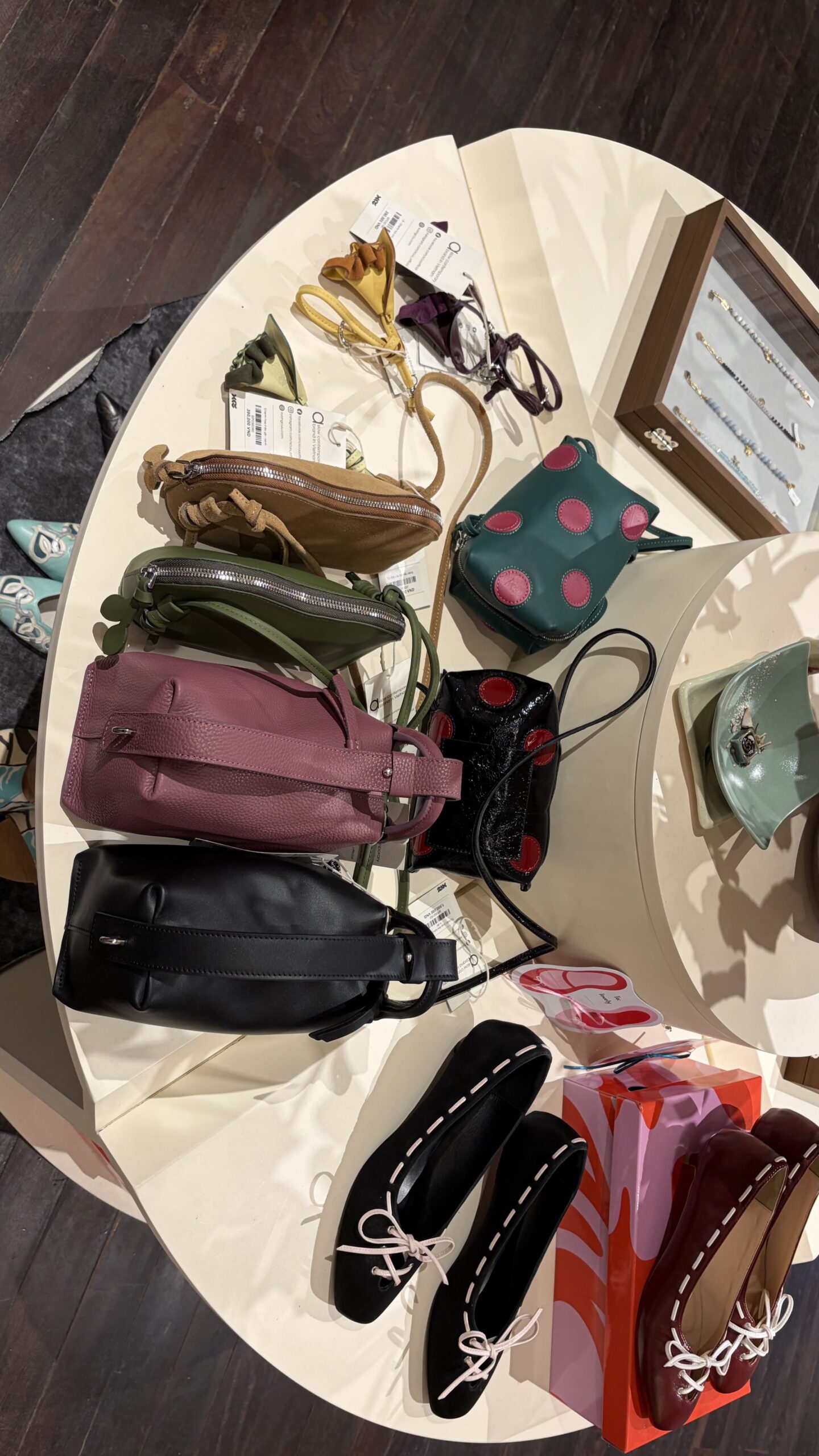
This trend is surprisingly visible just by walking around town. Since "clothes Korea came to sell" and "clothes Vietnam sends out to the world" coexist in the same city, keeping the following three points in mind lets you read the change concretely.
- Appears in a corner of a shopping mallPop-ups by Korean brands. It is proof that the Korean players are entering the market in earnest, and the clientele is largely young people dressed in Korean style
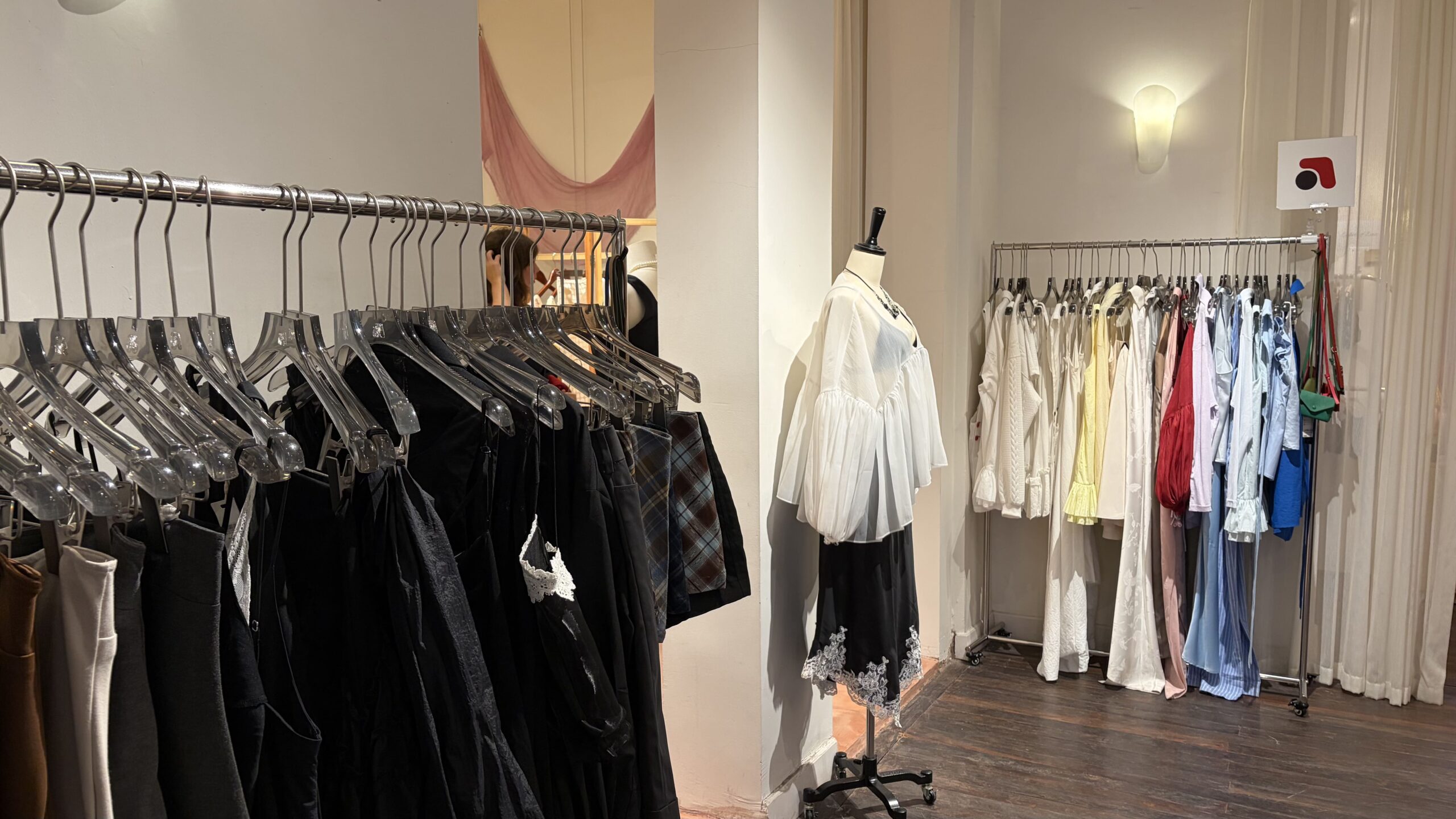
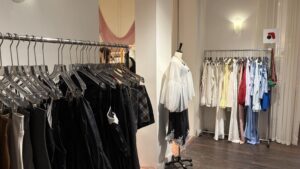
- In alleys and multi-brand stores,Select shops. Local brands born on social media line up with handwritten cards and just one or two styles, and this is the site of the ”relatability lane”
- Price tags and social-media tags. For a piece that catches your eye, search the store name or tag on TikTok or Instagram right there. You might arrive at a local brand from a K-POP idol's outfit post, or the other way around
A flashy pop-up, and a small shelf of handwritten cards. Just comparing these two on the same day should let you feel, firsthand, the current mood of Vietnam—"aspiration coming down, closeness rising up."
Frequently asked questions
- What does "after K-POP, it's Southeast Asia" mean?
-
It refers to how the center of buzz in Asian fashion has broadened from being concentrated solely in Korea toward Southeast Asia. Several movements are happening at once: Korean brands are expanding into Southeast Asia, Thai actors were notably visible at FW26, and Vietnamese brands are being worn by K-POP stars.
- Is Korean fashion no longer popular?
-
That's not the case. Vietnam's Gen Z still favors Korean-style styling, and Korean brands are, if anything, actively expanding into Southeast Asia. Rather than a changing of the guard where "Korea ends and Southeast Asia takes over," the reality is that the flow of aspiration and the reverse flow bursting out of it are running at the same time.
- What triggered Vietnamese brands drawing attention overseas?
-
A major trigger is being worn by K-POP stars and international celebrities. Well-known examples include BLACKPINK's Jennie wearing an LSEOUL skirt that sold out in no time, and La Lune and Fancì Club being worn by idols and models.
- Where can travelers feel this shift?
-
Comparing both the pop-ups of Korean brands lined up in urban malls and the local brands gathered at back-alley select shops lets you feel the two-way nature of the flow. For clothes that catch your eye, we recommend searching for them on the spot via TikTok or Instagram.
Related reading
- Why is Vietnamese fashion so interesting right now? | Reading the new-generation brand trend through the numbers and the ground
- Why does Vietnam's Gen Z choose "homegrown brands"? | The buying habits and values of the social-media generation
- Vietnam Apparel Frontline | The New-Generation Brands You Meet at Hanoi Select Shops