For the past few years, walking through the streets of Vietnam, you keep passing young people wearing clothes from small apparel brands you've never seen before. Not famous overseas logos, not old-fashioned traditional dress. Born on Instagram and TikTok, gathering tens of thousands of fans without even having a physical store of their own—this new generation of local brands is now reshaping Vietnamese fashion.
This article is a report that reads the buzz through the lens of "why now." Starting from the market's growth, and moving through the tailwind of K-fashion, Gen Z's social-media shopping, and a D2C ecosystem where brands don't own their own websites—we'll take these four angles to grasp the underlying structure, then look at real, fast-growing new-generation brands through concrete examples. We keep it readable from the perspective of travelers and Vietnam lovers, while still digging into what's actually happening behind the scenes.
First, the numbers. How fast is Vietnam's apparel market growing?
The sense of momentum you feel on the ground is backed up by the market-size numbers too. According to various market studies, Vietnam's apparel market is expanding at roughly the following levels. (These are approximate figures drawn from public reports, and it should be read with the understanding that they vary from one research firm to another.)
| Indicator | Rough benchmark | Sources & notes |
|---|---|---|
| Market size | About USD 4.5 billion (2024) → about USD 5.0 billion (2029 forecast) | Approximate figures from several market studies |
| Economic growth rate | 6–6.8% per year (2025–2026 outlook) | Rising incomes lift purchasing power |
| Video commerce | 13 billion transactions in 2024, of which fashion and accessories accounted for the largest share at about 31% | ”See-it-and-buy-it” on TikTok Shop and the like has become the main battlefield |
| Women's demand | Everyday wear—pants, shirts, skirts, dresses—accounts for over 80% of searches | Not special occasion pieces but ”everyday clothes” are the heart of the market |
The key point isn't the scale itself but the "quality" of the growth. Young urbanites with rising incomes have started buying everyday clothes—and buying them directly from videos on their phones. This structure has opened up sales channels even for individual brands without big capital.
What tends to get overlooked is that the heart of demand isn't "special-occasion clothes" but "everyday wear." More than 80% of women's fashion searches are for daily staples like pants, shirts, skirts, and dresses. Rather than competing with flashy showpieces, a small brand can hold its own by making clothes that blend into everyday life through its own interpretation. The reason so many new-generation brands build around basic items is, in part, a reflection of this market's shape.
Tailwind (1): The heat from Korea (K-fashion) is flowing into Vietnam
Look at the designs of the new-generation brands and the influence of Korean fashion runs deep. Among Vietnam's Gen Z, “street × minimal” is the mainstream, and K-pop-idol-style layering and relaxed silhouettes have become a thoroughly familiar sight. On the foundation of a ”Korean sense of aesthetics” laid down by K-POP and K-beauty, local brands are placing their own clothes.
The flow isn't one-directional. Entering 2026, Korean brands themselves began moving on Vietnam as a major sales destination. At the "Hallyu Expo," where 52 Korean fashion and beauty brands gathered, W Concept opened a pop-up in Hanoi—Korea is shifting into the role of "the side coming to sell into Southeast Asia." With luxury houses appointing Thai actors as ambassadors, the places generating buzz in Asian fashion have expanded from Korea into Southeast Asia. And Vietnam's own makers stand within that expansion.
Tailwind #2: Gen Z chooses clothes by "whether it fits my values"
Another foundation is the shift on the consumer side. For Vietnam's Gen Z, fashion has become the most immediate way to express "who I am." They tend to judge by "does it fit my values?" more than by a brand's fame or price, and if a brand resonates with them, they'll choose it without hesitation even if it's unknown.
What is working is "closeness." Many of the makers are ordinary individuals who started out reselling secondhand clothes or working at a neighborhood tailor, and there is a sense of familiarity—these are "clothes I could wear myself" rather than aspirational clothes worn by models. This closeness turns empathy directly into support.
That stage is social media. On Facebook, Instagram, and TikTok they share fashion every day, and they buy the clothes they spot in videos straight from the link on the spot. Interest in sustainability comes up often, but what actually opens wallets is price, trends, and the social proof of ”is everyone saying it’s good?” — environmental consideration is only an add-on reason to choose. (Figures like “90% choose sustainable” come from global surveys, not Vietnam alone.) It’s no longer a picture of big players muscling through on ad budgets, but one where empathy spawns tens of thousands of followers.
| Selection criteria | From name recognition and price to "does it fit my values?" |
|---|---|
| Source | Magazines and storefronts → posting on Instagram / TikTok |
| How they buy | Try on in-store → discover it in a video and buy instantly from the link |
| What appeals | Big-brand advertising → resonance, worldview, and the face of the maker |
Tailwind (3): You can launch a brand without having your own dedicated website
The third is that the hurdle for those starting out has dropped dramatically. Vietnam has long been a ”sewing nation” that carried the apparel export industry, with the skills and craftspeople for silk, cotton, and embroidered lace concentrated across the country. There is a foundation on which even an individual designer can make high-quality clothes in small lots.
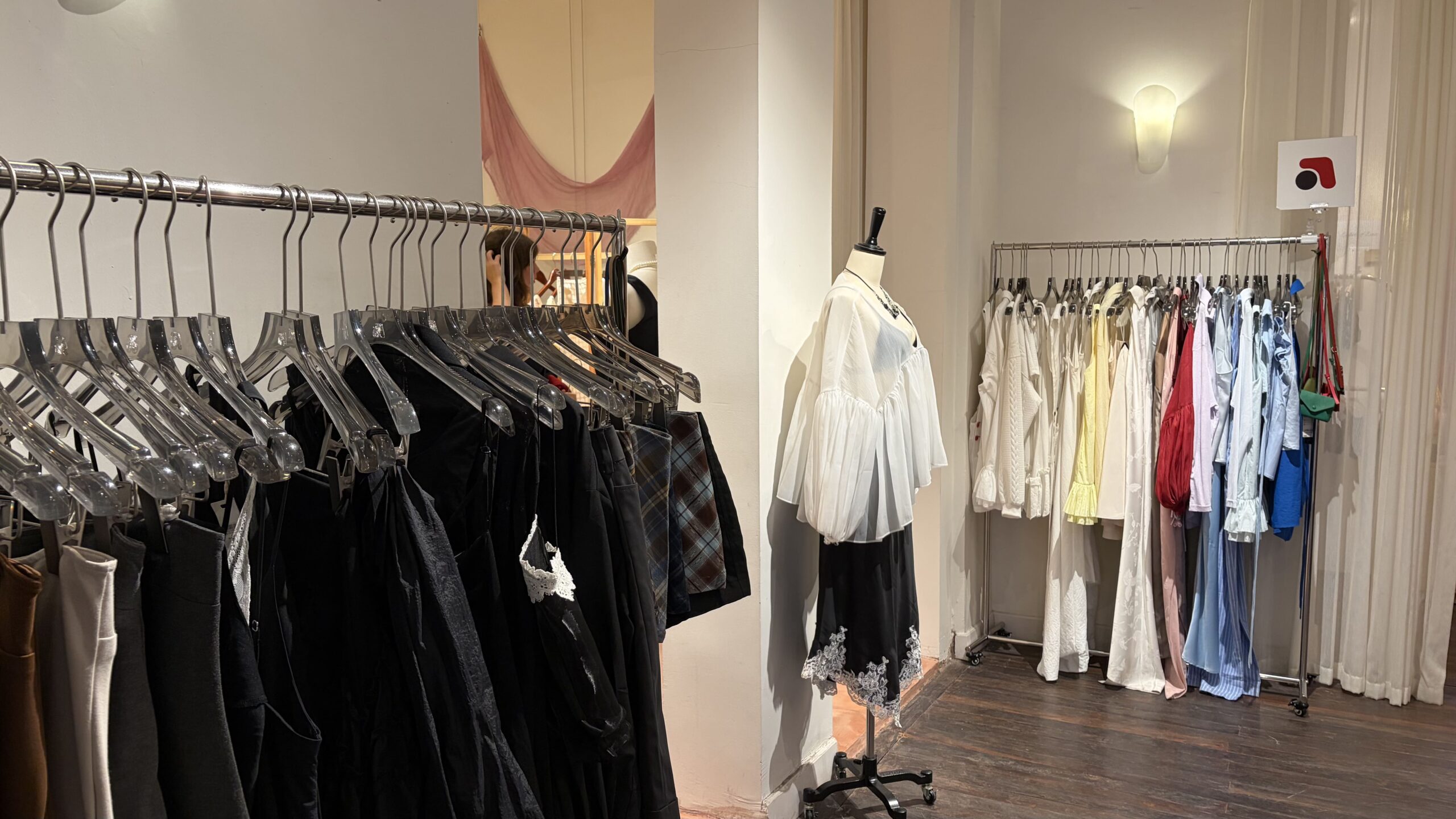
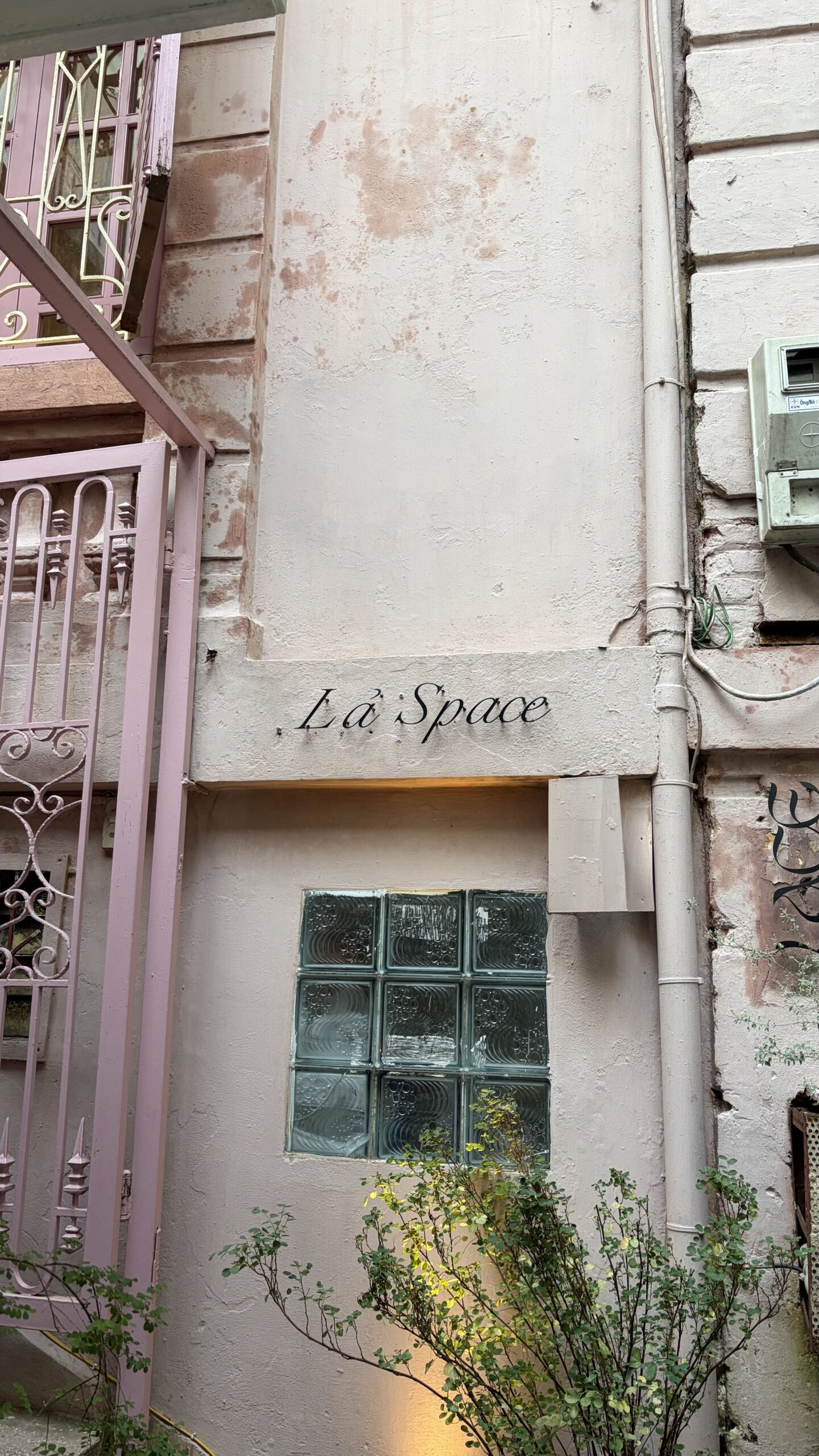
The way they sell is nimble, too. Many new-generation brands don't have their own brand websites; they complete sales through a combination of posting on Instagram, the online mall Shopee, and select shops around town. Because they can launch without holding large inventory or running their own e-commerce, young designers keep entering the scene one after another, and the whole scene's base has widened all at once. What symbolizes this "local supporting local" ecosystem is the sight of multiple brands sharing space in a Hanoi select shop.

Reading the growth through examples: new-generation brands on the rise
So what kind of brands is this tailwind actually producing? Over the past few years, new-generation brands with hundreds of thousands of followers on social media have emerged one after another. Let's start by lining up the leading names whose scale is easy to grasp.
| Brand | Base | Style | IG followers | Characteristics |
|---|---|---|---|---|
| Fancì Club | Ho Chi Minh City | Designer labels like corsets | About 486,000 | Born from secondhand-clothing upcycling. Went global after being worn by overseas celebrities |
| She by Shi | Ho Chi Minh City | Women's casual and girly | About 466,000 | Affordable ”city girl” clothes. Own online store plus cross-border shipping |
| Nhà kho Liti | Ho Chi Minh City | Korean-style trends | about 230,000 | Mid-price, Instagram-driven |
| Ssstutter | Hanoi / Ho Chi Minh City | Men's minimal | About 209,000 | Smart casual for men |
*Follower counts are the figures published on Instagram as of July 2026 (you can jump to each account from the brand name). In addition, expanding its support among younger audiences with a basic, everyday line is usthebasic and others are said to be at the 200,000-follower level.
Brands with hundreds of thousands of followers, born on social media
She by Shi(Ho Chi Minh City) is a leading example that captured the ”city girl” segment with affordable women's casualwear in vivid colors and patterns. It has its own e-commerce site and handles cross-border shipping.Nhà kho Liti(Ho Chi Minh City) was quick to pick up Korean-style trends and, making Instagram its main battleground, gathers mid-price demand from students to young women. The wave isn't only for women. Based in both Hanoi and Ho Chi Minh City,Ssstutterhas drawn over 200,000 followers with minimalist smart-casual menswear, representing the new generation of men's fashion. What they all share is that, rather than being large chains, they've grown fan bases of hundreds of thousands through the power of their social-media presence. For travelers, just remembering these names should sharpen how you see the clothes you spot on the street.
From unknown to the world stage: designer labels breaking out, too
Among the new generation, there are even brands that started on social media yet reached the world stage.Fancì Clubis an Instagram-native brand that started from upcycling secondhand clothes, launched in 2018 under founder Duy Tran. Its bold corset and cut-out designs were worn by overseas celebrities like Bella Hadid and BLACKPINK, earning it international recognition overnight.
There are also cases where a connection with K-POP became a tailwind in itself. Ho Chi Minh City–bornLSEOULreportedly sold out its 2,000-piece stock in about 15 minutes after BLACKPINK's Jennie wore one of its skirts (VnExpress). A Korean star wearing a Vietnamese local brand—it was the moment when this article's central theme, the "connection to K-fashion," translated straight into sales.
And then there is the layer of small makers, each starting from a single name card
By this point, it becomes clear that there are two paths to growth. One is the ”aspiration” path, where a celebrity or K-POP idol wears something and it takes off all at once (LSEOUL and Fancì Club). The other is the ”relatability” path, building empathy through everyday wear. Rather than a clean split into “K-POP is aspiration, Vietnam is relatability,” the fact that both lanes coexist within the same new generation is what gives today's Vietnam its depth.
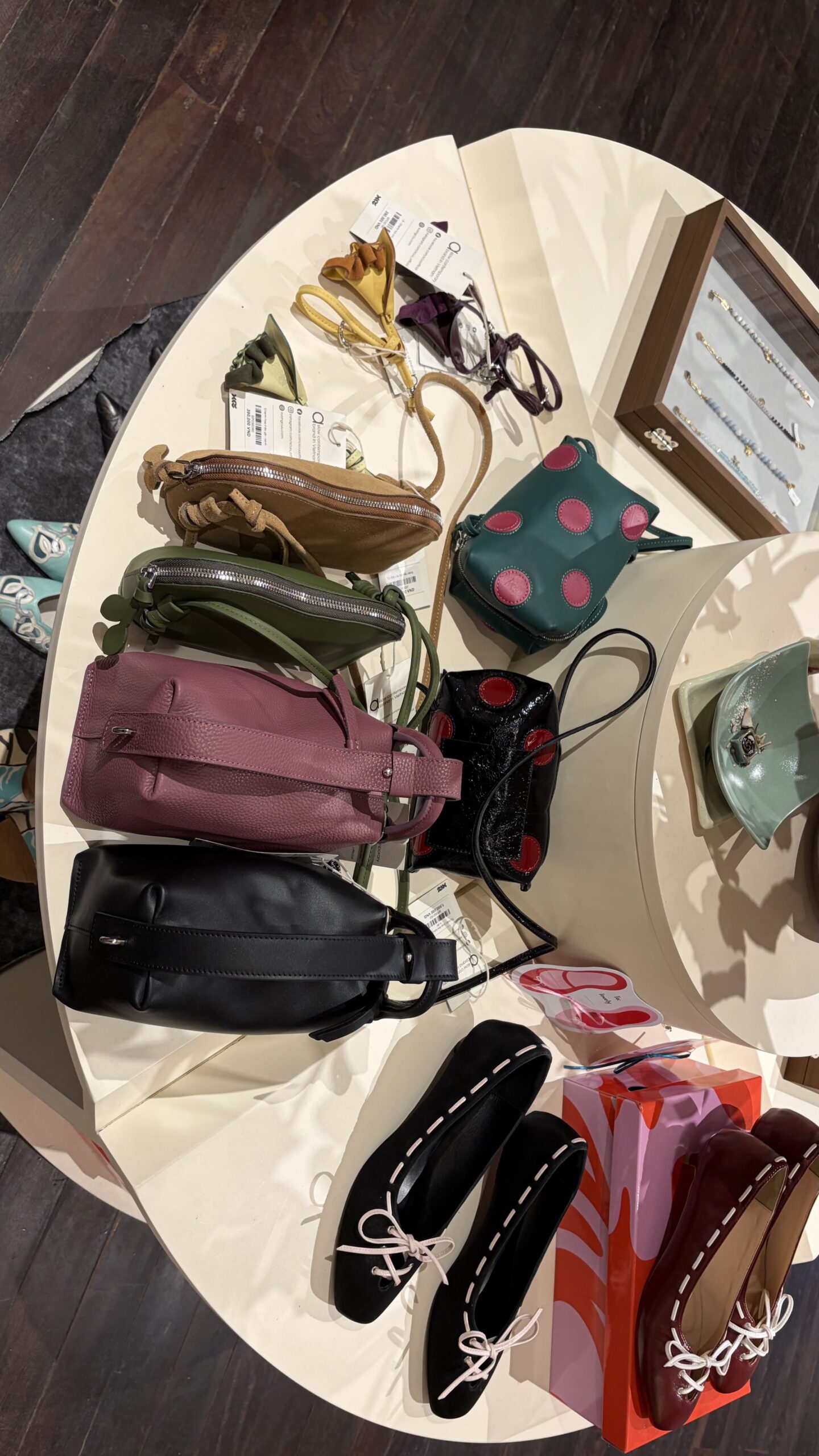
At the foot of that path of familiarity lies a thick layer of even smaller makers. They're the silk-dress and lace-underwear brands that line the shelves of Hanoi's select shops with just a single handwritten name card. This breadth of the base is exactly the soil that will grow the next Fancì Club or LSEOUL. What's happening in those rooms on the ground is covered in detail in a separate reportage article.
What surprised me at the local stores was that they don't handle only clothing. On one shelf were scented body washes, the bottles labeled with names like "Couture House," "Tokyo Hotel," and "Another Dream," and the contents were poured into small glasses with handwritten labels so you could try each one. A dress next to lace lingerie, and next to that, a scent—new-generation brands are selling not so much the clothing itself as a worldview: "what kind of air do you want to wear?" Standing in the store, I felt firsthand that before the big-picture talk of market data and K-fashion, there is this texture of each individual thing.
What comes next, and how travelers can encounter it
As long as these four elements line up—market growth, the K-fashion tailwind, Gen Z's social-media-driven consumption, and a nimble D2C ecosystem—Vietnam's new-generation brands will likely keep multiplying for a while. The challenge is how to survive amid a flood of unknown brands. Because entry is so easy, similar Korean-style designs are everywhere, and brands that only chase trends are easily buried. Against that backdrop, brands built on local materials and handwork such as silk and embroidered lace, or ones with a sharp, distinctive worldview like Fancì Club, are steadily building a deeper base of fans.
If you want to read one step ahead, what deserves attention is "crossing borders." As LSEOUL and Fancì Club have shown, in an era where SNS plus overseas celebrity wear is all it takes, a small Ho Chi Minh City brand can be seen by the world overnight. Along the very same route that K-fashion spread into Southeast Asia, Vietnamese brands are now beginning to travel the opposite way.
If you want to feel this energy while traveling, a select shop that gathers multiple brands is the shortcut. Just peeking into a single room of a concept store in Hanoi or Ho Chi Minh City conveys the current mood of Vietnam all at once. If a brand catches your eye, searching its name on Instagram right there makes it easy to check stock and sizes too.
Frequently asked questions
- Why is Vietnamese fashion drawing attention right now?
-
It is because four factors overlap: market expansion, the tailwind from Korea (K-fashion), Gen Z's purchasing behavior on social media and video, and a D2C ecosystem you can start in without your own website. The environment is set up so that even an unknown individual brand can gather fans in a short time.
- What kind of designs do the new-generation Vietnamese brands have?
-
The mainstream is a "street × minimal" look influenced by Korean fashion, with plenty of relaxed silhouettes and muted colors. Brands that make the most of local materials and craftsmanship—like silk and embroidered lace—are also on the rise.
- Where can I see the real thing?
-
Since each brand often does not have its own storefront, select shops that gather multiple brands are efficient. At concept stores in Hanoi or Ho Chi Minh City, searching a name that catches your eye on Instagram right there makes it easier to check stock and sizes.
- What's the price range like?
-
A dress runs roughly 1,000,000–1,500,000 VND (about 6,000–9,000 yen) as a guide. Hand-sewn or silk pieces that take more work tend to be a bit pricier. Prices shift with exchange rates, timing, and collections, so treat these as approximate.