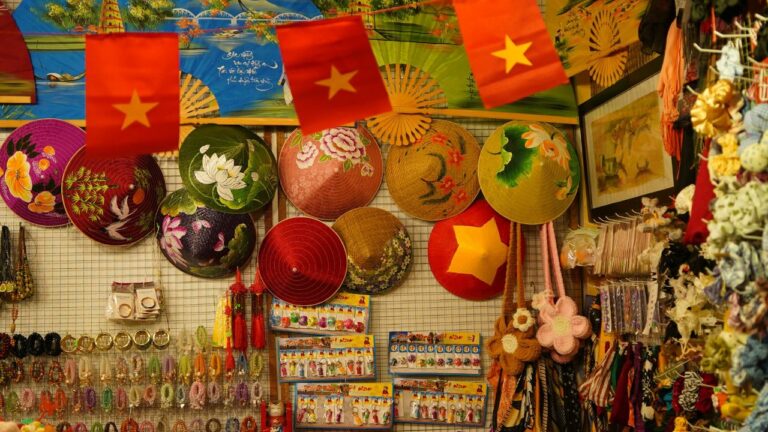
The people driving Vietnamese fashion are the young generation now around their 20s—the so-called Gen Z. Once you understand what criteria they use to choose clothes and how they buy, you start to see why unknown local brands keep gathering fans one after another. This article digs into Vietnamese apparel not from the "making" side but from the "buying" side.
To give the big picture first, Vietnamese Gen Z consumption has three traits: ① they choose by "whether it fits my values" rather than by brand fame, ② they buy directly from videos on their phones, and ③ admiration for the overseas and pride in their own country coexist. Let's look at these three in order.
First, what kind of demographic is Vietnam's Gen Z?
Vietnam is a particularly young country even within Southeast Asia, with its population centered on younger age groups. They are digital natives for whom smartphones and social media have been a given since birth, and their disposable income has grown alongside economic growth. "A young generation with money to spend, connected on social media around the clock"—this combination is the foundation of fashion consumption.
| Indicator | Rough benchmark | Source / notes |
|---|---|---|
| Gen Z population | About 13 million (roughly 20% of the total population) | Born 1997–2012. Friedrich Naumann Foundation / PwC |
| Young population | Over 40% of the population is under 30 | An especially young country even within Southeast Asia |
| Social media users | About 72.7 million (January 2024) | DataReportal "Digital 2024: Vietnam" |
| Major social platforms | Facebook ~72.7 million / TikTok ~67.72 million / Instagram ~10.9 million | Same as above. TikTok and FB dominate, while IG is relatively small |
The details of the figures vary from survey to survey, but what can be said in common is that the “young, digital, broadcasting generation” is the volume zone. What's more, they are expected to make up around 30 percent of the labor force by 2025, and they are increasingly becoming the side that ”holds the wallet.” A thick layer of people who combine youth, digital fluency, and disposable income—this single point alone explains why fashion in Vietnam moves so easily.
What you can’t overlook is what’s inside that digital world. Even among social-media powerhouses, Vietnam has far fewer Instagram users than Facebook or TikTok. Rather than the photo-friendly IG, it’s video-and-live TikTok and community-driven Facebook that sit at the center of daily life. Get this wrong, and you misread ”where to post to actually reach young people.”
① The yardstick for choosing is "resonance" over "fame"
For Vietnam's Gen Z, fashion is the most familiar way to express "who they are." Rather than choosing something because it is a famous brand or because it is expensive, as in the past, they use "does it fit my values?" as their yardstick. If they can relate to a brand's worldview and the maker's attitude, they will pick it up without hesitation, even if it is unknown.
The market research firm Cimigo points out that Vietnam's Gen Z “does not take a company's official line at face value, and values third-party reviews and the words of trusted communicators.” The feeling is that trust arises not from ”what a brand says about itself” but from ”what others say about it.” That is exactly why small brands, where real voices accumulate on social media, are strong.
Another thing working in their favor is “closeness.” Many of the new-generation brands were launched by ”ordinary individuals” who started from reselling secondhand clothes or from a neighborhood tailor shop. The maker's face is visible, and the way they present themselves does not pick and choose by body type or age. Messages like orié baie's “It is not your body type but the confidence to wear the clothes you love that is beautiful” and Label of Lace's “comfortable regardless of body type” create the relatability of “clothes I can wear myself” rather than “aspirational clothes a model wears.” This short distance connects empathy directly to purchase.
On the other hand, the much-touted “sustainability mindset” is best taken with a grain of salt. Numbers like “90% of Gen Z choose eco-conscious brands” come from global-scale surveys, not from Vietnam alone. Vietnamese studies, too, only deal with purchase ”intent,” not actual buying behavior. Worldwide as well, Gen Z is the biggest buyer of fast fashion, and there’s a gap between ”what people say” and ”what they buy.” What actually opens wallets is still price, trends, and the social proof of “is everyone saying it’s good?” Sustainability may serve as an ”add-on” reason to choose, but it isn’t the lead role yet.
| Selection criteria | Recognition and price → "Does it match my values?" |
|---|---|
| What resonates | Big-name advertising → worldview, the maker's face, and a sense of closeness |
| Relatability | “Ordinary individuals” posting → “I could wear that too” |
| Sustainable | is talked about, but actual purchases prioritize price, trends, and social proof |
| Domestic brands | If it resonates, they'll back it without hesitation, even if it's unknown |
(2) The way people buy has changed—buying on the spot, from videos on their phones
What has changed just as much as how they choose is how they buy. Vietnam's Gen Z follows fashion daily on Facebook, Instagram, and TikTok, buying clothes they spot in videos straight from the link. Not "try it on in a store first," but "spot it and buy instantly" has become the norm.
That stage isn't only Instagram. In Vietnam, if anything, Facebook and the video platform TikTok sit at the center of daily life. The flow of buying directly from videos and live streams on shopping malls like Shopee and TikTok Shop spread rapidly all at once.
| Indicator | 2024 level | Source / notes |
|---|---|---|
| Transaction volume across the four major malls | About 13.8 billion USD, up 40% year over year | YouNet ECI (Shopee / Lazada / TikTok Shop / Tiki) |
| TikTok Shop | About 3.8 billion USD, roughly 27% share | Surging as the star of discovery-driven commerce |
| Largest category | Fashion and accessories lead in transaction value | About 23.4 trillion VND in Q1 2024 (across the four malls / YouNet ECI) |
Not searching and then buying, but "spotting it in a video or livestream and buying on the spot"—so-called shoppertainment—is especially strong in fashion. Instagram works as a place to show a brand's worldview, but what actually moves the numbers is TikTok and Shopee. That's a defining trait of Vietnam.
Live-stream selling has particular momentum. Live commerce, where hosts sell while demonstrating, pairs well with fashion, and during major sales there are even moments when a single stream draws hundreds of thousands of orders (YouNet ECI reporting; note that this is a peak-time example, not a daily average). The sense of "TV shopping on your phone, and interactive at that" has become the entry point to shopping for the young generation.
This "video → instant purchase" flow became a decisive boost for small brands without large inventories or physical stores. Even with just Instagram DMs and the Shopee marketplace, they can deliver clothes to fans numbering in the tens of thousands.
For travelers, this is actually good news. Even for clothing you spot around town and take a liking to, searching the store name or tag on your phone will often lead you to the account or online shop. If you go along with the local way of buying—"don't buy on the spot, buy later from your phone"—you can take home what you're after without adding to your luggage.
③ "Korean-ness" and "national pride" coexist
The wardrobe of Vietnam’s Gen Z is heavily shaded by Korean fashion. Built around “street × minimal,” the relaxed silhouettes and muted color palettes of K-pop idols have been widely embraced. The ”Korean sense of beauty” laid down by K-POP and K-beauty has become the foundation of everyday styling.
What's interesting is that this admiration coexists, without contradiction, with a "pride in wearing domestic brands." Even when the taste is Korean-style, in many cases what people actually choose are local brands from Ho Chi Minh City or Hanoi. Taking in overseas trends while remaking them with their own hands—this two-layer structure gives Vietnam's local brands their depth.
In the streetwear field, this “borrow it, then remake it” comes through even more clearly. While building on the grammar of American and Korean streetwear as a foundation, they layer on motifs from Vietnamese and Asian culture, local slang, and graphics. Precisely because merely tracing overseas templates leaves you buried, how you mix in ”your own identity” has become the dividing line for brands that survive.
What the brands chosen by Gen Z have in common
So what kinds of brands are actually winning Gen Z's support? Though the types differ, what they share is that they "tell a worldview on social media and grow their fans through empathy."
- She by Shi(Ho Chi Minh City) | Affordable women’s casual wear in vivid colors and prints. Everyday clothes for the ”city girl” crowd
- Nhà kho Liti(Ho Chi Minh City) | Mid-price, quick to pick up Korean-style trends
- usthebasic(Ho Chi Minh City) | a basics-oriented line that has spread among students and young people
The street-leaning segment is deep, too. Named "Most Loved Youth Fashion Brand" at a youth awardsDirtyCoins, touting proprietary fabrics,Levents, bringing Vietnamese and Asian cultural elements into streetwearDegreyand others—homegrown street brands have taken root as everyday wear for Gen Z. The men's D2C brandCoolmate, there are also examples like this that grew through functionality and an online-only model.
What we don't want to overlook here is that there are two paths to growth. One is the ”relatability” path, building empathy through everyday wear. The other is the ”aspiration” path, becoming known all at once because an overseas celebrity or K-POP idol wore it. LSEOUL, whose skirt Jennie wore, and Fancì Club, which Bella Hadid and others wore, are the latter, and these took off through the same “clothes a star wears” structure as K-POP. In other words, it does not split cleanly into “K-POP is aspiration, Vietnam is relatability”; within the same new generation of Vietnam, a layer that spreads through relatability and a layer that takes off through aspiration coexist. Seen through these two layers, the depth of the scene comes into view more three-dimensionally.
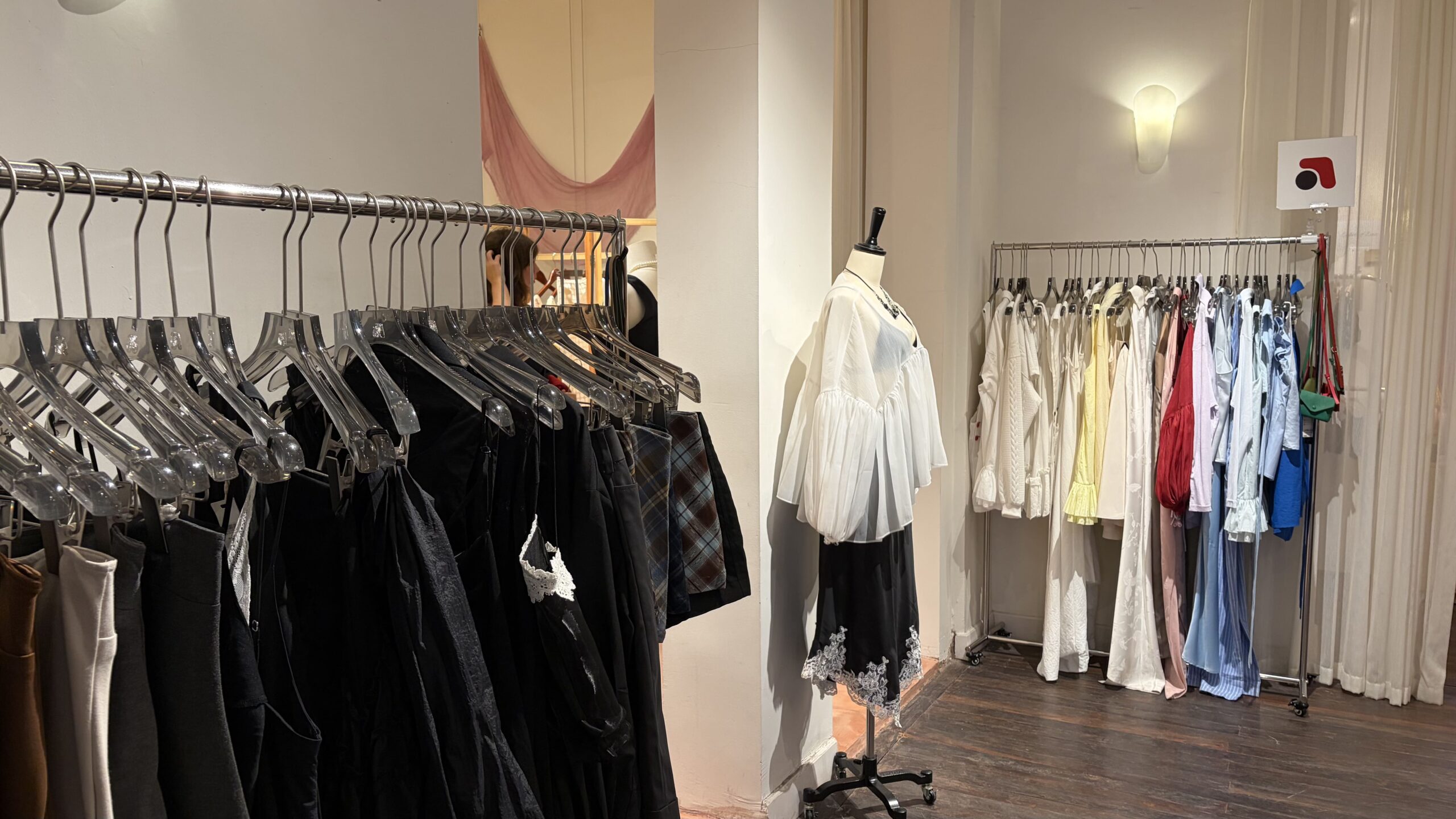
It is the same for even smaller brands, the kind that start from a single handwritten name card. They carefully make silk dresses and lace lingerie for a small number of fans who relate to them. This accumulation becomes the soil that grows the next hit brand. The full picture of new-generation brands and the scene on the ground in Hanoi are covered in a separate article.
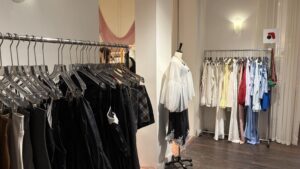
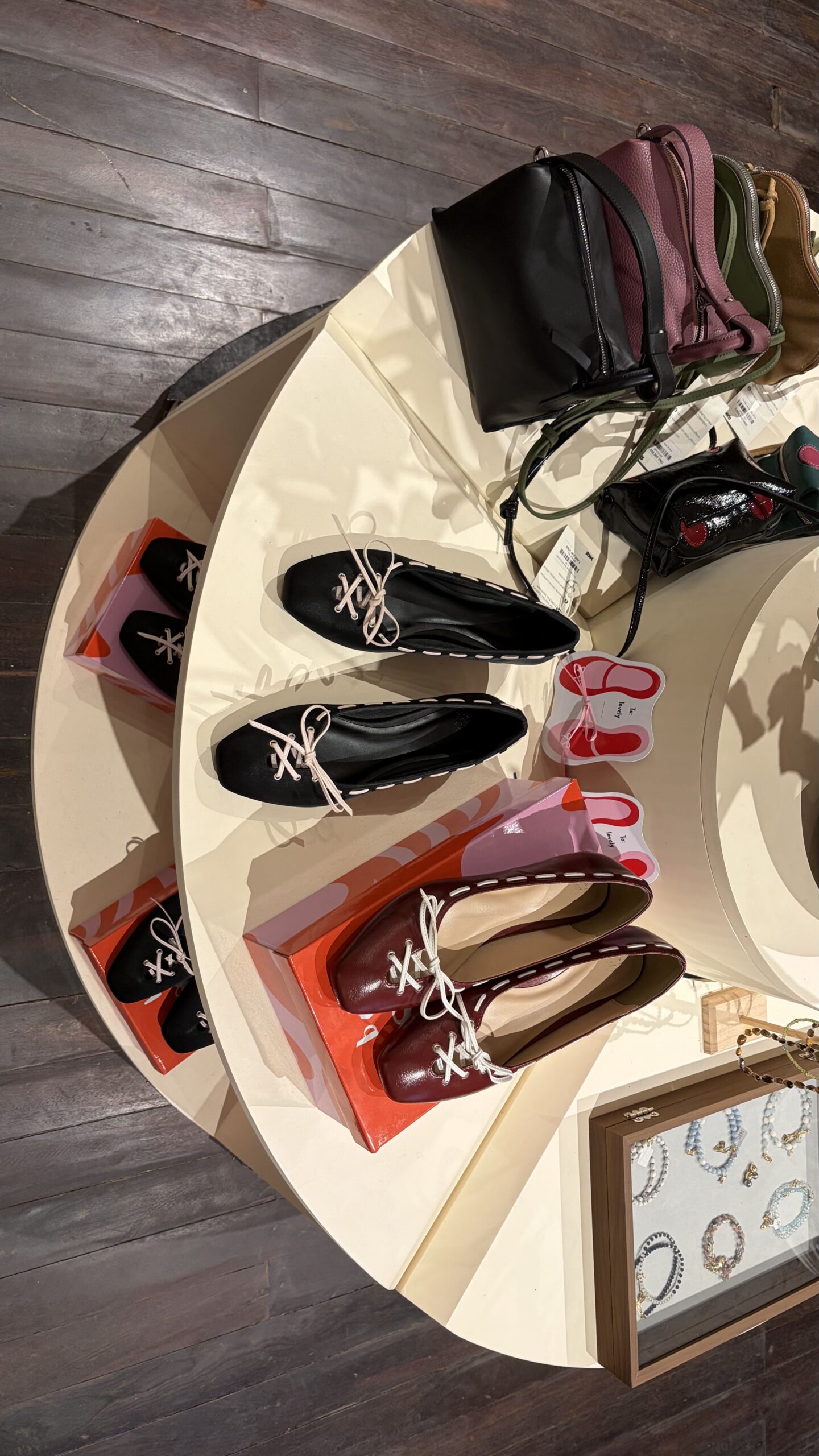
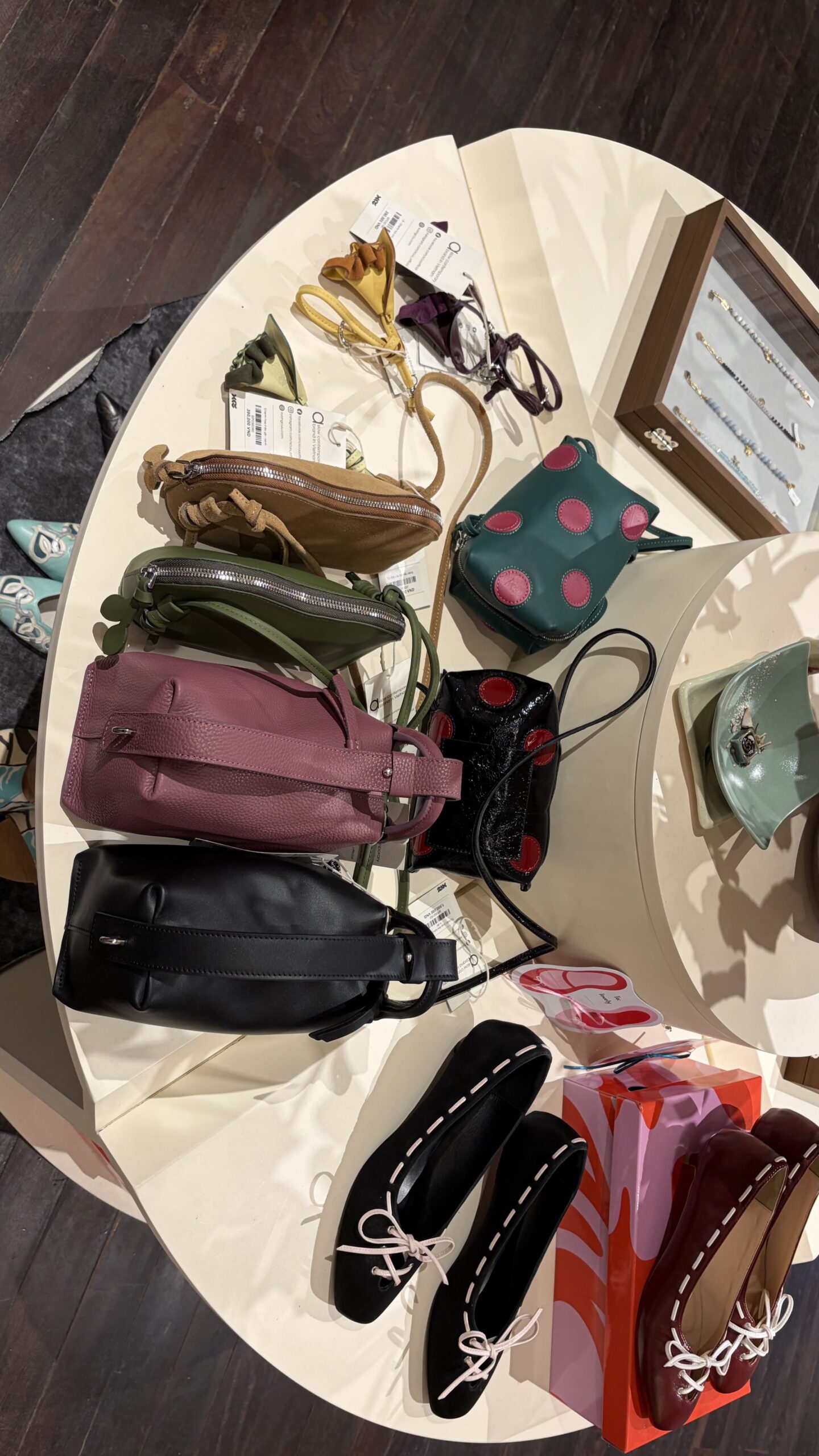
When I picked up a pair of shoes in the shop, I noticed "To: lovely" printed on the price tag. Buying as if giving a gift to yourself—that kind of air clings to each and every item. Vietnam's young buyers aren't so much buying clothes because they need them as buying to get closer to the "self they want to be" or the "worldview they love." That's why relatability matters more than price or fame. The reason small brands with no ad budget reach tens of thousands of people is, I felt, that they've skillfully attuned themselves to this sense of choosing a "gift to oneself."
Travelers, borrow this generation's perspective and your shopping changes
Knowing how this generation chooses makes shopping in Vietnam a notch more interesting. Rather than chasing overseas brands at famous malls, searching for local young brands on TikTok and Instagram and touching the real thing at select shops gets you closer to the current mood of Vietnam. Even if you can't buy a brand you like on the spot, following its account keeps you connected via online shopping after you return home.
Incidentally, from the maker's side, the key to this market is the same. What reaches Vietnam's Gen Z isn't the sheer volume of advertising but "resonance with values" and "storytelling on social media," and even without fame, a brand with a clearly defined worldview gets chosen. For small makers who can't rely on big-brand volume, the way this generation chooses is the biggest boost of all.
Frequently asked questions
- By what criteria does Vietnam's Gen Z choose clothing?
-
There's a strong tendency to prioritize "whether it matches my values" over a brand's recognition or price, and if they can relate to the worldview or the maker's stance, they'll choose even an unknown brand. Interest in sustainable materials and handwork is also high.
- Where do you buy your clothes?
-
The mainstream is "discover it on video and buy it instantly"—buying clothes you find on Instagram, TikTok, or Facebook straight through a link, a direct message, or the Shopee marketplace. Many brands have no physical store, and social media has effectively become their sales floor.
- Why are homegrown local brands more popular than overseas brands?
-
More and more cases go like this: the taste is influenced by Korean fashion, but what they actually choose is a local brand they can relate to. A movement to remake overseas trends with their own hands shows up as pride in homegrown brands.
- How can travelers get in touch with local young brands?
-
The shortcut is to search a brand name that catches your interest on TikTok or Instagram, then see the real thing at a select shop that gathers several brands. At a concept store in Hanoi or Ho Chi Minh City, you can take in the current mood all at once.