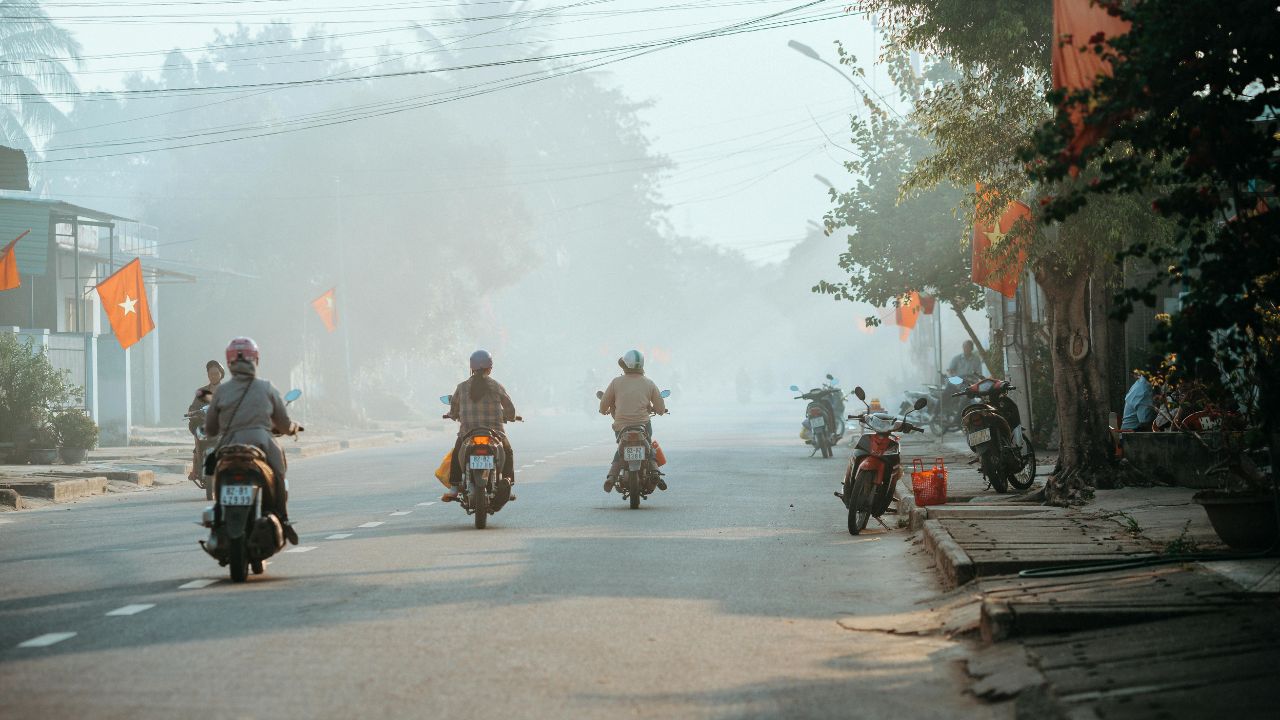
Da Lat is a town of flowers and cool retreats spread across the Central Highlands of Vietnam at an elevation of about 1,500 m. Cool year-round, it's dotted with villa architecture from the French colonial period, lakes, flower fields, and waterfalls. With many Instagrammable cafés and strawberry farms, it's gaining popularity as a highland resort. This page brings together everything from an overview of the town to how to get around, classic spots, model courses, food, souvenirs, and the latest topics, guiding you to individual articles on cafés, news, and souvenirs.
| Location | Lam Dong Province, Central Highlands |
|---|---|
| Elevation | About 1,500 m |
| Best season | December–March |
| Suggested days | 2 days |
| Language | Vietnamese (English also understood in tourist areas) |
| Currency | Vietnamese dong (VND) |
| Time difference from Japan | -2 hours |
What kind of town is Da Lat
Da Lat is the provincial capital of Lam Dong Province, a highland city located at an elevation of about 1,500 m. With an average annual temperature of 18–22°C, it's cool year-round and has been called the "Paris of the East" as a summer retreat since the French colonial era. Known as Vietnam's largest Arabica coffee-growing region, distinctive coffee roasteries are scattered throughout the city and its outskirts. Rich in original tourist assets like the Crazy House and Tuyen Lam Lake, it is also the No. 1 honeymoon destination for Vietnamese people. Da Lat's townscape is dotted with mountain-villa architecture from the French colonial era—Europe's summer retreats themselves. Centered on Tuyen Lam Lake, the Han Market, Da Lat Station (a preserved station building of French architecture), and a romantic atmosphere where French and Vietnamese cultures intersect are the town's appeal. The outskirts spread with large-scale flower farms exceeding 1,500 hectares, coffee plantations, and greenhouse strawberry farms—Vietnam's largest highland agricultural zone. On weekends it bustles with honeymooners and couples from Ho Chi Minh City, and the lakeside horse-drawn carriages and swan boats are an iconic tourist experience.
Access to Da Lat and getting around
[Important] Da Lat's airport is currently closed for renovation work.Lien Khuong Airport (Liên Khương / DLI)has suspended all flights since March 4, 2026, andis scheduled to reopen on August 19, 2026(though this depends on regulatory approval and could change). The runway is undergoing a full renovation at a total cost of 1,032 billion dong. Once finished, the runway will measure 3,250m by 45m.
In other words,if you're heading to Da Lat right now, traveling overland is the only realistic option. Be sure to check the airline's official website for flight status before you travel.
Once the airport reopens (planned for after August 19, 2026)
reports indicate Vietjet plans to operate 5 routes with 49 round trips a week (Hanoi 28, Ho Chi Minh City 7, Vinh 7, Hai Phong 4, Da Nang 3), while Vietnam Airlines plans 3 routes with 42 round trips a week (Hanoi, Ho Chi Minh City, Da Nang) — 91 round trips a week combined. The only international route will be to Kuala Lumpur, andthere are no direct flights from Japan。
| Airport location | About 30km south of Da Lat city (elevation 962m) |
|---|---|
| Airport to city: shuttle bus | Around 50,000 dong / about 1 hour. Terminates near Da Lat Market or the bus terminal |
| Airport to city: taxi | 250,000–300,000 dong / about 40 minutes (plus a 10,000–15,000 dong airport exit fee) |
Traveling overland — the realistic route for now
| Departure point | Means | Duration | Fare guide |
|---|---|---|---|
| Ho Chi Minh City | Sleeper bus (about 300km) | 6–9 hours | 250,000–500,000 dong. Overnight buses mostly depart between 8:00 PM and 11:00 PM |
| Nha Trang | Bus / shared van (135–158km) | 3 to 4 hours | 180,000–600,000 dong. Around 230,000 dong for a limousine van |
| Cam Ranh Airport (CXR) | Car / van | 3 to 4 hours | A strong alternative while the airport is closed |
The main bus operators include Phương Trang (Futa), An Anh Limousine, Diễn Linh, and Kumho Samco.Da Lat has no mainline railway(the Da Lat train station in town runs only a short scenic line). The nearest mainline station is Nha Trang, from which you'd travel about 134km overland.
Also,an expressway connecting Ho Chi Minh City and Da Lat is under construction. The Tan Phu–Bao Loc section (66km) broke ground in December 2025 and is due to finish by the end of 2027. Once the whole route opens, the trip is expected to shrink from over 6 hours to about 3, butas of August 2026 it has not yet opened。
Getting around town
Central Da Lat — around the Hoa Binh district, Xuan Huong Lake, and the night market —is walkable. That said, Da Lat is a highland town andhas a lot of hills, so wear comfortable walking shoes. Waterfalls, temples, tea plantations, and Lang Biang Mountain are all outside the city center, so you'll need a car or motorbike to reach them.
| Grab (motorbike) | 12,000 dong per km for the first 2km, then 4,000 dong per km after that. Surcharge applies from 11 PM to 6 AM |
|---|---|
| Grab (car, 4-seater) | 25,000 dong for the first 2km, then 11,500 dong per km after that |
| Motorbike rental | 80,000–150,000 dong a day. However, Japanese international driving permits aren't valid here, so it's best to avoid driving yourself |
| Taxi | Mai Linh, Lado, Thắng Lợi, and others |
* Vietnam is a signatory to the Vienna Convention, so international driving permits issued in Japan (under the Geneva Convention) are not valid there.Riding a rental motorbike would count as driving without a valid license, so we don't recommend it. Use Grab or a taxi instead.
Da Lat's classic sightseeing spots
We've summed up the representative spots in a quick-reference table. Use it as a guide when planning your route.
| Spot | Notes |
|---|---|
| Crazy House (Hang Nga Guesthouse) | Fairy-tale organic architecture |
| Xuan Huong Lake | A man-made lake in the center |
| Linh Phuoc Pagoda | A vividly colored temple of glass and ceramic shards |
| Datanla Falls | Waterfalls you descend by coaster |
| Prenn Falls | A wide waterfall on the outskirts |
| Flower fields (such as Mai Anh Flower Garden) | Large-scale highland flower gardens |
| Da Lat Old Station | A retro preserved station building |
Crazy House (Hang Nga Guesthouse)
An organic building begun in 1990 by architect Dang Viet Nga, with almost no right angles. Passageways and stairs shaped like tree trunks, caves, mushrooms, and spiderwebs intertwine intricately, and from the rooftop terrace and suspension bridges you can survey the pine forest and Da Lat's townscape. Built on the theme of coexistence with nature, walking through its maze-like interior is itself a highlight. It's about 5–10 minutes by car from the center; to avoid crowds, the morning right after opening is the easiest time to move around.
Xuan Huong Lake
A crescent-shaped man-made lake in the center of the city, with a lakeside promenade that's a standard course for walking and jogging. Riding a duck-shaped swan boat, you can view the pine forest and townscape from the water. Going around the lake is several kilometers and takes time to walk, so it's recommended to narrow down your aim and enjoy it. Early morning with mist and dusk when the sky takes on color are the photogenic times.
Linh Phuoc Pagoda
A temple begun in 1949 and completed in 1953, with walls, pillars, and balustrades covered in fragments of ceramics and glass bottles—also nicknamed the "Bottle Temple." The biggest highlight is a 49-meter-long giant dragon sculpture made using discarded beer bottles and the like, whose intricacy is overwhelming. Several impressive structures, such as a tall bell tower and a giant Buddha statue, are dotted around the grounds. It's about 15–20 minutes by car east of the center, and since the grounds are large, visiting in walkable shoes is reassuring.
Datanla Falls
A seven-tiered waterfall embraced by pine forest along the Prenn Pass, about 5 kilometers from the center. The biggest appeal is the alpine coaster, whose speed you can control yourself, gliding down about 1 kilometer of rails through the forest toward the falls. You can also descend the stairs on foot to see the falls up close. The coaster is very popular, so to avoid wait times, the early morning is the easiest time to move around.
Prenn Falls
A wide waterfall on the south side of the city, a few kilometers from Datanla Falls, with a promenade that lets you walk around behind the falls to view them. The surroundings are maintained as a park, where you can stroll leisurely amid the greenery. Since it's near Datanla Falls, combining the two as a waterfall tour is efficient. In the rainy season the water volume increases and the power grows, so its character changes with the seasons.
Flower fields (such as Mai Anh Flower Garden)
Taking advantage of the cool highland climate, Da Lat is dotted with large-scale flower gardens gathering roses, hydrangeas, and more, where you can enjoy a variety of flowers at once across spacious grounds including greenhouses. The colorful flower fields are popular as photo spots. Since they're large, checking the garden map before walking makes it easier to get around. The best viewing times differ by variety, so looking up peak-bloom information before your visit will boost your satisfaction.
Da Lat Old Station
Characterized by an Art Deco triangular roof, it's one of Vietnam's oldest railway stations, and the retro station building itself is a photo spot. Within the grounds are preserved old-type rail cars, and a short tourist train runs toward nearby Trai Mat. It's close to the center, easy to drop by between town walks. The train operating hours are limited, so if you're thinking of riding, checking the times in advance is reassuring.
Da Lat model courses
Da Lat's sights aregrouped into four clusters. Knowing this layout will cut down on wasted travel time.
- City center: Xuan Huong Lake, flower gardens, the night market, Lam Vien Square, and the Crazy House (half a day)
- Northeast: Da Lat Station → sightseeing train to Trai Mat → Linh Phuoc Pagoda (round trip takes 2–2.5 hours)
- Southwest: Datanla Falls → Robin Hill cable car → Truc Lam Zen Monastery → Tuyen Lam Lake (a half-day loop)
- Farther out: Lang Biang Mountain (north) and the Cau Dat tea plantations (23–25km southeast) areon opposite sides of the city. Doing both in one day isn't realistic
If you only have one day
In the morning, head to Da Lat Station.the 9:50 AM sightseeing traintakes you on a 30-minute ride to Trai Mat, known for its colorful glass mosaics atLinh Phuoc Pagoda, which you can visit. You'll be back at the station by around 11:25 AM.
* This trainsometimes gets canceled if it doesn't reach the minimum number of passengers, so the 9:50 AM departure is the most reliable. Linh Phuoc Pagoda closes at 5:00 PM.
After lunch,the Crazy House(80,000 dong, 8:30 AM–7:00 PM). In the afternoon,Datanla Fallsyou can enjoy the alpine coaster there (250,000 dong round trip), watch the sunset over Xuan Huong Lake in the evening, and finish the night at the market.
If you have two days
| Day 1 | Northeast cluster (Da Lat Station → Trai Mat → Linh Phuoc Pagoda) + city center |
|---|---|
| Day 2 | Morning: Robin Hill cable car → Truc Lam Zen Monastery (free admission) → Tuyen Lam Lake / Afternoon: Datanla Falls |
If you have three days
On day three,Lang Biang Mountain(50,000 dong admission, 300,000 dong per jeep for 5–6 people), orthe Cau Dat tea plantations early in the morning(best between 7 and 9 AM) — pick one. As noted earlier, these two are on opposite sides of the city, so you can't fit both into the same day. If you're the active type, swapping in canyoning at Datanla Falls (a full-day activity) is also a good option.
Tips for getting around
- It rains in the afternoon during the rainy season, so schedule waterfalls, tea plantations, and Lang Biang for the morning
- The Da Lat cable car is closed for a lunch break (11:30 AM–1:00 PM), and reportedly closed all day Thursday for maintenance. Check before you visit
- The sightseeing train to Trai Mat —the 9:50 AM departure is the most reliable
- Since it's a hilly city, choose your footwear carefully on days you'll be walking
Da Lat's food and specialties
We've put the local flavors worth savoring in Da Lat into a table.
| Dish | Characteristics |
|---|---|
| Bánh mì xíu mại (Banh Mi Xiu Mai) | A morning staple in Da Lat, you savor meatballs unique to this region that don't use tomato sauce, soup and all, dipping a baguette in to eat. Widely enjoyed at street stalls and eateries, the warm soup soaks in on a cold highland morning. |
| Bánh tráng nướng (grilled rice paper) | A street snack said to have originated in Da Lat, with egg, scallions, dried shrimp, and the like placed on rice paper and grilled over charcoal. Also called "Vietnamese pizza," eating it fresh off the grill at the night market is the standard way to enjoy it. |
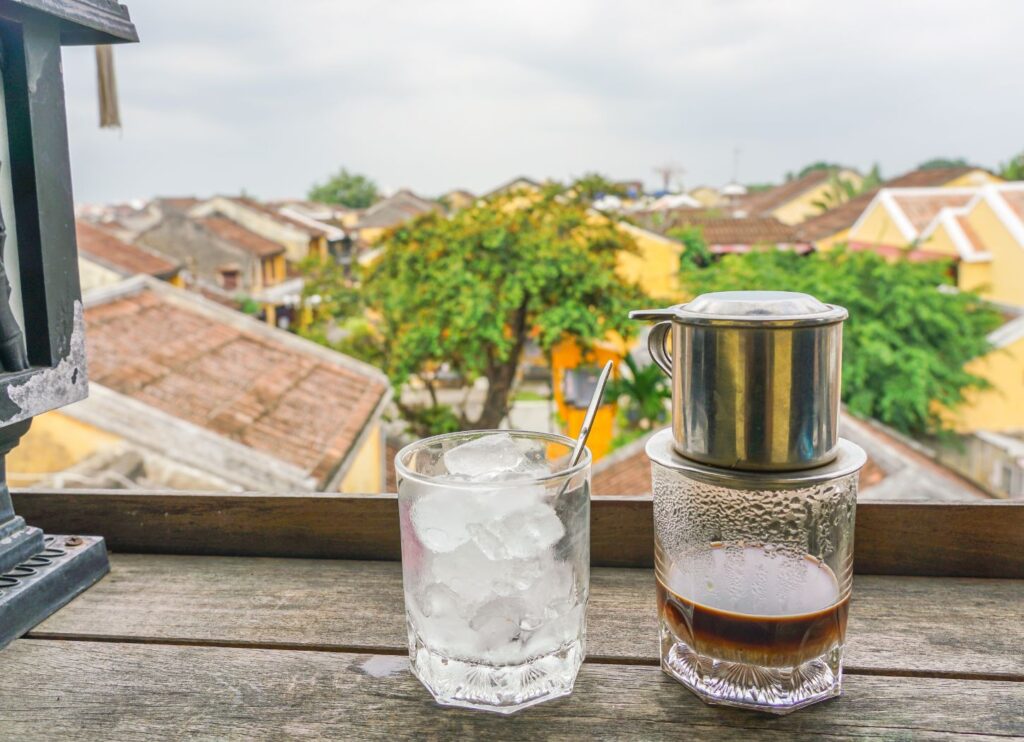
| Arabica coffee | Known as a producing area for Arabica that takes advantage of the cool highland climate, the city is dotted with cafés with good views. Savoring a freshly brewed cup alongside the pine forest scenery is a Da Lat-like way to spend time. |
| Highland vegetables | Fresh leafy vegetables and artichokes grown by taking advantage of the cool climate are specialties, and you can enjoy seasonal flavors at markets and eateries. Often used in hot pots and soups, they're a presence that supports the local table. |
| Strawberries | Blessed with a climate of large temperature swings and fertile soil, it's known as Vietnam's foremost strawberry-producing region. At farms on the outskirts you can try picking, and processed goods like jam and dried fruit are popular as souvenirs too. |
Da Lat's cafés
We've put the cafés worth dropping by in Da Lat into a table (from the shop name to individual pages).
| Shop name | Genre | Characteristics |
|---|---|---|
| MIYAEN | Matcha | A matcha latte made with Vietnamese matcha from Bao Loc |
| Phê La | Tea | A tea-led café using oolong from Da Lat. Milk tea is the mainstay |
| Trung Nguyên Legend | Coffee | Vietnam's biggest coffee brand. Serves weasel coffee and the G7 blend |
| Là Việt Coffee | Coffee | A Da Lat roastery. Arabica brewed pour-over |
| Starbucks Vietnam | Coffee | Has a phin coconut latte sold only in Vietnam |
Souvenirs to buy in Da Lat
Da Lat isknown for its highland produce and coffee, which make up the bulk of its souvenirs. Many of these can't be found in other Vietnamese cities, making it one of the most enjoyable places to shop for gifts.
"Dried persimmons" made using a method brought over from Japan
It's not widely known, but Da Lat'sdried persimmons (hồng treo gió)isare made using a technique introduced from Japan's dried-persimmon method. They're dried naturally in sunlight and wind over about four weeks. They're produced in areas such as Cau Dat, Trạm Hành, and Xuân Trường. Since the taste is close to the Japanese version, they make a safe gift for almost anyone.
| Dried persimmons (Japanese-style) | 280,000–320,000 dong for a 500g box; sold by weight, 150,000–500,000 dong per kg |
|---|
| Item | Price guide | Notes |
|---|---|---|
| Coffee beans (Arabica from Cau Dat) | 180,000–800,000 dong per kg | Cau Dat sits at 1,500m elevation and traces back to a French-era plantation from the 1920s. K'Ho Coffee is a cooperative of K'Ho farmers on Lang Biang Mountain |
| Artichoke tea | 39,000–80,000 dong per bag | A Da Lat specialty. The extract (cao atiso) costs 250,000–500,000 dong per kg |
| Da Lat wine | 750ml from 210,000 dong | Launched in 1999, made by local producer Ladofoods. A 3-liter box wine is also available |
| Jam and candied fruit (mứt) | 70,000–200,000 dong per pack | Workshops cluster along three streets: Phù Đổng Thiên Vương, Mai Anh Đào, and Nguyên Tử Lực |
| Dried fruit and vegetable chips | 40,000–120,000 dong per bag | At places like L'angFarm |
| Fresh strawberries | 40,000–350,000 dong per kg | In season from November to late April |
| Wool sweaters, ethnic minority textiles | To be confirmed | At the market or night market |
Where to buy
| Da Lat Market | On Nguyễn Thị Minh Khai Street. Quality varies, so plan to inspect items yourself |
|---|---|
| Night market (Chợ Âm Phủ) | Same street. Around 5:30 PM–midnight. Busiest between 7 and 10 PM |
| L’angFarm | 6 Nguyễn Thị Minh Khai and other locations. With over 100 items,fixed prices are displayed. This is the safest option for tourists |
Bargaining is the norm at the market, but if you'd rather have clear fixed prices, a chain like L'angFarm is the safer bet.
Da Lat's latest topics
Recent topics related to Da Lat are covered in detail in separate articles.
- A "real Mario Kart" in Da Lat: gravity carts that descend slopes using only the brakes go viral
- Da Lat's giant maze bar "100 Roof Bar": a scenic drinking spot of ladders and crawl-through holes
- Da Lat's double-life café "YAM – ChiangMai"—a café by day, a Thai restaurant by night
Best season, budget, and trip preparation
Da Lat is a highland city at an elevation of 1,513m, andits average annual temperature is 18.0°C. As its nickname "the city of eternal spring" suggests, even at the height of summer the high only reaches around 25°C. Think of it as a completely different climate from Vietnam's beach resorts.
Monthly climate
| Month | High / Low | Rainfall | Rainy days |
|---|---|---|---|
| January | 22.3℃/11.7℃ | 9mm | 2.2 days |
| February | 23.9℃/11.9℃ | 21mm | 2.5 days |
| March | 25.1℃/13.0℃ | 64mm | 5.8 days |
| April | 25.3℃/14.7℃ | 170mm | 12.8 days |
| May | 24.7℃/16.2℃ | 212mm | 20.5 days |
| June | 23.6℃/16.4℃ | 204mm | 21.2 days |
| July | 23.0℃/16.2℃ | 233mm | 23.8 days |
| August | 22.7℃/16.2℃ | 238mm | 23.1 days |
| September | 22.9℃/16.0℃ | 283mm | 24.0 days |
| October | 22.8℃/15.3℃ | 245mm | 20.0 days |
| November | 21.7℃/14.6℃ | 94mm | 11.5 days |
| December | 21.4℃/13.2℃ | 36mm | 5.9 days |
The best months are December–March; avoid August–October
The dry season runs November–April, the rainy season May–October, but the months you can realistically count on for sunny weather areDecember–March. By April, rainfall already reaches 170mm.
On the other hand,the months to avoid are August–October. In September, it rains on 24 days of the month, and sunshine hours hit their annual low (127 hours — about half of March's total). Humidity exceeds 90%, and persistent fog reduces visibility. If your main goal is waterfalls, tea plantations, or Lang Biang Mountain, this is not a good time to go.
Even during the rainy season,mornings tend to be clear, with rain concentrated in the afternoon. If you're visiting during the rainy season, the golden rule is to schedule outdoor plans for the morning.
What to wear — assuming "Vietnam means hot" will leave you regretting it
Da Lat'smornings and evenings get genuinely cold. A long-sleeve shirt or a thin knit is enough during the day, butmornings and evenings call for a fleece, a down vest, or a medium-weight jacket.
especially sincethe dry season brings the widest swings between day and night temperatures. From January to March, there's a 10–12°C gap between day and night. Records show a low of 5.3°C was recorded on January 24, 1974. Compared with coastal Nha Trang, that works out to about 8.8°C cooler on average annually.
Budget guide
| Accommodation type | Approximate cost per night |
|---|---|
| Budget lodging / guesthouses | 350,000–700,000 dong (US$13–27) |
| Mid-range hotel (city center) | US$25–50 |
| 3-star | 800,000–1,800,000 dong |
| 4-star | 900,000–3,500,000 dong |
| 5-star / resort | 1,850,000–4,500,000 dong |
| Pine-forest resort (on Tuyen Lam Lake) | US$80–150 |
| A meal at a local eatery | 40,000–70,000 dong |
|---|---|
| Mid-range restaurant (for two) | About 200,000 dong |
| A cup of specialty coffee | 45,000–70,000 dong |
| A few items at the night market | Under 100,000 dong per person |
Da Lat isLodging of the same quality is 20–30% cheaper than at other tourist destinations, it's said. That said,prices spike sharply during Tet, the April 30–May 1 holiday, Christmas through year-end, the Flower Festival, and summer vacation. If you're traveling during these periods, book early.
Da Lat hotels and where to stay
Accommodation in Da Lat comes down tochoosing between the convenience of the city center and the quiet of the pine forests. That said, resorts on the outskirtshave very few restaurants nearby, so it's inconvenient without a car.
* Following the administrative reorganization in July 2025, Da Lat's numbered wards such as "Ward 1" and "Ward 3" were abolished. The city center is nowconsolidated into Xuan Huong–Da Lat Ward. Old guidebook address formats may no longer apply, solooking things up by street name and landmarkis the more reliable approach.
| Area | Street / landmark | Characteristics |
|---|---|---|
| City center (Hoa Binh district / market) | Nguyễn Thị Minh Khai、Phan Đình Phùng | The highest concentration of hotels, restaurants, and souvenir shops. Right next to the night market. Walking distance to Xuan Huong Lake and the cathedral.Crowded and noisy on weekends |
| Along Xuan Huong Lake | — | A roughly 5km lakeside promenade.The sunset here is the most beautiful. Thick fog in the mornings. Boutique lodgings and cafés |
| Backpacker area | Trương Công Định (lodging), Hoàng Diệu (bars) | Easy to meet fellow travelers here. A cluster of cheap lodging |
| Around the Crazy House | Trần Phú、Lê Hồng Phong | 20 minutes on foot to the night market. Quiet lodgings with gardens. Trần Phú is a street lined with French-era architecture |
| Around Da Lat Station | Trần Hưng Đạo | 10 minutes on foot to the lake. Colonial-era architecture still stands here |
| Tuyen Lam Lake (pine forest) | 7km from the center | Almost no restaurants outside the resorts, so a car is essential. US$80–150 |
Da Lat on the map