A new rail freight route linking China and Vietnam has begun operating, cutting transit time to about 7 days from the previous 12-15 days, nearly half. The roughly 4,000km route connects Qinghai Province in China with Dong Nai Province in southern Vietnam, and cargo now arrives in about a week including customs clearance. For residents in Vietnam handling retail, e-commerce, or sourcing, having procurement from China arrive in half the time is a change that feeds directly into how they hold inventory and manage cash flow. Here's a look at what's changing and who it affects.
Qinghai to Dong Nai: 4,000km in about 7 days
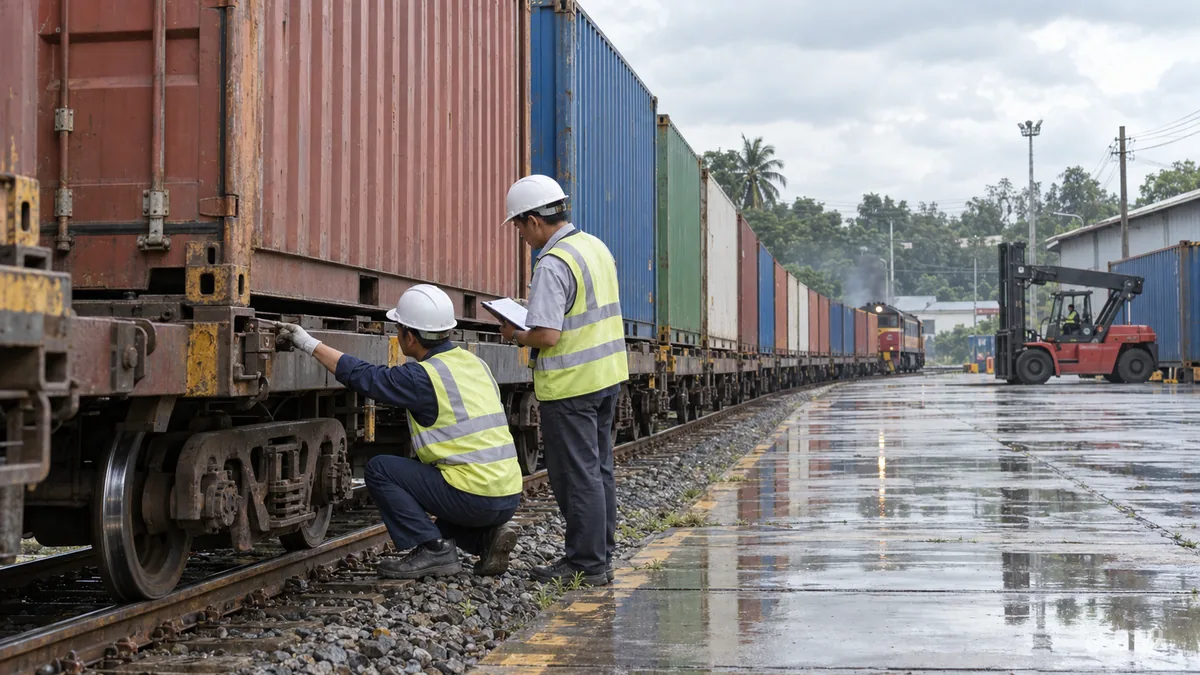
This new route runs from Qinghai Province in China to Trang Bom Station in Dong Nai Province, southern Vietnam. The total length is about 4,000km, split roughly into about 2,200km on the Chinese side and over 1,700km on the Vietnamese side. It operates as an international multimodal container train, with Railway Transport and Trade JSC coordinating on the Vietnamese side. The transit time, including customs clearance, is about 7 days, a sharp cut from the previous 12-15 days.
| Item | Details |
|---|---|
| Section | Qinghai, China to Trang Bom Station, Dong Nai Province, Vietnam |
| Total length | About 4,000km (about 2,200km on the Chinese side / over 1,700km on the Vietnamese side) |
| Days needed | About 7 days including customs clearance (previously 12-15 days) |
| Format | International multimodal container train |
Skipping the border transfer is what cut the transit time
The key to the shorter transit time is skipping the transfer and sorting of goods at the border. Previously, cargo had to be regrouped at a border consolidation point along the way, which is where the time was lost. By running the train through without stopping, cargo from China now moves straight to Vietnam's logistics hubs and ports, and can also be routed on to other markets. Relying less on border consolidation points is what brings the transit time down to about a week.
From a resident's perspective, being able to count on a predictable lead time matters a lot. If you source from China for e-commerce sales, a 12-15 day range forces you to carry thicker inventory. If that settles around 7 days instead, you can cut the inventory and capital you have sitting idle for the same sales volume. The shorter transit time isn't just about speed, it feeds directly into better cash flow.
Rail freight has been growing on the back of imports, topping 1.4 million tons in 2025
This new route sits on top of a broader trend of growing international rail freight. Vietnam's international multimodal rail freight volume reached 1.15 million tons in 2024 (up 43% year on year) and topped 1.4 million tons in 2025 (up 23%). Within that, exports grew 2.7% while imports grew 51%, a much sharper rise on the import side. The picture is one of more cargo flowing from China into Vietnam through rail. Direct routes like the Qinghai-Dong Nai service are increasing as a way to absorb that growth in imports.
Logistics costs are also tied to road and shipping pricing. Within Vietnam, tolling on expressways and managing ETC balances have been expanding,tolling on sections of the North-South Expressway and ETC balancesand costs and hassle on the land-transport side are shifting in step with moves like that. As rail becomes a thicker channel, it adds one more factor to weigh against the burden of domestic transport.
Three changes that matter to residents sourcing from Vietnam
The changes this new route brings for residents can be grouped into roughly three. One is the lighter inventory and cash-flow load from the shorter lead time already mentioned. Two, since the route reaches all the way to a port, it becomes easier to route goods through Vietnam on to a third country. Three, rail becomes an option to hold in reserve as an alternative to land transport, which is more exposed to fuel prices. In Vietnam,the rise in E10 gasoline priceshas kept going, making land-transport costs harder to predict.
The expansion of rail freight is connected to the buildup of passenger rail too. New tourism-oriented lines are moving forward in various places, and,the heritage train from Hue to Phong Nhaand other services like it show Vietnam's railways themselves becoming more usable. This freight route sits within a broader trend of rail's standing rising on both the freight and passenger sides.
Suited to "cargo where time is value," like electronic components and clothing
Where rail's 7-day speed pays off is for cargo where time translates directly into value. Seasonal clothing and general goods, small-lot daily items for e-commerce, and parts or materials that can't afford to stop a production line all benefit directly from a predictable arrival. Goods that would miss their selling window after three weeks by sea can make it to shelves or a website in time at rail's one week. The more a shipment originates from inland China, the more rail's direct routing pays off, since it skips the step of trucking to a port and transferring onto a ship.
Customs paperwork, though, can't be skipped even on rail. Certificates of origin, invoices, and, depending on the item, inspections or permits are still required, and if any of that stalls, the 7-day design falls apart. The more you push for speed, the more accuracy and advance preparation on paperwork matter. It helps to check the customs requirements for the items you handle in advance, so rail's speed isn't cancelled out by delayed documents. For small-lot e-commerce imports in particular, whether you consolidate into one shipment or split into smaller ones changes both the customs workload and how many days delivery takes.
Choosing between rail, sea, and road
In terms of speed and cost, rail sits in the middle, cheaper than air freight and faster than sea freight. The more time-sensitive a shipment is and the more mid-range its unit value, the more rail's 7-day transit pays off. Conversely, for low-value, bulky cargo, sea freight is often still the better fit. Sorting out which cargo to shift onto rail comes down, practically, to weighing transit time, cost, and volume together.
What residents can do now is check with suppliers or logistics providers whether this kind of rail multimodal transport, including the Qinghai-Dong Nai service, is available to them. If China is your main source of supply, whether you have access to a route that delivers in 7 days affects how you design your inventory in the first place. It's worth keeping rail as a card to hold, alongside a mix of sea and land transport.
For example, splitting a monthly bulk order of general goods into two smaller orders a month, using rail's faster turnaround, can keep the quantity per order down while still avoiding stockouts. A predictable delivery window also makes it easier to work backward from sales or peak seasons when placing orders. Whether the Qinghai-Dong Nai service fits your own supply chain depends on the items and volumes you handle, and the customs requirements involved. A good place to start is getting a quote and transit time from a logistics provider and comparing it against the route you use now.
Sources:
e.VnExpress — New rail route cuts China to Vietnam freight time from 15 to 7 days