There is a little-known "catch" to the free rides on 134 city bus routes that Ho Chi Minh City began on July 1. The rides are free through the end of the year, but it is a two-stage setup: from July to September you simply board, while from October you must verify your identity each time you ride using VNeID or an ID card (reported June 23, 2026, by VnExpress, Tuoi Tre, and others). For people living in or staying long-term in Vietnam, what you do during the "prep period" through the end of September will change how smoothly you ride from October on.
July–September is "just ride"; identity verification is required from October
The schedule released by the city's transport authorities clearly splits into two phases. Phase 1 runs from July 1 to September 30, during which no passenger registration or identity verification is required at all. Anyone can wait at a stop and simply board, with no fare. This much has been reported already.
What changes is the second phase, October 1 to December 31. It remains free, but identity verification will be required for each ride. The verification methods cited by authorities include the chip-embedded national ID card (CCCD), an account on the national integrated app VNeID, a bank card, an e-wallet, and the bus app MultiGo, among others. In short, it shifts to a format where "you have the machine read who you are before boarding." The full picture of the free buses is covered inAn article summarizing how 134 routes became free from July, so here we focus on the practical side of the verification requirement starting in October.
Why bring in verification partway through
There is a reason for placing a three-month run-up rather than starting abruptly in October. According to authorities, this preparation period is positioned as a time to get citizens used to using buses while building out the passenger database, the technical infrastructure, and the e-ticketing system. In other words, going free is not merely a zero-fare campaign but also a mechanism for shifting from paper ticket books and cash to e-tickets.
By inserting identity verification, the city can accurately grasp "how many people, on which routes, and when." The free program is expected to draw roughly 665 billion dong from the city budget for the second half of the year (about 3.9 billion yen at 10,000 dong ≈ about 59 yen), and since tax money is involved, making usage visible is unavoidable. For riders, the verification from October is an extra step, but it is strongly about laying the groundwork to keep the program going.
What changes by phase
| Item | Phase 1 (July 1 to September 30) | Second phase (Oct 1–Dec 31) |
|---|---|---|
| Fare | Free | Free |
| Identity verification | Not required | Required each time you board |
| Authentication method | ― | ID card, VNeID, bank card, e-wallet, MultiGo, etc. |
| Target routes | 134 city routes | 134 city routes |
| Excluded routes | Route 172 (Vung Tau–Ba Ria–Saigon; excluded because part of it passes through Dong Nai City) | |
The number of routes stays at 134 in both phases. One thing to note is that route 172, which heads toward Vung Tau, is excluded from the start. That is because part of its path passes through Dong Nai City, so you cannot use the free bus to head to Vung Tau. This exclusion remains the same from October onward.
What happens to people without smartphones and to travelers?
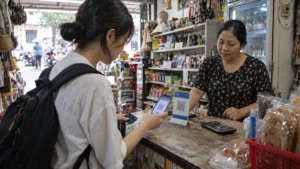
Hearing "you'll need VNeID from October," resident foreigners and travelers who don't have a smartphone or Vietnamese ID may brace themselves. But the authorities have stated clearly that they will prepare individual guidelines for groups needing direct support, such as the elderly, people with disabilities, children, students, travelers, and those without a smartphone. The verification methods are also expected to include multiple entry points, not just ID cards or apps, such as bank cards and e-wallets.
At present, the official arrangements for foreign tourists are at the stage of being finalized by the end of September, and the specific method of presentation will be announced later. Vietnam's cashless scene centers on e-wallets, and this summer's moves in airport access and domestic travel are, asAn article on the period when domestic flights are greatly increasedalso touched on, brisk. If you plan to use buses as your transport after arrival, keep in mind that an extra step of verification comes into play from October onward.
What to do by the end of September for peace of mind
For long-term stayers and residents, it is worth acting during the preparation period. For example, those who hold a Vietnamese ID card (CCCD) should activate their VNeID account, and cashless users should check whether their everyday bank card or e-wallet supports transit payments. If you first try to set things up only after October begins, unfamiliar screens and congestion tend to make it take even longer.
Short-term travelers can ride without worrying about verification if their stay ends by late September. If you come after October, the surest approach is to wait for the traveler-oriented guidelines the authorities will publish; rather than forcing yourself to set up an app, it is safer to follow the guidance on the ground. Either way, the premise that "free rides continue through the end of the year" does not change, so you only need to keep track of whether verification applies.
Frequently asked questions
Will free buses go back to being paid from October?
No. Fares remain free through December 31. What changes is not the price but that, from October 1, you must verify your identity each time you board using VNeID, an ID card, or the like.
Can travelers without VNeID still ride buses from October onward?
The authorities have announced they will prepare individual guidelines for travelers and people without a smartphone. Verification methods are expected to include several options such as an ID card, VNeID, bank cards, and e-wallets, and the specific presentation method for travelers is expected to be announced later.
Is the bus to Vung Tau also free?
No. Route 172, which heads toward Vung Tau, is excluded from the free program from the start because part of its route passes through Dong Nai City. This remains unchanged through both Phase 1 and Phase 2.
Sources
Tuổi Trẻ Online: Từ 1-7, người dân TP.HCM đi xe buýt miễn phí, trừ tuyến 172 đi Vũng Tàu
VnExpress International: Ho Chi Minh City announces 134 free bus routes from July
VietnamNet: Miễn phí xe buýt từ 1/7: TPHCM kỳ vọng tạo cú hích cho giao thông công cộng