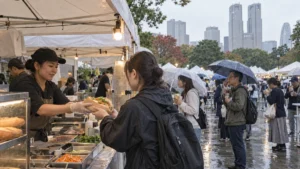
A food feature serialized by the major Vietnamese newspaper Thanh Nien, "In Search of Hometown Eateries in Ho Chi Minh City (Đi tìm quán ăn quê nhà ở TP.HCM)," has struck a chord, and customers are flocking to the regional eateries it featured. The morning crowds are so intense that some shops sold out of every dish by 9:30 a.m. and closed early, the paper reported (reported June 30, 2026). Ho Chi Minh City draws people from every region, north to south, and a single alley shop can hold the flavor of one region. For travelers, the series doubles as a "regional food-crawl map."
A 14-part series that sparked a "bowl from home" boom
Thanh Nien's series ran to 14 installments. Hanoi's bun thang, Quang Ngai's jelly sweet suong sa, Hue's fried rice cake banh ram it, Hoi An's cao lau, Phu My's bun giam, Gia Lai's fermented crab noodle soup bun cua thoi, Sa Dec's hu tieu, Chau Doc's bun ca, Bac Lieu's bun mam, Ca Mau's banh tam cay, and more, introducing one dish per region from north to south. What they share is the perspective of "everyday eateries that locals from that region visit out of nostalgia, not tourist attractions."
After publication, some shops added staff to handle more customers than expected, and some even temporarily suspended delivery-app orders to serve dine-in guests. What makes this phenomenon interesting is that the crowds are not from publicity-driven hype, but from articles "giving a map to genuinely skilled shops that had gone unnoticed."
Sold out by 9:30 a.m.: why Hanoi's "bun thang" runs out
One shop that drew particular attention in the series was "Bún Thang 50" at 50 Ho Bieu Chanh Street in Phu Nhuan District. Bun thang is a traditional Hanoi noodle dish that piles finely shredded chicken, thin egg strips, and dried shrimp over a clear broth—labor-intensive, so the amount that can be made in a day is limited. This shop, founded in 1990, is a long-established family business now in its third generation. It is open from 6 a.m. to 1 p.m., but after the article ran, there were days when the day's portion sold out by 9:30. Being able to eat in Ho Chi Minh City a bowl rarely found outside Hanoi is itself a value for travelers.
This "sold out by midday" pattern is also a common pitfall at Vietnam's popular eateries. As with theA Cao Lau shop in Saigon that closes at 1 p.m.we introduced earlier, if there is a particular bowl you are after, the rule of thumb is to aim for right after opening.
"Smelly but addictive": the adventure of Gia Lai's fermented crab noodles
Another spot generating travel buzz is "Măm Măm Gia Lai," which serves the home cooking of Gia Lai Province. Its signature dish, bun cua thoi (bún cua thối), is a noodle soup with a distinctive smell from fermented field crab, beloved locally as "stinky but strangely addictive (Thum thủm mà… lỡ ghiền)." The shop has been open for nearly 10 years; about half its customers are from Gia Lai, and foreign visitors who learned of it on social media are starting to come too. For adventurous travelers, it is a bowl that lets you experience "the region's real deal" beyond pho and banh mi.
A quick-reference chart for "regional noodle hopping" by price and hours
All cost roughly 30 to 60 yen per bowl (converted at 10,000 dong ≈ about 60 yen), and the affordability of trying regional flavors is Ho Chi Minh City's strength. To make them easy to work into an itinerary, we have organized the standout eateries the series put in the spotlight.
| Shop name | Regional flavors | Location (Ho Chi Minh City) | Guide price | Hours |
|---|---|---|---|---|
| Bún Thang 50 | Hanoi's bun thang (clear chicken-broth noodles) | 50 Ho Bieu Chanh Street, Phu Nhuan District | From 40,000 dong (from about 240 yen) | 6:00〜13:00 |
| Măm Măm Gia Lai | Gia Lai's fermented crab noodles, bun cua thoi | An alley off D5 Street in Thanh My Tay Ward (formerly Binh Thanh District) | 27,000–56,000 dong (about 160–340 yen) | 11:00〜21:00 |
Tips for Japanese travelers looking for "regional eateries"
Guidebooks tend to lean toward pho and banh mi, but the real appeal of Ho Chi Minh City lies more in "the one dish that migrants from each region keep alive." There are three tips for finding them. First, target shops with a regional name (Gia Lai, Ca Mau, etc.) in the shop name or on the sign—a sign of an authentic place aimed at people from that region. Second, aim for right after opening. Morning noodles work best if you assume they sell out before noon. Third, don't brace yourself over smell or appearance—just try it once. It is precisely in dishes like fermented crab noodles, where "the pungency is the region's character," that the memory of the land is packed.
Ho Chi Minh City's transport access keeps improving, and it is getting easier to reach the famous shops tucked away in the alleys.City buses—134 routes went free from Julymakes it realistic to hop between regional restaurants scattered across districts. Slotting in just one regional taste between famous sights sharpens the resolution of your travel memories.
Practical notes for avoiding crowds and "missing out"
Shops just after media coverage tend to stay busier than usual for a while. If there is a shop you're set on, make a weekday right after opening your first choice. Noodles selling out before noon is not unusual, so slotting them into your breakfast plan is the sure bet. During peak popularity, some shops halt delivery orders, so if you really want to eat there, going to the shop in person is the quickest route. Regional dishes may also vary in daily prep volume, so it helps to keep the leeway to enjoy "sold out early today" as part of the trip.
Frequently asked questions
What kind of budget do bun thang and bun cua thoi cost to eat?
All are affordable, at a few dozen to a few hundred yen per bowl. Bún Thang 50 starts from 40,000 dong (about 240 yen) per bowl, while the bun cua thoi at Măm Măm Gia Lai runs about 27,000–56,000 dong (about 160–340 yen) as a guide (converted at 10,000 dong ≈ 60 yen). The charm of Ho Chi Minh City is being able to try authentic regional cuisine on a low budget.
Is it true you can only get them if you go in the morning?
Noodles with limited prep volume, like bun thang, have had days when they sell out around 9:30 a.m. after media coverage. If there is a shop you're set on, visiting right after opening is the sure bet. The bun cua thoi shop, on the other hand, is open from midday into the evening, so it offers relatively more flexibility on timing.
I hear the fermented crab noodles have a strong smell. Is it okay for a first-timer?
Bun cua thoi is characterized by the distinctive aroma of fermented field crab, and even locals call it "smelly but addictive." It has a reputation for offering deep umami once you get used to the smell, and foreign customers are slowly increasing. If you're unsure, starting with a small size is recommended.
Sources
Thanh Niên: Quán ăn quê nhà ở TP.HCM ‘đóng cửa sớm vì quá đông’ sau loạt bài của Báo Thanh Niên
Thanh Niên: Quán bún thang bình dân trứ danh TP.HCM, truyền 3 đời