On a trip headed for the seaside resorts of Nha Trang, there's now one more cultural experience worth a detour. From June 26–28, 2026, the “Cham Ethnic Culture Festival (6th edition)” was held in the new Khanh Hoa province in south-central Vietnam, drawing thousands of residents and tourists. The venue was April 16 Square in Phan Rang–Thap Cham (the former provincial capital, formerly Ninh Thuan province). It's a place where the Champa culture you meet at the Po Nagar Towers in Nha Trang can be experienced not just as ruins but as a still-living festival. Even for Japanese travelers whose goal is the sea and the beach, it's worth knowing as a side trip you can fit into half a day or a full day.
What is the “Cham Ethnic Culture Festival” gathered at April 16 Square?
The event's formal name is the “6th Cham Ethnic Culture Festival (Ngày hội Văn hóa dân tộc Chăm lần thứ VI).” Co-hosted by the Ministry of Culture, Sports and Tourism and the Khanh Hoa Provincial People's Committee, its theme was “Preserving and promoting Cham ethnic culture in a new era.” The venue, April 16 Square (Quảng trường 16 tháng 4), is a symbolic square in central Phan Rang named to commemorate the liberation of the former Ninh Thuan province, and across from it stands a museum holding many relics of the ancient Champa kingdom.
Over three days, about 1,000 artisans, artists, performers, and athletes took part from seven provinces and cities nationwide: Khanh Hoa, Gia Lai, Dak Lak, Lam Dong, An Giang, Tay Ninh, and Ho Chi Minh City. Vice President Vo Thi Anh Xuan attended the opening ceremony, positioning it as a national-level event.
Why a Cham culture festival in Khanh Hoa now
One reason is administrative redistricting. On July 1, 2025, the former Ninh Thuan province was merged into the former Khanh Hoa province, creating the “new Khanh Hoa province” with a coastline of about 500 km—the longest in the country. The provincial capital is Nha Trang. With Ninh Thuan, a center of Cham culture, now in the same province as the resort city of Nha Trang, the move to link seaside resorts and inland Champa heritage in one itinerary is accelerating.
The other is the demographic backdrop. According to VnExpress, the new Khanh Hoa province is home to more than 95,000 Cham people, roughly half of all Cham nationwide. Rather than a people of the past who left only ruined towers behind, they are a living cultural community rooted in the area, still passing down weaving, pottery, and rituals—and this is what makes the festival more than a mere tourist event.
Highlights: traditional crafts, dance, and Cham-style sports
Over three days, a wide range of “watch” and “do” elements was on offer. Here we organize the highlights worth noting from a Japanese traveler's perspective.
| Categories | Details |
|---|---|
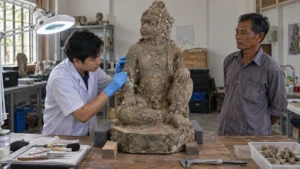
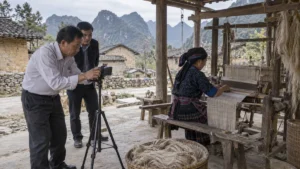
| Traditional craft demonstrations | Demonstrations of the hand-woven cloth (Bau Truc-style and related) passed down by the Cham, and traditional pottery made without a wheel |
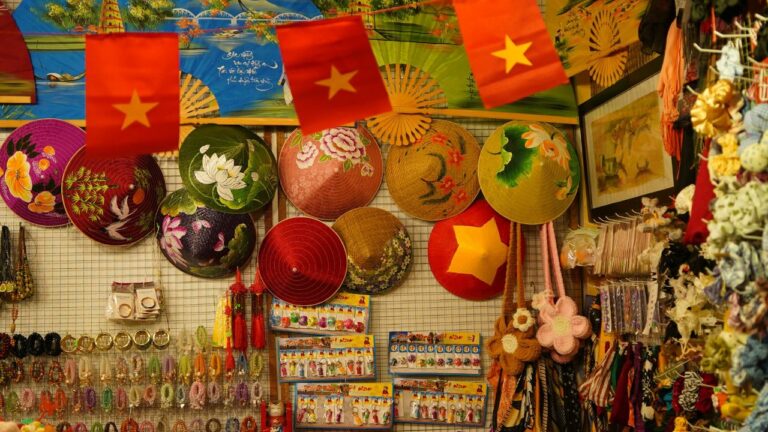
| Costume and exhibition booths | Each province and city introduced its regional costumes, crafts, and culture at its own booth |
| Stage performances | Programs such as “Soul of the Land,” “Spring of Weaving,” and “New Vietnam, the Joyful Cham Festival” |
| Ethnic sports | Tug-of-war, pole-pushing, and other contests rooted in Cham daily life |
Results were also announced at the closing ceremony. In the sports contests, 117 gold, 117 silver, and 234 bronze medals were awarded; in the culture and tourism categories, 19 A-prizes, 19 B-prizes, and 20 C-prizes were given, and certificates were presented to the Cham groups from the seven participating regions. The next, 7th edition is scheduled for 2031 in An Giang province—an event that continues while rotating around the region.
The connection to Nha Trang's “Po Nagar Towers”
The Po Nagar Towers (Tháp Bà Po Nagar), where many Nha Trang travelers stop, are precisely a structure built by this Champa culture. A cluster of brick towers rising at the mouth of the Cai River, north of central Nha Trang, they enshrine the Champa goddess Po Nagar. Meanwhile, near Phan Rang, where the festival was held, stands another famous tower, Po Klong Garai, considered the pinnacle of late-13th- to 14th-century Champa architecture and sculpture.
In other words, on a trip through the new Khanh Hoa province you can now do both: “see” the tower ruins in Nha Trang and “experience” the still-living festivals and crafts on the Phan Rang side. The area's strength is that you can do more than snap a photo in front of a tower—you can touch the present-day lives of the people who carry that culture.
What it suggests for travelers: adding “half a day of culture” to a beach resort
Travelers from Japan who choose Nha Trang tend to make the beach, island hopping, and seafood their main goals. Add a layer of Champa culture, and the satisfaction and talking points of the trip rise considerably. Here are concrete ways to work it in.
- In the morning, visit the Po Nagar Towers in central Nha Trang and experience Champa architecture with the sea behind you.
- If you can time your visit to a festival period (see below), extend to the Phan Rang side to watch craft demonstrations and dance.
- Even outside a festival period, you can dig deeper into Champa culture at the Po Klong Garai Towers near Phan Rang and the Ninh Thuan museum.
The south-central region is also a land rich in festival culture. Like Quy Nhon'skite-flying festivaland, themed on traditional events,the Tam Thanh festival,the style of combining a beach stay with regional celebrations makes a trip through this area far more three-dimensional.
Ripple effects on tourism and the region
A Khanh Hoa official speaks of the aim of promoting cultural-tourism development and building distinctive tourism products. Behind it is the intent to connect diverse resources—the sea, renewable energy, and Champa heritage—within one province, and to spread the flow of tourism inland from its concentration on Nha Trang.
The practical benefit for travelers is more options for touring with Nha Trang as a base. For the sea alone, the resorts and offshore islands near Nha Trang are the picks, but with a cultural core now in the same province, there's a reason to extend a stay by a day or two. When planning a Vietnam trip, the idea of completing both beach-type and culture-type destinations within one province is becoming effective. Combine a cultural experience with seaside leisure, and the density of the trip goes up.
Practical information: getting there and timing
- Gateway: Nha Trang (Cam Ranh International Airport) is the main gateway to the south-central region. From Japan, access is via connecting flights.
- Po Nagar Towers in central Nha Trang: a short drive from the city center. Easy to fit into a half-day of sightseeing.
- Toward Phan Rang: head south from Nha Trang. The tower (Po Klong Garai) and the museum are good for digging deeper into Champa culture.
- Festival timing: this Cham Ethnic Culture Festival was held in June 2026. As a Cham festival on a typical annual scale, the autumn “Kate Festival” is also a signature event around the Phan Rang area, with dance and traditional rites to see.
- Exchange-rate guide: 1 yen ≈ around 170 Vietnamese dong (it fluctuates, so check the latest rate before departure). Cash is safest for stalls and admission fees.
Summary: pair “tower + festival” on your next trip
If you're visiting Nha Trang, touch the entrance to Champa culture at the Po Nagar Towers, and if possible, extend to the festival and towers on the Phan Rang side—try working this two-part plan into your next itinerary. The concrete next actions are three. First, before departure, check the official Khanh Hoa province and Ninh Thuan tourism information to see whether your travel dates overlap with a Cham festival (the June Cham Ethnic Culture Festival or the autumn Kate Festival). Second, be sure to include a half-day visit to the Po Nagar Towers in your Nha Trang sightseeing. Third, allocate a day or two each to seaside leisure and cultural experiences, and plan to enjoy the new Khanh Hoa province together in one trip. The sea, the ruins, and the festival—completing them all within one province is the appeal of south-central Vietnam today.