The My Son Sanctuary World Heritage Site (Quang Nam Province) is putting together a special Cham culture program to mark National Day on September 2. The highlights are the stage performance Echoes of My Son and Cham folk songs performed in front of the brick towers. DTiNews reported Da Nang City's announcement on August 18. For anyone traveling central Vietnam over the holiday, it's a day to encounter living Champa culture in this valley of reddish-brown towers. It's an easy day trip from Hoi An or Da Nang, so it's worth building your day around this performance rather than treating it as an add-on to sightseeing at the ruins.
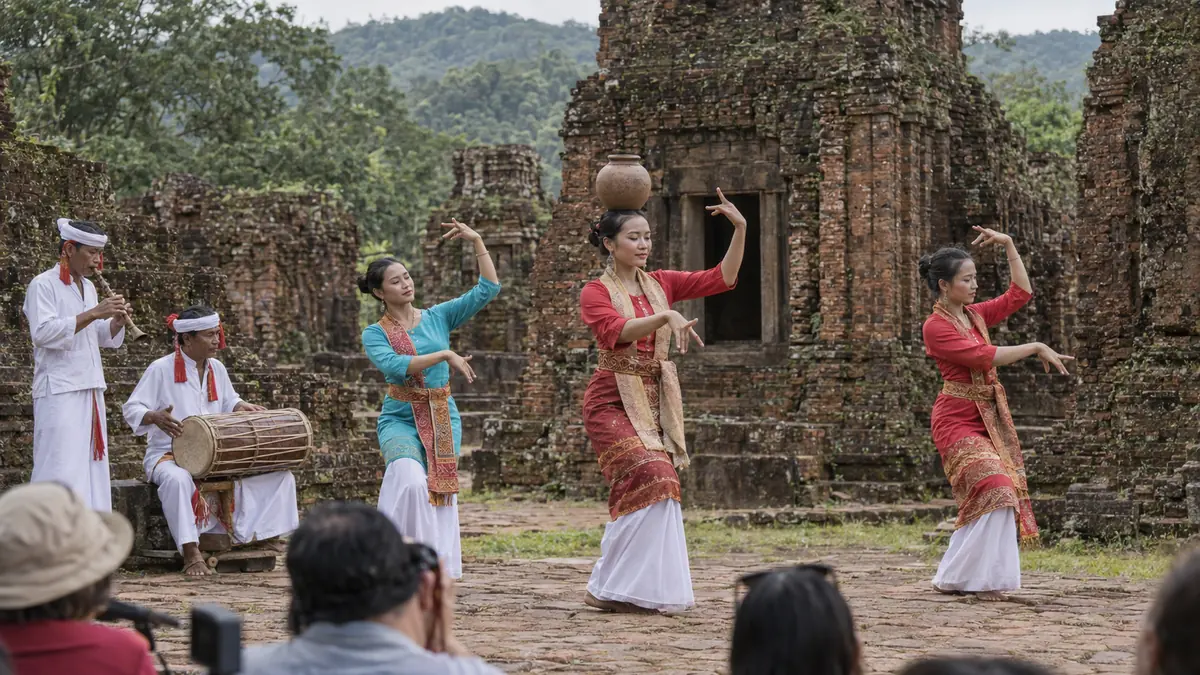
On September 2, a stage performance and Cham folk songs overlap in front of the towers
Among the events Da Nang City has lined up for the National Day holiday, two of them converge at My Son on this same September 2. One is the stage work Echoes of My Son; the other is Cham folk singing performed with the towers as a backdrop. In addition, the Cham Sculpture Museum in Da Nang is staging a Champa Dance program, and during the holiday admission is free at all three of Da Nang's museums — the Da Nang Museum, the Da Nang Fine Arts Museum, and the Cham Sculpture Museum. Linking the My Son ruins themselves with the museums in Da Nang lets you trace Champa's expression in three dimensions, from stone ruins to sculpture to dance and song.
Echoes of My Son is normally a special program staged around the middle of each month, with more substantial staging than the usual short dance performance. It's being scheduled again to coincide with National Day. The key point is that the date is limited to September 2 — visiting on a weekday before or after won't get you the same show. If you're planning a holiday itinerary, it's realistic to book lodging before and after around this one day.
My Son is the sacred site of the Champa Kingdom, lined with Hindu towers
My Son is a Hindu religious city built by the Champa Kingdom between the 4th and 13th centuries, and it was inscribed as a UNESCO World Heritage Site in 1999. Brick towers dedicated to Shiva cluster together in a basin among the mountains, and the construction technique — said to have stacked the bricks without adhesive — still isn't fully understood. The lineage here is different from that of the Kinh, Vietnam's majority culture, and what remains is a distinct aesthetic born from myths of Indian origin and the maritime silk road trade.
The Cham people, who carried Champa culture, remain an ethnic minority living mainly in the south-central region today. The dance and song performed at My Son carry on movements rooted in temple ritual, known for their colorful costumes and the Apsara dance performed with water jars balanced on the head. The September 2 performance is a chance to see this living tradition presented with more elaborate staging than usual.
About an hour from Hoi An, with a 150,000-dong admission that includes the dance performance
My Son is about 40 km from Hoi An, roughly an hour's drive, and 65–70 km from central Da Nang, around 90 minutes. Most visitors come on a half-day tour from Hoi An or Da Nang. It's open daily from 6:30 a.m. to 5:30 p.m. Admission is 150,000 dong per person (about ¥860, approximate at ¥1 ≈ 175 dong), and this fee includes the on-site Cham sculpture display and the electric cart ride from the gate to the ruins. The daytime Cham dance performance is also included in the admission fee.
| Item | Details |
|---|---|
| Location | My Son Sanctuary (Quang Nam Province, formerly part of greater Da Nang) |
| Special performance date | September 2 (National Day) |
| From Hoi An | About 40 km, roughly a 1-hour drive |
| From Da Nang | About 65–70 km, roughly 90 minutes by car |
| Opening hours | 6:30 a.m.–5:30 p.m. (daily) |
| Admission | 150,000 dong (about ¥860), including the dance performance and electric cart |
Exchange figures are approximate, converted at ¥1 ≈ 175 dong. Admission fees and hours are subject to change, so check the latest posted information on-site on the day.
If you want to avoid the heat, the first show of the morning is easiest to plan around. The regular daytime performance runs multiple times in the morning and afternoon at the performance hall and in front of Tower Group G, but a show can be pushed to the next slot if there aren't enough audience members. On September 2, the larger holiday crowds make it more likely a show will go ahead, but it's safer to build in some wait time for parking and the electric cart too.
You can build a holiday itinerary through central Vietnam around song and dance
For Japanese readers, the value of My Son lies in a feeling close to walking temple and shrine architecture in Kyoto or Nara, but experiencing a religious city from a completely different lineage in Southeast Asia. On September 2 specifically, that overlaps with the time-based arts of song and dance. A straightforward half-day plan is to walk Hoi An's old town in the morning, then head to My Son before noon to catch the special performance. If you want to grab a meal in Hoi An first,a guide to Hoi An's best-known banh mi spots, with pricesmakes it easy to plan your route.
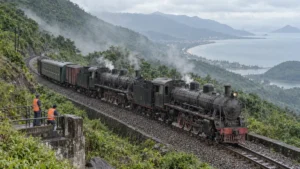
If you're covering more of central Vietnam over the holiday, you could also head north by combining this withthe Hue–Phong Nha heritage train, which begins service September 1. Hue's court culture, My Son's Champa heritage, and Da Nang's contemporary events let you trace layers from entirely different eras within central Vietnam alone. If you want a taste of Vietnam-Japan exchange in Da Nang itself, some years the dates overlap with events likeDa Nang's Vietnam-Japan cultural festivala bon-odori dance circle, letting you pick up several cultural experiences during the same stay.
Building your September 2 around My Son
Echoes of My Son and the Cham folk songs at My Son are a program specific to September 2, different in substance from an ordinary day visit. Free admission at Da Nang's three museums is part of the same holiday, so connecting the ruins and the museums into one line deepens your understanding. Start by securing lodging in Hoi An or Da Nang for September 2, then leave in the morning to arrive in time for the special performance. On the day, the 150,000-dong admission already includes the dance, so there's no need to buy a separate show ticket. As long as you plan for the timing and the waits, you can witness a valley of stone ruins filled, for just one day, with sound and movement.