For four days, a Da Nang seaside park fills with a ring of Bon Odori dancers and Japanese food stalls. "Vietnam-Japan Festival Danang 2026," held July 9–12, was the 11th edition. Last year's attendance topped 50,000, and its exhibits — gathering both countries' culture and food — reached about 100 booths. The run itself is already over, but this is a fixture held every summer since 2014, and it's reasonable to expect it back at roughly the same time next year. For Japanese planning a Da Nang trip, "early July in Da Nang" is a special week when Japanese is understood as is and you can jump into the Bon Odori. This article sorts out what happened this year, then rounds up practical angles for catching the festival in Da Nang next year.
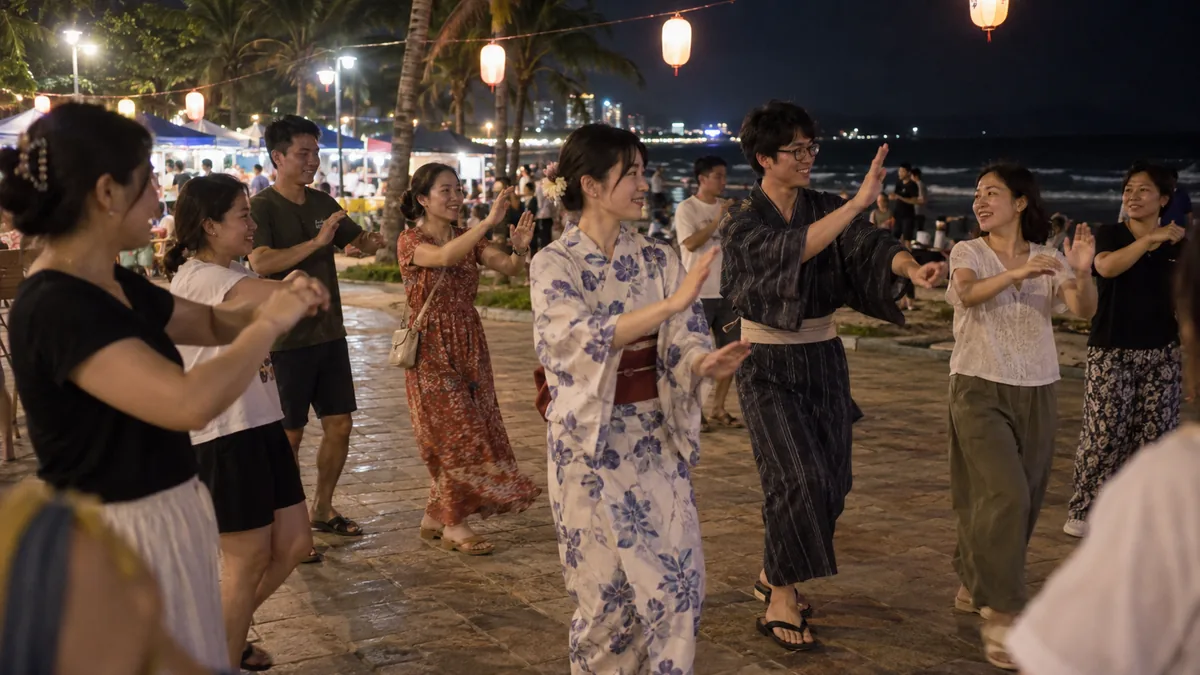
The venue is the seaside Bien Dong Park; it opens at 7 p.m.
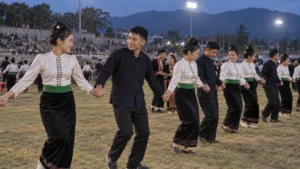
The festival's main venue is Da Nang's Bien Dong Park (Công viên Biển Đông). It is a seaside park facing My Khe Beach, about a 10-minute taxi ride from the city center. The opening ceremony started at 7 p.m. on the first night, July 9, followed from 7:30 to 8 by an exchange stage of bamboo dance (nhảy sạp) and Bon Odori, and from 8:30 to 10 by a Vietnam-Japan cultural performance program as the night went on. Being held outdoors at night is meant to avoid the daytime heat while creating festive energy on the lit-up seafront. From a traveler's view, the setup of beach and town walks by day and heading to the venue after sundown works just as it is.
Da Nang at this time of year also overlaps with fireworks. This year the Da Nang International Fireworks Festival final was set for July 11, and in nearly the same week as the cultural festival the whole city turned festive. How to find free viewing spots along the shore isThe Da Nang fireworks final is July 11—how to pick a free "best seat in the city"is compiled here, a useful reference for bundling the festival and fireworks into a single itinerary.
Bon Odori and bamboo dance: Japanese and Vietnamese performing arts on one stage
This year’s highlight was a lineup showing Japanese and Vietnamese physical culture side by side. Alongside an exchange stage presenting bon odori and Vietnam’s bamboo dance in succession, there were a joint demonstration of Japanese judo and Vietnamese Vovinam, a Japan–Vietnam friendship soccer match, a Baseball5 (a simplified five-a-side baseball) experience, the cosplay contest finals, and an earthing marathon—both spectating and participation on offer. The festival’s character is a design that doesn’t merely “show” Japanese culture but pairs it with Vietnamese martial arts and dance to “mingle” them.
The bamboo dance is a northern, ethnic-minority dance in which two people clap bamboo poles on the ground while dancers hop across the gaps. Set beside a Bon Odori circle, the rhythms of clapping hands and footwork echo one another, and you can join in with your body even without understanding the words. This is the time slot easiest for travelers to jump into, and every year you see Japanese visitors coming in yukata and jinbei.
The city-to-city and company-to-company business moving behind the festival
This event is entertainment, but it's also a place that connects practical business between Da Nang and Japan. This year, an exchange conference titled "Meet Japan in Da Nang" was held to coincide with the opening, attended by officials from Japan's Ministry of Foreign Affairs and representatives of the Japanese Embassy in Vietnam. Da Nang and Kinokawa City in Wakayama Prefecture also signed a memorandum of cooperation, moving relationship-building between the municipalities a step forward.
There are moves tied directly to ease of travel. In the past few years, direct flights on Da Nang–Tokyo and Da Nang–Osaka have increased, making Da Nang easier to reach from both the Kansai and Kanto regions. The festival's roughly 50,000-a-year draw and this expansion of air routes aren't unrelated; they reinforce Da Nang's standing as "a central Vietnamese tourist city that's easy to reach from Japan."
If you’re aiming for the festival in Da Nang next year
The event period is typically from early to mid-July. In 2026 it ran July 9–12, so expecting a similar time next year, overlapping a Da Nang stay around the second week of July is a solid bet. Take lodging near seaside My Khe Beach and you are within walking distance of the Bien Dong Park venue, which is also advantageous for watching the fireworks. Since the evening stage is the main act, feel free to put other plans in during the day.
If you have time to spare in the morning, going to watch the local fishing is a very Da Nang way to spend it. The sight of fishermen hauling nets on the beach at dawnHauling nets with fishermen on a dawn beach: the very first thing on a July morning in Da Nangis introduced here. When you need to stock up or find yourself missing Japanese food, the AEON that opened near the airport is handy for residents and travelers alike; for details,AEON Opens 5 Minutes From Da Nang Airport: A New Base for Residents Where You Can Buy Sushi and Bentowe rounded up. Eat your way through the festival stalls and top up what's missing at Aeon — that's the realistic combination.
Summary: In July, Da Nang is “the city Japan comes to”
The Vietnam-Japan Festival Da Nang 2026 has ended, but the festival, now in its 11th run, will return at roughly the same time next year. About 100 stalls, an exchange of Bon Odori and bamboo dance, and a seaside night that draws more than 50,000 people in a typical year. A week where Japanese works as is and you can jump in and dance can be a highlight of a Da Nang trip. Build your itinerary around the second week of July—including fireworks, the morning catch, and stocking up on Japanese food—and you can savor this city's “Japan comes to town” season in full. Just lock in next year's airfare and a seaside room early to be safe.