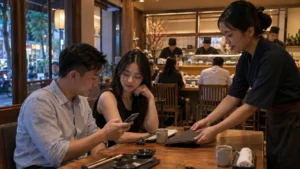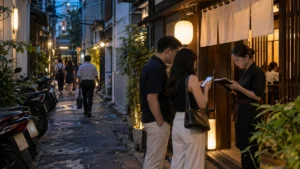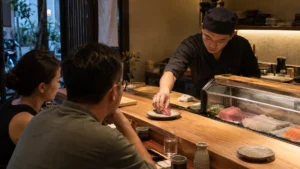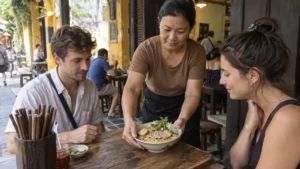
ベトナムでは、チップは一律の義務ではありません。ホテル、スパ、ツアーなどで良い対応を受けたときに感謝として渡すことはありますが、金額を守らなければ失礼になる国ではなく、サービス料が会計に含まれている場合もあります。
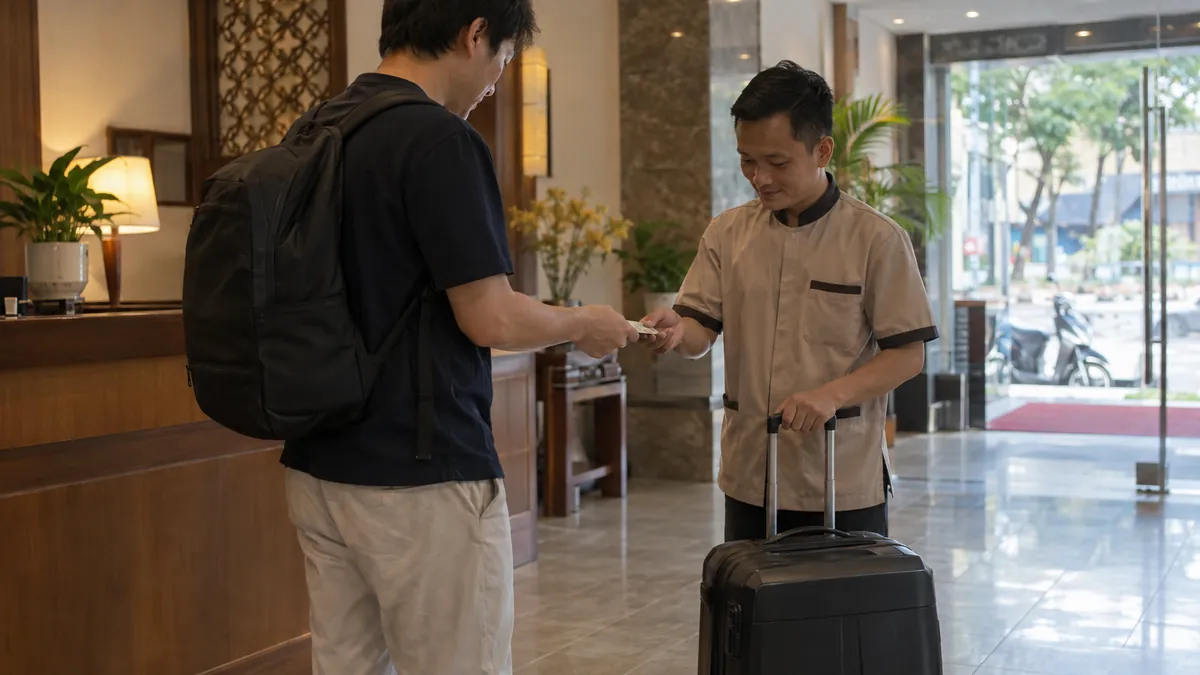
迷ったら、まず請求書の「service charge」を確認し、現金を渡すなら小額紙幣を直接・静かに渡す。この2点で十分です。この記事の金額は義務や固定相場ではなく、場面を判断するための目安として読んでください。
先に結論:3つだけ確認
- レストランではサービス料が含まれていないか会計を先に見る
- ホテル・スパ・ツアーは、特に助かったときだけ無理のない額を渡す
- 不満がある、説明のない請求がある、現金を持っていない場合は無理に渡さない
Conclusion: tipping is basically unnecessary; give as a token of thanks
Tips aren’t required at restaurants, street stalls, taxis, and the like. On the other hand, a small amount is appreciated by hotel porters and spas, or when you receive attentive service. At upscale restaurants and hotel restaurants, a service charge may be included in the bill, in which case an additional tip is unnecessary.
Why there’s little tipping culture to begin with
Vietnam has never had a deeply rooted tipping custom, and the general thinking is that service is included in the price. Tips are accepted at places that deal with foreigners—tourist sites, hotels, spas—but they aren’t expected at local eateries and taxis. There’s no need to force it; giving within the range of thanks when you’re satisfied is plenty.
Tipping guidelines by situation
| Hotel porter | 10,000–50,000 VND (more at higher-end hotels) |
|---|---|
| Housekeeping (pillow tip) | Not required. If you give, 10,000–20,000 VND (20,000–50,000 at high-end places) |
| Spa & Massage | Around 50,000 VND as a guide. The price may already include a tip |
| Restaurant | Basically unnecessary. A service charge may be included |
| Tour guide / driver | Often included in the tour price. A small amount if it’s good |
| Taxi / ride-hailing | Basically unnecessary. Not taking the small change back is fine |
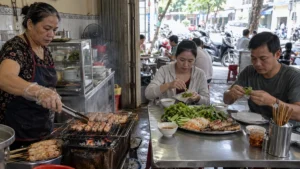
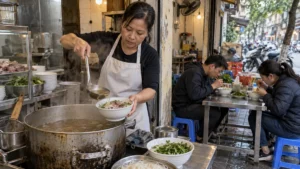
| Street stall / local eatery | Unnecessary. Paying the set price cheerfully is plenty |
A more detailed way to think, situation by situation
Even within the same “hotel” or “dining,” the sense of whether to tip changes by situation. We’ve sorted out the scenes that tend to confuse.
| Hotel bellboy (carrying luggage) | 10,000–50,000 VND once your luggage is carried to your room. More at higher-end hotels |
|---|---|
| Room service | A service charge is often included in the price. If you give as a gesture, a small amount is plenty |
| Housekeeping (pillow tip) | Not required. For consecutive nights, if you want to show appreciation, just leave 10,000–20,000 VND by the pillow |
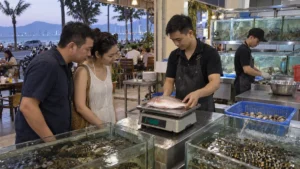
| Upscale restaurant | A service charge is often included in the bill. Check the itemized bill; if it’s included, no addition is needed |
| Local eatery / street stall | Unnecessary. Paying the set price cheerfully is plenty |
| Cafe | Basically unnecessary. Self-checkout is common, and there’s hardly any tipping custom |
| Hair, beauty, and nails | A small amount if you’re satisfied. Some shops include the tip in the price |
| Japanese-speaking guide / driver (tour) | Often included in the tour price. For good service, giving a small amount separately to the guide and the driver is appreciated |
| Ride-hailing like Grab | Basically unnecessary. If the app lets you select a tip, it’s optional |
| Airport porter | About 10,000–50,000 VND once your luggage is carried. If the price is fixed, follow that posting |
When to give, and when you don’t need to
- Give right after receiving the service—when your luggage is carried, when a treatment ends, at the end of a tour, and so on. Give it discreetly on the spot, not later
- Leave the pillow tip before you go out—for housekeeping, place it by the pillow or in an easy-to-see spot when you head out
- Unnecessary if a service charge is included—if the bill says “Service Charge,” there’s no need to add a tip on top
- Unnecessary at local shops and taxis—it isn’t expected at street stalls, eateries, or hailed taxis. There’s no need to force it
How to prepare bills for tipping
A common tipping trouble is “not having a small enough bill on hand.” Preparing with the local cash situation in mind lets you give smoothly.
- ATMs tend to dispense large bills—Vietnamese ATMs sometimes dispense everything in the highest-denomination 500,000 VND note (the largest bill). It’s hard to use at small shops, so break it early
- Break bills into small denominations frequently—when paying at convenience stores, supermarkets, and restaurants, be conscious of keeping 10,000–50,000 VND bills on hand
- Set aside a few bills for tipping—keeping a few 10,000–50,000 VND notes in a separate pocket of your wallet lets you hand one over quickly on the spot
- Don’t mistake the digits—VND has many digits, and it’s easy to confuse 200,000 with 20,000. Check the amount before you give it
Watch for the service charge at checkout
At upscale restaurants and hotels, a service charge or tax may be added to the bill. If the itemized bill notes “Service Charge” or “phục vụ,” a tip is effectively included, so there’s no need to add more on top. Checking once at checkout lets you avoid double-paying.
How to give smartly
- Having a few small bills (10,000–50,000 VND) ready makes it easy to give
- Hand it over discreetly. It doesn’t need to be a crisp new bill
- Check whether there’s a Service Charge at checkout so you don’t pay twice
- There’s no need to force it; give within the range of thanks when you’re satisfied
- Use small 10,000–50,000 VND bills, not large notes (like 200,000 or 500,000 VND)
- Don’t hand over a large amount expecting change. For taxis, not taking the small change is plenty
Frequently asked questions
- Is tipping necessary in Vietnam?
-
It isn’t an obligation. Tips are basically unnecessary at restaurants and taxis. It’s a custom to the extent that a small amount is appreciated by hotel porters and spas, or when you receive attentive service.
- How much is a typical tip?
-
A hotel porter is 10,000–50,000 VND, and a spa around 50,000 VND as a guide. At upscale restaurants and hotel restaurants, a service charge may be included in the bill, in which case there’s no need to add more.
- What should I prepare for tipping?
-
It’s handy to have a few small 10,000–50,000 VND bills ready. They don’t need to be crisp new notes—handing one over discreetly is plenty.
- What about tipping when paying by credit card?
-
Card receipts rarely have a tip line, so if you give, cash is the norm. At upscale restaurants and hotels, a service charge is often included, so checking the itemized bill means no addition is needed.
- How do I prepare small bills for tipping?
-
Vietnamese ATMs sometimes dispense everything in the highest-denomination 500,000 VND note, which is hard to use at small shops. When paying at convenience stores and restaurants, keep 10,000–50,000 VND bills on hand and set a few aside for tipping to make giving easier.
- Do I need to tip at Grab (ride-hailing) or cafés?
-
Both are basically unnecessary. Grab may let you select a tip in the app, which you can give optionally. Cafés mostly use self-checkout and have hardly any tipping custom.
It’s reassuring to also check dining etiquette and how to exchange currency together.


まとめ:相場より、請求内容と納得感で決める
チップは基本不要で、良いサービスへの任意の感謝です。ネット上の相場を義務と考えず、サービス料の有無、現金の持ち合わせ、自分が助かったかで判断してください。渡さない場合でも、お礼を言葉で伝えれば失礼にはなりません。