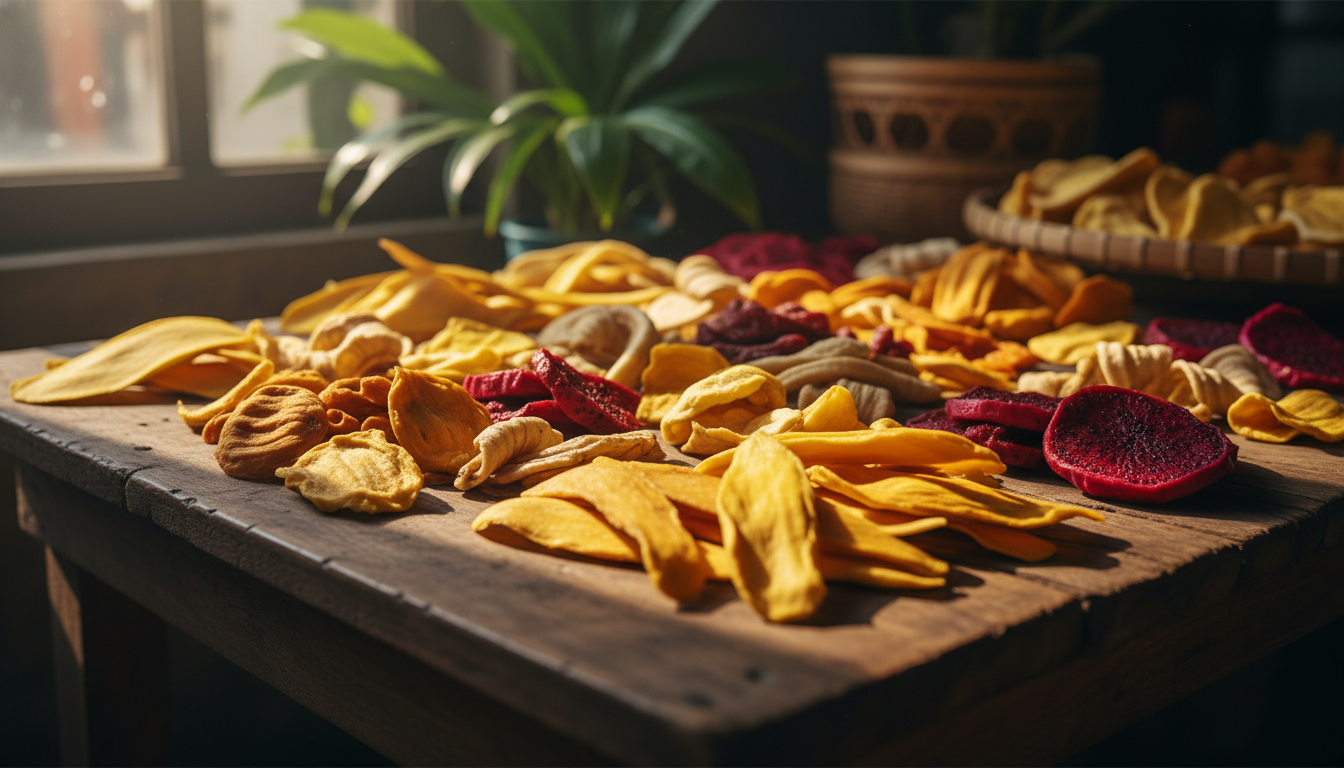
When it comes to classic souvenirs from a Vietnam trip,dried fruit is hard to beat.
The appeal is being able to easily enjoy fruits you rarely see in Japan. But it's easy to get stuck thinking, “There are too many kinds — which should I choose?” or “I don't want to get my souvenirs wrong…”
This article covers Vietnamese dried fruit in detail — the characteristics and flavor of each type, recommended brands, and where to buy them.

I want to buy dried fruit as souvenirs, but there are so many kinds I can't decide.

This article explains recommended dried fruit brands and what to watch for when buying, in detail.
A guide to popular dried fruits by kind
Here we'll look at fruits that are popular as souvenirs from Vietnam.
Depending on your purpose, try looking for them at supermarkets and souvenir shops too.
If you want a classic souvenir: Mango, Pineapple
If you want dried fruit you can't get in Japan: Passion Fruit, Jackfruit, Dragon Fruit
Soft dried mango | Savor the rich sweetness and aroma
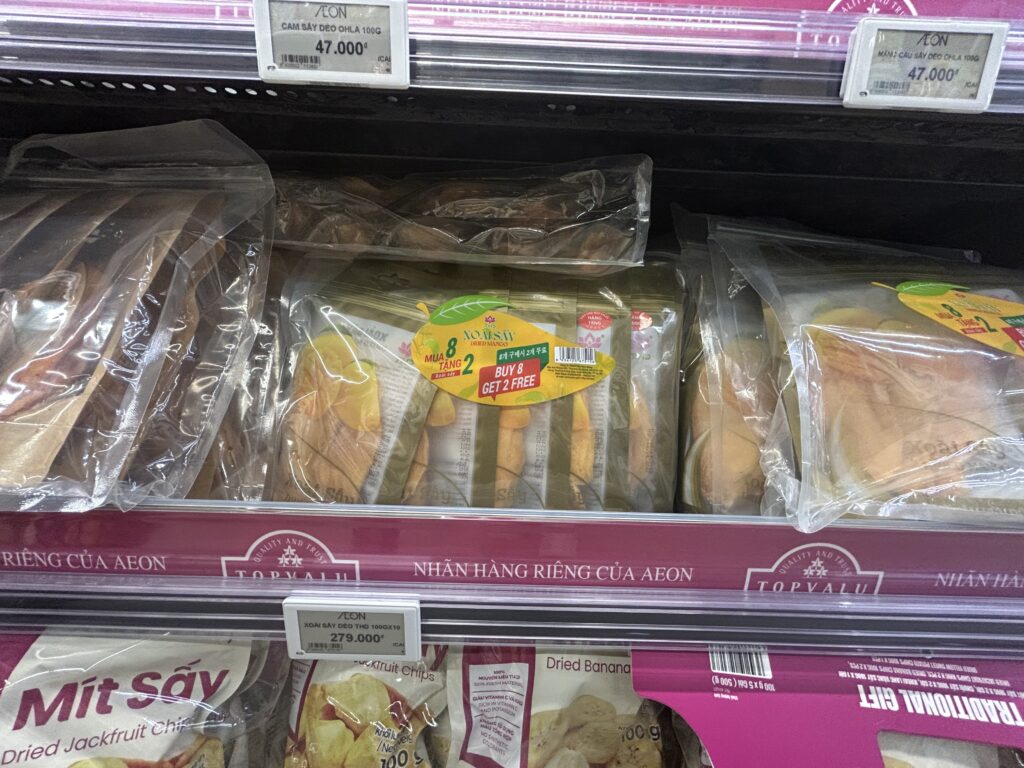
Soft dried mango made from fully ripe mangoes is the classic choice among Vietnamese dried fruits.
If it's your first trip to Vietnam, dried mango is a safe recommendation.
It costs around 49,500 dong per 100g (about 300 yen).
Dried Jackfruit | Prized for Its Crunchy Texture
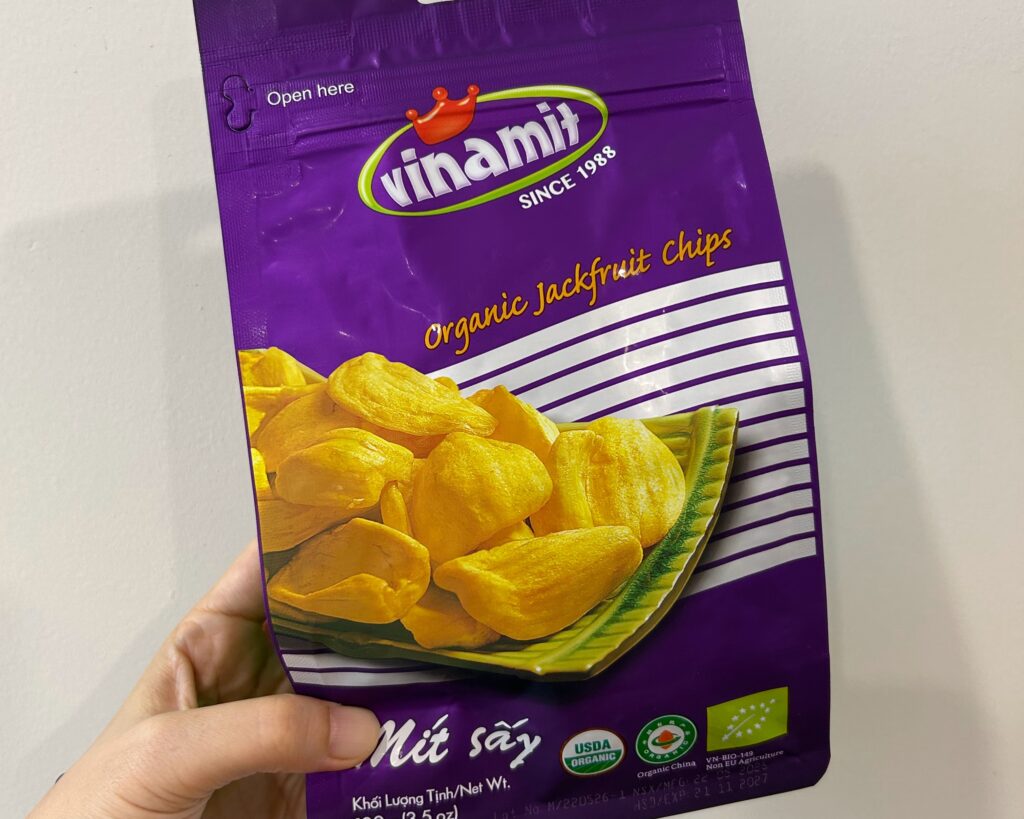
Jackfruit, known for its strong sweet aroma, is hard to find in Japan.
Fresh jackfruit can't be brought into Japan, but dried jackfruit chips make a perfect souvenir。
and while you savor its rich aroma, it's also a great energy boost thanks to its fiber and vitamin C content.
Products made with Vinamit's vacuum-drying technology are especially popular for their quality, priced at around 90,000 dong (about 540 yen) for 210g.
Dried Passion Fruit | Recommended for an Unusual Souvenir
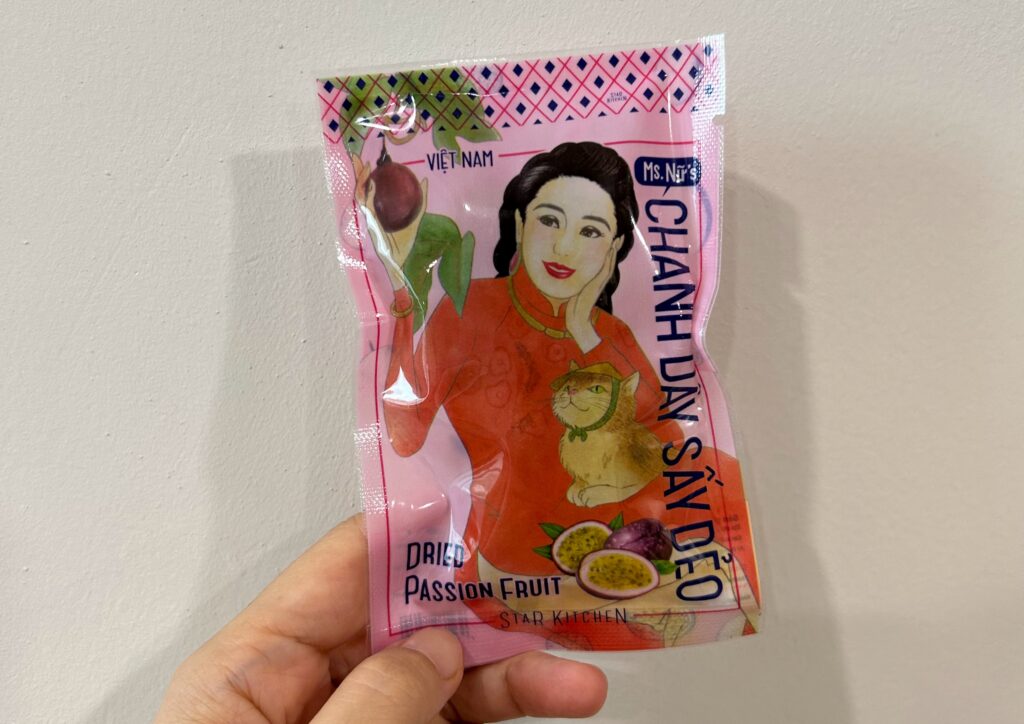
Passion fruit, known for its rich aroma and tartness, may be unfamiliar to some, but it's a staple fruit in Vietnam.
Star Kitchen's dried passion fruitstands out for its distinctly Vietnamese package design.
Its subtle sweetness and tartness are addictive, making it a popular souvenir among women.
As a souvenir made from an unusual fruit, it lets the recipient feel a real sense of Vietnam.
Dried pineapple | Sweet-tart freshness spreads through your whole mouth
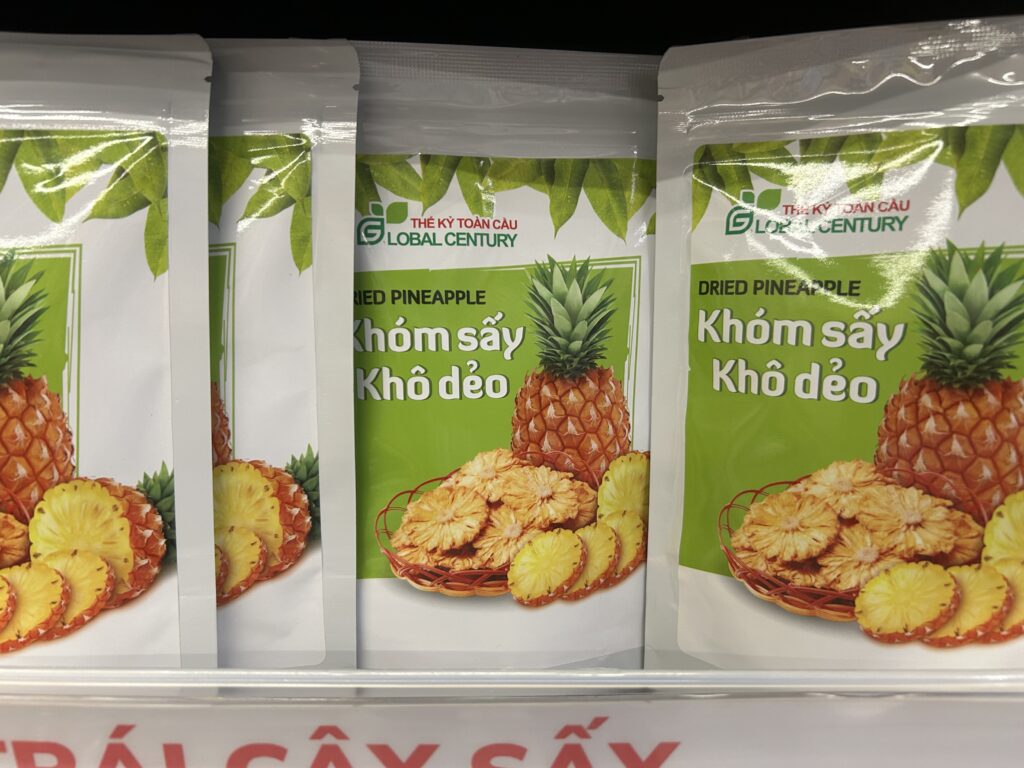
Dried pineapple, with its perfect balance of tartness and sweetness, has a refreshing flavor.
It's rich in vitamin C, making it a popular healthy snack too.
It's a bit chewy, but the more you chew, the more you can taste the pineapple's tartness — it's delicious.
Dried Dragon Fruit | Also a Great Gift for the Beauty-Conscious
Dragon fruit, with its eye-catching vivid color, is one of the tropical fruits that feels distinctly Vietnamese.
The dried version lets you enjoy the little pop of the seeds' texture too.
見た目は華やかですが、ドライフルーツは水分が少なく、同じ重量なら糖分とエネルギーが集中します。美容・健康をうたうより、原材料、砂糖・油の追加、1回量で選んでください。
Recommended brands and tips for choosing
Vinamit | A long-established dried fruit maker
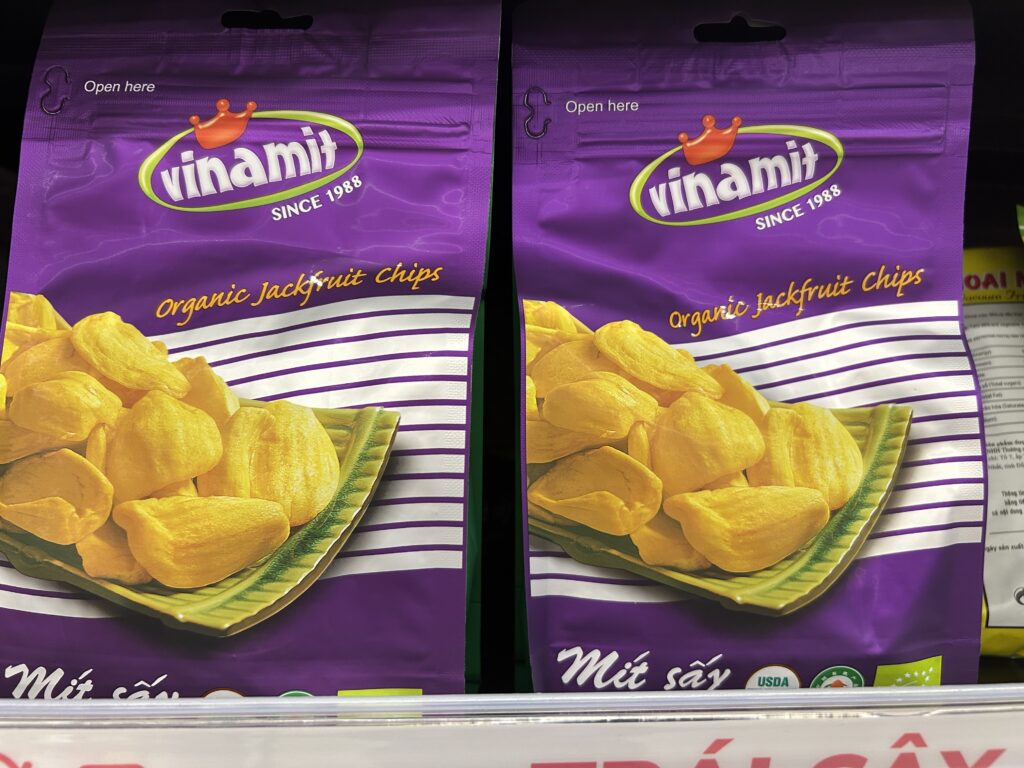
Vinamit, a long-established food maker founded in 1988, is a dried fruit brand that represents Vietnam.
You'll mainly find it in the snack aisle of supermarkets, from a brand trusted for having sold dried fruit for a long time. It comes in generous portions at a low price, making it a handy, easy-to-buy souvenir.
The lineup is wide too, covering all the classic dried fruits — mango, jackfruit, banana, pineapple, and more.
If you're after value for money, Vinamit is the one to go for.
L’ANGFARM | A Souvenir Chain Found Across Vietnam
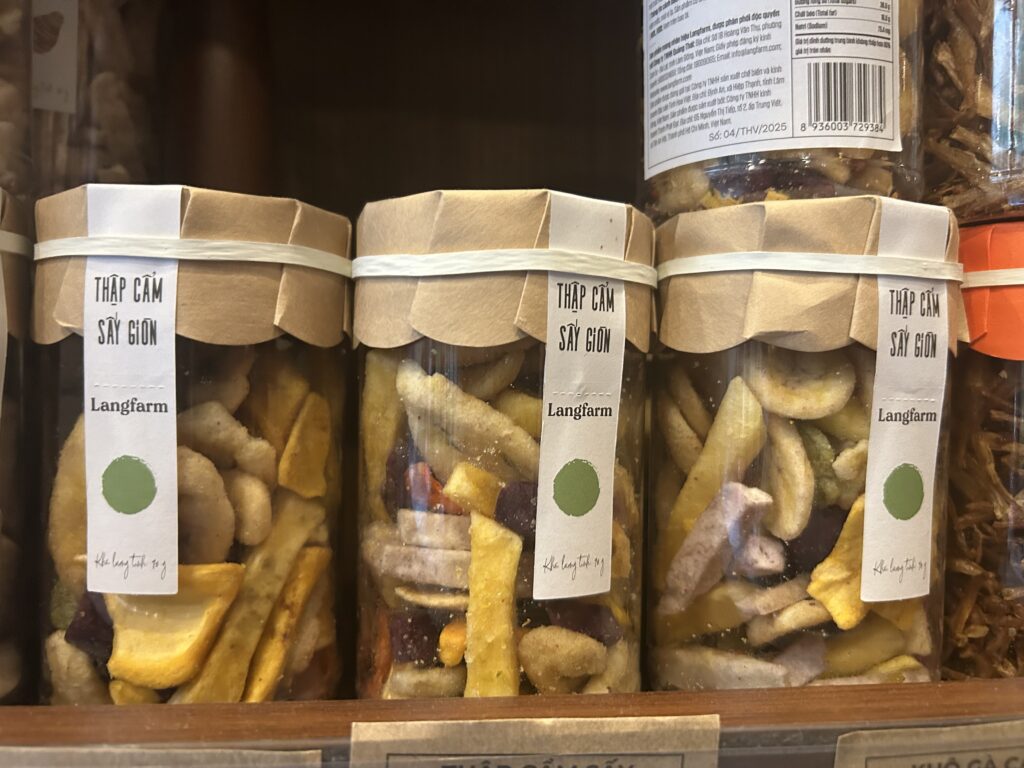
L’ANGFARM is a souvenir brand centered on specialty products from Da Lat. Alongside dried fruit, it carries a wide range of products including artichoke tea, coffee, nuts, and jam.
Though the brand originated in Da Lat, it also has stores in Hanoi, Ho Chi Minh City, Da Nang, Nha Trang, and more, so it's easy to drop by during your trip.
Many of its dried fruits are made to bring out the ingredient's natural taste and texture, and it's a good pick for anyone who wants a slightly more refined package too.
La Petite Epicerie Saigon | A Souvenir With Cute Packaging
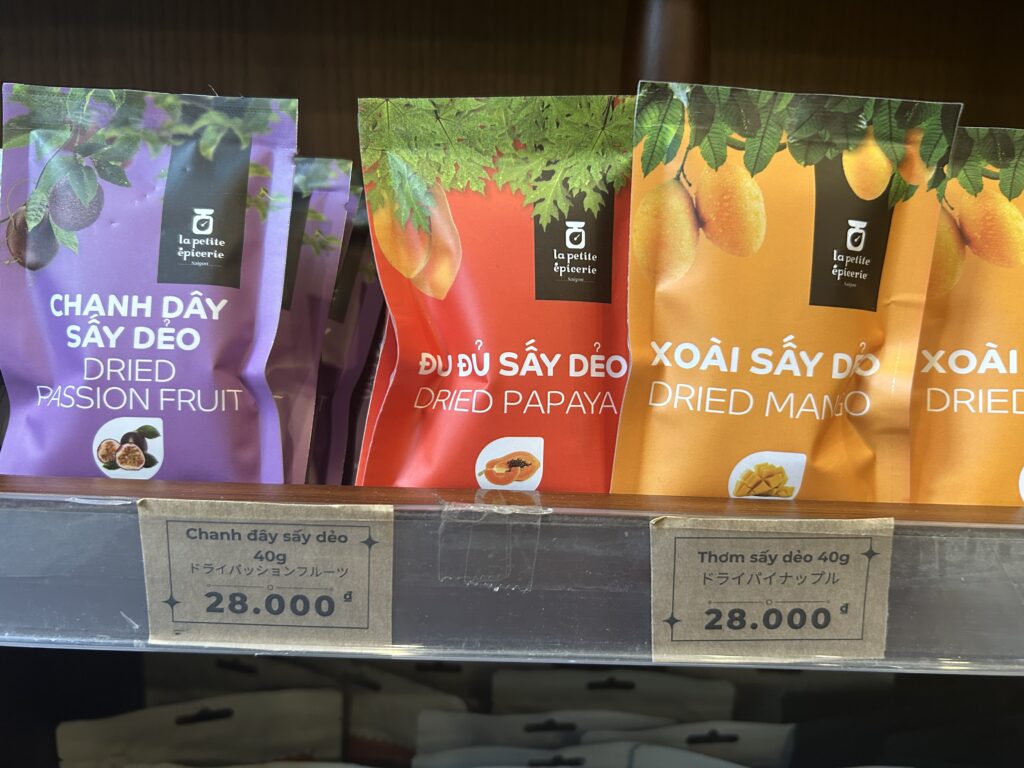
La Petite Epicerie Saigon is a food brand founded in Ho Chi Minh City in 2013.
Its dried fruit lineup is extensive, including mango, passion fruit, papaya, and pineapple. Among them, the mango, with its tropical sweetness, and the passion fruit, with its moderately addictive tartness, are especially recommended.
There's also a smaller 40g size, which is easy to pick up as a small souvenir for a friend or when you want to hand over a combination of a few different flavors.
Ohla | A dried & nut brand popular with Vietnamese people
Ohla, a brand from Luong Gia, is a food maker whose core business is exporting dried fruit, oatmeal, and nuts. It's become a common sight in supermarkets over the past few years.
Its simple package design doesn't look cheap, so it's a welcome gift for anyone. The brand strikes a good balance of quality and price and is well liked by locals in Vietnam too.
YUGOC | A souvenir brand popular with foreigners
YUGOC, which has high name recognition among foreigners as a souvenir brand, is a brand selling sweets themed on Vietnamese tradition and specialties. Among Japanese travelers it became famous for Vietnam-made raw honey, but it also carries a rich variety of dried fruit and nuts besides.
Beyond the classic mango, its dried fruit lineup features unusual options like red dragon fruit and ginger & honey. It's available at more than 20 souvenir shops nationwide, and the travel-friendly, stylish packaging is part of the appeal.
Points for choosing wisely
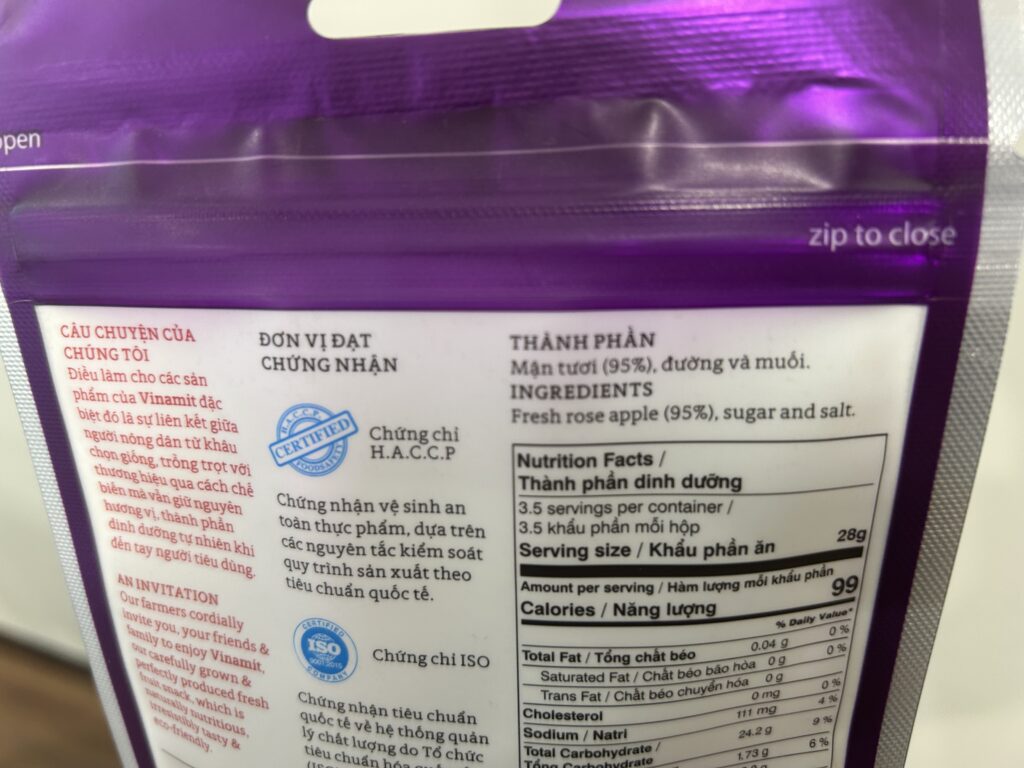
If you have a moment when choosing dried fruit, take a look at the ingredients listed on the back.
砂糖の有無・量は商品表示で確認します。加糖品が必ず安いとは限らず、無糖表示でも果物由来の糖は含まれます。酸味、食感、保存性も含めて選んでください。
Products bought at supermarkets are generally fine, butif you're concerned, it's a good idea to check the production date and expiration date.
- HSD(Hạn sử dụng): Use-by / expiration date
- NSX(Ngày sản xuất): Production date
- EXP(Expire): Expiration date (English label)
Where to buy and the merits by location
Supermarkets | Recommended for the cost-performance-focused
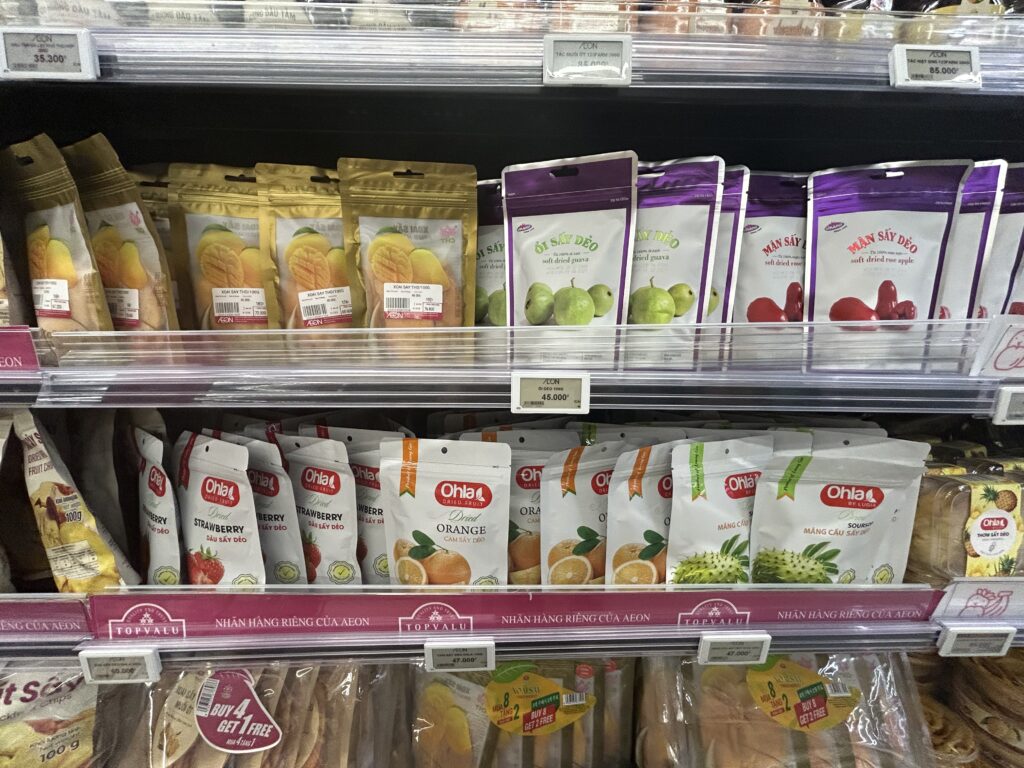
Major supermarkets like WinMart, LotteMart, and AEON have extensive dried fruit sections, so you can easily find neatly packaged options.
Goods shops and souvenir shops | High-quality items for gifts
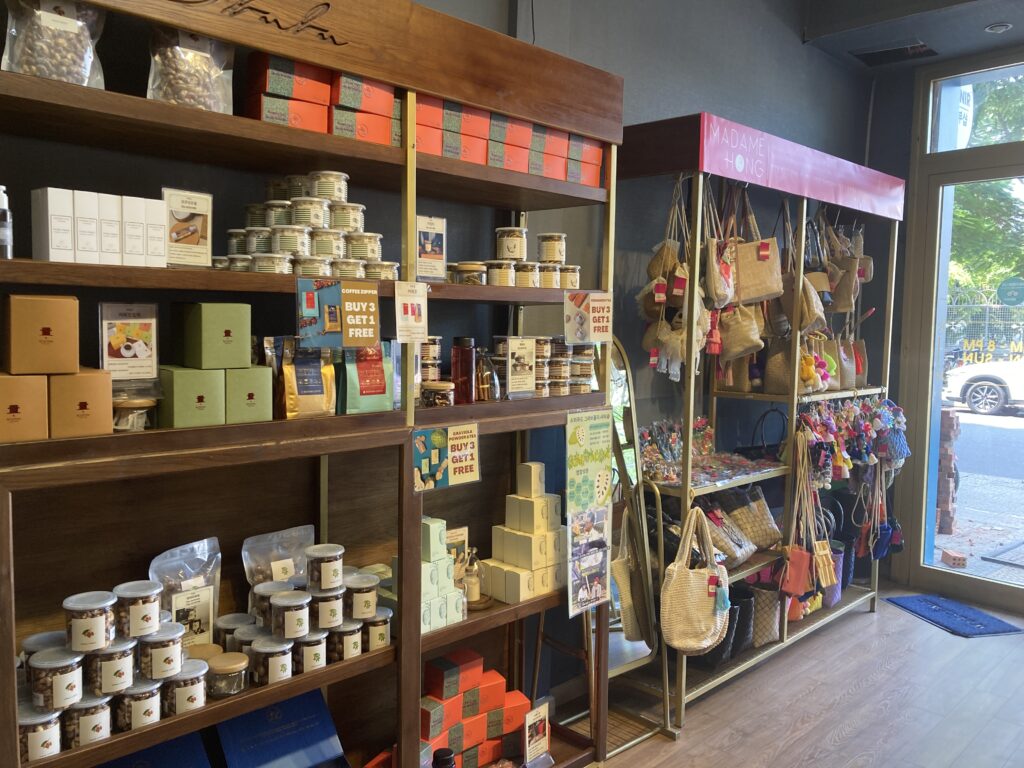
Compared with supermarkets, dried fruit at goods shops and souvenir stores tends to be priced higher.
But in return, you'll find stylish, travel-worthy packaging you won't see at supermarkets or convenience stores, along with souvenir-only original flavors from the brand.
For gifts to important people, like your parents or coworkers, it's a good idea to shop at a goods store.
Convenience stores | Convenient for sudden extra purchases
You can buy dried fruit at convenience stores too, but the variety is limited. It's convenient for a sudden extra purchase or when you need a little souvenir. The price is a bit higher than a supermarket, but many stores are open 24 hours, so the merit is being able to shop without worrying about time.
Buying at Markets Requires Some Caution
There's nothing wrong with buying dried fruit at a market, but check whether the package is sealed and whether the expiration date and production date are clearly marked.
密閉包装や原材料表示は判断材料ですが、それだけで植物検疫の可否は決まりません。果物の種類、乾燥・加熱など加工状態、害虫混入の有無で扱いが変わります。
Cautions when bringing them into Japan
生果実は品目ごとに持込禁止または検査証明書・入国時検査が必要です。十分に乾燥・加工された市販ドライフルーツは持ち込みやすいものの、すべてを一律に「問題ない」とは言えません。購入前に植物防疫所の品目・加工状態別条件を確認してください。
We haven't heard of cases where items were actually confiscated, but caution is needed in the following situations.
Be Careful With Dried Fruit From an Unclear Maker or Ingredients
Check that the package has a label stating the manufacturer, ingredients, production date, and expiration date.
製造元不明の商品は、検疫以前に原材料、衛生、賞味期限を確認できません。密封された市販品でも検査対象になり得るため、申告を求められたら提示してください。
To avoid these risks, it's best to buy dried fruit at a supermarket rather than a market.
Cautions on quantity limits and bringing in large amounts
Bringing in a large quantity of dried fruit may raise suspicion that it's intended for resale.
Buying within a reasonable amount is fine, but bringing in a whole cardboard box of dried fruit can raise suspicion of resale.
It's best to bring back a reasonable amount as souvenirs for family and friends.
袋の表裏で確認する5項目
- 果物以外の砂糖・油・香料・保存料
- 100g当たりではなく1袋の内容量
- 製造日・賞味期限・保存方法
- 未開封で密封され、虫や湿気がないか
- 日本の植物検疫条件
Summary | Bring Your Favorite Dried Fruit Home From Vietnam
Vietnamese dried fruit is a classic souvenir that lets you easily bring home the taste of the tropics.
The lineup ranges from easy-to-eat options like mango to types rarely seen in Japan, such as jackfruit, passion fruit, and dragon fruit.
If you're unsure which souvenir to choose, keep the following points in mind.
- If it's your first time buying, easy-to-eat mango is the classic choice
- If you want something distinctly Vietnamese, jackfruit or passion fruit is recommended
- For value, supermarkets are the easiest place to choose; for gifts, souvenir shops work best
- If you're bringing it back to Japan, the basic rule is to choose sealed products that clearly state the manufacturer
If you choose the product that suits you, the moment you open the bag after returning home, the aroma and taste should bring back your time in Vietnam.
Family and friends can enjoy that distinctly tropical taste too, so be sure to add dried fruit to your list of souvenir options for your Vietnam trip.
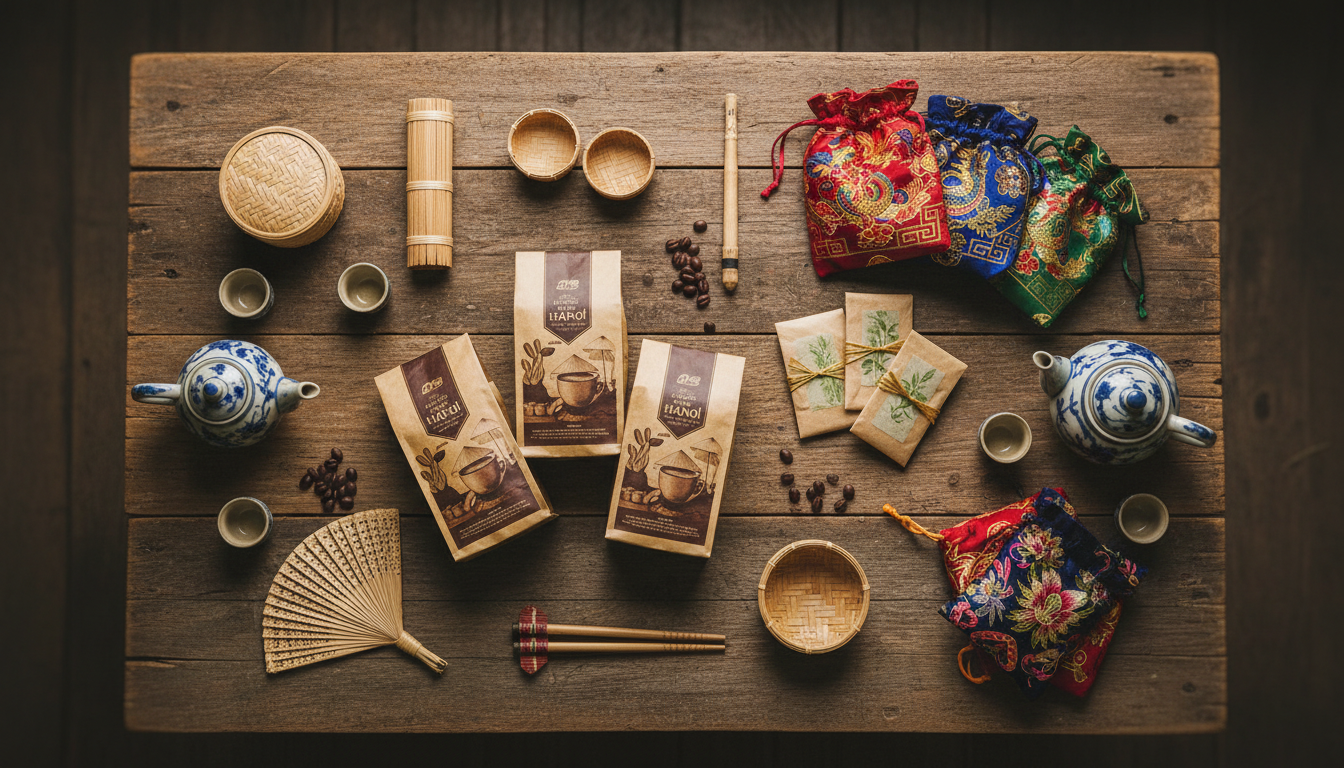

For coffee, tea, and goods to pair with the dried fruit as a gift,our Vietnam souvenir guideyou can pick by who you're giving them to here.