Do you ever think, "I want to buy Vietnamese snacks as souvenirs, but I don't know what to choose," or "I went to a Vietnamese supermarket, but there were just too many kinds"?
お菓子はベトナム土産の定番ですが、味見をしないと選びにくいものです。職場で配るなら個包装、親しい人には好みに合う味、自分用には現地らしいおやつ、と渡す相手を先に思い浮かべると、広い売り場でも候補を絞れます。
In this article, a Japanese resident gives a thorough rundown of the snacks you can buy at Vietnamese supermarkets and souvenir shops.
I want to buy both casual snacks to hand out and something special as a gift.

This article covers 15 items in detail, from snacks for handing out widely and gifts for someone special, to treats for everyday snacking.
Easy to Find at the Supermarket!Vietnamese Snacks That Make Great Souvenirs
Here we've picked out snacks that are easy to buy at the supermarket and that make souvenirs people are happy to receive.
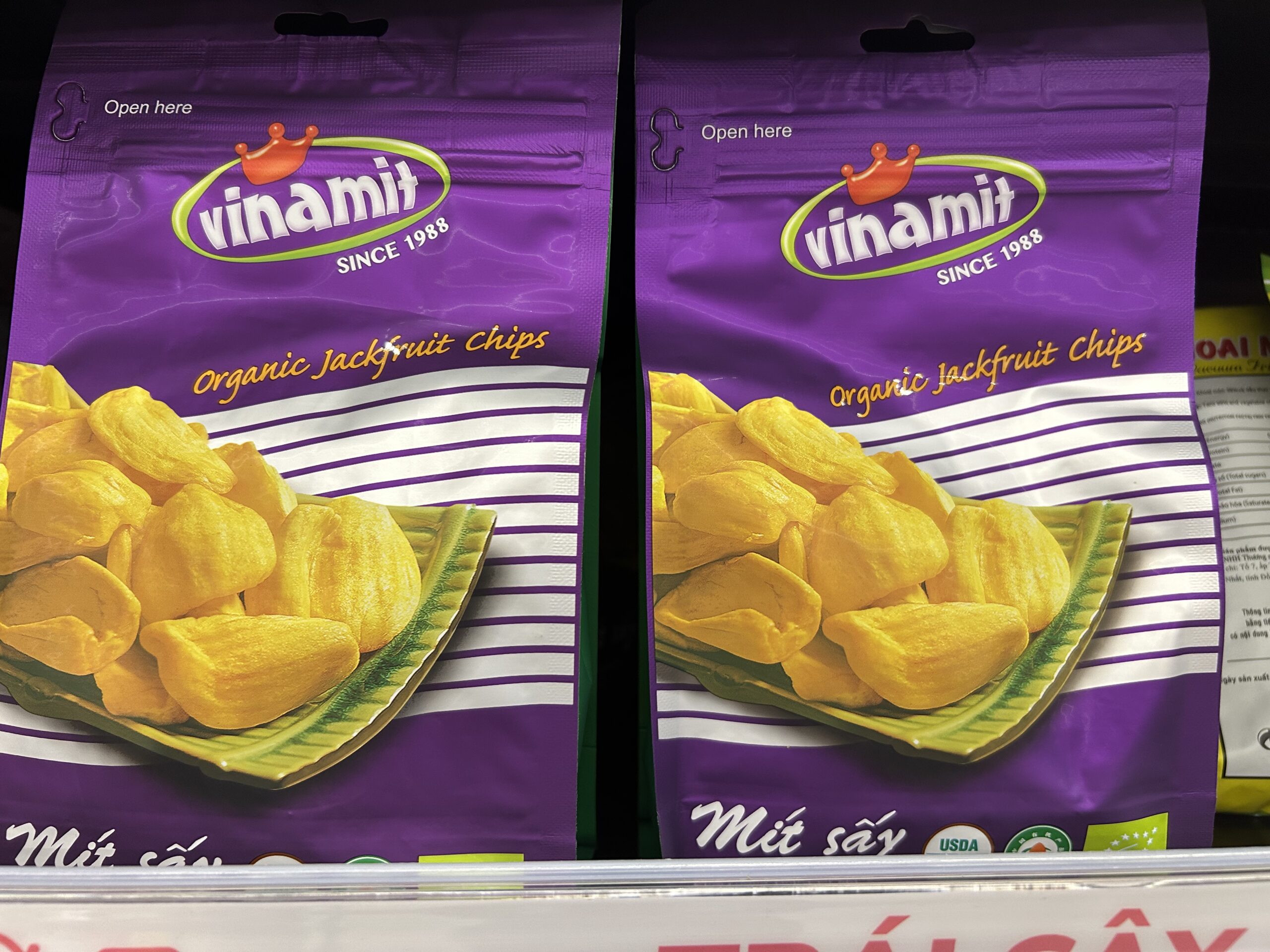
Dried jackfruit chips (Vinamit)
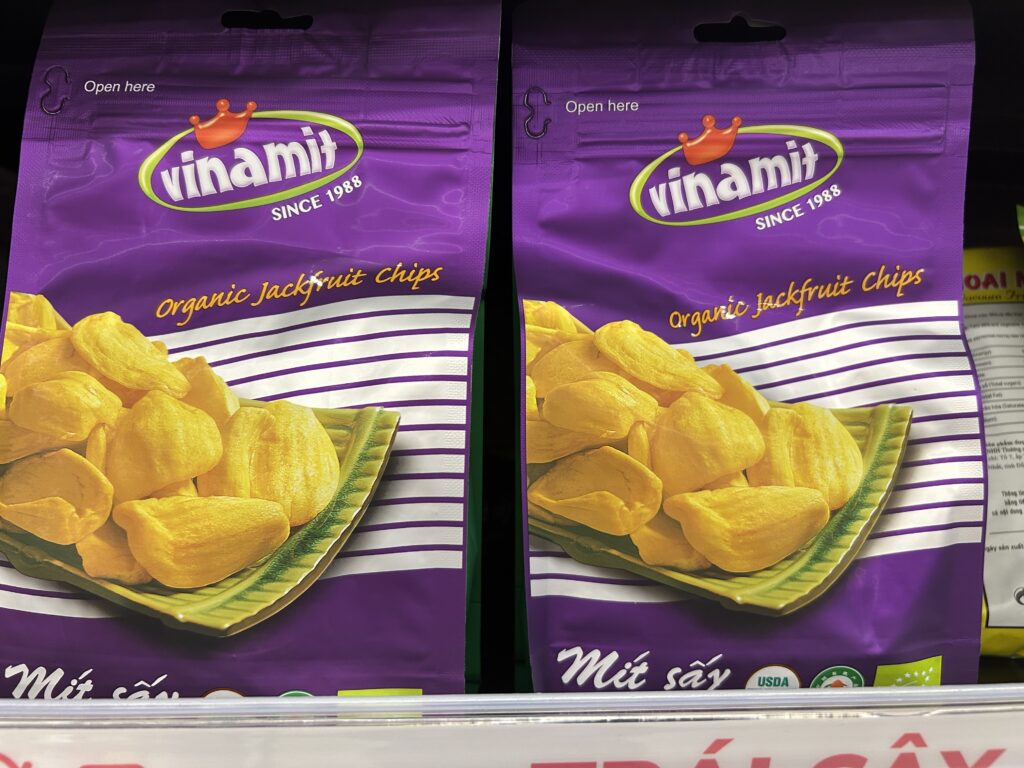
「Vinamit” is a Vietnam-born maker of dried fruit and dried chips.
The classic banana and sweet-potato chips are delicious too, butWhat I often buy as a souvenir is jackfruit chips.
Jackfruit isn't very familiar in Japan, but it's a staple fruit in Vietnam.
These dried chips are addictive, with a crisp texture and a tropical sweetness reminiscent of mango and pineapple.
通常品のほか、写真のようなオーガニックの商品もあります。食感や内容量を比べながら選んでみてください。
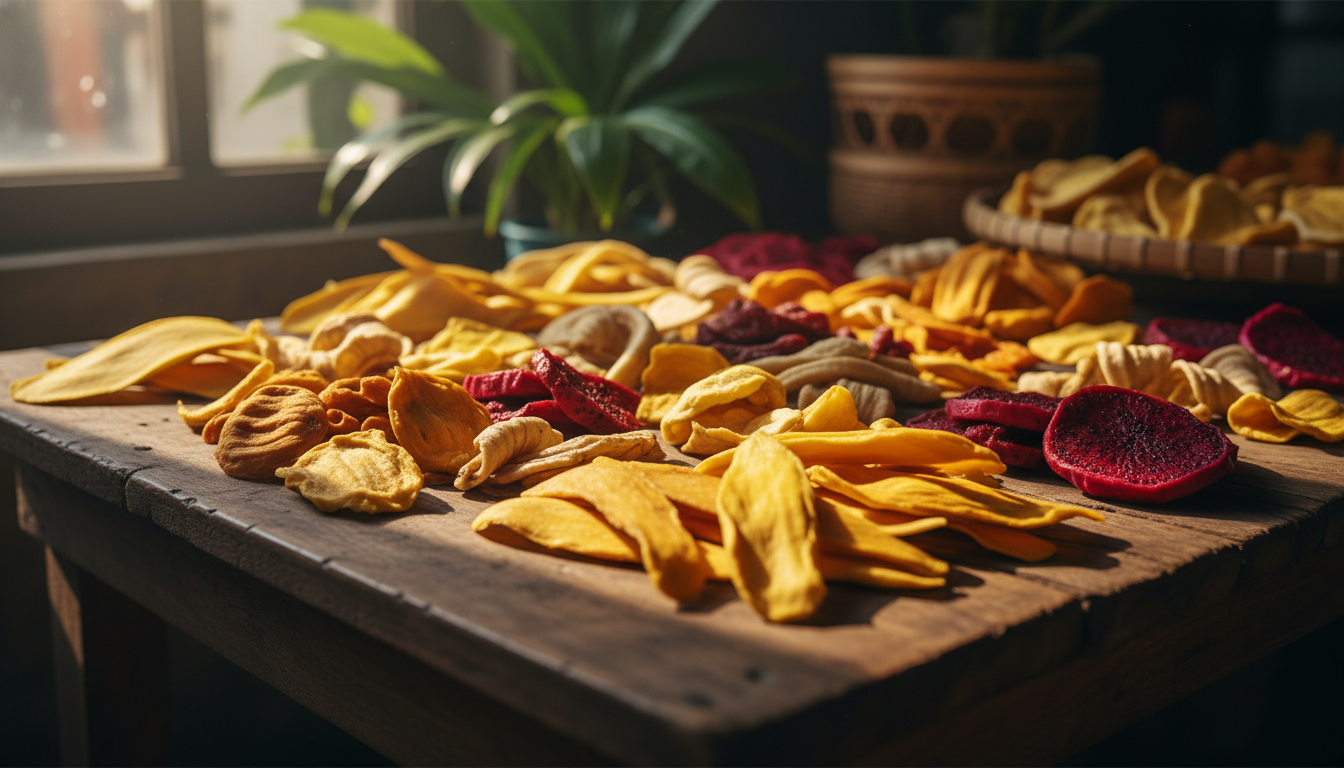
Coconut crackers(individually wrapped)
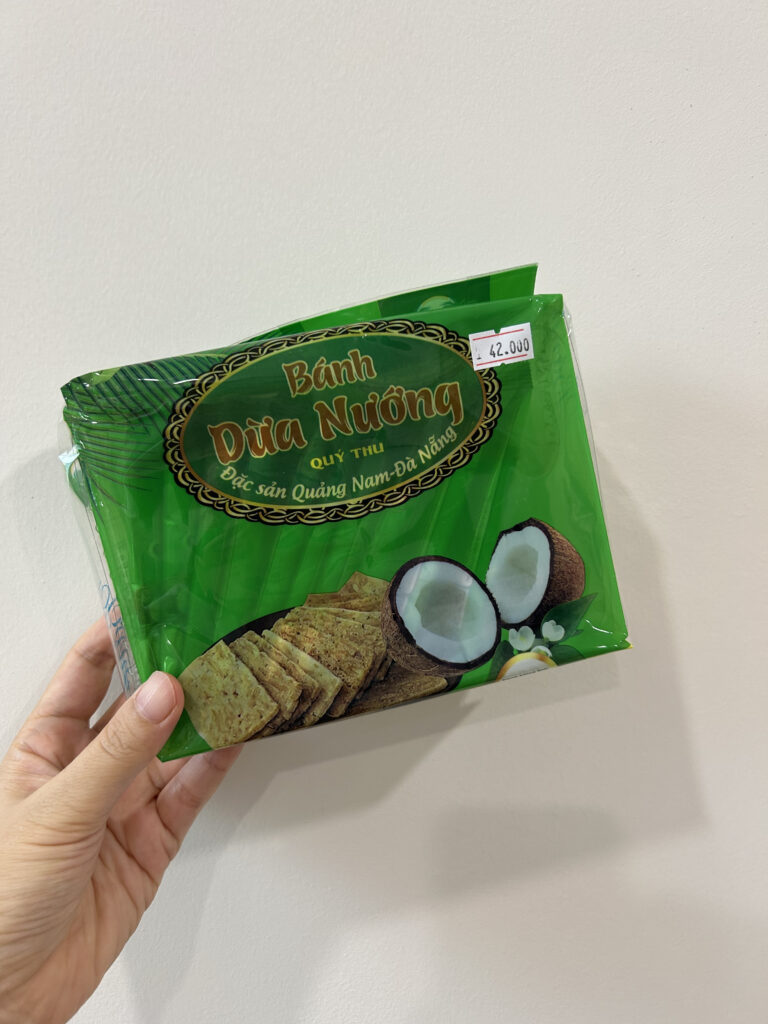
Coconut crackers are a staple you'll see at supermarkets and souvenir shops. Many manufacturers sell them, and配りやすい個包装の商品も見つかります。
ココナッツの香りとカリッとした食感が好きな人には、配りやすいお土産になります。大袋を買う前に中の小袋の数を見ておくと、渡す人数に合わせやすくなります。

Which maker do you especially recommend?
My recommendation is the coconut crackers from a brand called "QUY THU."You can buy it at souvenir shops geared toward Japanese visitors and at markets. If you spot it, do give it a try.
Mung bean sweets
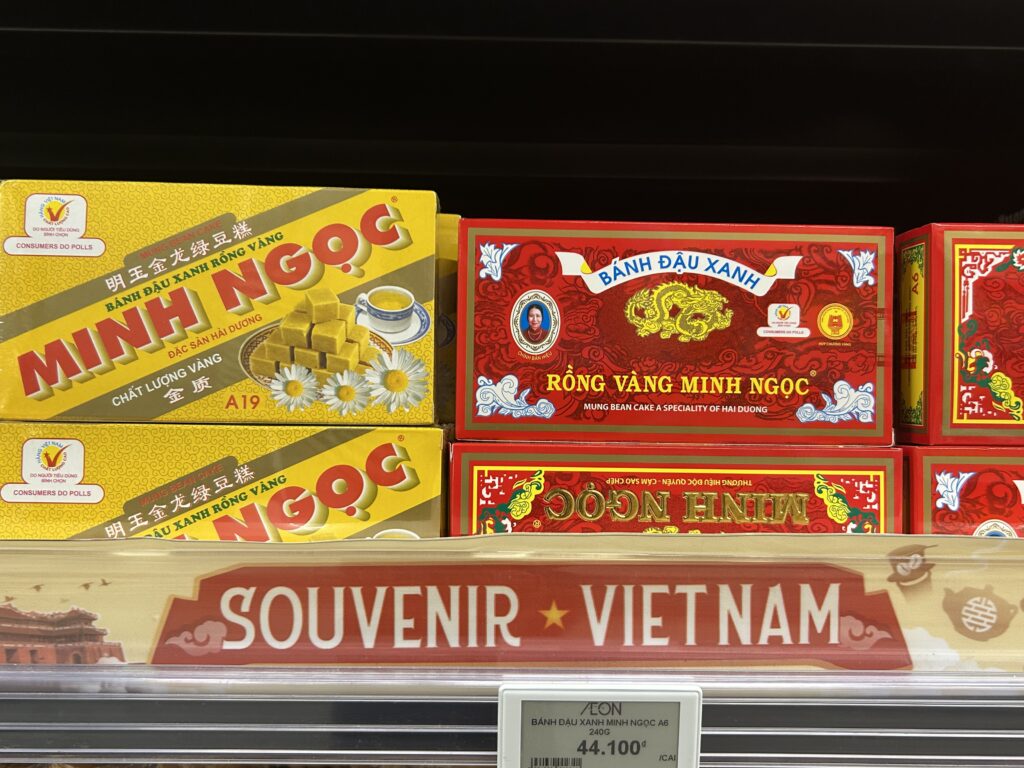
Mung beans are small green beans grown mainly across Asia. In Vietnam, you can enjoy drinks, ice cream, and buns made with them.
バインダウサイン(bánh đậu xanh)とよばれるお菓子は、日本の落雁のようなもので、現地のスーパーで気軽に購入することが可能です。
ほろっと崩れる口当たりは、温かいお茶と合わせると楽しみやすいもの。素朴な味が好みの方への候補になります。箱の中で崩れやすいため、持ち帰るときは荷物の底に押し込まず、期限も商品ごとに確認しておきましょう。
ピーナッツ菓子「Kẹo đậu phộng(ケオ・ダウ・フォン)」
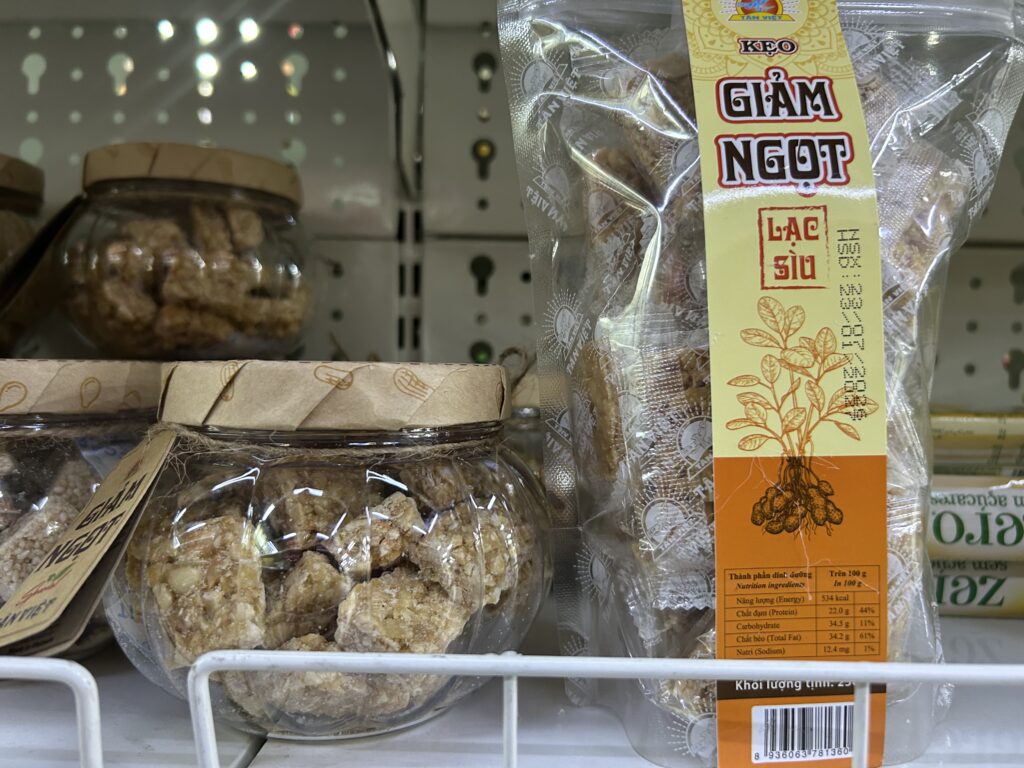
Kẹo đậu phộng(ケオ・ダウ・フォン)は、ピーナッツを砂糖などで固めたベトナムの伝統的なお菓子です。カリッと香ばしい食感で、日本の雷おこしやピーナッツせんべいを思わせる親しみやすい味わい。
It's easy to find at supermarkets and souvenir shops and tends to suit Japanese palates fairly well, making it a good choice if you want an old-fashioned Vietnamese sweet.
Nut-filled seaweed crunch
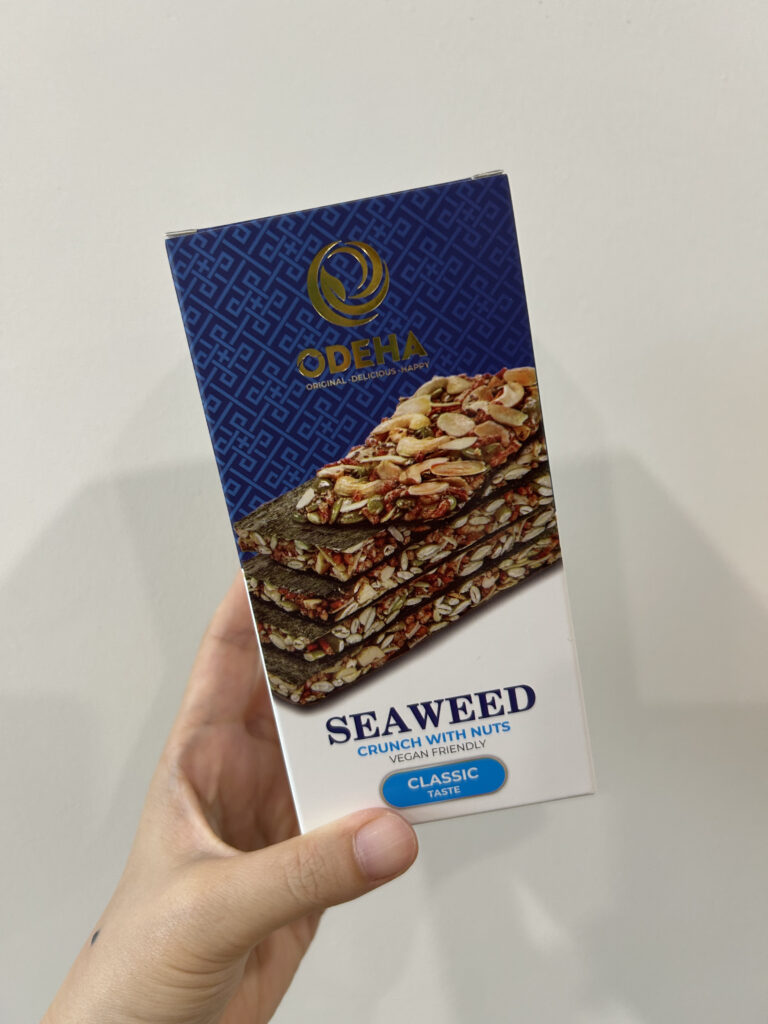
海苔とさまざまなナッツを組み合わせた、香ばしいスナックです。Inside are pumpkin seeds, almonds, cashews, brown rice, seaweed, and more.
You can find it at local supermarkets too, but the "ODEHA" seaweed crunch (pictured) sold especially at Hanoi shops has a rich nut-and-seaweed flavor and a crunchy texture that's hard to resist.
You can enjoy them as a snack with drinks, too
Vietnamese Sweets Worth Giving to Someone Special
For those who feel supermarket snacks are a bit too casual, here are some sweets recommended as gifts for someone special.
STAR KITCHEN's "Banh mi rusks" (individually wrapped)
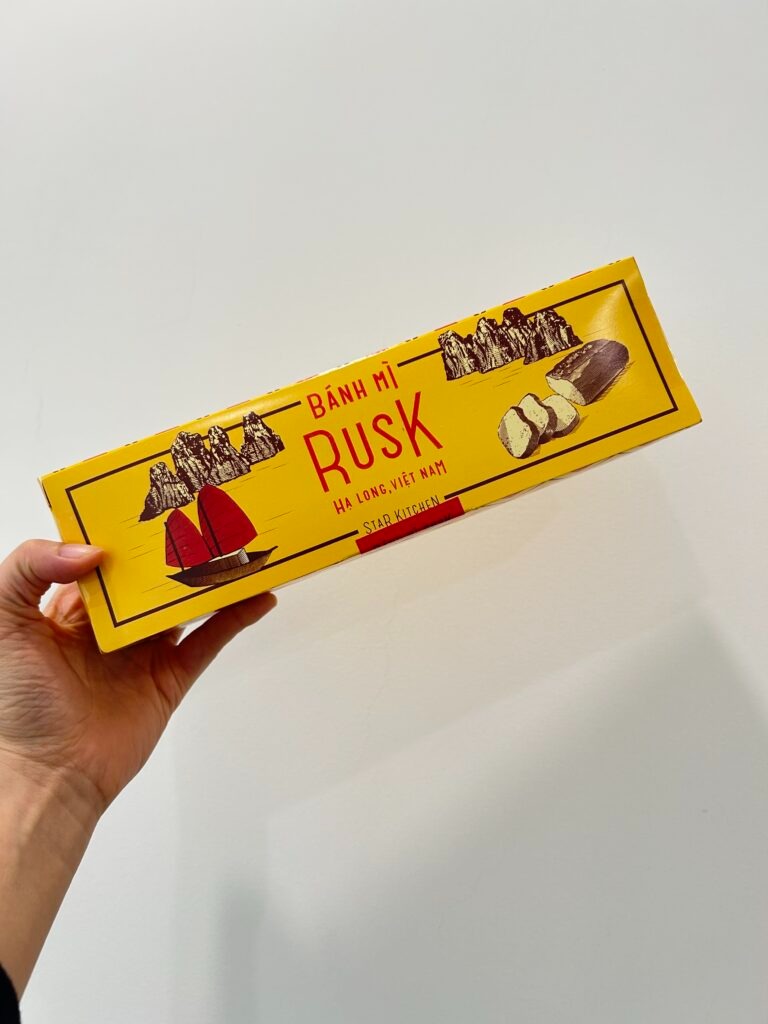
If sweets from the supermarket feel too casual,We recommend STAR KITCHEN's "banh mi rusks."
「ベトナムらしいお土産」がコンセプトの、日本人が商品開発・製造品質管理を手がけるラスクです。箱入りで渡せるので、かしこまった場面にも、友達と味を比べるお土産にも使いやすい一品です。
6種類の詰め合わせには、マンゴー、ココナッツ、パクチー、フォー、ペッパー、コーヒーが入り、1枚ずつ個包装になっています。単一フレーバーの商品もあるため、みんなで食べ比べたいなら詰め合わせかどうかを箱で確かめて選びましょう。
Being an easy-to-eat rusk, it's easy to give even to people who are wary of foreign food.
La Petite Epicerie Saigon | A Souvenir With Cute Packaging
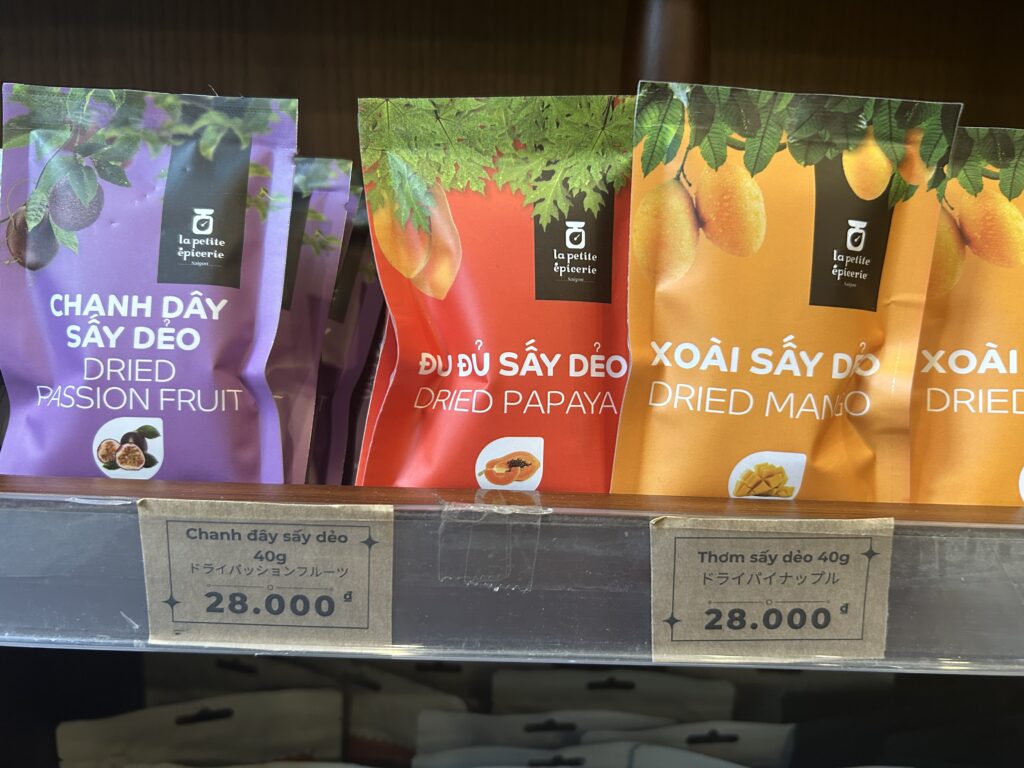
La Petite Epicerie Saigon is a food brand founded in Ho Chi Minh City in 2013.
Its dried fruit lineup is extensive, including mango, passion fruit, papaya, and pineapple. Among them, the mango, with its tropical sweetness, and the passion fruit, with its moderately addictive tartness, are especially recommended.
40gの小袋なら、友人へのちょっとしたお土産にも渡しやすいサイズです。大きい袋もあるので、相手と量に合わせて選べます。
Chocolate from Maison Marou
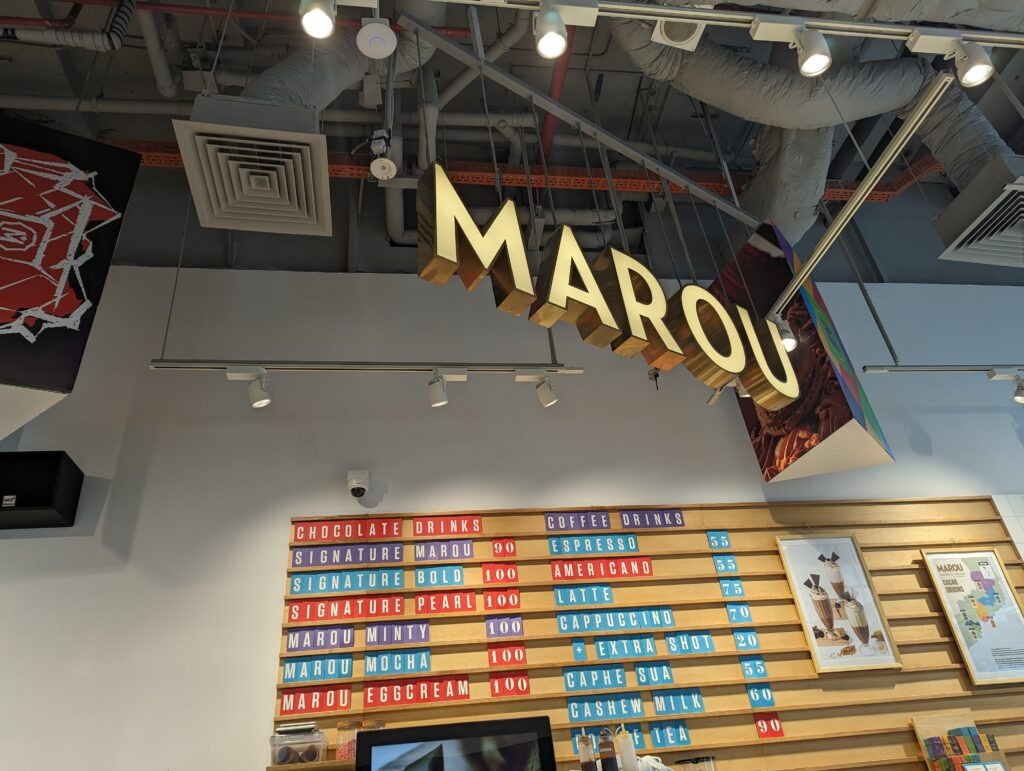
Marou is a premium chocolate brand made with Vietnamese cacao. One of the early adopters of bean-to-bar in Asia, it suits anyone looking for a souvenir that feels distinctly Vietnamese and refined.
The packaging is stylish too, so it works not only as a gift for friends but also as a souvenir for your boss or seniors.
試食が用意されているときは、カカオの風味を比べてから選べるのも嬉しいポイントです。
Maison Marou has several locations in Hanoi. It's also in large shopping centers, so look for the branch nearest you.
ALLUVIA Chocolate
One Vietnamese chocolate brand you shouldn't overlook is ALLUVIA.
It has multiple stores in tourist areas of Ho Chi Minh City and Hanoi, and some locations even let you sample the chocolate.
The packaging, illustrated with nostalgic Vietnamese scenery, makes it a valued choice for a special souvenir.
チョコレートは季節を問わず高温に注意。Maison Marouは18〜24℃の涼しく乾いた場所で、直射日光を避けた保存を案内しています。暑い日の街歩きでは最後に買い、保冷バッグを使っても高温の車内などに長く置かないようにしましょう。
A Good Fit for Japanese Palates, Too!Everyday VietnameseSweets
Vietnam isn't just home to snacks famous as souvenirs — there are also plenty of treats that locals enjoy every day at supermarkets and convenience stores.
Here we introduce staple products that you'll often spot while living locally, perfect for everyday snacking.
These are snacks that suit Japanese tastes, so be sure to try them during your stay.
Pillows
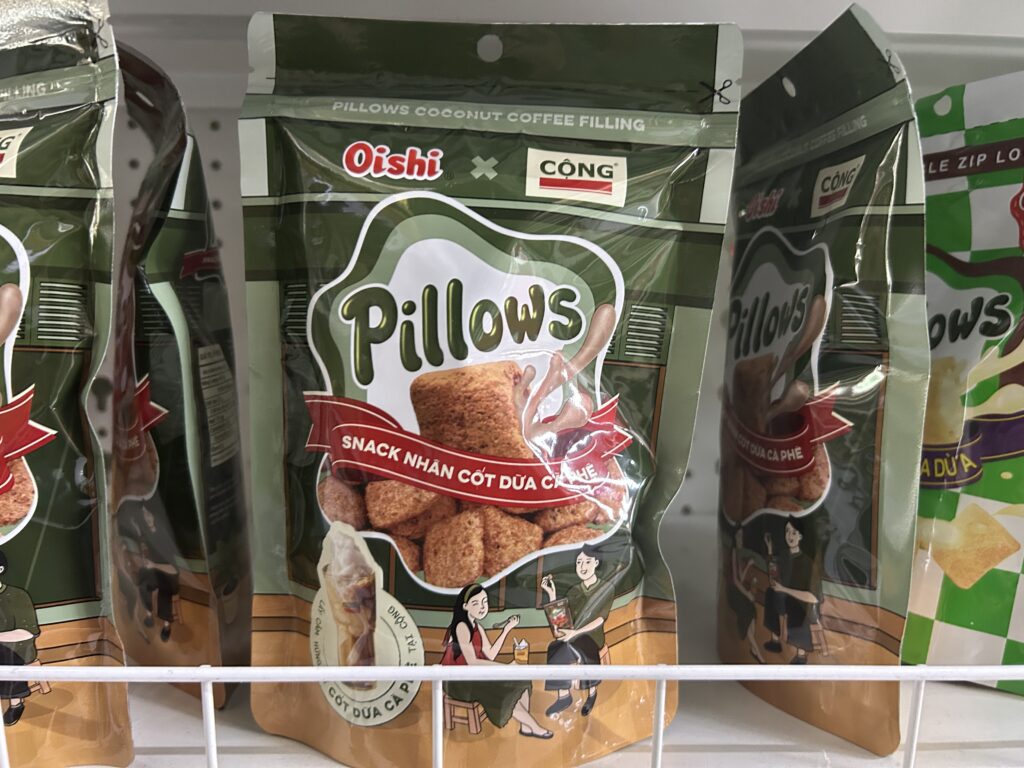
Pillows(ピローズ)は、サクサクとした軽い生地の中にクリームが入った「Oishi」のスナックです。Oishiはフィリピン発のブランドで、ベトナムでも商品を展開しています。現地で親しまれているおやつとして、スーパーで探す楽しみがあります。
Starting with the chocolate flavor, its familiar taste appeals to Japanese palates too, and it's easy for both kids and adults to enjoy.
2026年5月には、ベトナムのコーヒーチェーン「コンカフェ(Cộng Cà Phê)」とのコラボによるココナッツコーヒーフレーバーも食品業界メディアで紹介されました。ココナッツの甘さとコーヒーの風味を組み合わせた商品で、店で飲んだココナッツコーヒーを思い出すきっかけにもなりそうです。
You can find a detailed introduction to Vietnam's popular chain, Cong Ca Phe, in the article below.
Đậu phộng rang(ダウ・フォン・ザン)
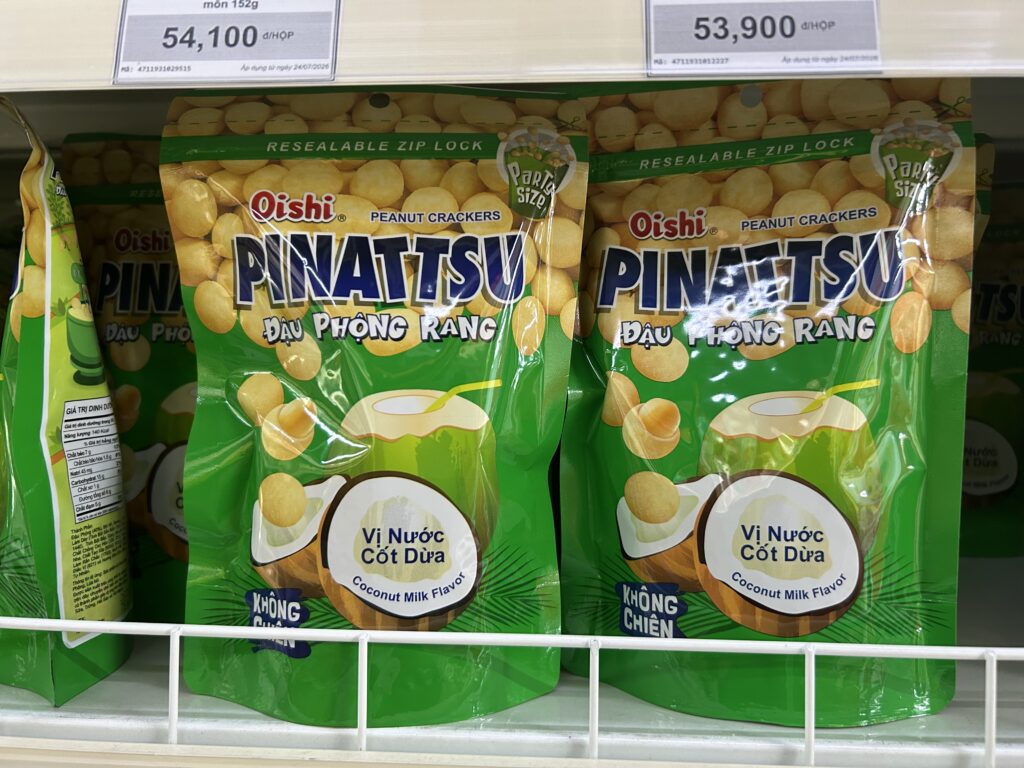
Đậu phộng rangは炒ったピーナッツを指す言葉ですが、ここで紹介するのは衣付きのタイプ。ピーナッツのまわりをカリッとした生地で包み、香ばしさと軽快な食感を楽しめます。甘い味だけでなく塩味のものを選びたい人にも候補になります。
It comes in a range of flavors, including coconut, which is relatively easy to enjoy. It's also a good pick for anyone wanting to try a slightly unusual, distinctly Vietnamese snack.
ICHI Rice Crackers(individually wrapped)
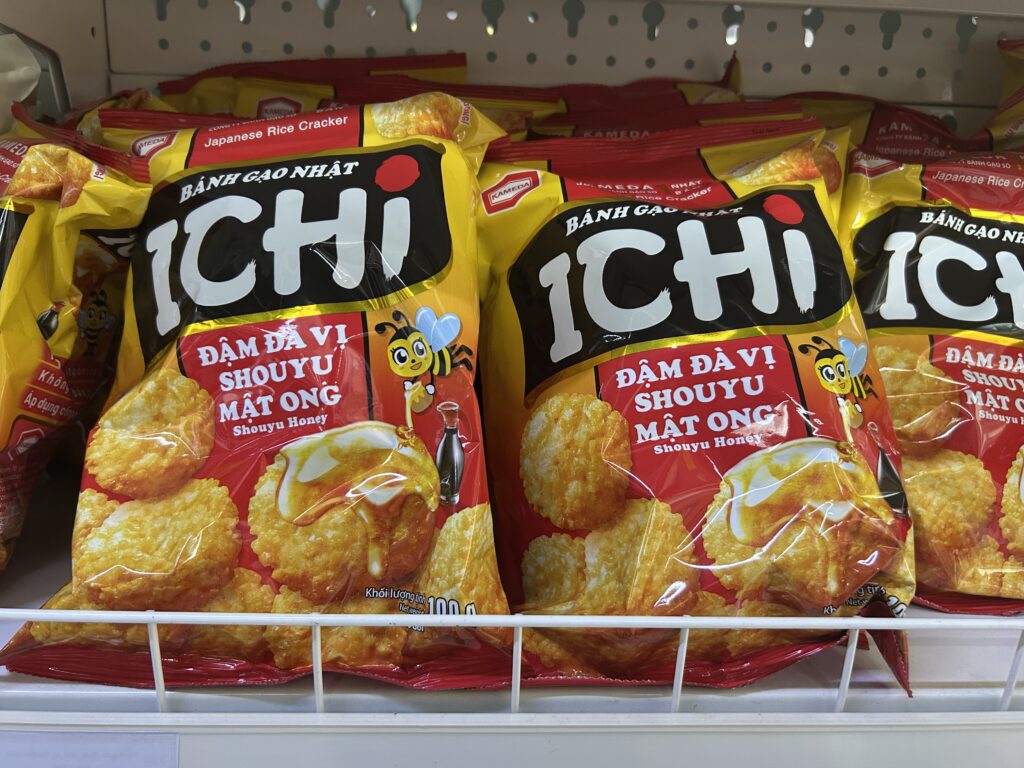
ICHI is a rice cracker brand made by Thien Ha Kameda, a company established jointly by Vietnam's Thiên Hà and Japan's Kameda Seika. It incorporates Japanese rice-cracker-making techniques while tailoring its products to Vietnamese tastes.
The classic is a sweet-and-salty rice cracker made with soy sauce and honey. It has a light, crisp texture that's easy to eat, and it's also a familiar snack for children.
AN Rice Crackers(individually wrapped)
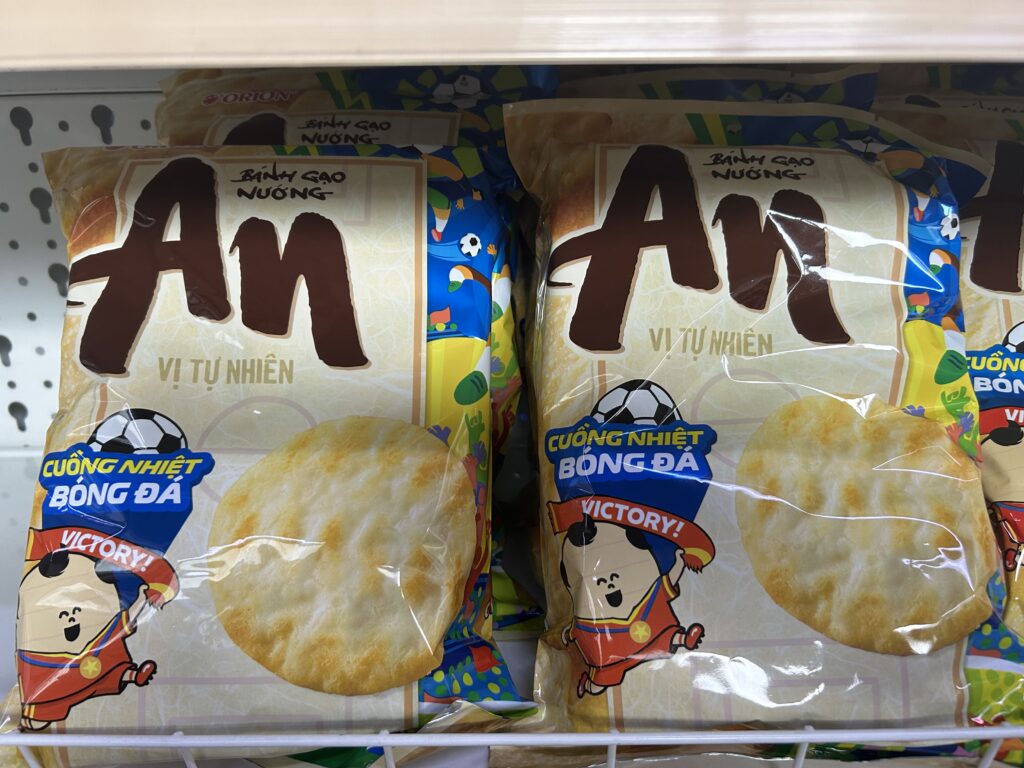
AN is an Orion rice cracker series commonly seen in Vietnamese supermarkets. Besides plain, it comes in various flavors including seaweed and cheese.
The plain type has a mild sweetness and a gentle flavor, making it popular as a snack for children too.
Cosy Biscuits
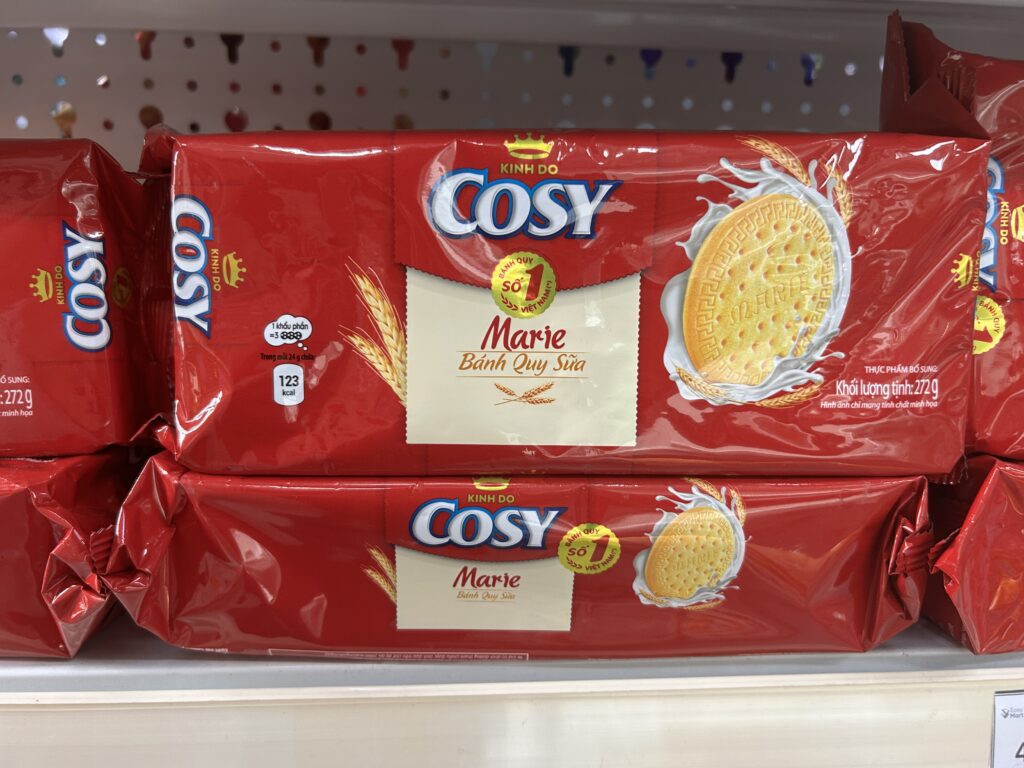
Cosy is a staple biscuit brand sold widely across Vietnam. Among its lineup, Cosy Marie's milk flavor stands out for its simple sweetness and crisp texture.
Many of its products come in large sizes at fairly affordable prices, making it perfect for everyday snacking at home. There are also individually wrapped versions, which come in handy for kids' snacks or when out and about.
GingerCandy
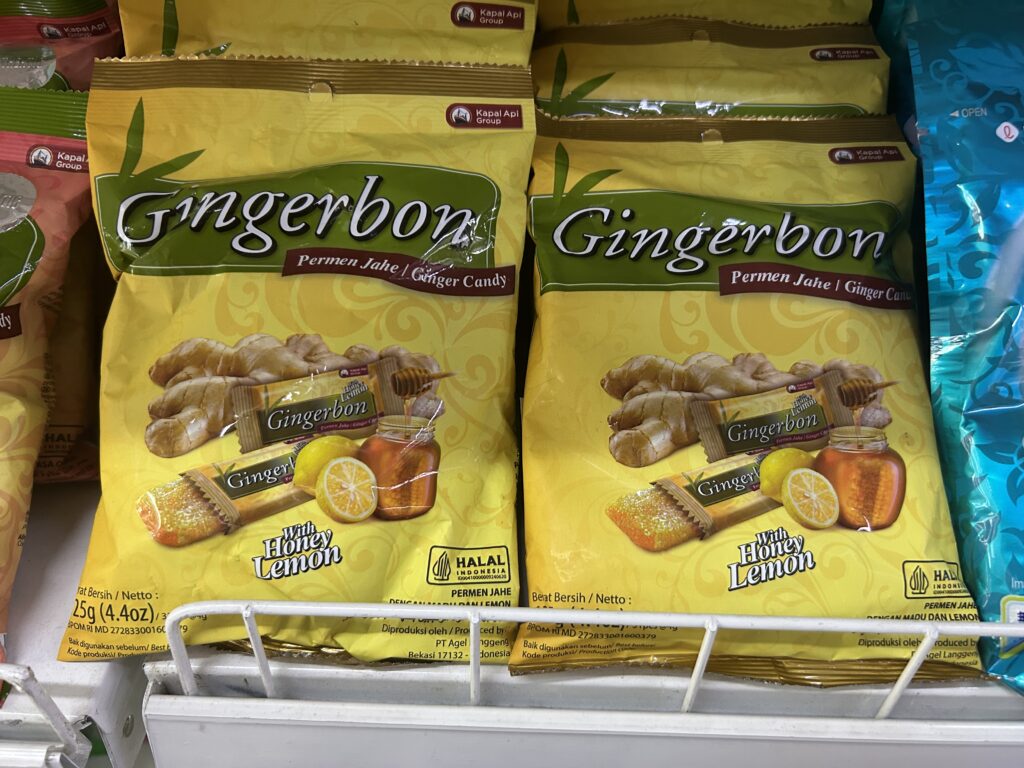
ピリッとしたしょうがの辛さを楽しめる飴です。甘いだけではないお菓子を探す人に向きますが、辛さは商品によって違うので、自分用を一つ試してから贈り物を選ぶと好みに合わせやすくなります。
Where to Buy Vietnamese Snacks?
Each place to buy has its own pros and cons, so it's efficient to choose depending on your purpose.
4 Recommended Places to Buy Vietnamese Snacks
There are broadly four types of places to buy snacks in Vietnam.
| Where to buy | Selection | Price | Recommended for |
|---|---|---|---|
| Large Supermarkets | Staples to snacks in general | Cheaper | Buying in bulk for handouts |
| Markets | Mainly traditional sweets | Cheaper | For those who prioritize a local feel |
| specialty shop from Tsukiji, Tokyo, | Mainly branded sweets | Pricier | For gifts / yourself |
| Airport duty-free shops | Classic sweets + brands | Pricier | For last-minute purchases |
価格や内容量を比べてまとめ買いするなら大型スーパー、箱や味の相談までしたいなら専門店、と使い分けましょう。表は一般的な傾向で、同じブランドでもサイズやセット内容で価格は変わります。空港は買い忘れたときの候補ですが、目当ての商品があるなら街中で選んでおくと余裕が持てます。
Forgot to Buy Something? Where to Get Vietnamese Snacks in Japan
「現地で買い忘れた」「もう一度あの味が食べたい」という方向けに、日本国内でベトナムのお菓子を探すときの候補を紹介します。
Kaldi Coffee Farm
カルディは輸入食品を探す候補の一つです。ただし、ベトナムのお菓子の扱いは店舗や時期で変わるため、旅行先で見つけた同じ商品をいつでも買えるとは限りません。商品名や原産国を公式オンラインストアで調べてから、近くの店舗へ確認すると探しやすくなります。
Amazon / Rakuten imported-food stores
Amazonや楽天市場では、ベトナム産のココナッツ菓子などを商品名から探せます。レビュー数だけでは保管状態は分からないので、販売者、届く時点の賞味期限、内容量を見比べましょう。現地で気に入った商品の袋を写真に残しておくと、似た名前の別商品と見分けやすくなります。
Summary: Choose Vietnamese Snacks Based on Who You're Giving Them To and Why
Vietnam offers all kinds of snacks, from casual staples you can pick up easily at the supermarket, to premium chocolates worth giving to someone special, to snacks locals enjoy as everyday treats.
If you're not sure what to choose as a souvenir, use the following as a guide.
- For handing out widely, individually wrapped items like coconut crackers are convenient
- If you want something distinctly Vietnamese, jackfruit chips and mung bean sweets are recommended
- If you want to enjoy snacks unique to the local scene, supermarket staples like Pillows, ICHI, and AN are also worth trying
A large supermarket in particular lets you find everything at once, from snacks for handing out to everyday treats. On the other hand, if you want to choose a special gift, a specialty chocolate brand store makes it easier to pick something out.
When you visit Vietnam, be sure to browse the supermarkets and souvenir shops and pick up any snacks that catch your eye.
If you'd also like to choose coffee, tea, or other goods besides snacks,our Vietnam souvenir guideyou can pick by who you're giving them to here.