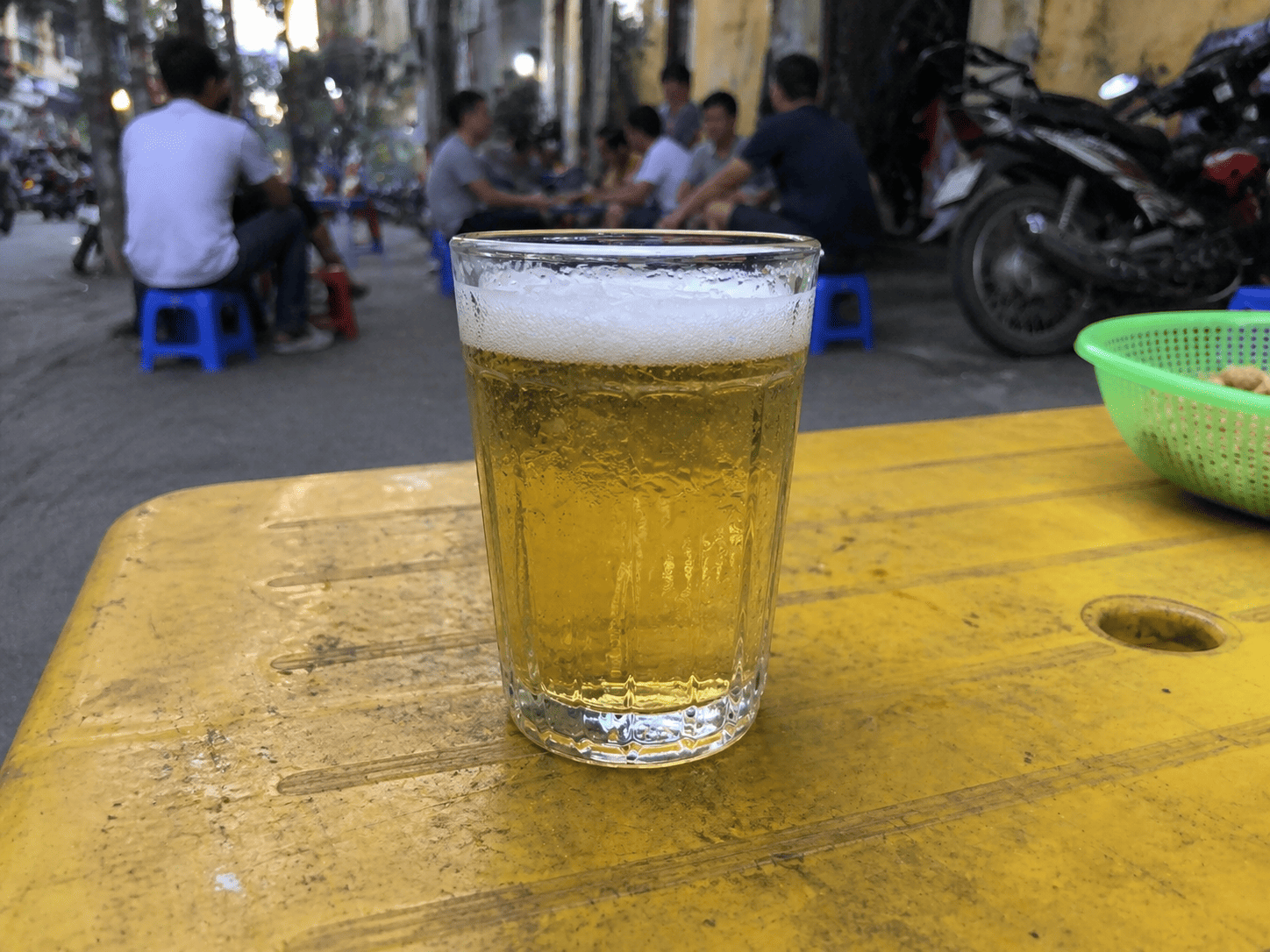
ビアホイは、ハノイの日常に根づく軽い生ビールです。安さは魅力ですが、「必ず1杯60円」「どの店も当日醸造」と固定的に考えると実情から外れます。価格、提供方法、鮮度は店と時期で変わるため、注文前にVND表示と銘柄を確認してください。
この記事ではタヒエン通りを中心に、初めてでも無理なく楽しむ順番、衛生・支払い・貴重品管理、クラフトビールとの違いを整理します。安さを競うより、路上の飲食文化を安全に体験するためのガイドです。
先に結論:最初の一杯で確認すること
- 着席前にビールと料理の価格をVNDで確認
- 氷・グラス・料理の衛生状態に違和感があれば店を変える
- スマホや財布を道路側・テーブル上に置かない
- 一気飲みの誘いは断ってよく、水と食事を挟む
What is Bia Hoi? A day-only, morning-brewed draft beer
Bia hoi is a draft beer that spread in northern Vietnam after the French colonial era, "brewed in the morning and drunk up within the day." A piece of wisdom from an age when cold-storage equipment wasn't widespread, a rotating sales style took hold in which kegged beer is delivered to town stalls each morning and sold out by evening.
Low alcohol 3–4%, a light mouthfeel
Bia hoi's alcohol content is 3–4%, lighter than canned beer (around 5%), designed to be gulped down in Vietnam's muggy climate. With an easy-to-drink, grainy taste using malt, hops, and rice, even first-timers get used to it right away.
1杯10,000VND前後から:価格は店で確認
価格は10,000〜15,000VND程度と紹介されることが多いものの、観光地、容量、銘柄で変わります。「世界最安」はメディア上の呼称で、公的な価格比較ではありません。円換算ではなく店頭のVND価格を確認してください。
The charm of the "freshness" poured straight from the keg
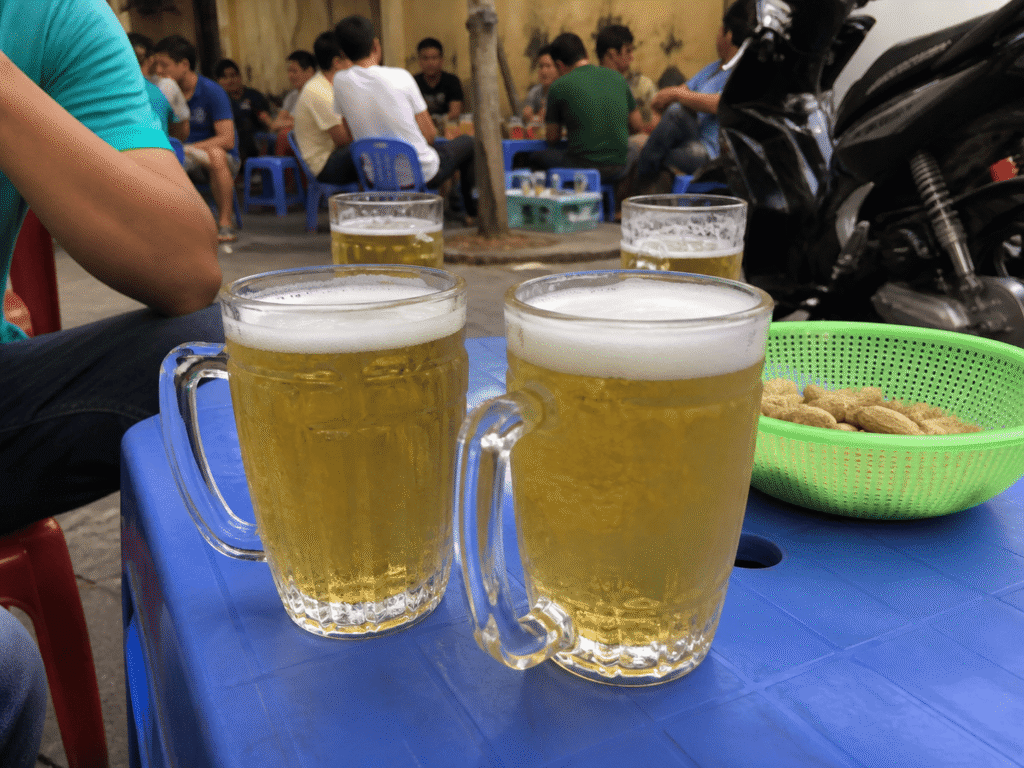
It's distinguished by a cloudy texture poured straight from the keg, not found in bottled or canned beer. The style of adding ice to chill it is Vietnamese too, and the icy mug feeling really hits the spot on a hot night.
How to walk Hanoi's "bia hoi street," Ta Hien Street
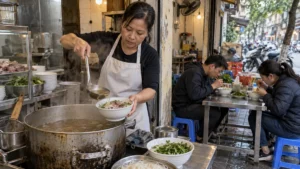
Tạ Hiện (Ta Hien) Street in Hanoi's old town is one of the world's most famous bia hoi streets, where more than 20 bia hoi stalls line up within just 200 m. At the Tạ Hiện × Lương Ngọc Quyến intersection, called "Bia Hoi Corner," chairs are lined up across the whole street at night.
- Location: the center of the old town, a 7-minute walk from Hoan Kiem Lake
- Bia Hoi Corner Google Maps
How to enjoy it by time of day
| Time slot | Atmosphere | Recommendation level |
|---|---|---|
| 9:00〜17:00 | Daytime drinking centered on local uncles | ★★ (for the local-experience crowd) |
| 17:00〜19:00 | Office workers on the way home from work, the buzz starting to build | ★★★★ |
| 19:00〜24:00 | The peak of tourists and local youth, the busiest | ★★★★★ |
| 24:00〜2:00 | Centered on late-night shops, many tipsy patrons | ★★★ (caution needed) |
For first-timers, the 19:00–21:00 window is best. It's a time slot with a wide choice of stalls and high safety. Weekends get even more crowded, so for grabbing a seat, aim for right after the 19:00 opening.
The history of Ta Hien Street
A street with several hundred years of history since the era of Thang Long (Hanoi's old name), originally a commercial area where artisan guilds gathered. After Vietnam's reunification in 1975, it changed into an entertainment district, and since the 2010s, with the surge in foreign tourists, it became world-famous as a bia hoi street. "1900 Le Théâtre," a colonial-era theater renovated, is also on this street—a distinctive landscape where history and the present mingle.
5 popular bia hoi stalls on Ta Hien Street
Ta Hien Street is lined with similar stalls, but there are differences among the popular shops locals choose. The criterion is "having a line = fast turnover = fresh beer."
| Shop name | Characteristics | Price per glass |
|---|---|---|
| Bia Hơi Hà Nội (a long-established corner shop) | High share of local customers, fresh beer | 10,000VND |
| Bia Hơi Tạ Hiện | Tourist-friendly, with an English menu | 12,000〜15,000VND |
| Bia Hơi Hải Xồm | A large shop, for groups | 10,000〜12,000VND |
| Bia Hơi Cổ Tân | A retro atmosphere, many local uncles | 10,000VND |
| Bia Hơi 19C Ngọc Hà | A long-established shop a bit away from Ta Hien | 8,000〜10,000VND |
注文方法は「Một bia hơi(モッ ビアホイ)」で「ビアホイ1杯」の意味。指で本数を示せばさらに伝わります。お通し(おつまみ)が出てくる店もあり、有料の場合があるため、不要なら料金を確認して断って構いません。
8 classic snacks that go with bia hoi
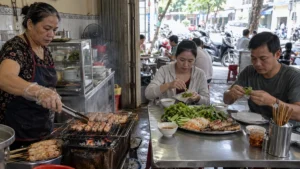
At bia hoi stalls, it's classic to enjoy traditional Vietnamese snacks that go with beer alongside it. At 20,000–80,000 VND per item (about 120–480 yen), they're affordable.
- Nem chua rán (nem chua ran): fried fermented-pork spring rolls; the sourness pairs perfectly with beer
- Chân gà nướng (chan ga nuong): grilled chicken feet, full of collagen
- Bò khô (bo kho): spicy beef jerky; the salad with green papaya is a staple
- Đậu phộng rang (dau phong rang): salt-roasted peanuts, a sure bet at bia hoi stalls
- Mực khô nướng (muc kho nuong): grilled dried squid, the best drinking snack
- Bánh xèo (banh xeo): Vietnamese-style crispy pancakes
- Lạc rang muối (lac rang muoi): salt-boiled peanuts, for a light nibble
- Phá lấu (pha lau): stewed offal; the star-anise aroma gives a deep flavor
For first-timers, the three-item set of Nem chua rán + Đậu phộng rang + Chân gà nướng is a sure bet. With 3–4 people, about 200,000 VND (about 1,200 yen) fills you up.
Safety & manners tourists should grasp
Bia hoi is a cultural experience you can enjoy safely, but there are a few points to note that come with the street culture of the stalls.
Don't leave valuables on the table
Cases of valuables vanishing the moment you leave your seat at a street stall happen frequently. Always keep your smartphone and wallet in a pocket or body bag, and don't leave them on the table. The rule is to keep your backpack on your lap or strapped to a chair leg.
Always check the price before ordering
観光客向け屋台の中には外国人価格を提示するところも。注文前に「Bao nhiêu?(バオニュー=いくら?)」と確認するのが安全。掲載価格は固定相場ではありません。高いから不正と決めつけず、注文前にメニューと総額を確認し、納得できなければ別の店を選びましょう。
For payment, prepare small-denomination cash
Street stalls don't take credit cards—cash only. Since large 500,000 VND (about 3,000 yen) bills are disliked, preparing plenty of small bills of 20,000–100,000 VND (120–600 yen) makes payment smooth. For details on exchanging money, seethe Vietnam money-exchange guidefor details.
Notes for solo women and those with children
Visiting alone as a woman is basically no problem, but the late-night hours (after 11 p.m.) see more tipsy patrons, so it's safest to avoid them. With children, we recommend the earlier 19:00–20:00 window, choosing stalls on busy streets, and taking care of the toilet beforehand at your hotel. Stall toilets have hygiene issues.
Bia hoi vs. craft beer vs. canned beer comparison
The beer you can enjoy in Vietnam falls into three broad types. Understanding each one's position lets you choose according to the situation.
| Type | Price/glass | Alcohol | Location | Experience value |
|---|---|---|---|---|
| Bia Hoi | 10,000–15,000 VND (60–90 yen) | 3〜4% | Street stalls | A local culture experience |
| Craft beer | 70,000–150,000 VND (420–900 yen) | 5〜10% | Taproom | A gastronomy experience |
| Canned/bottled beer (Bia Hà Nội, Bia Saigon, etc.) | 15,000–30,000 VND (90–180 yen) | 4.5〜5% | Restaurants, convenience stores | Classic Vietnamese beer |
Ideally, try them all during your stay. Experiencing local culture with bia hoi and enjoying gastronomy at a craft-beer shop late at night is the "two-stage" approach that makes for a satisfying Hanoi beer tour.
Places to enjoy bia hoi outside Hanoi
Since bia hoi is a culture that originated in the north, Hanoi is the home, but you can experience it in other cities too.
Ho Chi Minh City
In Ho Chi Minh City, Bui Vien Street (Bùi Viện) is known as a nightlife area for foreigners, but the bia hoi culture isn't as strong as in Hanoi. Locals' mainstream style is to drink chilled canned beer (Bia Saigon).
Da Nang, Hai Phong
There are bia hoi stalls in some districts of central Da Nang and northern Hai Phong too, but the scale is smaller compared with Hanoi's Ta Hien Street. If your aim is the "bia hoi experience," it's efficient to concentrate it during a Hanoi visit.
Can you take it home or as a souvenir?
Unfortunately, bia hoi is kegged draft beer, premised on consumption within the day. There are no bottled or canned retail products. Those who want to bring a souvenir back to Japan can consider canned Bia Hà Nội or Bia Saigon as an alternative. You can buy them at supermarkets (Lotte Mart, GO!) for 15,000–25,000 VND (about 90–150 yen) a can. For carry-on rules by airline, seecomplete guide to flights from Japan to Vietnamplease check.
Summary: for a Hanoi visit, the "bia hoi → craft" two-stage approach
Hanoi's bia hoi is a distinctly Vietnamese cultural experience of drinking a light 3–4% draft beer at about 60 yen a glass on plastic chairs on the street. The classic move is to enjoy it at Bia Hoi Corner on Ta Hien Street from 19:00 to 21:00 along with the standard snacks of Nem chua rán + peanuts + grilled chicken feet. If you just grasp the two points of managing your valuables and checking the price, you can fully savor the world's-cheapest-class draft beer culture safely.
After enjoying bia hoi, for the real deal in the Tay Ho and Truc Bach areas, seethe complete Hanoi craft beer guide; and for eating your way through the night, see12 spots for a food crawlas well. For Hanoi's best season, seethe best season to visit Hanoiexplains it too.
Frequently asked questions
まとめ:60円の安さではなく、ハノイの時間を味わう
ビアホイの価値は最安記録ではなく、軽いビールと料理を囲んで路上で過ごすハノイの日常にあります。価格と料理を先に確認し、混雑した場所では貴重品を身につけ、水を挟んで自分のペースで飲んでください。