On Vietnamese social media right now, a drink that is neither milk tea nor coffee is stealing the spotlight. It is “sữa tươi váng sữa”—the thin skin that forms when fresh milk is warmed and cooled (váng sữa means milk skin), placed atop cold fresh milk shaved like ice. It caught fire at China's night markets, and specialty shops have begun appearing in big cities like Ho Chi Minh City. Despite a plain look with no flashy toppings or coloring, one sip brings a wave of nostalgia—for travelers looking to seek it out locally, it is becoming the drink most in season right now.
What is 'vang sua'? Really, it's milk skin
Váng sữa is the rich, cream-like skin that forms on the surface when fresh milk is heated and then slowly cooled. It works on the same principle as the "skin" that forms on warmed milk in a Japanese home, and what takes center stage is that skin gathered without any artificial additives. At the bottom of the bowl sits "milk ice," frozen fresh milk shaved smooth, layered under the silky milk skin. The contrast in texture between the crunchy ice and the skin melting in your mouth is this cup's biggest draw.
The taste is "rich and creamy, yet restrained in sweetness." A plain flavor reminiscent of fresh-squeezed milk that stirs memories of the milk you drank as a child — that's the shared verdict of local young people. You could call it a subtractive drink, the opposite of the tapioca and syrup of industrial milk tea.
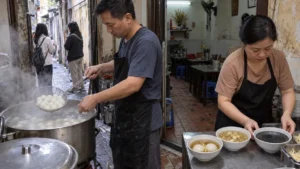
The method is unadorned, too. Warm pure fresh milk over low heat, wait for a skin to form on the surface, and carefully skim it off. Showing this laborious process at the storefront is itself a show, and videos of “the moment of skimming the skin” circulate widely on social media. Since you can’t substitute an artificial skin or cream, ingredients and handwork decide the taste. That’s exactly why the skin’s thickness and sweetness differ from shop to shop even for the same item, giving rise to the fun of comparing. Vietnamese young people teaching each other recipes as if in competition also owes to this “rustic simplicity that makes you want to recreate it at home.”
From China's night markets to Vietnam—why it's going viral now
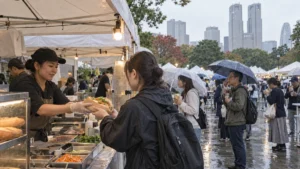
It began in China. Young people lined up at night street markets, and it spread as a 'cultural experience' beyond a mere drink. Not just quenching thirst but touching a nostalgic feeling—told that way, it raced across social media, packaged with photogenic shots, check-ins, and recipe sharing. That wave then jumped straight to Vietnam.
This isn't the first time a food trend from China has spread rapidly across Vietnamese social media. Jade-green matcha batter wrapped around goi cuon skin—How matcha banh trang went viral via Chinese social mediaand, using auspicious seaweed,The spread of “hair cake,” the fat-choy (hair-moss) sweetfollows the same circuit. What they share is a single, easy-to-explain ingredient and a load of 'nostalgia' and 'meaning.' Sua tuoi vang sua neatly satisfies both.
How to Drink It in Ho Chi Minh City: Finding It and What to Watch For
To be honest, a list of which Ho Chi Minh City shops serve it and at what price isn't settled yet. It's still a stage where specialty shops are popping up one after another, and prices and locations change by the day. If a traveler wants to actually find it, the surest way is to search "sữa tươi váng sữa" on TikTok or Instagram and look for the nearest small shop from the location tags. Pins are increasing under the same keyword on Google Maps too.
There’s one thing worth knowing when ordering to avoid confusion. At a Vietnamese supermarket, “váng sữa” often refers to cup dairy products for infants, typified by Monte. This drink is a different thing—a cup of “shaved fresh milk plus milk skin.” At the counter, giving the full name “sữa tươi váng sữa” (fresh-milk váng sữa) avoids mistakes. As for price, going by similar fresh-milk drinks around town, expect it to land in the tens of thousands of dong (10,000 dong ≒ about 60 yen). Since the actual price per cup varies by shop, be sure to check locally.
A drink that sells nostalgia—the context
Behind this drink's appeal is a mood that seeks reassurance in additive-free, close-to-raw ingredients. It's made from little more than fresh milk, with nothing 'dressed up' about its color or scent. It landed right where health-consciousness meets a return to unadorned flavor. In Ho Chi Minh City, a half-century-oldBack-Alley Coffee Brewed with a Cloth FilterThere's fertile ground here where a cup that sells nostalgia itself keeps a firm following. The sữa tươi váng sữa boom, too, isn't just a fleeting play for photogenic looks — it taps the same vein of "longing for the plain and simple."
For Japanese travelers hunting for Vietnamese souvenirs or food experiences, it’s worth remembering as your next move after street food. After walking around Ho Chi Minh City in midsummer, a cup of cold fresh-milk ice with the milk skin melting on top offers both the practical benefit of cooling you down and a novelty you’ll want to photograph. How firmly the specialty shops take hold remains to be seen, but as a trend you can taste on the ground right now, there’s no harm in putting it on your checklist.