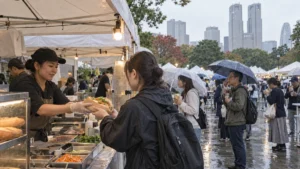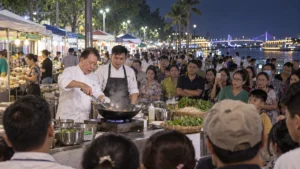
The Thao Dien area of Ho Chi Minh City draws many resident Japanese and Westerners. In this neighborhood lined with stylish cafés, Italian restaurants, and Korean barbecue, at the very back of a residential lane, there is a small shop serving Tibetan steamed dumplings, momo. It's called "Om Momo." The local English-language outlet Saigoneer featured it in its signature column "Hẻm Gems" on June 14, 2026, and it has quietly become a talking point among people living in Saigon. The owner was born into a family of Tibetan refugees and spent 20 years as a film director in the advertising industry. It's a little-known spot that rarely appears in tourist guides.
This article organizes the gist of the news, then introduces the owner's journey, the menu and budget, and how the shop is received locally. On that basis, it adds its own take on how Japanese travelers visiting Saigon can enjoy this shop, and on Saigon's food culture as colored by immigrants.
The gist of the news that started it
Organizing what Saigoneer reported, the key points are these. In a corner of a residential compound in Thao Dien (formerly District 2 by administrative division, now An Khánh), the Tibetan restaurant "Om Momo" opened in 2024. The owner is Tsering Tashi Gyalthang. Born into a family of Tibetan refugees who grew up in northern India after the 1959 Tibetan uprising, he moved to Vietnam in the early 2000s and worked for years as a director of advertising and documentary films. With handmade steamed momo dumplings as the signature, he offers fillings such as lamb, beef, chicken, and spinach with cheese. Positioning food as "a way to tell a story," the shop has become, for many Saigon residents, their first encounter with Tibetan culture.
From advertising director to momo shop owner: the owner's story
What set Tsering on the culinary path traces back to 2023. At the time, he was inviting Tibetan friends to his home for a film project called "State of Statelessness." Together they kneaded dough, wrapped fillings, and made momo. In that time of shared work, he says, he grasped something.
He told Saigoneer: "As a director I'd always made ads, and no matter how beautifully they turned out, they never became mine. Back then I felt I wanted to do something more human." He was drawn to the clumsy, plain work that could only be done by hand, the very opposite of film, where you can edit endlessly and craft everything to perfection.
Once he made up his mind, his moves were steady. He devoted all of 2024 to mastering momo-making. He learned how to wrap them from his mother and friends back home, and after returning to Saigon he practiced daily, working with his hands. Just then, word came that a nearby café was becoming available. To his own surprise, he took it on the spot and opened the shop with help from his friend Anto. Tsering says "food is telling a story," and hopes that not just the food but the photos and music inside the shop will become "a spark of interest" that leads visitors to Tibetan history and its people.
What is momo, anyway?
Momo is a steamed dumpling eaten mainly in Tibet and Nepal. The name is said to come from the Tibetan "mog mog," and it spread to Nepal through Himalayan trade, becoming so established that it is now called Nepal's national dish. After the 1959 Tibetan uprising, many Tibetans moved to India, and the way to make momo spread to various places along with them. That the journey of Tsering's own family overlaps with how momo has spread across borders may be no coincidence.
The texture and the way you eat them differ a little from the pan-fried or boiled Chinese dumplings Japanese people picture. Om Momo's momo have a somewhat thicker dough and simple fillings that bring out the ingredients' flavors. You can enjoy them as they are, or with an Indian-style curry sauce or a house-made fermented chili sauce.
A guide to the menu and budget
Om Momo offers a wide range of Tibetan home cooking beyond momo. Here are the main menu items, organized from the original article. Because individual per-item prices could not be confirmed for the shop, they are not listed here. As a per-person budget guide, Saigoneer cites around 200,000 dong. In Japanese yen that comes to roughly 1,200 yen (at about 170 dong to the yen), though it varies with exchange rates and what you order.
| Dish | Details |
|---|---|
| Momo (steamed dumplings) | Four kinds: lamb, beef, chicken, and spinach with cheese. Somewhat thick dough with simple fillings that bring out the ingredients |
| House-made sauces | Three fermented chili sauces of differing heat. An Indian-style curry sauce is also available |
| Shapta | A dish of beef or chicken stir-fried with bell pepper, onion, and tomato, served with tingmo steamed bread |
| Chicken Shamdey | A chicken and potato stew with rice, introduced as the taste of a Tibetan home |
| Kewa Datshi | Soft potatoes in a chili-and-cheese sauce |
| Tibetan butter tea | A salty tea of fermented dark tea with butter added, served in a wooden bowl |
| Dessert | "Drunken Lama" pear poached in red wine and spices, chocolate lava cake, and Tibetan rose panna cotta |
Local and customer reactions
Let's look at how the shop is received locally from three angles, drawing on reporting and voices around the shop.
First, the very fact that Saigoneer, which keeps covering Saigon's food, featured it in its signature column "Hẻm Gems" is itself a mark of esteem. That column is a project to unearth hidden gems in lanes hard to spot from the main streets. The editorial choice to pick a single shop deep in a residential neighborhood, rather than a flashy tourist spot, suggests this shop's authenticity.
Second, there is the appraisal of the experience itself. A cylindrical turquoise object placed at the center, vivid photos and art filling the walls, the warm glow of rock-salt lamps, and prayer flags (tarcho) fluttering above the outdoor seats. Saigoneer portrays this space as one as full of story as the food. It is also repeatedly emphasized that, for many Saigon residents, this is their first gateway to Tibetan culture.
Third, there is the sense of connection reflected in the owner's own words. Tsering's wish for "everyone to be curious" is the flip side of feeling that people take in not just the taste but the story behind it. The stance of not using delivery apps and reaching only those who come in person also captures this shop's character well.
Takeaways for Japanese travelers
So, what does this shop mean for Japanese travelers visiting Saigon? Here are three considerations.
First is how well it fits the place that is Thao Dien. This area is a living sphere for resident Japanese, and quite a few people visit on business or during long stays. The fun of this neighborhood is that Korean barbecue, Brazilian food, Japanese conveyor-belt sushi, and Vietnamese vegetarian cuisine coexist within a single block, and the surprise of adding "Tibetan cuisine" to the mix is considerable. Being able to slip in a completely different food culture between the usual pho and banh mi adds depth to a stay.
Second is the value of the experience of "tasting a dish along with its story." What Japanese travelers tend to seek abroad is photogenic, flashy food or the lines at famous shops, but what Om Momo offers is the opposite. An owner born into a stateless family of refugees let go of a 20-year advertising career and arrived at momo, which can only be shaped by hand. A bite of momo taken with that background in mind carries a weight beyond a mere steamed dumpling. For travelers who want to touch a place's history and people's ways of living through food, there is no better shop.
Third is the point of contact with the Japanese table. Momo, with fillings wrapped in a steamed skin, sit easily on Japanese palates familiar with gyoza and steamed pork buns. Even if the salty butter tea and fermented chili sauce are new, the outline of the dishes themselves is easy to imagine. It's also appealing that the hurdle is low as a first step into a foreign cuisine. Heat can be adjusted with three levels of sauce, so even those who dislike spicy food can order with confidence.
Saigon's food, colored by immigrants
The arrival of Om Momo means more than just a new shop. Saigon's food was built up in the first place by layer upon layer of diverse flows of people. The baguette brought in during French rule became banh mi, ethnic Chinese from various places brought noodle dishes, and now expatriates from around the world carry the flavors of their home countries. The gathering of internationally flavored shops in Thao Dien is an extension of this.
Onto that, the meaning of a Tibetan owner who moved here as a refugee quietly placing his home country's home cooking is not small. Rather than watering the cuisine down for tourists, he serves the recipes he learned from his mother just as they are. A man who chased perfection in the world of commercial film deliberately returned to plain, human handwork. The depth of Saigon's food lies in being able to take in these individual stories one dish at a time. For a traveler to choose that dish is not merely to consume cuisine, but also to touch a part of the diversity the city has nurtured.
How to get there and tips for visiting (practical info)
Here is the practical information to have in hand before your visit. The address and hours are based on the information posted by Saigoneer. Because they may change, we recommend checking the latest situation by phone or otherwise before visiting.
| Item | Details |
|---|---|
| Shop name | Om Momo |
| Address | 11/2 Street No. 57, An Khánh (former Thao Dien / District 2), Ho Chi Minh City |
| Hours | Weekdays 12:00–21:30 / weekends 11:30–22:00 |
| Phone | 0918 699 697 |
| Budget guide | About 200,000 dong per person (about 1,200 yen / at about 170 dong to the yen) |
| Payment | Various services |
| Parking | Cars and motorbikes both OK |
| Delivery | No delivery apps (dine-in only) |
As a tip for getting there, since the shop is in a tucked-away corner of a residential compound, enter the street number in a map app and go in ready to walk the lane to find it at the end, so you won't get lost. From central Thao Dien, a motorbike taxi or ride-hailing app is the realistic way to go. As for ordering, first share two or three kinds of the signature momo, taste the three levels of sauce, and add a dish like shapta or a stew. The Tibetan butter tea served in a wooden bowl is salty and divides opinion, so it's safest to try a small amount first. Since there's no delivery, this is a shop to visit with time to spare, planning to savor the atmosphere along with the food.
Summary
Om Momo is a shop that sits quietly in a residential back lane, far from flash or long lines. That is precisely why the momo shaped by hand by an owner born into a refugee family who switched from advertising director carry a density you won't find at a famous tourist-spot shop. For Japanese staying in Thao Dien, it's an ideal option to slip a foreign culture into a meal between pho and banh mi, and for travelers who want to know the diversity of Saigon's food firsthand, it should be an unforgettable experience. If you have the chance to visit Ho Chi Minh City next time, walk just a bit deeper into the Thao Dien lanes and, over butter tea in a wooden bowl and freshly made momo, touch the story of the distant land of Tibet.
Frequently asked questions
Where is Om Momo?
It's at 11/2 Street No. 57, inside a residential compound in the Thao Dien area of Ho Chi Minh City (formerly District 2, now An Khánh). Since it's in a tucked-away corner of a residential neighborhood, it's easier to reach if you enter the street number in a map app and walk the lane to find it at the end.
What kind of dish is momo?
It's a steamed dumpling eaten mainly in Tibet and Nepal. Om Momo's momo have a somewhat thicker dough and simple fillings that bring out the ingredients' flavors. You eat them as they are, or with an Indian-style curry sauce or a house-made fermented chili sauce. There are four kinds: lamb, beef, chicken, and spinach with cheese.
How much is the budget?
According to Saigoneer, the guide is around 200,000 dong per person. In Japanese yen that comes to roughly 1,200 yen (at about 170 dong to the yen), though it changes with exchange rates and what you order. Delivery apps are not supported; it's dine-in only.
Related reading
Source: