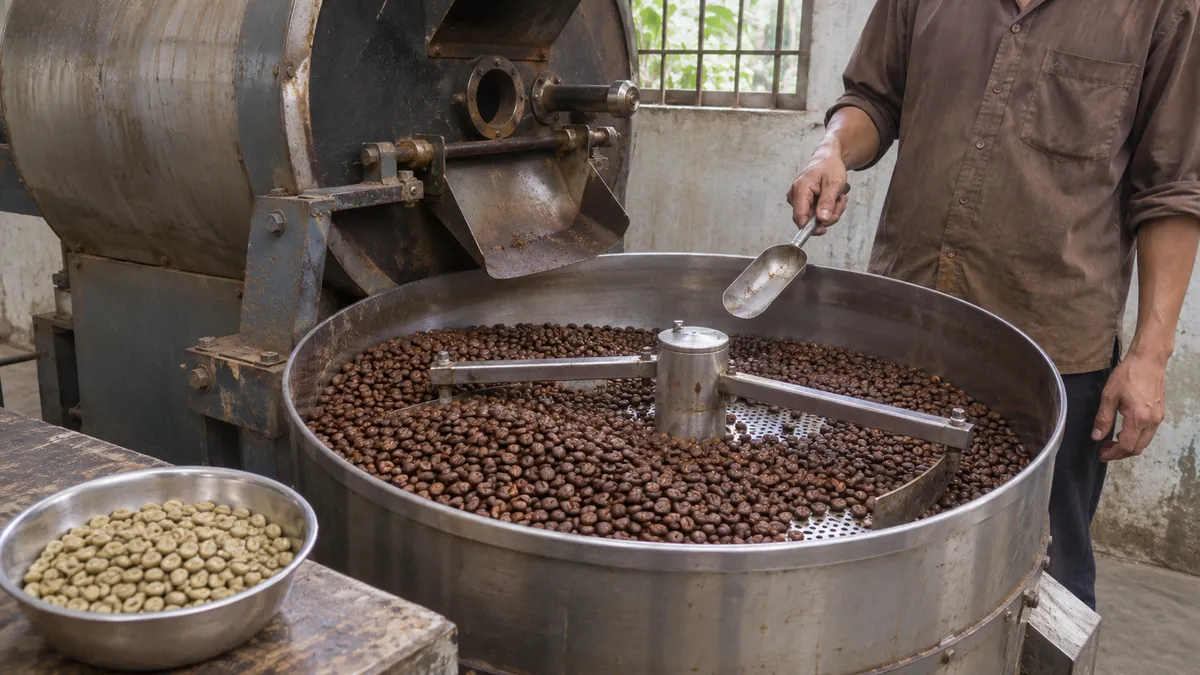
On March 20, 2026, green coffee bean prices rose for four consecutive business days in Vietnam's Central Highlands coffee-growing region. In Dak Lak, the price reached 93,500 dong per kilogram, up 1,000 dong from the previous day. Robusta futures on the London market also rose. However, this reflects the producing-region spot price on a specific date. It does not necessarily mean prices will continue to rise, or that the price of a cup at a café will increase by the same proportion anytime soon.
Daily gains and medium-term trends are different things
Market data from Vietnam's Ministry of Industry and Trade dated March 20 also shows that since early March, the direction of international prices has been Robusta falling and Arabica rising. In other words, the four-day consecutive gain is a short-term movement and should be read separately from monthly or annual trends. Prices move due to multiple factors including weather, harvest volumes, farmers' selling timing, export demand, exchange rates, logistics, and speculative capital.
"Farmers holding back supply" is not the only cause
Reports on market prices do mention farmers not selling their stocks immediately, but it is not appropriate to generalize that all producers are deliberately restricting shipments. Fertilizer costs, labor costs, borrowing, and storage capacity differ, and each farmer's decision to sell varies accordingly. No primary sources were found that conclusively link flooding or farmland sales to the four-day price rise, so causal relationships have been kept separate here.
Impact on travelers' coffee costs
Green bean prices are one component of a café's costs. Rent, labor, milk, sugar, packaging, and location all affect the price of a cup, so there is no simple way to convert a producing-region price into a retail price. Rather than assuming things are "more expensive than before," travelers are better off checking the menu before ordering. When buying beans as souvenirs, compare not only price but also roast date, origin, whole bean versus ground, and whether the packaging is sealed.
Vietnam's coffee exports in 2025 reached approximately 1.59 million tonnes, with a value exceeding 8.9 billion USD — a record high. While this indicates the scale of export value, it does not mean that every producer's income has increased. When purchasing at a producing-regionBuon Ma Thuot, note that buying direct from a farm does not always mean a lower price; evaluate both the quality explanation and the price.
Connecting the numbers to your own judgment
When I look at rankings or figures, I first check the surveying body, the period covered, the sample, the currency, and whether it is a calendar year or fiscal year. A national growth rate does not directly reflect the prices or crowds at the specific places you visit. For travel planning, it is more practical to treat statistics as background context and make final decisions based on fares, accommodation rates, and operating information on the days you plan to travel.
Sources
- Vietnam.vn: March 20 prices
- Vietnam Ministry of Industry and Trade: market data
- Overview of Vietnam coffee exports
Before using figures to make travel decisions
The meaning of rankings and monetary figures changes depending on the surveying body, the period covered, the sample, the currency, and whether a calendar year or fiscal year is used. Rather than simply copying headline numbers, check the title and notes of the primary source, the date of publication, and whether the figures are preliminary or final. It is also important not to apply national statistics directly to individual shop prices or crowd levels.
Also, consider separately who this article is suited for and who it is not. The best choice varies depending on time, budget, physical condition, language ability, and the ages of those traveling with you. Having one alternative plan ready means that if something sells out, the weather turns bad, a venue is closed, or there are delays, you can avoid pushing yourself too hard.