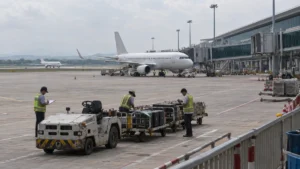
Vietnam’s Ministry of Construction revised the national airport development plan via Decision 1140/QD-BXD, formally incorporating a second international airport for the Hanoi capital region. The envisioned scale is large—30 to 50 million passengers a year—located in Ung Hoa and Chuong My districts, roughly 40 km south of central Hanoi. Noi Bai International Airport, Hanoi’s air gateway, suffers chronic congestion beyond its design capacity, and this plan will serve as its relief. For residents, business travelers, and tourists entering Hanoi from Japan, it bears directly on future flight numbers and connection options. How access to Noi Bai itself will change isHanoi's simultaneous groundbreaking on five metro lines set to change airport accessSeen together with this, the full picture comes into view. That said, note first that this is a decision at the planning stage.
What Was Decided: The "Added to the Plan" Stage
With this decision, Hanoi's second airport is positioned as an international airport within the revised national airport development plan. With the Ministry of Construction's approval of Decision 1140/QD-BXD, the capital region's second airport — until now discussed only at the conception and draft level — has become part of the country's formal plan.
The revised plan itself envisions developing 36 airports nationwide by 2030 (19 international, 17 domestic), handling about 249 million passengers and 4.4 million tons of cargo a year. By 2050 this is expected to grow to 37 airports (20 international, 17 domestic). Hanoi’s second airport was written in as one corner of this national network.
Why now—Noi Bai is long past its design capacity
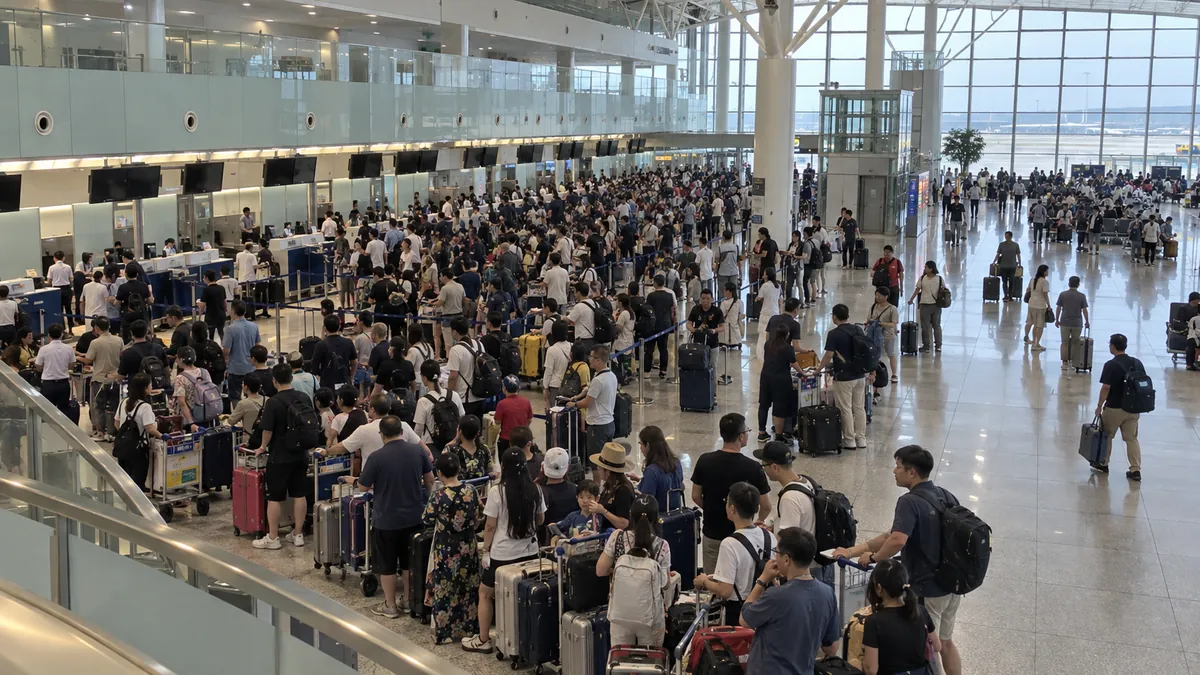
Behind it is chronic congestion at Noi Bai International Airport. Noi Bai's design capacity is 25 million passengers a year, but in 2023 it handled over 30 million—20% above the design figure. Both passengers and cargo have exceeded capacity almost every year since 2017.
As a countermeasure, the expansion of Terminal 2 (T2) has advanced, widening total floor space to over 200,000 square meters and raising capacity from 10 million to 15 million passengers a year, and up to 18 million at most. Check-in counters and self bag-drop went into operation in December 2025. Even so, it hasn't kept up with rising demand in the capital region, and the need to prepare another airport has emerged.
The second airport and Noi Bai's division of roles, by the numbers
This plan does not abolish and replace Noi Bai. Noi Bai itself will add land on its south side to expand capacity to about 50 million passengers, with the second airport added on top—a “two-airport system” is envisioned. The key figures follow.
| Item | Hanoi's second airport (planned) | Noi Bai International Airport (current and future) |
|---|---|---|
| Annual passenger capacity | 30 to 50 million people | Designed for 25 million / over 30 million actual in 2023 / future target about 50 million |
| Cargo capacity | About 1 million tons a year | Capacity being boosted through the T2 expansion |
| Site area | About 1,500 hectares | Plan to add about 1,500 hectares on the south side |
| Location | Ung Hoa and Chuong My districts (about 40km south of the center) | Soc Son, northern Hanoi |
| Development timing | A priority project for 2031–2045 / final site fixed by 2030 | Expansion underway |
If the two airports operate, the capital region's receiving capacity reaches around 100 million people a year by simple addition. With Noi Bai to the north of the center and the new airport to the south, the sky gateways increase in two directions across the urban area. As pioneered in Ho Chi Minh City,The changing of the international-flight guard brought by Long Thanh's new airportAs with that, it can be read as the start in the north, too, of a move by a major metropolitan area away from dependence on a single airport.
What's still undecided at the planning stage
So we don’t read this with expectations running ahead, here’s what isn’t yet settled. The revised plan says the final site will be confirmed by 2030, and Ung Hoa and Chuong My are, at this point, positioned as leading candidates. Construction of the airport itself is classified as a 2031–2045 priority project, and no specific year for groundbreaking or opening has yet been given.
- Location—Ung Hoa and Chuong My districts are the axis, but the final decision awaits additional studies through 2030
- Timing: development falls in the 2031–2045 window. No official confirmed opening date has been announced
- Surrounding development: a plan to attach an airport city, a free trade zone, and a logistics hub, though these are at the vision stage on paper
On access, on top of existing arteries such as the Phap Van–Cau Gie expressway, there's talk of siting urban rail Line 9 and a high-speed rail station nearby. But these too are future visions written into the plan, and it will be a good while before you can count on them as travel legs.
This is what residents and business travelers should watch
From the standpoint of daily life and business trips, there are two takeaways from this plan right now.
First,The groundwork is laid for even more flights to and from HanoiWhat this means is that if a two-airport system widens the capital region's capacity, room opens up for more flights and new routes. Direct flights from Japan have begun departing from Shizuoka and regional airports, and that movementFirst direct Shizuoka–Hanoi flightas covered there. Future growth in flight numbers works to thicken such regional-origin routes and connection options. But since the opening is the 2030s at the earliest, entry to Hanoi for the time being remains via Noi Bai.
Second,The possibility that the locational value of southern areas shifts. The new airport sits in the southern districts of Ung Hoa and Chuong My, until now outside the tourist and business flow. If the airport-city and free-trade-zone concepts take on reality, the center of gravity for logistics, lodging, and industry around them will shift. Even looking at Vietnam's regional logistics from the standpoint of running a food business in Kyoto, developing cold-chain logistics and produce-collection hubs next to the airport is a factor that shapes lead times for importing and exporting fresh goods. Southern Hanoi is a place worth watching.
Practical Information for Getting into Hanoi Now
Because the second airport won't actually be usable for some time, here are the basics of Noi Bai, the gateway for the time being.
| Item | Details |
|---|---|
| Current gateway | Noi Bai International Airport (HAN, Soc Son in northern Hanoi) |
| Terminal | T1 (domestic) / T2 (international, expanded) |
| Distance to the city center | About 27–35 km (roughly 40–60 minutes by car) |
| Congestion trend | Exceeding design capacity is the norm. Arrive with extra time to spare, especially during Tet and the busy summer season |
| Second airport | Ung Hoa and Chuong My (about 40 km south). Development in 2031–2045; site to be finalized by 2030 |
Summary: Move With the Understanding That "What Was Decided Is the Plan"
Hanoi's second airport entering the national plan marks a turning point: the capital region has formally begun preparing another receiving point against a chronically congested Noi Bai. The assumed scale is 30 to 50 million people, the site is Ung Hoa–Chuyen My, and the timing is 2031–2045. The groundwork is laid for more flights and wider connection options down the road. At the same time, it's still a planning-stage matter — the final site isn't fixed until 2030, and the opening date is undecided. For getting into Hanoi for now, work on the premise of Noi Bai and, in peak periods, move with time to spare. Going forward, follow the site confirmation that should come by 2030 and the rise and fall of Japan–Hanoi flights, including regional departures like Shizuoka, and you can read the effect on daily life and business travel.
Sources
- Hanoi’s 2nd airport added to national plan(VnExpress International)
- Hanoi’s second airport officially added to national airport plan(Vietnam Plus)
- Hanoi plans second international airport in city’s southernmost part(The Investor)
- Hanoi plans second international airport for up to 50 million passengers(VnExpress International)
- Noi Bai International Airport inaugurates expanded T2 terminal(Vietnam News)