What are Vietnamese fried spring rolls, "cha gio"?
When you think of Vietnamese food, many people probably picture fresh spring rolls or pho.
現地で揚げ春巻きは広く親しまれていますが、「生春巻きより頻繁」と一律に比較できる統計はありません。家庭、地域、行事、店で登場頻度は変わります。それが「チャーゾー(Chả giò)」と呼ばれる揚げ春巻きです。ライスペーパーで具材を包み、カリッと揚げた一品は、ベトナムの定番メニューとして親しまれています。
米を使った薄い皮は代表的ですが、小麦を含む皮や専用品を使う例もあります。豚、エビ、カニ、卵、魚醤などが入ることが多いため、グルテンだけでなく甲殻類・卵・魚・豚肉の有無も確認してください。
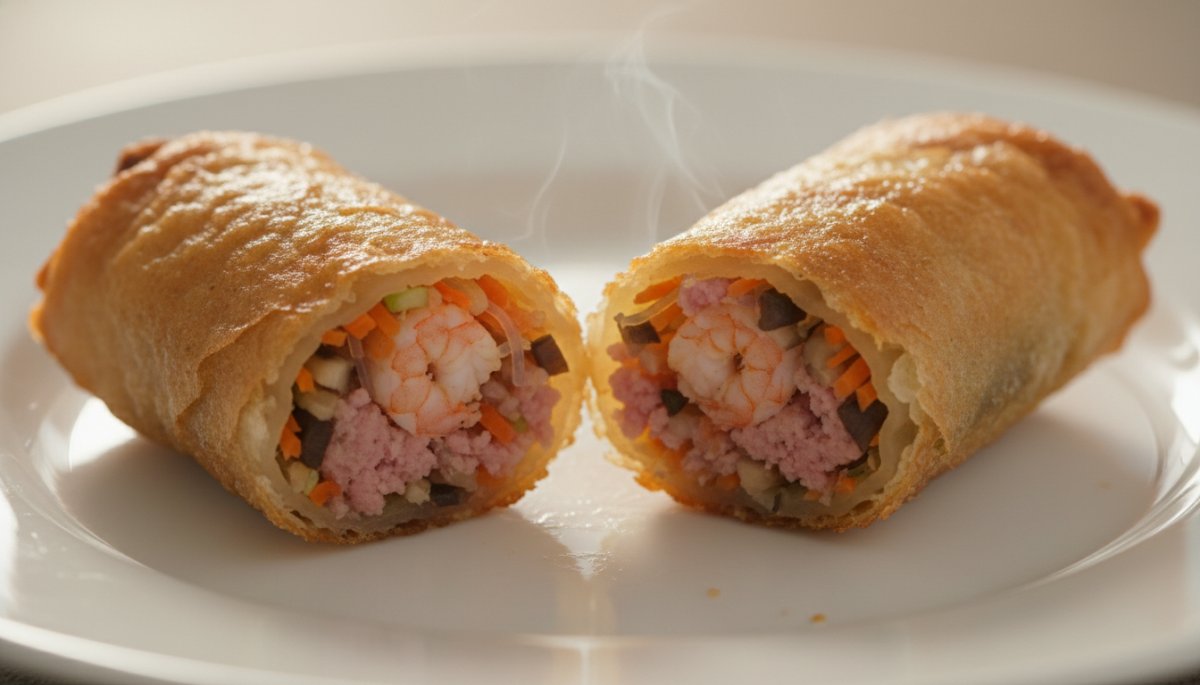
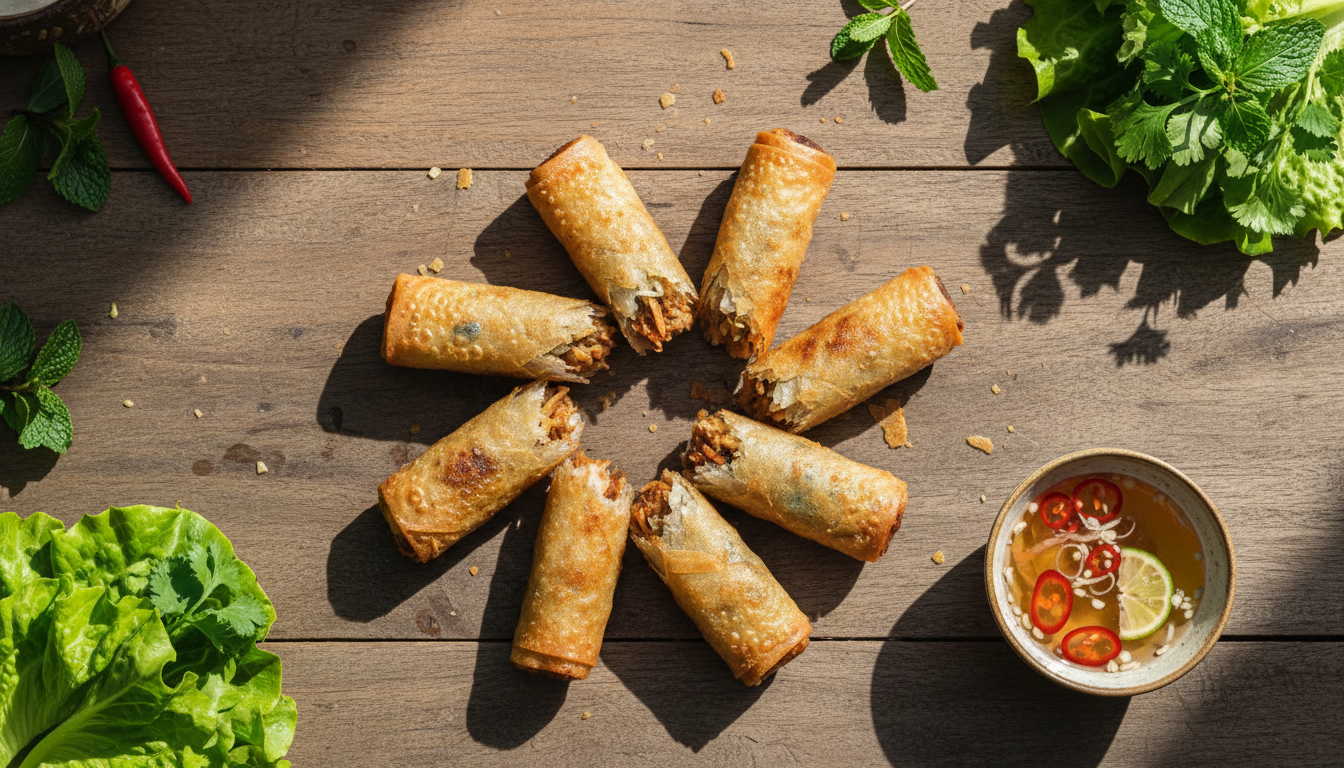
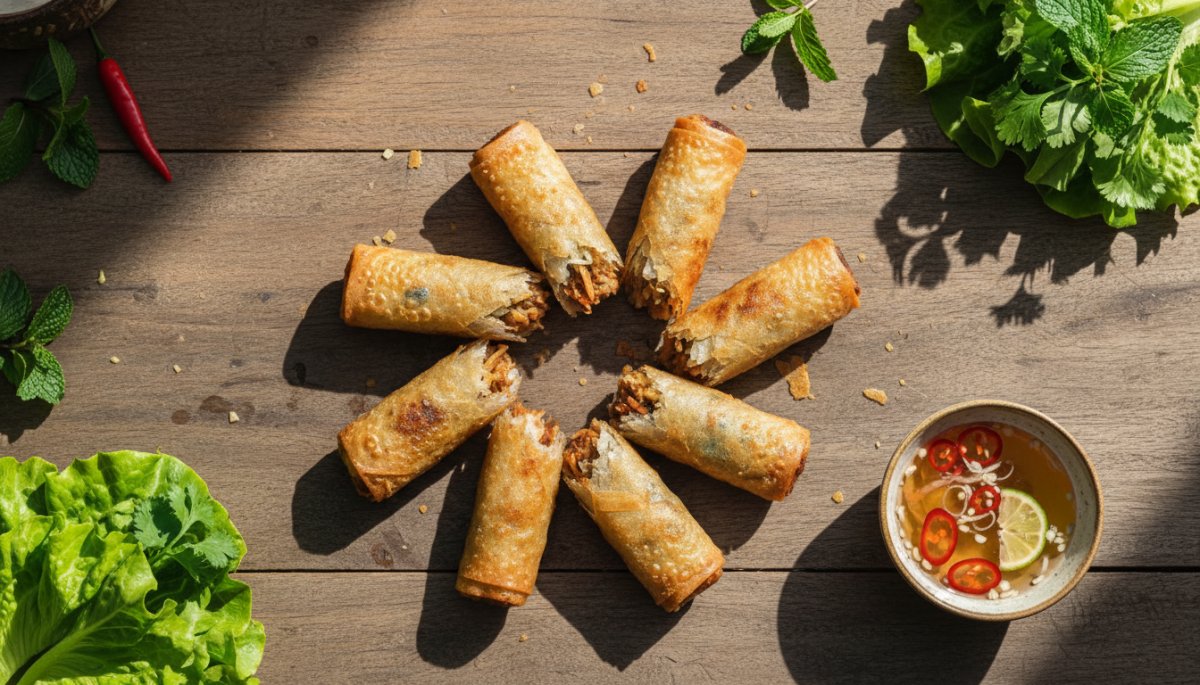
In Vietnam, they're usually eaten with lettuce and herbs and a sweet-and-sour dipping sauce called "nuoc cham." The balance of the lettuce's crunch, the crispy surface, and the chewy inside is exquisite.
Different names and features for cha gio in the north and south
Vietnam is a country long from north to south, and the names and seasoning of dishes differ by region.
Fried spring rolls are no exception. In the south they're called "cha gio" (Cha gio), while in the north the name "nem ran" (Nem ran) is used. The basic method is the same, but the interesting point is that the fillings and seasoning differ subtly by region.
南部でchả giò、北部でnem ránという呼び名が多いものの、具材と味を南北二分類で固定はできません。家庭や店で豚、海鮮、芋類、春雨、きくらげ、野菜、皮が変わります。注文時は名称より中身を確認してください。
What's common to both regions is that they're beloved as home cooking. The fact that they're eaten daily, not just as a dish for special occasions, speaks to cha gio's appeal.
Cha gio's fillings and variations
Cha gio's fillings are varied!
The base is ground pork, but combining it with shrimp, crab, and various vegetables creates endless variations. Vermicelli is indispensable as a textural accent, and dried wood ear mushroom plays a key role in adding umami. Aromatic vegetables like carrot, scallion, garlic, and shallot give depth of flavor.
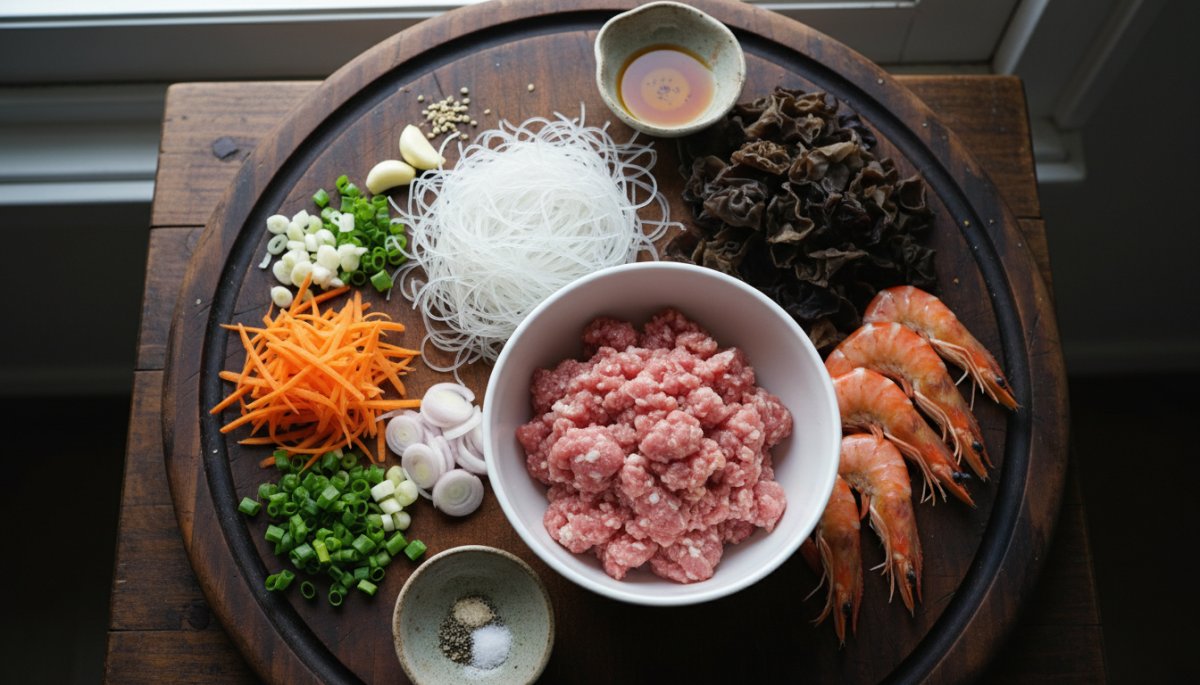
Some households also add taro or jicama. These tubers create a crisp texture and balance out the fillings overall. A simplified recipe using imitation crab is also popular, letting you easily enjoy an authentic flavor.
味付けは家庭ごとに異なり、ヌクマムや粉末調味料が必須ではありません。窒素度数だけで料理用・たれ用を決めず、塩分と香りを少量で調整します。粉末調味料は肉エキスやアレルゲンを含む場合があるため表示を確認してください。
After mixing the fillings, letting them sit for about 15 to 30 minutes lets the flavors meld, for a tastier finish. This waiting time is the secret to getting close to a pro's flavor.
How they're eaten in Vietnam, and nuoc cham
The way to enjoy cha gio isn't just eating them fresh from the fryer as-is.
レタスやハーブ、米麺と合わせ、ヌクチャムにつける食べ方があります。ヌクチャムには魚醤、にんにく、唐辛子などが入ることが多いため、魚アレルギーや辛味が苦手な人は別添えを頼んでください。
Nuoc cham is a sauce made by mixing sugar, lime juice, nuoc mam, and water in a 1:1:2:2 ratio. Adding minced garlic and fresh chili completes the sweet-sour, spicy flavor. The trick is to add the lime juice after the sugar, which brings out the lime aroma more.
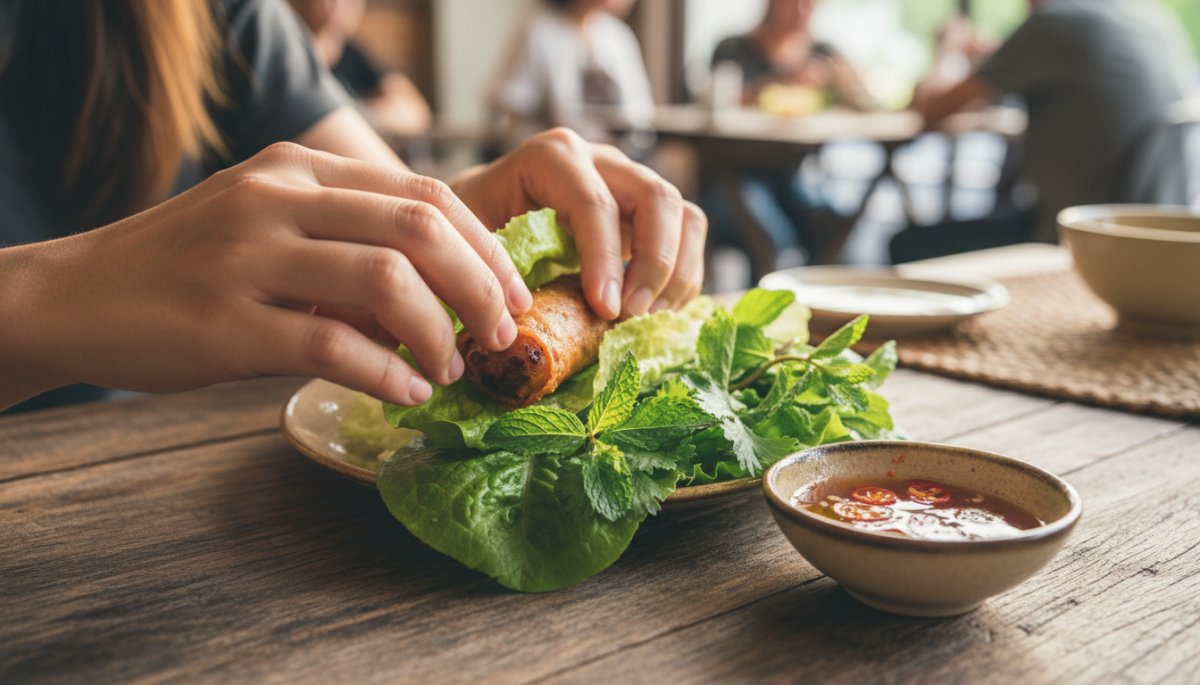
Spread out the lettuce, place an appropriate amount of cilantro, mint, and perilla, set one spring roll, and roll it by hand. Then eat it while dipping it in nuoc cham. This whole sequence of motions is the real joy of Vietnamese food. They're sometimes eaten with rice noodles (bun) too, in which case you can enjoy them as a more satisfying one-plate meal.
Tips and cautions for making cha gio at home
When making cha gio at home, the most important thing is how you handle the rice paper.
Soften the rice paper by quickly passing it through water, but the trick is to start rolling while it's still slightly firm, before it fully softens. Softened too much, it tears easily and becomes hard to roll. The rice paper generally sold in Japan is for fresh spring rolls and is large, so cutting it in half makes it easier to handle.
There are points to rolling too. Place the rice paper in a diamond shape and set the fillings a little below center. Fold the bottom, fold in the left and right, then roll from the near side. Keeping this order keeps the fillings from spilling out and gives a clean finish.
When frying, watch the oil temperature and the spacing between the rolls. Frying slowly and a bit longer at a lower temperature of 150 to 160°C keeps the rice paper from tearing for a clean finish. Frying over high heat causes tearing, so be careful. Also, the rice paper puffs up and the roll moves on its own, quickly sticking to the neighboring roll, so it's important to fry in small batches, well spaced apart.
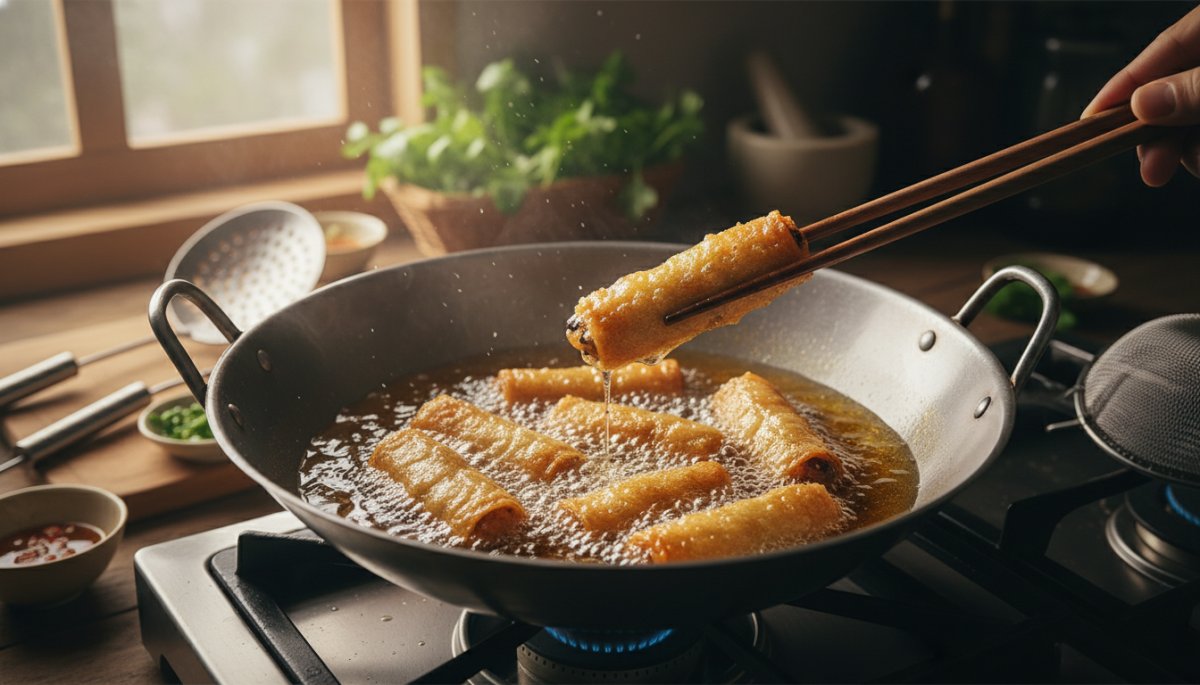
揚げたては内部が非常に熱く、すぐ切ると肉汁や油でやけどする危険があります。短く休ませてから、必要ならよく切れる包丁で切ります。食感を保ちたい場合は切らずに提供しても構いません。
自宅調理で外せない安全ポイント
- 生肉・海鮮のまな板と、野菜・完成品を分ける
- 具を詰めすぎず、中心まで熱が届く大きさにする
- 豚などのひき肉は中心温度71℃を目安に温度計で確認する
- 鶏ひき肉を使う場合は中心74℃を目安にする
- 揚げた後は室温に長時間放置せず、残りは早く冷蔵する
皮が色づいたことだけでは、中心の生肉が安全な温度に達した証明になりません。二度揚げは食感を整える方法ですが、安全確認の代わりにはならないため、食品用温度計を使うと確実です。
Summary: enjoying Vietnam's food culture through cha gio
Cha gio is beloved by many people as a leading example of Vietnamese home cooking.
The distinctive texture of rice paper, the variety of fillings, the pairing with nuoc cham, and the style of eating them with lettuce and herbs. All of these combine to create cha gio's unique appeal. The fact that the name and seasoning differ in the north and south also makes you feel the depth of Vietnam's food culture.
When making them at home, mastering how to handle the rice paper and how to fry them is the key to success. It takes a little effort, but that makes the joy of completing them all the greater. Enjoy them with a cold beer, or savor them as a satisfying one-plate meal paired with rice noodles (bun).
For anyone who wants to know Vietnam's food culture more deeply, or who wants to take on authentic ethnic cuisine, be sure to try making cha gio. For more detailed information on Vietnam's travel info, coffee culture, and local dining etiquette,hereyou can find it.