
When it comes to Vietnamese cuisine, there's one seasoning you simply can't leave out: nuoc mam.
Much like soy sauce in Japan, it's a daily essential in Vietnamese households, used in stir-fries, simmered dishes, and dipping sauces alike.
This article covers the basics of nuoc mam, practical ways to use it, and how it differs from Thai fish sauce (nam pla)in detail.
 Japanese travelers
I've been curious about nuoc mam, but I haven't tried it yet…
 Japanese travelers
Buying a seasoning you're not familiar with can feel like a big step.

It has a fish sauce-like flavor that pairs perfectly with Vietnamese food! Learn what makes it distinctive, then start by trying a small amount at a restaurant.
What Is Nuoc Mam? A Staple Seasoning in Vietnam
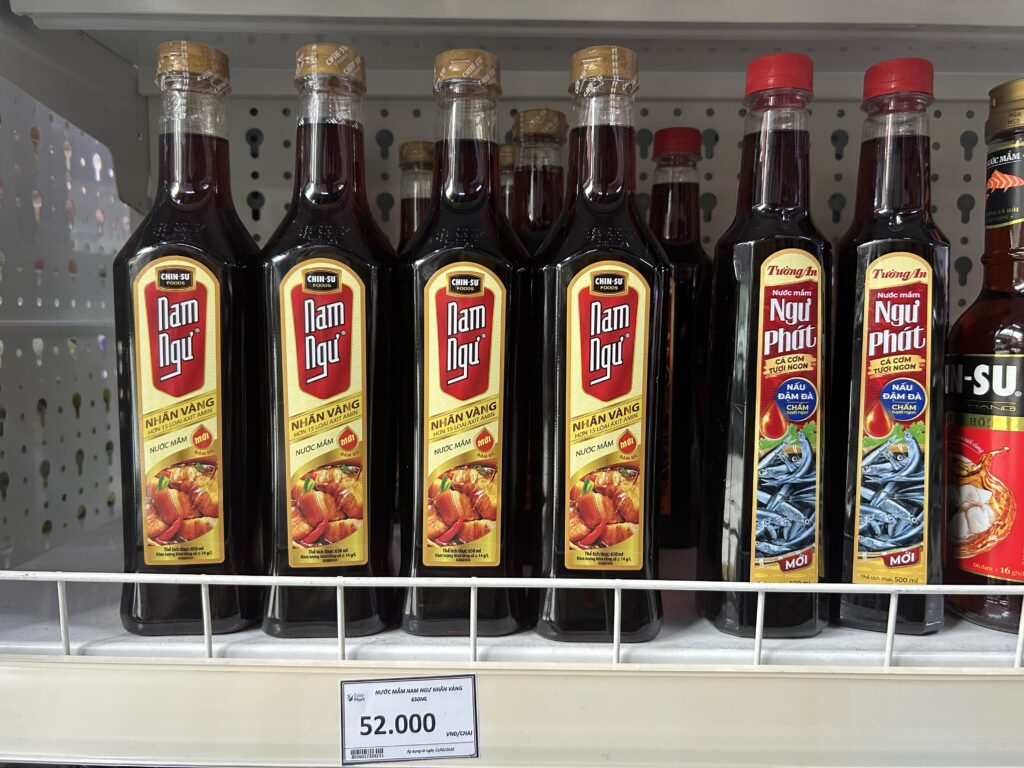
Nuoc mam is a fish sauce made in Vietnam.It's made by packing small fish and salt into wooden barrels and letting them ferment and mature for anywhere from four months to a year.
Fish sauce sold for home use at supermarkets is priced at 55,000 to 150,000 dong (approx. 330 to 900 yen) for 500 ml.
Ingredients and production method
The main ingredient is a small anchovy called ca com. These little fish are packed into large earthenware jars with salt and left to ferment naturally using enzymes from the fish's own innards.
Over time, the fish bones and bodies gradually break down and settle as sediment at the bottom of the jar. The liquid that remains at the top becomes nuoc mam.
Places known as famous production areas
Within Vietnam, the areas known as famous nuoc mam production regions are Cat Hai in the north, Nha Trang and Phan Thiet in the south, and Phu Quoc Island.
Since fish is the main ingredient, production is especially active in Vietnam's coastal regions.
Nuoc mam from Phu Quoc Island in particular is internationally recognized as top-grade.
What the "°N" Label Tells You About Umami Strength
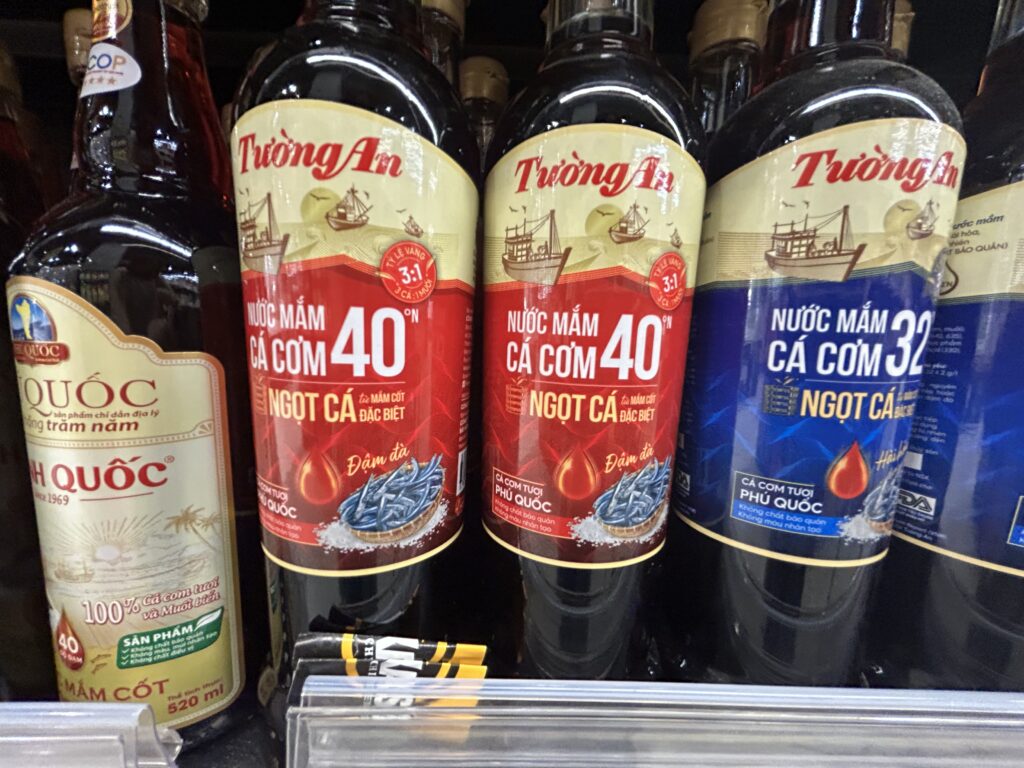
Some products carry a label like "40°N." This indicates the umami grade, based on the nitrogen content in the nuoc mam.
The higher the number, the stronger the aroma and umami—and the higher the price. Most supermarkets stock varieties in the 35 to 40°N range.
As a rule, lower-grade nuoc mam is used for cooking, while higher-grade nuoc mam is diluted with water and used as a dipping sauce.
How It Differs From Other Seasonings
There are other seasonings made from fermented fish or shrimp too. Let's look at how nam pla and mam tom compare.
How It Differs From Nam Pla

Both nuoc mam and nam pla are basically made from anchovies and salt, but they differ in production method and other ingredients.
Nuoc mam has a lower proportion of salt to fish and a relatively shorter fermentation period. Nam pla, on the other hand, often has a small amount of sugar or caramel added during fermentation and a somewhat longer aging period.
Nam pla tends to taste a bit sweeter, so it's worth choosing between the two depending on the dish.
Mam Tom Is Another Famous Vietnamese Fermented Seasoning
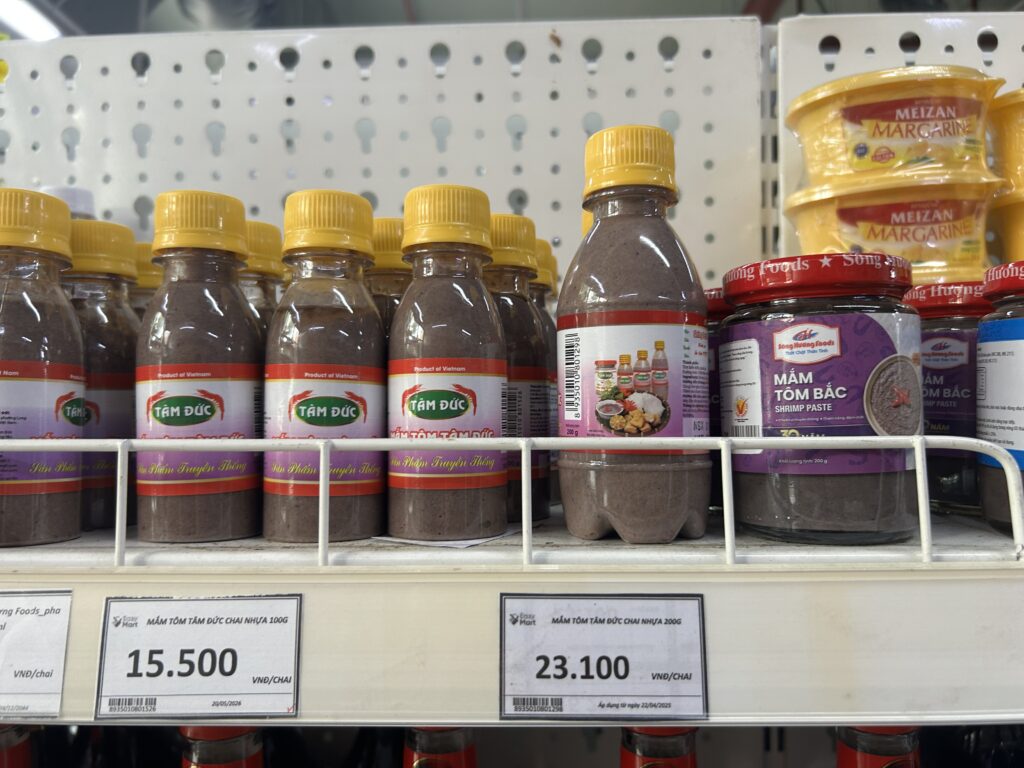
Besides nuoc mam, Vietnam also has another fermented seasoning called mam tom.
Mam tom is a sauce made by salting and fermenting small shrimp.
with a grayish to purplish color, a thick texture, and a strong aroma. It might catch first-timers off guard, but it delivers a rich flavor packed with concentrated shrimp umami.
A classic dish featuring it is Hanoi's famous bun dau mam tom, where rice noodles, fried tofu, and meat are dipped in mam tom.
The appeal of nuoc mam lies in how easy it is to use. Like soy sauce in Japan, it works its magic in all sorts of situations.
What makes nuoc mam so appealing is its versatility. Like soy sauce in Japan, it comes in handy in all kinds of dishes.
The simplest way to use it is as a dipping sauce. Serve it with fresh spring rolls, fried spring rolls, boiled vegetables and the like.
It's used in dipping sauces for fresh spring rolls, fried spring rolls, and the noodle dish bun cha.
The dipping sauce for fresh spring rolls is called nuoc cham.
It's simply nuoc mam mixed with chopped chili, garlic, fresh lime juice, water, and sugar. The sweet, tangy, spicy flavor brings out the best in the dish.
Nuoc mam is a big help in stir-fries and braised dishes too.
Take fried chicken wings with nuoc mam flavor, for example. There's a dry type where you season with nuoc mam and the like before frying, and a moist type where you deep-fry plain and then toss in nuoc mam sauce. Both are superb — good with rice and as a drinking snack alike.
Nuoc mam-flavored fried chicken wings, for example, come in two styles: a dry version marinated in nuoc mam before frying, and a moist version that's fried plain and then tossed in nuoc mam sauce. Both are delicious as a side with rice or as a snack with drinks.
Nuoc mam is also the key flavor in fried tofu with scallion sauce, a staple of Vietnamese home cooking.
Let us introduce a few representative Vietnamese dishes in which nuoc mam plays a starring role.

Banh mi (Bánh mì)
Bun cha
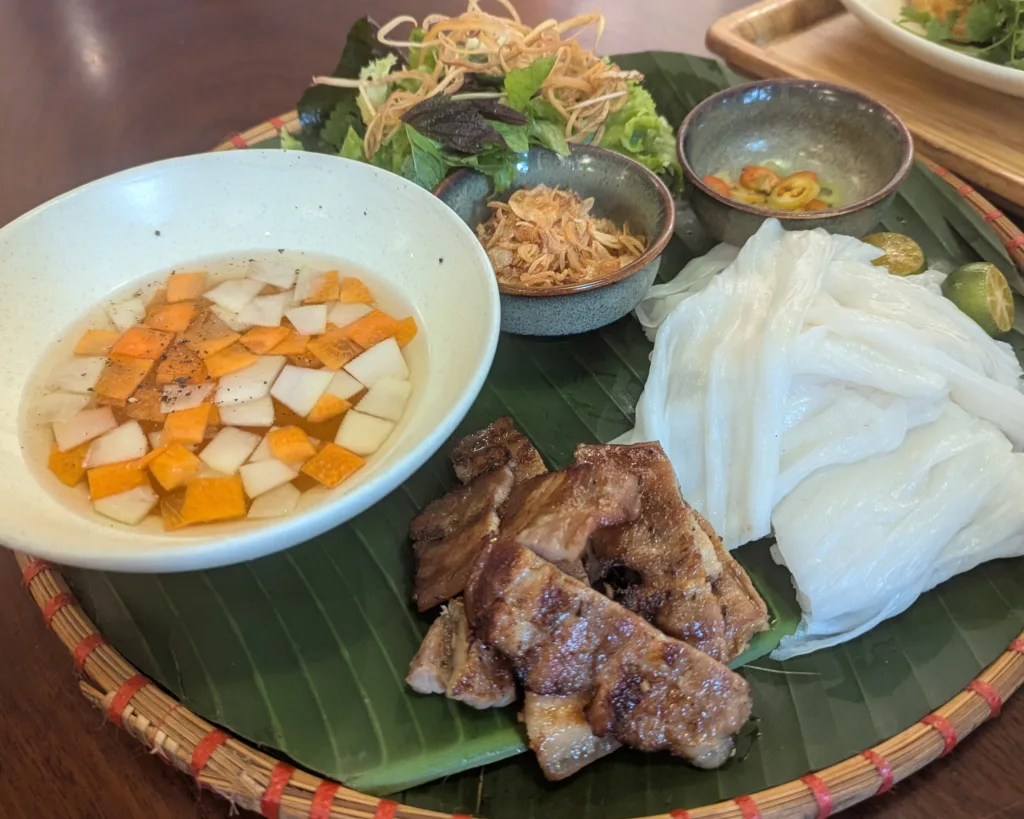
The Vietnamese dish that combines rice noodles called bun with vegetables and grilled meat is known for its sweet-and-savory sauce.
Depending on the restaurant, bun cha sauce is typically made with a nuoc mam base plus vinegar, sugar, garlic, and chili.
Pho

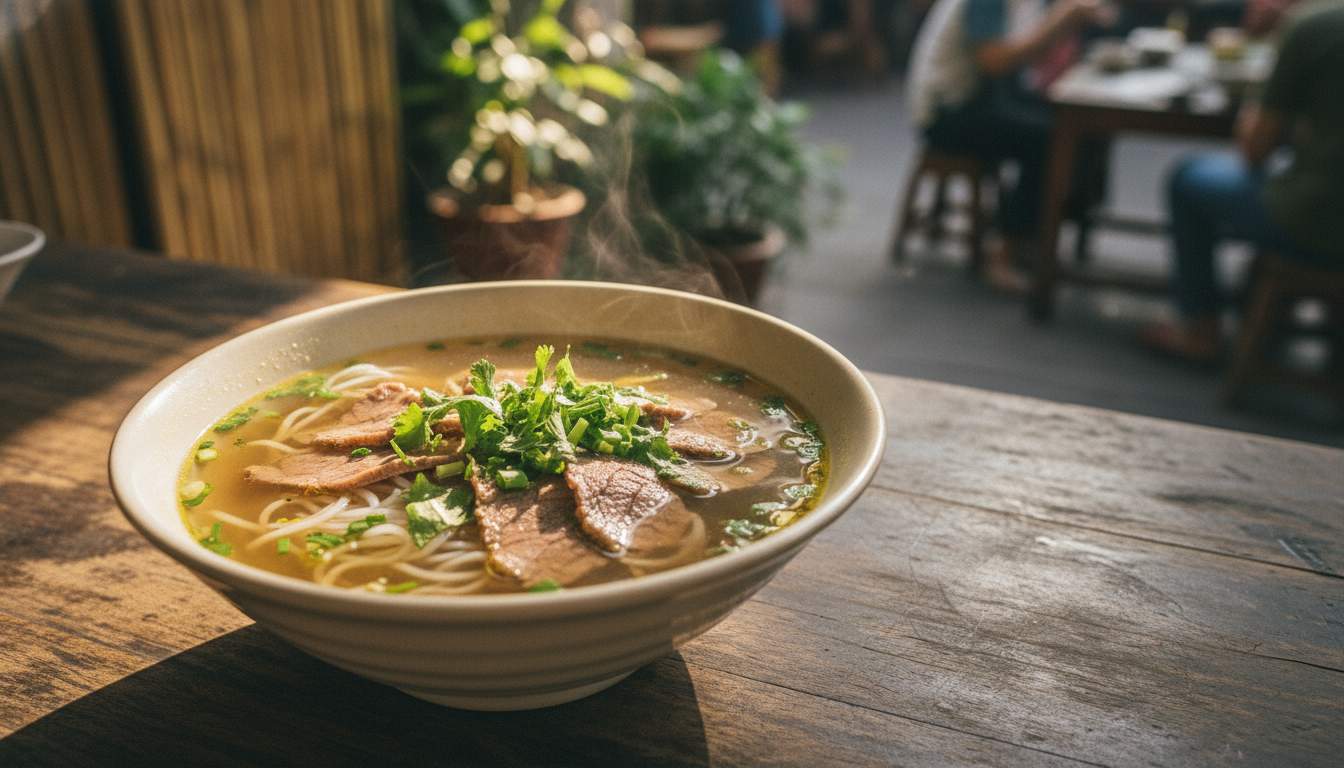
The faint scent of fish stock drifting through the soup — that's the aroma of nuoc mam. This aroma has an almost magical power to draw people to the street stalls.
Adding a splash of the nuoc mam left on the table lets you adjust the flavor to your liking. Give it a try whenever you want a bit more saltiness or umami.
Banh Xeo
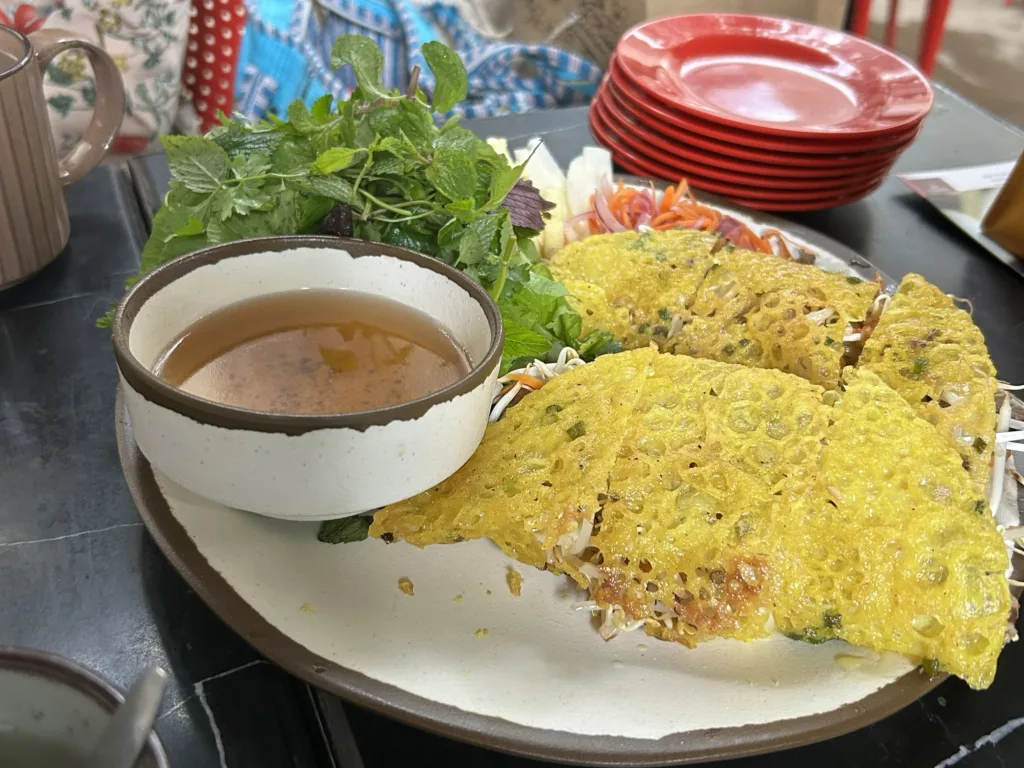
This too is eaten together with "nuoc cham," the nuoc-mam-based dipping sauce. The sweet-tangy sauce with lemon juice, sugar, garlic and chili added is an exquisite match for the crispy batter.
This dish is also enjoyed with nuoc cham, the nuoc mam-based dipping sauce. Its sweet-and-tangy blend of lemon juice, sugar, garlic, and chili pairs perfectly with the crispy batter.
Banh Mi
What defines the flavor of banh mi is the nuoc mam-based sauce and mayonnaise. Combined with liver pate, they create a complex, deeply satisfying taste.
Pho (Phở)
Once you've visited Vietnam, you'll want to buy nuoc mam to take home as a souvenir. Many people think that way.
There are a few things to keep in mind if you're bringing nuoc mam home as a souvenir.
Because nuoc mam has a strong smell, it's prohibited as carry-on baggage. It's not uncommon for it to be confiscated at the baggage check.
Because of its strong smell, nuoc mam is not allowed as carry-on luggage on flights.It's not uncommon for it to be confiscated during baggage checks.

Once opened, nuoc mam should basically be stored in the refrigerator. As a fermented food it keeps relatively well, but to preserve the flavor, we recommend using it up sooner rather than later.
The salt crystals that harden on the rim of the bottle are actually delicious too. Drip a drop onto your finger and lick it, and a saltiness like seawater and the scent of the shore will race through your whole body — you should feel a sensation of a body worn down by the heat coming back to life.
Nuoc mam is a soul seasoning that Vietnamese cuisine cannot do without.
Nuoc mam is an indispensable seasoning in Vietnamese cuisine.
As a dipping sauce, as a seasoning for heated cooking, and as a secret ingredient in a dish — the ways to use it are limitless. At first the distinctive aroma may throw you off, but strangely, it has an appeal that leaves you hooked after using it a few times.
Refer to the "°N" mark on the bottle and choose according to your use. Start with a mid-range 35–40°N and you won't go wrong.
If you want to explore the depth of Vietnamese cuisine or try a new seasoning, give nuoc mam a try.