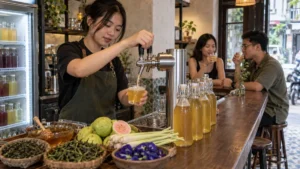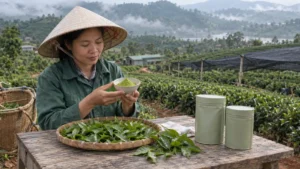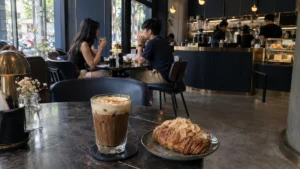
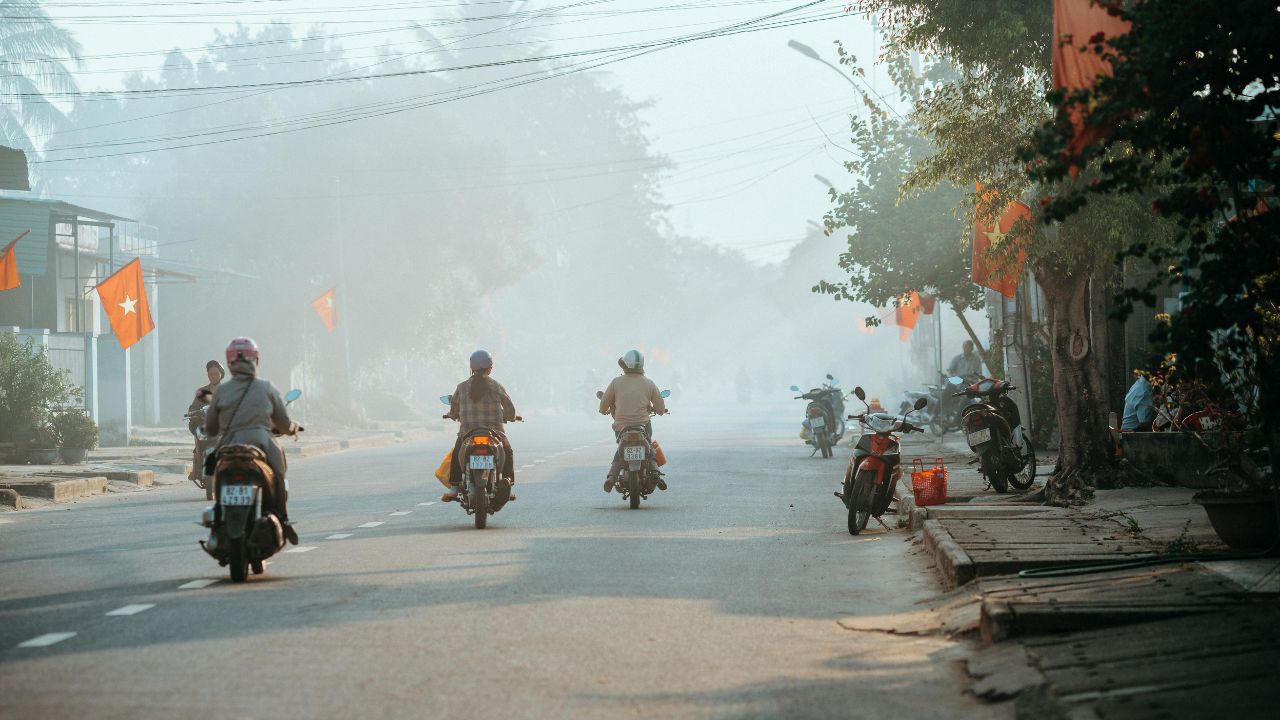
Vietnamese coffee, with its rich aroma and distinctive flavor as its appeal. Its history traces back to the mid-19th century. Its origin was when coffee trees were brought in by missionaries during the French colonial era.
Even now, after war and political upheaval, long-established cafés more than 50 years old remain in Hanoi and Ho Chi Minh City, continuing to protect an unchanging flavor.
This article introduces the history of Vietnamese coffee, its long-established cafés, and how to enjoy it at home.
The history of Vietnamese coffee
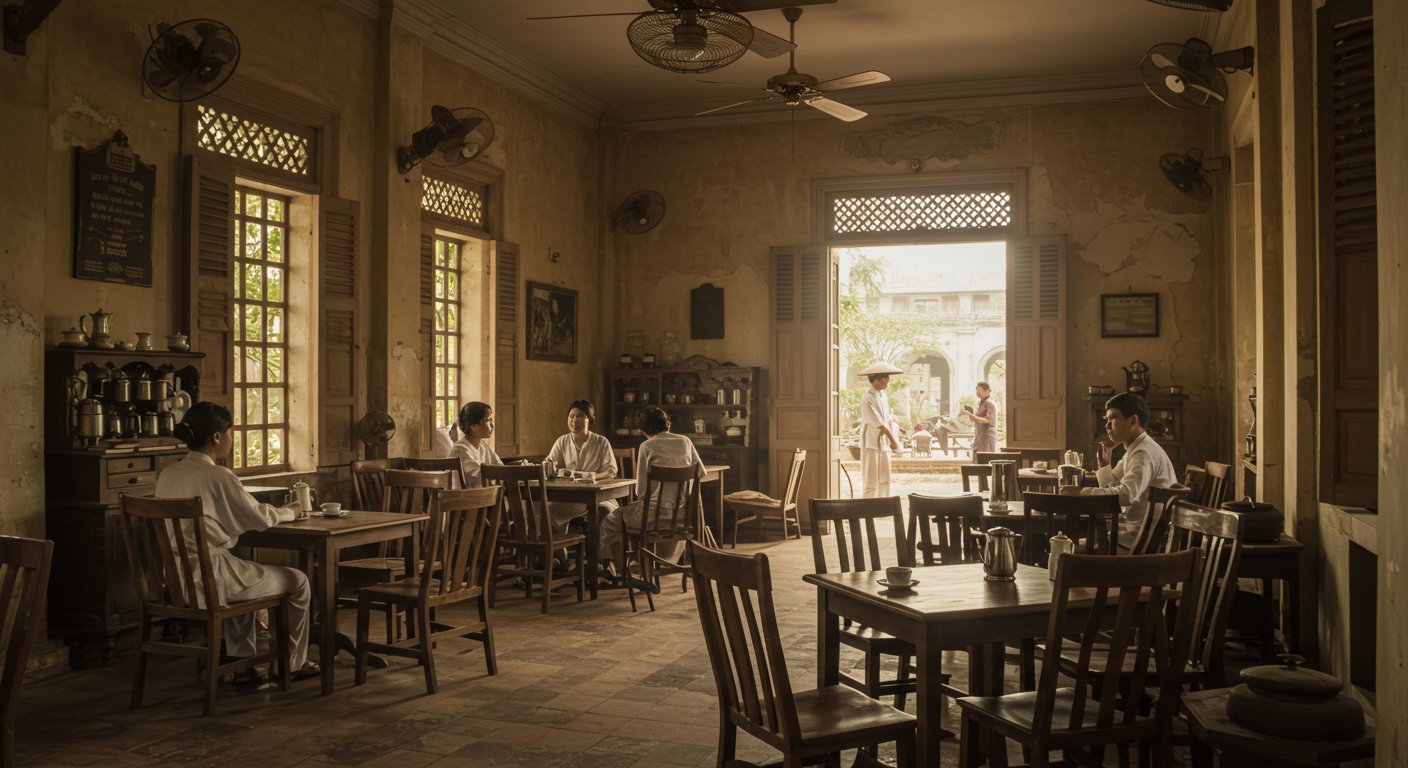
Vietnamese coffee has achieved its own evolution over more than 130 years since the French colonial era.
Let's look back on that journey in a timeline.
| Era | Event |
|---|---|
| 1850s | French missionaries bring in Arabica |
| 1880s | The first commercial coffee plantations are established |
| Early 1900s | The phin filter is invented as an affordable brewing method |
| 1975 | Reunification of Vietnam; nationalization of the coffee industry |
| The 2000s | Vietnamese coffee gains international recognition |
Behind the development of Vietnamese coffee is the influence of French rule. Coffee brought by the French permeated among ordinary people as a café culture along with Western culture.
The Traditions That Long-Established Coffee Shops Keep Alive
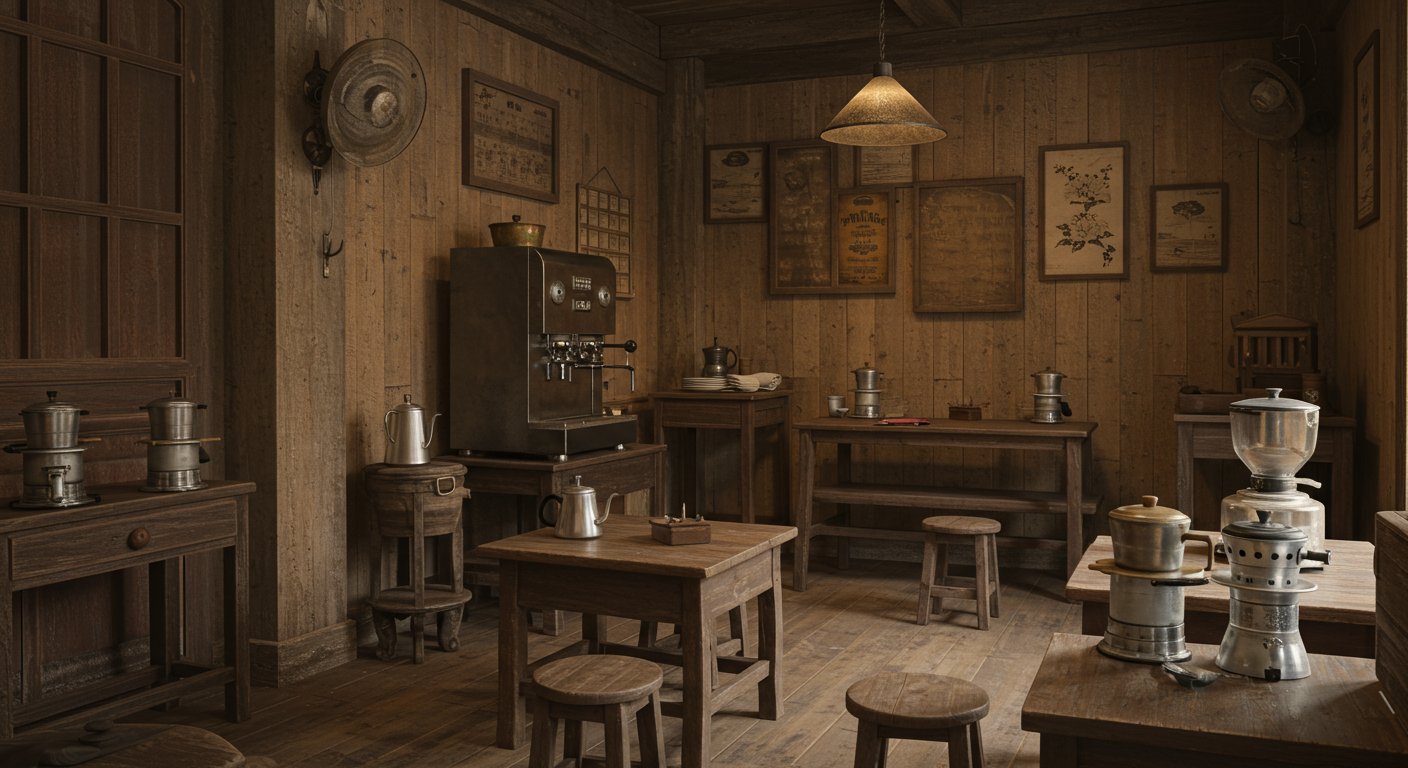
Long-established coffee shops that have kept operating for nearly 100 years are dotted throughout Vietnam.
Ever since coffee culture took root in the French colonial era, while being tossed about by the changes of the times, they have continued to protect their roasting methods, brewing styles, and shop appearance without major change.
The way of carefully brewing one cup at a time with an aluminum phin, and the powerful aroma released by dark-roasted beans, are unchanged now as ever.
Such long-established coffee shops are tourist attractions and, at the same time, places where you can feel Vietnam's everyday life and values.
Long-established cafés remaining in Hanoi's Old Quarter
In the Old Quarter of the capital, Hanoi, long-established cafés are dotted about. There are famous shops locally called the "four pillars of Hanoi coffee," each with its own history and commitments.
Cafe Giang
Standing in an alley at 39 Nguyen Huu Huan Street, Cafe Giang is known as the birthplace of the famous egg coffee.
It is now served at many cafés, but the original's flavor is said to be in a class of its own. Beyond simple egg coffee, it also offers new flavors such as matcha egg coffee and Oreo egg coffee. It continues to evolve, including opening in shopping centers, while protecting tradition.
| Founded | 1946 |
| Address | 39 Nguyen Huu Huan, Hoan Kiem, Hanoi |
| Hours | 7:00-22:30 |
| Signature items | Egg coffee (30,000-35,000 dong) |
Lam Cafe
Located at 60 Nguyen Huu Huan Street, Lam Café is a historic shop founded in 1952. In the 1950s, on the eve of the Vietnam War, it's known for having been a gathering place for cultural figures such as composer Van Cao and painter Bui Xuan Phai, who came here to discuss art and literature.
This shop's biggest feature is coffee where a faintly scorched fragrance stands out. Using dark-roasted Robusta beans, it pursues a balance of bitterness and aroma with an exquisite roast. The interior is small, but full of energy, where Hanoi's history and culture breathe.
| Founded | 1952 |
| Address | 60 Nguyen Huu Huan, Hoan Kiem, Hanoi |
| Hours | 6:30-22:00 |
| Signature items | Black coffee (35,000 VND), milk coffee (35,000 VND) |
The appeal of characterful Vietnamese coffee
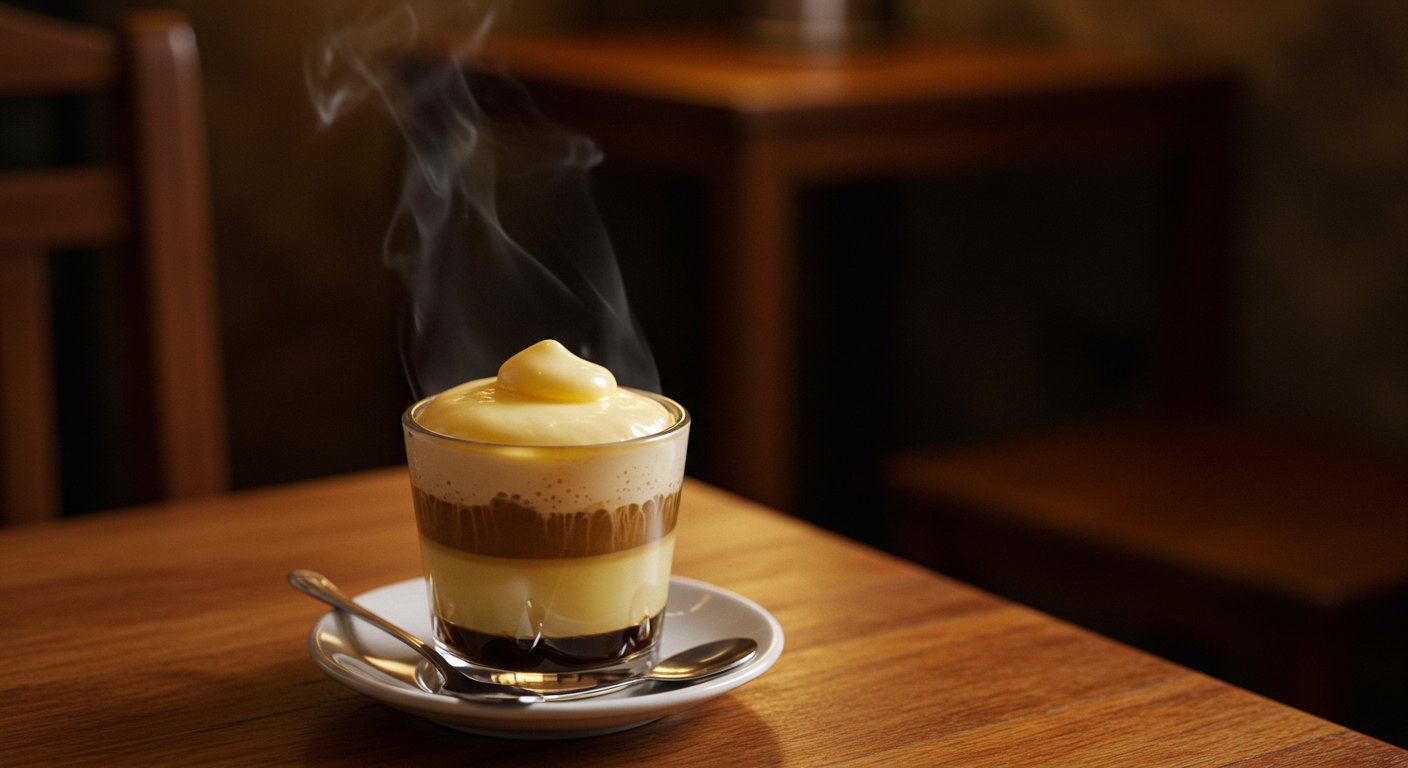
Vietnamese coffee, with its characterful flavors as its appeal. From black coffee to new trends incorporating salt and fruit, you can enjoy a variety of coffee.
Black coffee | Ca phe den
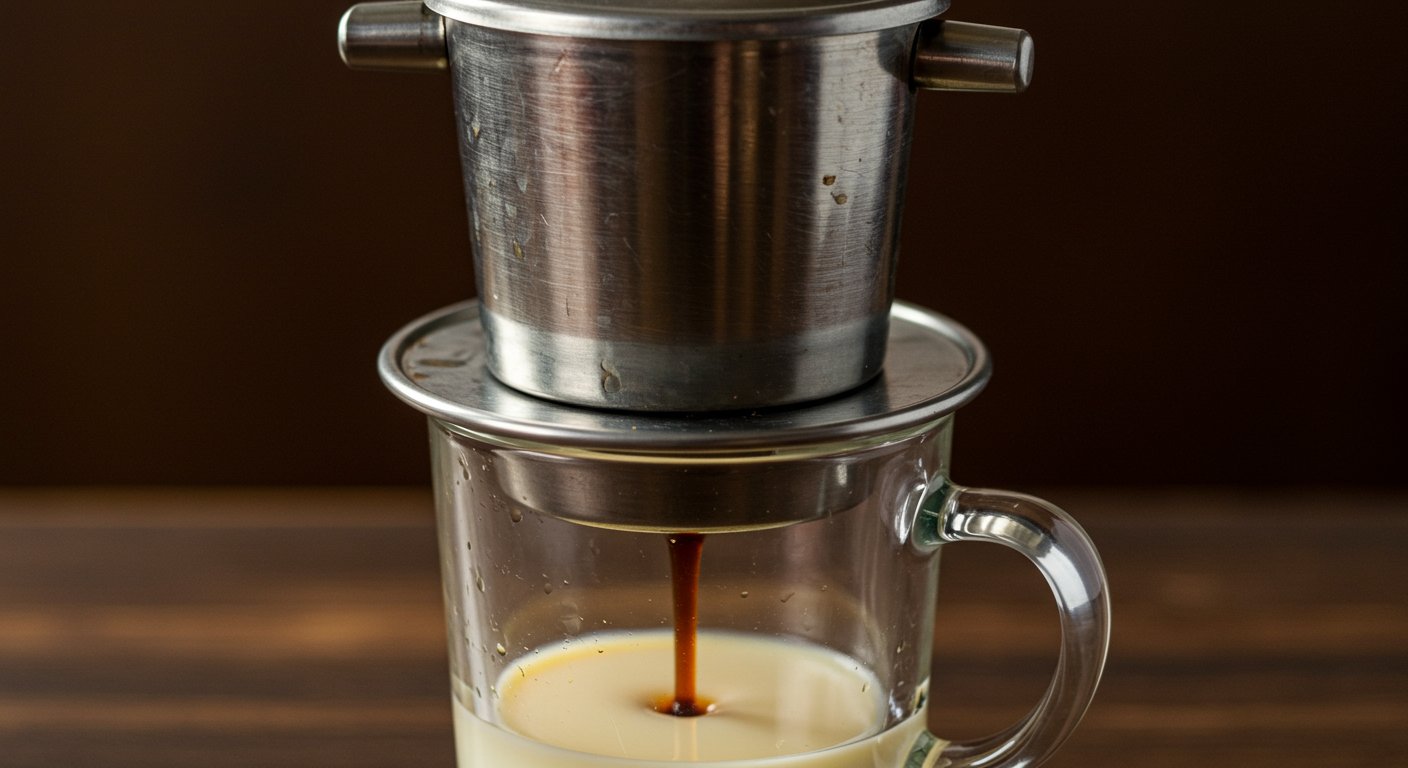
Using a metal dripper called a "phin," a rich extract is slowly drawn from coarsely ground coffee beans. Its bitterness is stronger than Japanese black coffee, and the standard is to savor it slowly while melting it with ice.
Condensed-milk coffee | Ca phe sua
When it comes to Vietnamese coffee, some may picture "condensed-milk coffee." The Vietnamese way is to stir condensed milk and coffee with a spoon and drink it little by little while enjoying conversation.
Milk coffee | Bac Xiu
The Vietnamese version of an iced latte. It resembles ca phe sua, but Bac Xiu has more milk and is easier to drink.
Condensed milk pairs well with ice, making it a drink perfect for the hot season.
Salt coffee | Ca phe muoi)
A menu item where a sharp accent of salt on the sweetness of condensed-milk coffee is addictive. Depending on the shop, the way of making it varies, such as topping it with salted milk foam.
Iced is the standard, recommended when you want to charge up energy in the hot season.
How to enjoy Vietnamese coffee in Japan
A tour of long-established Vietnamese coffee shops, their history and appeal
In fact, looking at the coffee beans Japan imports by country, Vietnam is second after Brazil. Vietnamese-grown accounts for over 20% of total imports, so it can be said to be a relatively familiar presence in Japan too.
For those who want to enjoy Vietnamese coffee in Japan too, here's how to recreate it at home.
Preparation for enjoying Vietnamese coffee at home
To recreate the rich flavor of Vietnamese coffee at home, preparation is essential.
Keep the following points in mind and enjoy the feel of a Vietnamese café at home too.
Preparation for tasting Vietnamese coffee at home
- Use Robusta beans
- Use the dedicated coffee dripper "phin"
- If you don't have a "phin," prepare a strong drip coffee
- Extract slowly, taking time
How to enjoy Vietnamese coffee at home
- Put coffee grounds in the phin and let them bloom with a small amount of hot water
- If adding condensed milk, put it in the cup first
- After blooming, pour boiling water and extract slowly, taking time
Want to drink it easily! For times like that, instant is recommended
For those who don't have time or find preparing tools a hassle, instant coffee is also an option.
With Vietnamese-brand coffee such as G7 and MR.VIET, you can easily taste Vietnamese coffee.
Easy to obtain on Japan's major mail-order sites, its appeal is that you can casually work it into a busy daily life.
The timeless appeal of Vietnamese coffee
Vietnamese coffee carries more than 130 years of history dating back to French colonial times, and it has developed in its own way. Even now, as the world’s second-largest coffee producer, the country preserves the traditional phin brewing method and the distinctive habit of adding condensed milk.
When you visit Vietnam, do visit not only the stylish cafés in guidebooks but also long-established shops that have been loved by locals for many years.There, the real flavor nurtured over time and the everyday life of Vietnamese people breathe.
Feeling the breath of the city and its people through coffee. That may be the appeal of Vietnamese coffee.