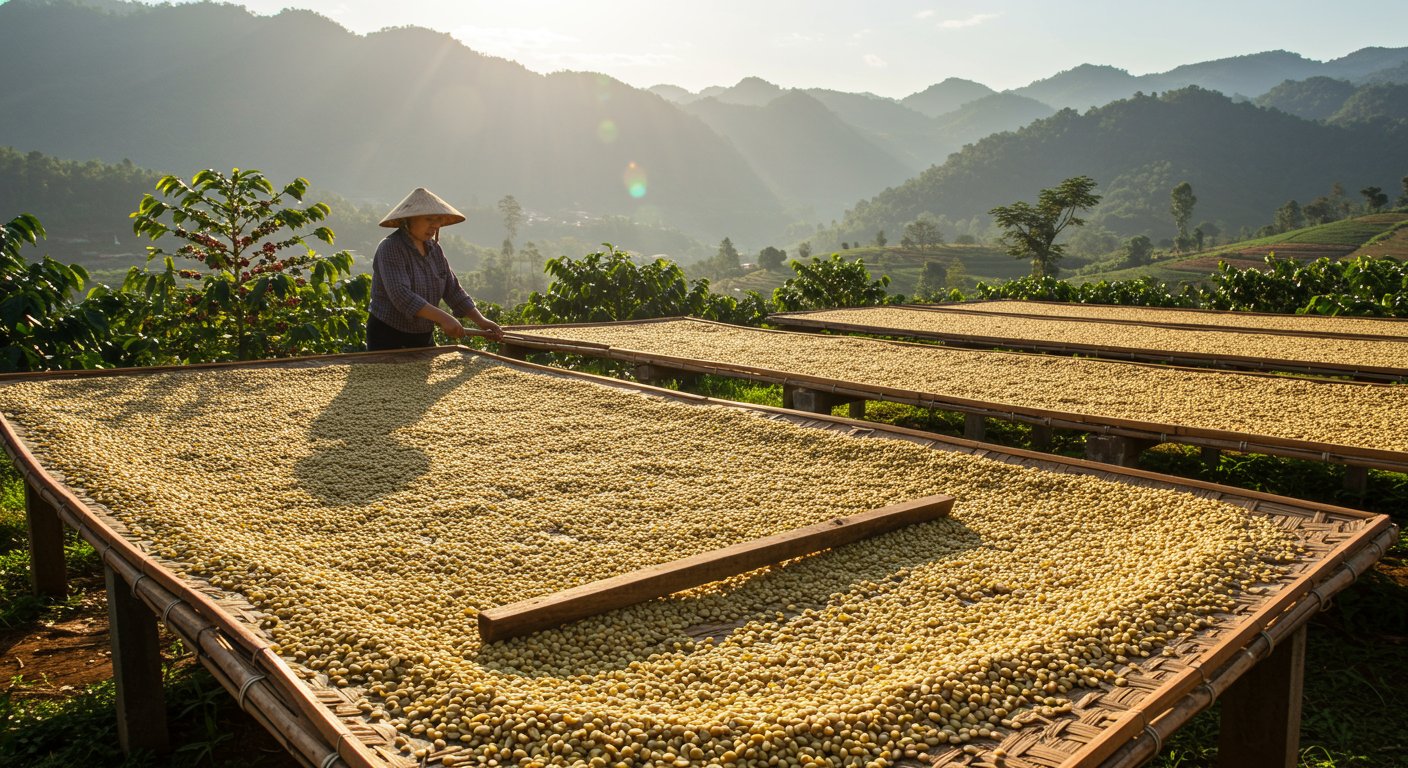
If you love coffee, you probably know that Brazil and Colombia are famous producing countries. But did you know that Vietnam is actually the world's second-largest coffee producer?
Vietnam produces about 1.88 million tons of coffee a year, making it one of the world's leading coffee powers, second only to Brazil. For Robusta in particular, it boasts the world's largest output.References
Coffee cultivation in Vietnam began in the mid-19th century, during the French colonial era. Arabica was tried at first but didn't yield the hoped-for results. Later, in the 1980s, coffee growing took off in earnest under the Vietnamese government's leadership, and production soared, centered on hardy Robusta.
This time, let's explore the appeal of that Vietnamese coffee region by region. Knowing each origin's characteristics and flavor differences is sure to make your coffee experience even richer.
TOC
1. Dak Lak Province – The Heart of Vietnamese Coffee
Dak Lak Province, located in central Vietnam, is the country's largest coffee-growing region. It's a highland area centered on the city of Buon Ma Thuot, and around 30-40% of all Vietnamese coffee (the largest share of any single province) is grown here.
Sitting on a plateau at around 500 m elevation, Dak Lak Province has an annual average temperature of around 25 to 27 degrees Celsius, an ideal environment for growing Robusta. The rich nutrients of its volcanic soil and moderate climate give the beans deep flavor and body.
Coffee from Dak Lak is marked by powerful bitterness and astringency. It has a strong roasted aroma and almost no acidity, which is why it pairs perfectly with the Vietnamese style of adding condensed milk.
The Robusta beans grown here may be too strong on their own, but they are prized worldwide as an important component of blended coffee and as a base for canned and instant coffee.
🧳 Book your Vietnam trip here
Hotel booking “agoda”
Book Vietnam hotels at great rates
Popular hotels in Da Nang, Hoi An, and Ho Chi Minh City are bookable at discounted prices. Many properties offer same-day booking and free cancellation, so you can adapt flexibly to last-minute changes of plan on the ground.
#Check the lowest price →
Advertisement (A8.net)
Overseas travel booking “NEWT”
Arrange flights and hotels together
Book your Vietnam-bound flights and accommodation all at once in the app. Earn up to 5% in points, with 24-hour Japanese-language support, so even first-time overseas travelers can prepare with peace of mind.
#Book travel the easy way →
Advertisement (A8.net)
From flights and tours to eSIMs and travel insurance, see where to book each in the order you need them in theVietnam travel bookings summaryas well.
In my third year living in Ho Chi Minh City, Vietnam. I launched this specialist Vietnam travel information site hoping to share local knowledge you simply can’t get by visiting as a tourist — the kind of thing you only understand by being here.