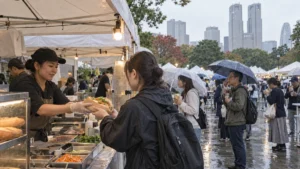
Hanoi, Vietnam's capital, is making all city buses and both of its urban rail lines free for the entire route during the holiday around National Day on September 2. The free period runs for five days, from August 29 to September 2. There's no age cutoff like 60-and-over — every rider, including foreigners, rides for free. For business travelers arriving in Hanoi over the holiday, and residents running errands around the Old Quarter and Hoan Kiem Lake, these five days wipe out both the cost of getting around and the hassle of having cash or a card ready.
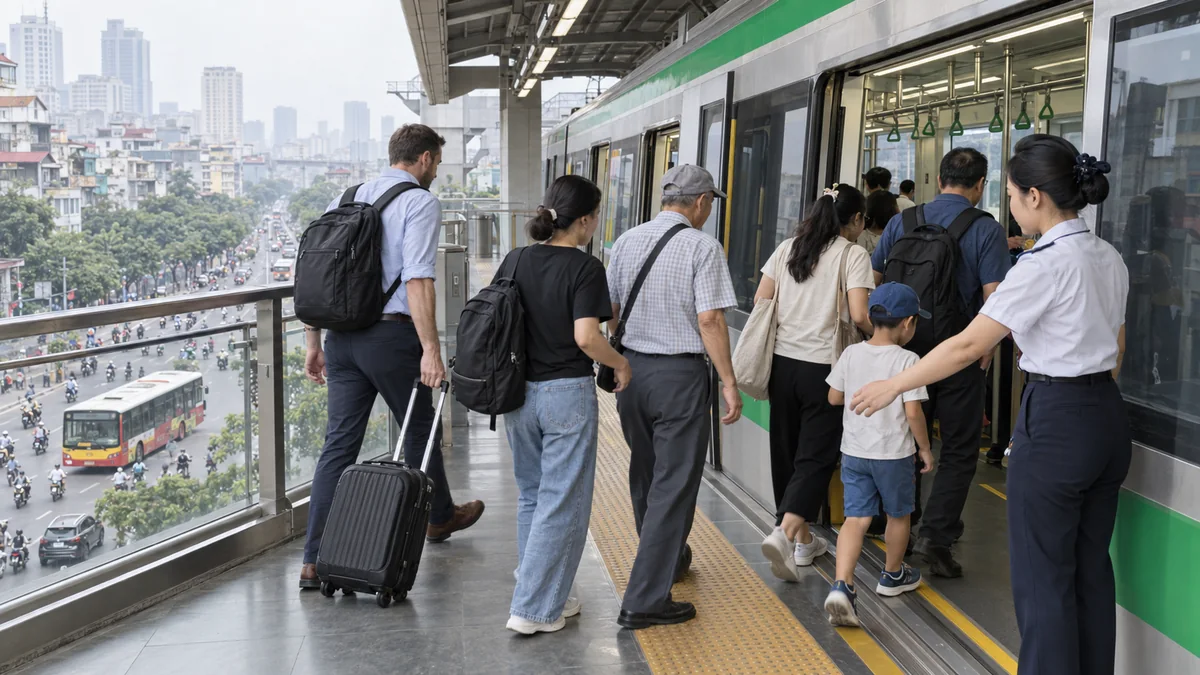
This is relevant to anyone whose stay in Hanoi overlaps with early September. Not only can you switch to free travel around the city, but service is also increased in anticipation of crowds.
Free on all bus routes and Metro lines 2A and 3.1 — no ticket or tap needed
Covered are all of Hanoi's bus routes plus its two urban rail lines, 2A and 3.1. Line 2A is an elevated metro connecting Cat Linh and Ha Dong, and it was Vietnam's first urban rail line, opening in November 2021. Line 3.1 runs the elevated stretch between Nhon and Cau Giay, and began passenger service in August 2024. These are the two rail lines actually running in Hanoi, and during the holiday neither needs a farebox or a card tap — you can just walk on board.
Both lines run east-west across the western side of the city, and transferring from Line 3.1 to a bus near Cau Giay lets you get almost to the center using only stretches with no ticket machines or gates at all. One line runs through the dense housing around Ha Dong, the other through the new-town area near Nhon, so commuting and holiday-travel crowds tend to overlap on both. Dropping fares to draw people onto the two metro lines is also meant to relieve road congestion.
Normally, Hanoi's buses require paying the fare when boarding or having a free IC pass ready, and depending on the route,distance-based fares require a tap when getting off. Someone who has just arrived anddoesn't have an application card for free bus travel— a short-term visitor like that would normally get held up fumbling with a metro ticket machine or bus change. During these five holiday days, all of that hassle disappears.
First run at 4:30 a.m., last train at 10 p.m. — what the increased service looks like
Operating hours run from 4:30 a.m. to 10:30 p.m. for buses, and 5:30 a.m. to 10 p.m. for the two metro lines. During the holiday, service is increased beyond normal levels in anticipation of people traveling home and festival crowds. The daily service counts published by the city are as follows.
| type | Operating hours | Daily trips / interval |
|---|---|---|
| Buses (all routes) | 4:30〜22:30 | About 17,335–17,645 trips / every 5–30 minutes |
| Metro 2A (Cat Linh–Ha Dong) | 5:30〜22:00 | 203 trips / about every 10 minutes |
| Metro 3.1 (Nhon–Cau Giay) | 5:30〜22:00 | 200 trips / about every 10 minutes |
Trip counts and operating hours are figures published by the city of Hanoi. The numbers vary slightly day to day: 17,335 trips on August 30, 17,645 on August 29 and 31, and 17,642 on September 1–2.
Different from Ho Chi Minh City's “free for 60 and over” — this time it's everyone, for a limited period
This round in Hanoi is a time-limited, everyone-rides-free program, with no narrowing by age or residence. It works differently from the ongoing free rides Ho Chi Minh City offers seniors — the defining features here are the five-day window and how wide open the “anyone” eligibility is. Ho Chi Minh City has also had a period when it made all its routes free, and1.32 million people rode over five days, a 30% jump in ridershipwas the result. The fact that dropping fares spikes demand was already visible in the south, and Hanoi's holiday service boost follows that same reasoning.
Crowds also concentrate in Hanoi over the National Day holiday. Around Hoan Kiem Lake and Ba Dinh Square, pedestrian zones and events make it hard for cars and motorbikes to move, and finding street parking eats up time. Drawing riders onto the free metro and buses keeps private cars out of the crowded center. For travelers and business visitors, this means five straight days of getting close to the venue for free, without getting caught in traffic.
Practical notes for getting around Hanoi for free during the holiday
- To reach the Old Quarter or Hoan Kiem Lake, take Line 3.1 to Cau Giay and transfer to a bus — you can get into the center without paying a fare.
- First service starts at 4:30 a.m., and the last train and buses run into the 10 p.m. hour. Evening events on National Day itself tend to run late, so secure your ride home before 10 p.m.
- Even free, the metro tends to get packed during rush hour. If you're moving with large luggage, aim for a gap between the roughly 10-minute intervals.
- Taxis and ride-hailing get hard to predict with holiday surcharges and traffic. Look up the nearest station to your venue in advance and plan around metro-plus-walking to keep your timing predictable.
- Free travel ends on September 2. Regular fares return from the 3rd, so if you're extending your stay, switch back to having cash or an IC pass ready.
Making the most of the five free days
For Hanoi's free travel, it's enough to keep three things in mind: all bus routes and Metro 2A/3.1, the five days from August 29 to September 2, and that every rider is covered. This window when you can skip the ticket line, skip having change ready, and just board is limited. If you're arriving in Hanoi over the holiday, map out your lodging and the nearest stations to your key spots in advance, and build your schedule around the free lines from day one — you can cover a crowded city for zero fare. Just keep in mind that regular fares return from September 3, and plan your departure accordingly.