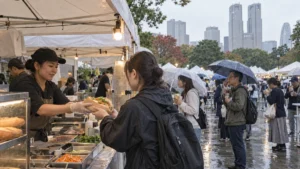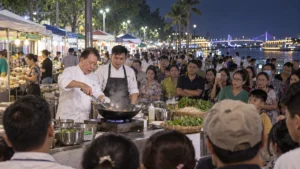
Three Vietnamese home dishes were selected for the “Top 100 Asian Side Dishes” published by TasteAtlas, the gourmet rating site that scores foods around the world. At the top for Vietnam was garlic-scented stir-fried water spinach (rau muong xao toi) at 9th, followed by an assortment of fresh herbs (a garnish plate) at 62nd, and the fried dough “quay” at 76th. It’s become a topic locally that dishes flanking the table—rather than headliners like pho and banh mi—won international acclaim. For those planning a trip to Vietnam, these three dishes you’re sure to meet at street stalls and eateries are a shortcut to knowing the local flavor.
The three Vietnamese side dishes TasteAtlas chose
TasteAtlas is a food database that scores dishes from around the world by user rating. In this “Top 100 Asian Side Dishes,” Lebanon’s hummus Beiruti took first place, Iran’s kateh (cooked rice) second, and Indonesia’s perkedel (potato croquette) third. Among them, Vietnam’s highest ranking was 9th-place stir-fried water spinach.
According to VnExpress, this stir-fried water spinach is introduced as “water spinach quickly blanched, then stir-fried with garlic and seasonings,” and is often served as one dish in a three-dish meal combining a main dish and a soup. That it was served to French President Macron, who visited Vietnam in May 2025, also boosted its profile.
Why the “supporting cast” was recognized
With the headliners pho and banh mi long famous worldwide, what’s new this time is that three side dishes—not main dishes—were selected together. The Vietnamese table is based on a composition of sharing several small plates rather than a dish that stands complete on its own. Stir-fries, soups, raw vegetables, pickles, and fried foods are laid out at once, and you assemble flavor and texture in your mouth. Supporting the “art of combination” are supporting-cast dishes like the three chosen this time.
A rating site’s evaluation is based on numerous scores gathered from users worldwide. A broad range of people, including tourists and overseas Vietnamese, gave high marks to these plain but endlessly craveable side dishes. Indeed, while stir-fried water spinach appears at tables hosting heads of state, it can be ordered for a few hundred yen at street-corner eateries. That the boundary between a special-occasion feast and an everyday dish is thin tells the character of this country’s food.
The features of each of the three dishes and where to eat them
Stir-fried water spinach (rau muong xao toi)
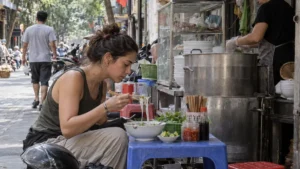
A simple dish of stir-frying water spinach over high heat all at once, seasoning it with garlic and fish sauce. Its charm is the crunchy texture of the stems and the savoriness cloaked in the bitterness of the greens. It’s a staple you can order almost anywhere at local eateries (com binh dan, popular canteens), working both as a side for rice and as a snack with beer. More often than at tourist-oriented shops, at eateries frequented by locals the heat is stronger and you can enjoy the aroma of a fresh stir-fry.
Herb plate (dia rau song)
An assortment of raw vegetables and herbs called “dia rau song (đĩa rau sống)” locally. In VnExpress’s introduction, it piles on lettuce, Thai basil, cilantro, cucumber, bean sprouts, and more. It’s always served alongside pho, grilled-pork noodles (bun cha), fresh spring rolls, and the pancake-like banh xeo, and it’s interesting that the herbs paired change with each dish. The way to eat it is Vietnamese-style—adding as much as you like to the noodles, meat, or wrappers and layering on your own preferred aroma and freshness. Travelers tend to leave unfamiliar greens behind “because they’re a garnish,” but leaving them out makes the flavor monotonous. It’s brought out with the dish at pho shops, bun cha shops, and fresh-spring-roll shops.
Fried dough “quay”
A long, thin fried dough rooted in China’s youtiao, crispy outside and hollow inside. The standard is to dip it in congee or noodle dishes. You often see it at morning congee stalls and noodle shops; soak it in soup and it turns fluffy, bite it as is and it’s crunchy—two textures in one stick. Many shops let you add just 1–2 sticks, perfect for taking the edge off your hunger.
Practical info for travelers to enjoy these three dishes
For all three, there’s no need to head to a special restaurant—you can meet them casually at local eateries and street stalls. We’ve listed the rough price ranges and best bets (currency converted at 10,000 VND = about 60 yen).
| Dish | Where to eat | Price guide | How to enjoy it |
|---|---|---|---|
| Stir-fried water spinach | Popular canteens / bia hoi (street beer) | Around 30,000–50,000 VND (about 180–300 yen) | Fresh and hot off the stir-fry, with rice or beer |
| Herb plate | Pho shops / bun cha shops | Comes with the noodle dish (free to a small amount) | Add as much as you like to noodles and meat |
| Fried dough “quay” | Congee stalls / noodle shops / morning markets | 5,000–10,000 VND (about 30–60 yen) per stick | Dip in soup / bite as is |
Prices vary by shop and region, so the figures are only a guide. At stalls you can order by pointing, and for stir-fried water spinach “rau muong” and for quay just saying “quay” will get through. If you’re concerned about hygiene with the fresh herbs, choosing a fast-turnover shop bustling with locals lets you enjoy them with peace of mind.
What’s in it for travelers
This selection extends Vietnam travel’s “must-eat list” beyond headliner cuisine. Even travelers who came for pho or banh mi can, at the same eatery, add a plate of stir-fried water spinach, add herbs to their noodles, and dip quay in congee—tracing the way of eating that locals keep up every day. Each costs from a few dozen to a few hundred yen, with no special reservation or trip to a tourist site needed.
What the three chosen dishes show is that the appeal of Vietnamese food lies not in the polish of a single plate but in the experience of assembling flavor at the table. Move between the savoriness of stir-fried water spinach, the freshness of raw herbs, and the texture of fried dough within a single meal. This joy of “making the flavor yourself” is exactly the experience travelers should savor at local eateries.
Spreading into the food and tourism scene
International attention to side dishes broadens how you enjoy the local food experience. Food tours have room to expand beyond headliner cuisine into content that takes side dishes and seasonings as their angle. Cooking classes that teach how to stir-fry water spinach or combine herbs, and morning street-food tours, are ways to spend time suited to repeat travelers and foodies.
The range of souvenir choices widens too. The fish sauce that defines the flavor of stir-fried water spinach, or the seasonings for dressing herbs, become take-home candidates that let you recreate the taste of your trip at home. As with Phu Quoc’s traditional fish-sauce making, there’s a story in the very seasonings that support the side dishes. Turn your eye not only to the headliners of sightseeing but to the flavors that flank them, and the depth of the Vietnamese table comes into view.
Frequently asked questions
Where in Vietnam can I eat stir-fried water spinach?
You can order it almost certainly at popular canteens (com binh dan) and street-beer shops nationwide. More often than at tourist restaurants, at eateries bustling with locals you can enjoy the savoriness of a fresh stir-fry.
Is the herb plate something you eat as is?
The Vietnamese way is to add as much as you like to noodle and meat dishes like pho and bun cha. Rather than leaving it as a garnish, using it as an ingredient to add aroma and freshness gives you a more local flavor.
What’s the standard way to eat the fried dough “quay”?
The standard is to dip it in congee or noodle soup. Dip it and it turns fluffy; bite it as is and it’s crunchy—the texture changes. Many shops let you add it in units of 1–2 sticks.
Summary
The three Vietnamese dishes chosen for TasteAtlas’s “Top 100 Asian Side Dishes” are all everyday flavors you can meet at street-corner eateries and stalls without searching for a special restaurant. On your next trip to Vietnam, order a plate of stir-fried water spinach, add herbs to your noodles, and dip quay in your congee—not just headliners like pho and banh mi. Savoring the supporting cast is the gateway to knowing the local food culture most deeply.
Related reading
- The talked-about pho shop that was Michelin-listed the day after closing
- Street food to savor at Da Nang’s shoulder-pole food fest
- Phu Quoc fish sauce: a traditional flavor spanning six generations
Source: