In an alley in Ho Chi Minh City's District 1, off Thái Văn Lung Street—the area known as the "Japantown"—sits a Japanese izakaya that's easy to miss from outside. The name is Sakaba Sasuke. A single black noren curtain is the only marker, and regulars find the door by that one cloth alone. Covered by the local English-language outlet Saigoneer on September 9, 2026, the restaurant draws both resident Japanese and travelers with skewers wrapped in pork belly and grilled, and a weekly-changing steamed tsukune. For anyone searching abroad for "the real thing," it's worth thinking about what one alleyway restaurant can mean.
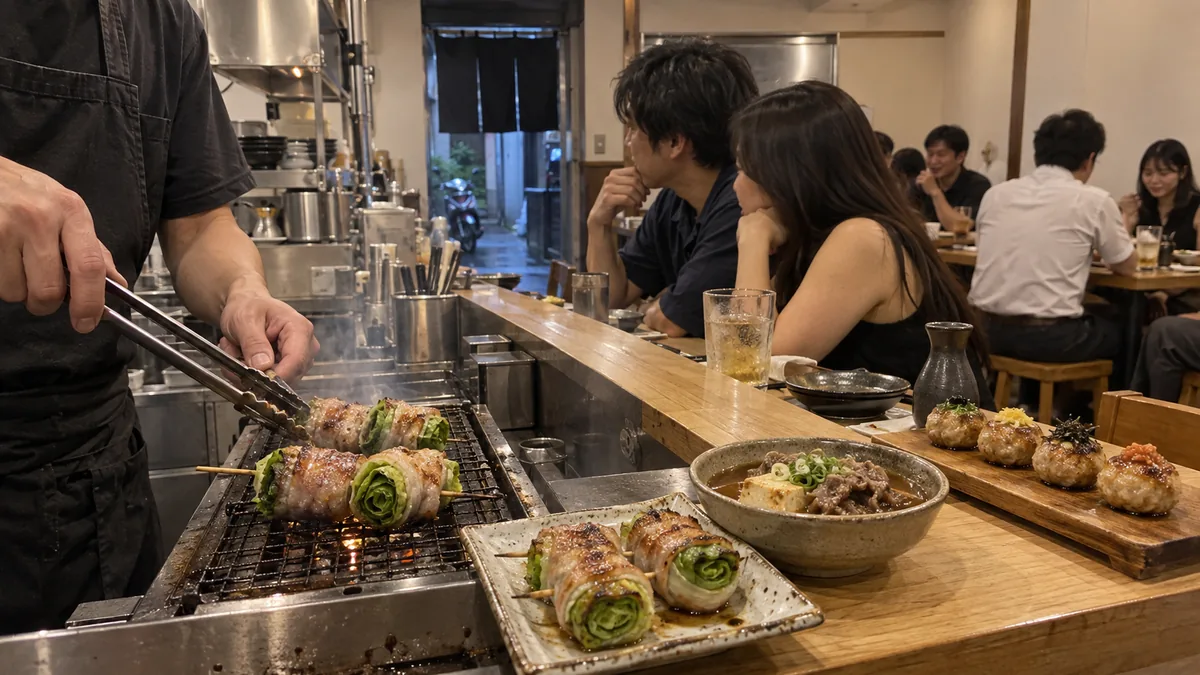
An izakaya found by a single noren, tucked in a Japantown alley
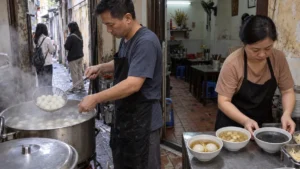
The restaurant sits on a quiet stretch of Thái Văn Lung Street, facing a narrow alley (a hẻm, in Vietnamese). There's no flashy signage—just the black noren hanging at the entrance as the only marker. The Saigoneer writer notes that this noren is "the only clue that the place exists." Inside, a front room with wooden counters and tables seats around 20, with more private table seating further back. Rather than covering the walls with Japanese-style decoration, the space is built around bright lighting and an open kitchen where you can see the skewer grill and simmering pots.
The owner is Shumpei Takamura. He moved to Vietnam several years ago, opened a franchise of the ramen shop Mutahiro just near this spot, and opened Sasuke in 2019. Both the name and the core of the cooking trace back to his time working at a restaurant called "Sasuke" in Tokyo, and to the kushimaki technique he learned in Fukuoka, Kyushu. From the Eikichi Yazawa music playing inside to the tagline "The Gather of Monkey Business," he says he's built the place entirely around what he personally finds "cool." Japanese and Vietnamese fly back and forth across the room, and roughly two-thirds of customers are Japanese. The menu is in three languages—Japanese, English, and Vietnamese—though the weekly specials are often written in Japanese and English only.
How pork belly fat changes the flavor: the signature skewers and weekly tsukune
The kitchen's personality shows most in how it uses pork belly. One signature dish is yasai kushimaki—lettuce and vegetables wrapped in thin pork belly and grilled. Saigoneer describes the moment the dripping fat coats the filling as when the flavor of the ingredients really comes through. Niku-dofu, beef and tofu, is another signature dish here: a small bowl piled high with tofu ladled from the pot and tender beef on top.
The most talked-about dish is the weekly steamed tsukune (mushi tsukune). Several chicken tsukune sit side by side on one plate, each with a different filling. They're served on a wooden board and diners are guided to eat left to right; the writer says that after more than a dozen visits, they've never hit the same combination twice. Takamura sometimes gets ideas from Instagram posts, and there's an anecdote about one attempt with natto, where the smell spread to all four pieces in the steamer and the dish flopped. The rest of the lineup rounds out a typical izakaya spread: yakisoba skewers, spinach-and-cheese rolls, camembert-stuffed rolls, butter-grilled king oyster mushrooms, karaage, shumai, and agedashi tofu.
Key menu items and the essentials
| Item | Details |
|---|---|
| Signature skewers | Yasai kushimaki (vegetables wrapped in pork belly and grilled), yakisoba skewers |
| Simmered dishes / small plates | Niku-dofu (beef and tofu) |
| Specialty | Weekly steamed tsukune (filling changes each time, eaten left to right) |
| Other | Spinach-cheese rolls, camembert rolls, butter-grilled king oyster mushrooms, karaage, shumai, agedashi tofu |
| Clientele | About two-thirds of customers are Japanese. Menu in Japanese, English, and Vietnamese |
Why Japanese regulars keep coming back, without any "Japanese-style" decor
What's interesting is that the place doesn't look like a typical izakaya. Instead of being crammed with lanterns and menu placards, the decor is minimal, and the open kitchen and grill draw the eye instead. Saigoneer observes that what regulars love most is "the smiles from the open kitchen." Staff move between shy smiles and full grins as they work, and that atmosphere is described as what makes the place feel comfortable.
When choosing Japanese food abroad, we tend to judge a place by how "Japanese" it looks. But what Sakaba Sasuke shows is a different path to trust—built not on themed decor but on carefully made food and the warmth of the people running it. Some nights the front room is packed elbow to elbow; other nights it's a quiet hideaway where you can take your time with the music. The restaurant recently moved to opening seven days a week, including Mondays. The reason people keep coming back isn't the decoration—it's the backbone of the place itself.
How travelers and residents alike can use this one restaurant
For Japanese residents, the restaurant works as a reliable, never-fails-you spot. At the same time, it's also a strong choice for bringing along travelers less familiar with Japanese food, or local friends. Lettuce wrapped in pork belly, and steamed tsukune eaten and compared one by one, are easy to explain, full of surprises, and good conversation starters. The three-language menu also means guests can order without stumbling over a language barrier.
This pattern connects to a broader way of enjoying Saigon's food scene as a series of "discoveries." We covered a stall charging several times the price of a street-side banh mi that still draws long lines, inA 2030-yen hot-plate banh mi in Saigon, 6 to 10 times the street price, still draws a lineas seen there, and this city clearly has a current where people gravitate toward experience rather than price. What draws people to Sakaba Sasuke, too, isn't affordability—it's dishes you can't find anywhere else. The original Saigoneer article doesn't mention prices, and neither does this one. Reservations are taken by Facebook message.
Another angle worth considering is the closeness between a restaurant and the people in it. There's a piece describing a foreigner invited to a memorial service at a family home in the Mekong Delta, struck by the warmth of the people, inA trip invited to a memorial feast, where Mekong hospitality surprises foreignersSet alongside that story, it becomes clear that food memories in Vietnam often stick less because of the dish itself than because of who you shared it with and how. At Sakaba Sasuke, where you can watch the grill cook's hands right across the counter, the setup makes that kind of memory easy to form. If you want to get closer to the local food culture itself, there's the piece about long-standing shops and a Michelin-listed spot with lines forming from the morning, inHanoi pho: lines stretched outside historic and Michelin-listed shops on National Day morningMoving back and forth between a bowl like that and a place like this, built by and for Japanese residents, gives you a fuller, more three-dimensional sense of the range of food in this country.
Practical details to know before you go
| Item | Details |
|---|---|
| Shop name | Sakaba Sasuke |
| Address | 8A/A22 Thái Văn Lung, Bến Nghé Ward, District 1, Ho Chi Minh City |
| Area | An alley off Thái Văn Lung Street, District 1 (Japantown) |
| Hours | 5:30 PM–11:00 PM (now open seven days a week) |
| Reservations | Reservations by Facebook message. Even for small groups, it's safer to message ahead |
| Markers | A black noren at the entrance. No flashy signage |
Seating is limited, so if you'd rather avoid the crowds, go right at opening in the 5 PM hour or on a weekday. If you want to enjoy the livelier atmosphere instead, later in the evening, when the regulars gather, is the time to go.
The next time you spend an evening in Saigon
What Sakaba Sasuke teaches us is that you don't have to judge Japanese food abroad by how "authentic" it looks. The flavor of vegetables brought out by dripping pork belly fat, tsukune that's different every time, and smiles from the grill station—put those three together, and people will keep making their way down the alley even without a sign or any decoration. The next time you're planning an evening in Saigon, book a seat on Facebook first, start with the niku-dofu, and try the yasai kushimaki and the weekly tsukune. Travelers should bring a local friend along, and residents should bring guests visiting from Japan—either way, it'll make the restaurant's appeal come through even more clearly.