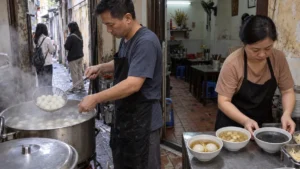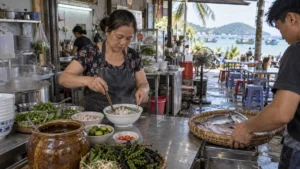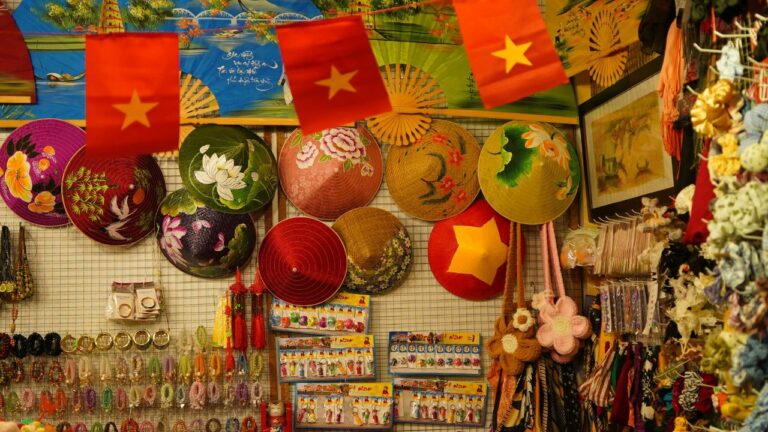
Long-established Ho Chi Minh City eatery Nguyen Sinh Bistro is serving a pan-fried beef banh mi for 345,000 dong (about 2,030 yen, or roughly $13) a plate, VnExpress reported on September 5, 2026. In Saigon, where the same street-food dish sells for 35,000–60,000 dong, the price is 6 to 10 times higher, yet the shop still draws lines. It’s now run by the founder’s grandson, Nguyễn Ngọc Thạch. The signature dish combines a chicken liver pâté passed down from his grandfather with Hokubee beef seared on an iron plate.
A dish worth knowing about for Japanese travelers
For Japanese travelers, banh mi is, along with pho, one of the first dishes people reach for in Vietnam. Most people picture it as a roughly 100-yen sandwich you can eat one-handed while walking. This news breaks that image. It’s served as ‘banh mi chao,’ a style where the bread comes on a separate plate and the fillings are cooked in a hot iron pan — and it costs nearly ten times the street-stall price. There’s room for travelers to be surprised on the ground that a dish challenging the assumption of banh mi as cheap, fast food is coming from a long-established local shop. It’s worth keeping in mind as a place worth visiting once you’ve decided how to spend your budget.
Nguyen Sinh Bistro traces back to 1942 in Hanoi
Nguyen Sinh’s history goes back to its first shop, opened in Hanoi in 1942. Founder Nguyễn Văn Miếu moved to Ho Chi Minh City in 1979 and opened the first city location in 1982. The pan-fried beef banh mi was added to the menu in 2013, and today it’s run by his grandson, Nguyễn Ngọc Thạch.
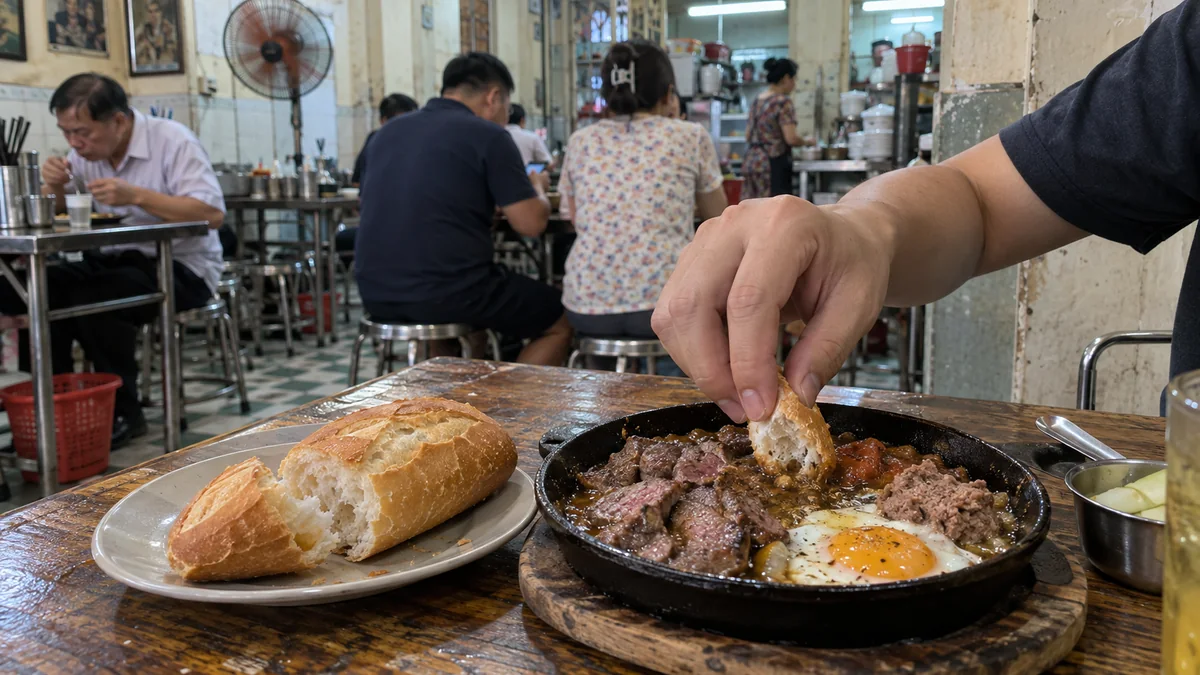
The signature 345,000-dong plate uses 200g of Hokubee-brand beef per serving. The shop explains that fat is injected into the lean meat to create a wagyu-like marbled finish. The beef, seared on an iron pan, is paired with a chicken liver pâté made from a recipe passed down since the founder’s generation, distinctively scented with cinnamon. As a shop that retains strong traces of French colonial-era food culture, it ranks among the oldest in Saigon.
Banh mi chao, served on a hot plate, is a breakfast dish with French roots
Banh mi chao (bánh mì chảo) refers to a way of eating where the fillings aren’t stuffed into the bread but instead cooked in a small iron pan and brought straight to the table. Fried eggs, pâté, sausage, and other ingredients are cooked together, and the pan arrives at the table still sizzling hot. The bread is served on the side, torn and dipped in, scooping up the contents of the pan. Adding beef steak takes it up a notch.
This style of eating is a breakfast dish that evolved from a beef dish France brought to Vietnam, layering Vietnamese-style seasoning onto the pairing of bread and egg. Sauces made with tomato, butter, and oil vary in formulation from shop to shop. This long-established restaurant has brought a premium-priced interpretation to a dish that took root as a Saigon breakfast staple. The wave of premiumization continues across the same city — a dish from a Michelin-listed restaurant$8 wagyu banh mihas sparked controversy over its pricing, for instance.
6 to 10 times the street-stall price: a side-by-side comparison
Even for the same pan-fried banh mi, the price differs by an order of magnitude between street stalls and this long-established shop. Comparing the street-stall prices cited by VnExpress with this dish shows just how wide the gap is. Yen conversions are calculated at 1 yen ≈ 170 dong.
| Source | Price (dong) | Approximate yen conversion |
|---|---|---|
| Street-stall banh mi chao | 35,000–60,000 dong | About 206–353 yen |
| Nguyen Sinh Bistro’s pan-fried beef banh mi | 345,000 dong | About 2,030 yen (roughly $13) |
That’s about 10 times the street-stall floor of 35,000 dong, and roughly 6 times even the ceiling of 60,000 dong. Converted to dollars, street stalls run about $1.40–$2.40, versus $13 at the long-established shop. Using 200g of beef and combining branded meat with house-made pâté is what supports that gap. The same banh mi chao sells for even more overseas — in New York,lines form only on weekends for a $28 plate,according to some reports.
A 4.2 rating and long lines, but customer reactions are mixed
Nguyen Sinh Bistro has a large number of reviews, with many praising the quality of the food and the shop’s atmosphere, though some complaints about service attitude remain. The fact that customers keep coming even at several times the street-stall price shows support from both locals and tourists.
This isn’t the only shop where a high-priced banh mi draws a line. At a shop where an American chef grills pork over charcoal for banh mi,a two-hour wait forms every day in Saigon,a sign that a customer base willing to pay for ingredients, brand, and a shop’s story has grown in Saigon.
How to get there and the best time to go
The shop is on Trần Đình Xử Street (Cầu Ông Lãnh Ward) in central Ho Chi Minh City. It’s close to the center of District 1, within walking, taxi, or ride-hailing distance from Ben Thanh Market and Bui Vien Street. Since banh mi chao is originally a breakfast dish, visiting in the morning lets you enjoy it in its intended time slot.
Since the dish is cooked and served in an iron pan, it takes longer from order to serving than a street-stall sandwich. Avoiding the busy hours and going right after opening or outside lunchtime lets you eat at a relaxed pace. The 345,000-dong plate is fairly large in portion too, so if you’re in a small group, ordering to share avoids waste. Knowing in advance how to tear the bread and dip it into the pan’s contents means you won’t be confused even on your first visit.
The surrounding area has Ben Thanh Market and Bui Vien
The area around the shop is surrounded by spots that draw travelers. Ben Thanh Market is within walking distance, where you can browse souvenirs, dried goods, and fruit. Bui Vien Street, lined with restaurants and bars at night, is nearby too, so you can plan mornings around the old shop’s dish and evenings around a walk through the streets. Saigon’s street food also gets high marks, and being able to eat your way through a long-established shop’s premium plate and a cheap street-corner dish in the same day, almost like tasting your way through a flight, is a sign of just how deep this city’s food scene runs.
Summary
Nguyen Sinh Bistro’s 345,000-dong banh mi reflects a shift in Saigon’s food scene, both through its price — 6 to 10 times the street-stall rate — and the fact that customers keep lining up anyway. The pan-fried beef banh mi that this shop, running since 1942, added in 2013 is a dish that layers a long-established interpretation onto a breakfast rooted in French cuisine. It’s worth setting aside the assumption that this dish should be cheap and quick, and visiting in the morning with the intention of sharing. Tasting the difference from the street-stall version for yourself will leave the breadth of Saigon’s banh mi culture as part of your travel memory.
Sources:
Ho Chi Minh City shop serves $13 pan-fried banh mi (VnExpress International, September 5, 2026)
‘Banh mi chao’: A Vietnamese dish that sizzles in a pan(Nhan Dan Online)