Vietnam has a national territory stretching long and narrow from north to south, and the climate and culture differ greatly by region.
That difference is reflected vividly in the cuisine too, and a feature is that even with the same dish name, the seasoning and how it's eaten differ when the region changes. By knowing each of the northern, central, and southern dishes, the depth of Vietnam's food culture comes into view.
This article explains the regional differences in Vietnamese cuisine in detail and introduces each region's representative dishes and use of seasonings.
The importance of understanding the regionality of Vietnamese cuisine
Travel through Vietnam and you may feel, each time you move, as if you've come to a different country.
That applies not only to the climate and the air of the town but also to the food culture. Capture Vietnamese cuisine in a single image and you'll miss its diversity. By understanding the food culture of each region, your Vietnam gourmet trip will become deeper and more enjoyable.
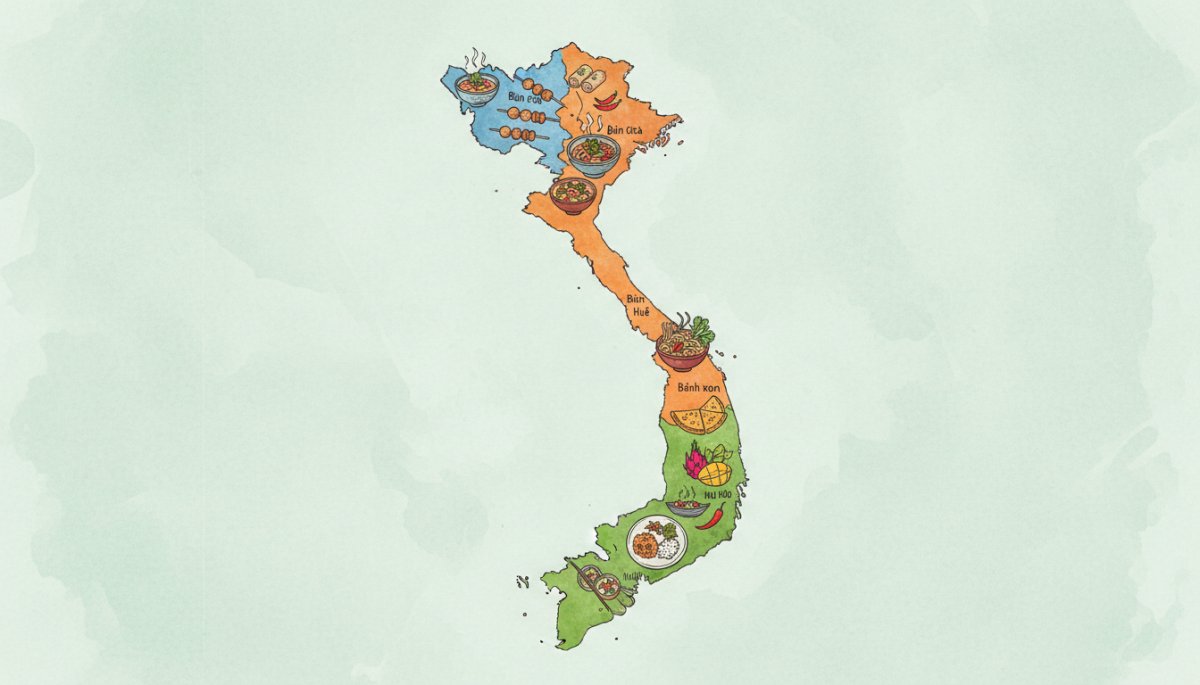
「北は穏やか、中部は辛い、南は甘い」は入口として便利ですが、家庭、都市、民族、料理ごとの差を覆い隠します。傾向として捉え、個々の料理を地域の性格そのものに結び付けないことが大切です。
北部料理の特徴:だしと塩味を生かす傾向
The northern region, centered on the capital Hanoi, features a climate with four seasons.
北部料理には、だしや発酵調味料を生かし、香辛料や甘みを控えめに感じる料理があります。ただし「質素」「洗練」は価値判断を含むため、具体的な材料と調理法で比べます。チリ、レモングラス、コショウなどのスパイスを使用しますが、辛すぎず食べやすい料理が多く、多くの人の胃袋をつかむような満足度の高い料理が並びます。
Representative dishes of the north
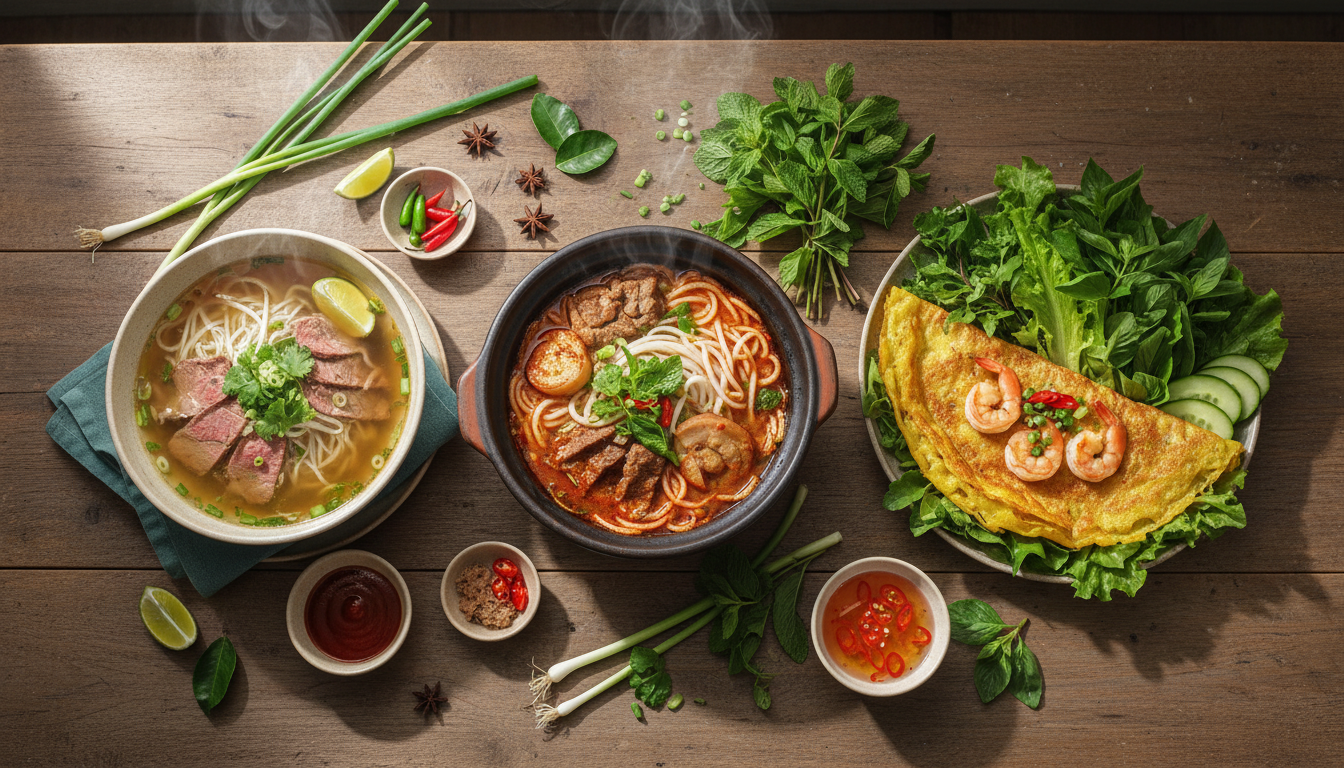
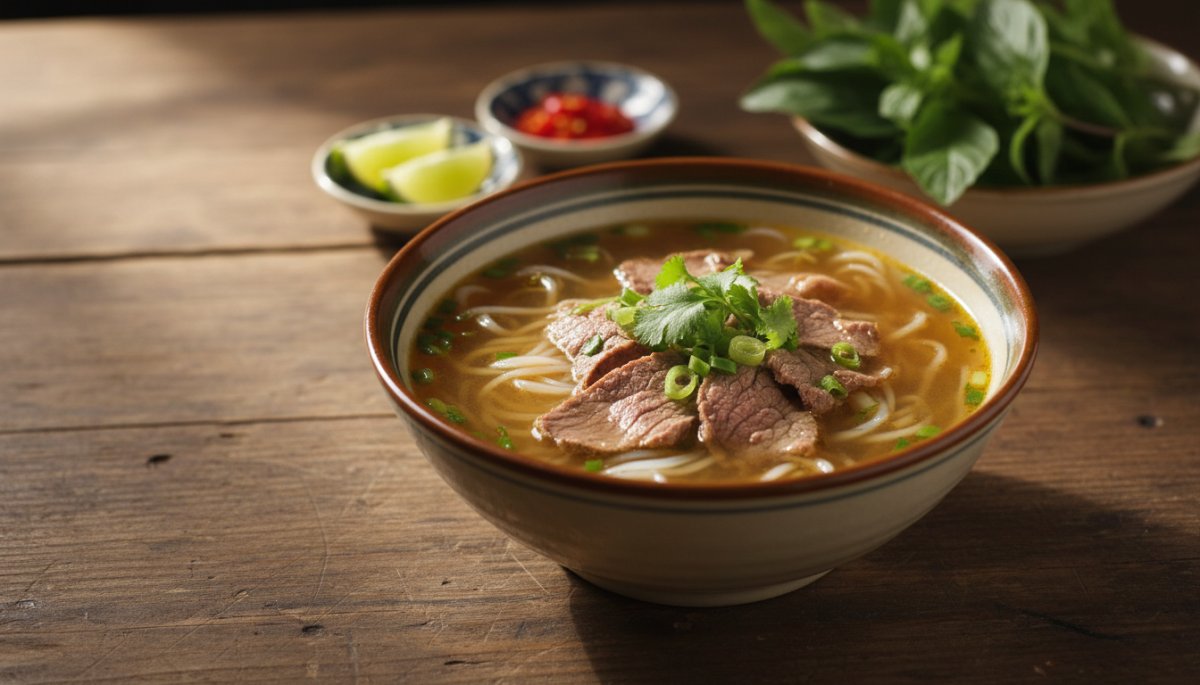
Phởis a rice-noodle dish originating in the north, eaten all across Vietnam.
北部のフォーは旨味が凝縮された濃厚なスープが主役で、一杯で味が完成されている感じがします。具は肉と玉ねぎ、青ねぎ程度とシンプルで、別皿の香草が少ない店もありますが、北部の人がハーブを「使いたがらない」とは一般化できません。油っぽくなく、味付けも辛すぎず、甘すぎないため、海外に紹介するのにとても適しています。
Bun chais a Hanoi specialty like a dipping noodle dish, eaten by tearing bun (rice noodles), herbs, and raw vegetables into a sweet-sour sauce with charcoal-grilled pork belly and meatballs. With a flavor easy for beginners to try too, it's so popular that many say "I like bun cha more than pho."
Characteristics of northern seasonings and flavoring
In northern cuisine,nuoc mamand dishes with a salty flavor using plenty of soy sauce are favored.
Nuoc mam is a fish sauce made by fermenting small fish and salt, and because it's rich in glutamate, the source of umami substances, using it in a dish draws out the ingredients' umami and brings depth and richness to the dish. Northern people usually want to fully enjoy the flavor of the broth, so they tend to prefer simple seasoning.
Characteristics of central cuisine: spicy, highly distinctive flavors
The central region, centered on Da Nang, Vietnam's third city, is a notable area dotted with World Heritage sites.
中部には唐辛子や発酵調味料を強く利かせる料理がありますが、すべてが非常に辛いわけではありません。気候だけを原因とせず、フエの宮廷料理、沿岸の食材、交易や地域史も含む多様な背景として捉えます。中部の料理は独自性が高く、好みが分かれますが、辛いものが好きな方にとっては病みつきになるおいしさがあります。
Representative dishes of the center
Bun bo Hueis a noodle dish famous in the ancient city of Hue, popular all across Vietnam.
A spicy noodle dish featuring a deeply savory broth built from many ingredients, including beef, pork trotters, lemongrass, and a salty paste seasoning made by fermenting shrimp called mam ruoc. Among the raw vegetables served, shredded banana flower and split water spinach stems are standard.
Mi Quangis a Da Nang specialty, a dish with a rich, small amount of liquid and flat noodles reminiscent of kishimen, plus ingredients. The ingredients are commonly pork and shrimp, and you eat it while adding fried rice crackers and herbs to taste.
The center's seafood and court cuisine
The center is famous for fresh seafood caught in the South China Sea.
Fried fish paste like satsuma-age,cha cais a famous Vietnamese dish travelers will want to have on their list. Also, in the Nguyen dynasty that continued in Hue until the 20th century, a distinctive food culture not seen in other areas developed, and among it, the dishes the emperors enjoyed are still beloved by many people at home and abroad as "court cuisine."
Characteristics of southern cuisine: sweet, rich flavors
The south, centered on Ho Chi Minh City, Vietnam's largest economic city, has seen urban development second to none in Southeast Asia.
南部料理は異なる文化の影響を受け、多くの料理の真髄を吸収してきたため、非常に豊かです。南部料理には砂糖、ココナッツウォーター、豊富な香草や魚介を使う例があります。「繊細ではない」といった優劣ではなく、料理ごとの甘味・酸味・発酵味を見ます。南部人は酸味と甘味を組み合わせた料理を好むため、砂糖やココナッツウォーターを料理に多用します。
Representative dishes of the south
Banh xeois a standard southern dish, often introduced in Japan as Vietnamese-style okonomiyaki.
Rice flour is mixed with coconut milk and turmeric to make a batter, and vegetables and meats are folded in as fillings and grilled. For Vietnamese people, it's an easy dish eaten at supermarket food courts and street stalls.
fresh spring rollsis also said to be a southern specialty, and in the north, where China-derived fried spring rolls have taken hold, fresh spring rolls are rarely eaten. A dish with shrimp, pork, raw vegetables, herbs, and more in rice paper, it's a dish many Japanese people like too.
The bounty of the south's Mekong Delta
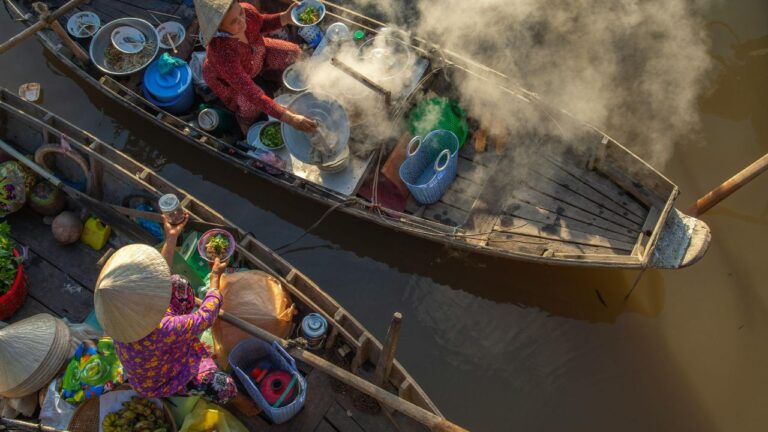
The Mekong Delta region, located in the southwest, is blessed with fertile land woven by great nature.
River fish caught in the Mekong River is also a southern feature not to be forgotten. Examples include the "elephant ear fish" and "mam ca," made by fermenting small fish. Mam ca in particular has a somewhat off-putting smell, but it has an indescribable flavor not found in Japan, so it's something you'll want to sample at least once. It can be eaten as a braised dish or hot pot.
A comparison of noodle dishes by region
In Vietnam, rich in noodle dishes, the regional differences are especially pronounced.
Regional differences in pho
Northern pho has a firmly effective stock but a light seasoning.
南部のフォーは比較的甘いスープの味わいで、もやしや香草をふんだんに使います。ハノイ式と南部式の好みは人それぞれです。南部の人にも共通認識があるとは断定せず、スープの甘み、香草、もやし、卓上調味料の違いとして比べてください。
Noodle dishes unique to the south
Hu tieuis a noodle dish eaten in southern Vietnam.
In contrast to northern pho, where you enjoy a soft, smooth throat-feel, hu tieu noodles are half-dried before being cut, so a feature is their firmness. Hu tieu Nam Vang commonly has plenty of ingredients — shrimp, pork, minced meat, liver, and more — on a sweetish, clear pork-bone-based broth, served with raw bean sprouts, chrysanthemum greens, lettuce, and garlic chives on the side.
Bun thit nuongis eaten in the south, centered on Ho Chi Minh City, and in Japanese it would be something like "grilled-pork salad noodles." A noodle dish where you pour a sweet-savory nuoc-mam-based sauce over charcoal-grilled pork marinated for flavor, bun (thin rice noodles), pickled vegetables, peanuts, scallion oil, herbs, and raw vegetables, then mix the whole thing well and eat. Very refreshing, it's delicious even on a hot day or when you have no appetite.
Regional differences in how seasonings are used
香草を多く使う料理はありますが、すべてのベトナム料理に入るわけではありません。
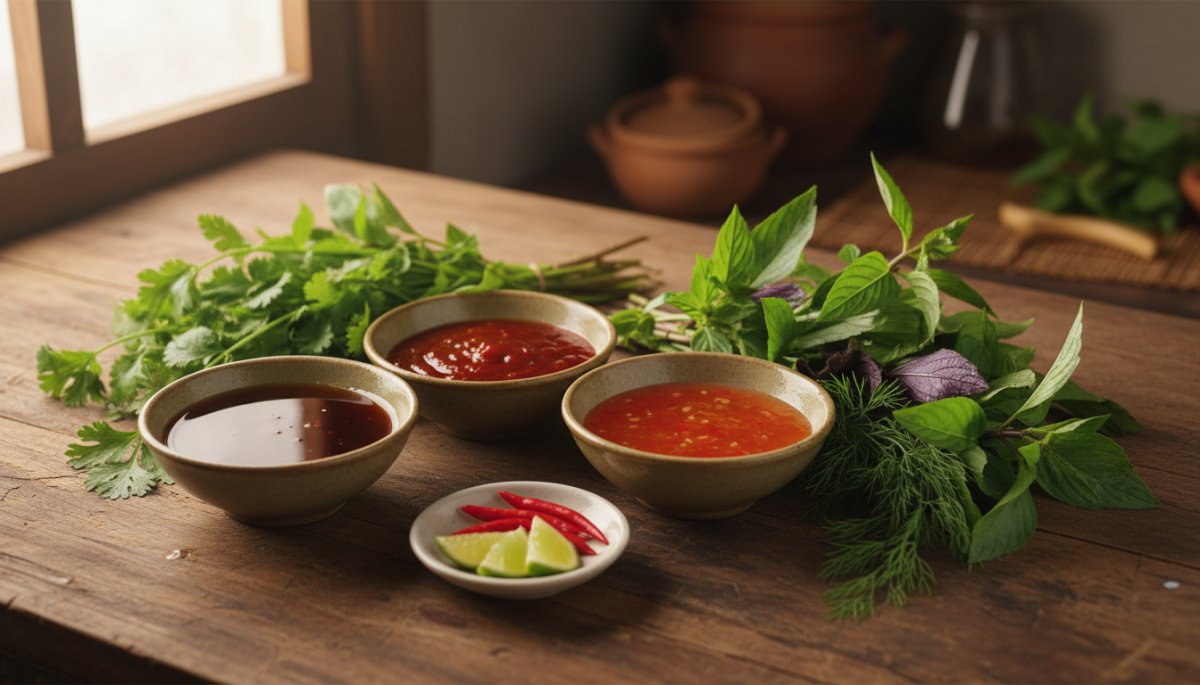
It's common to wrap coriander, basil, mint, dill, perilla, and the like around shrimp or fish to eat. In Vietnam, various seasonings are used depending on the dish, and preferences differ by region.
Main seasonings
Nuoc mamis a fish sauce made by fermenting small fish and salt, a seasoning indispensable to Vietnamese cuisine.
Chili sauceis a red liquid seasoning with the heat of chili, used especially heavily in the center.Sweet chili sauceis chili sauce with sweetness added, and it tends to be favored in the south.
Seasoning tendencies by region
Remember that the north has many light dishes, the center spicy, and the south sweet.
This difference isn't mere preference; it was born of climate, history, and cultural background. In the north's four-season climate, plain, refined seasoning developed; in the center, not blessed with good weather, spicy seasoning using plenty of chili; and in the south, blessed with fertile land, sweet seasoning using sugar and coconut milk.
地域差を決めつけずに食べ比べるコツ
- 同じ料理を別都市で食べ、だし・甘味・辛味・香草を比べる
- 「北・中・南」だけでなく、家庭・民族・沿岸/山間の違いを見る
- 辛さ、砂糖、魚醤、発酵調味料は注文時に確認する
- 甲殻類、魚、ピーナッツ、大豆など見えにくいアレルゲンに注意する
Conclusion: to enjoy the regionality of Vietnamese cuisine
Vietnamese cuisine differs greatly in seasoning and ingredients by region.
The north features light-seasoned, stock-effective dishes, the center chili-spiced spicy dishes, and the south sweet, rich dishes using sugar and coconut milk. Since even the same dish name differs in flavor and how it's eaten when the region changes, tasting and comparing each region's dishes lets you feel firsthand the diversity and depth of Vietnam's food culture.
When traveling in Vietnam, the more you try to get around efficiently, the more you may miss its appeal. Precisely because much doesn't go as planned or as you wish, memorable moments are born. Why not understand each region's food culture and enjoy your Vietnam gourmet trip more deeply?
Vietnam is a country whose depth widens the more you try to know it. It can't be fully grasped in a single visit; by coming a few times, its outline gradually comes into view. Start by learning the differences in each region's cuisine, and discover Vietnam's appeal.