In Hong Thai, in northern Vietnam's Tuyen Quang Province, the Hong Thai Autumn Festival ran from August 7 to 9, 2026. Set among pear orchards spread across a highland plateau at roughly 1,000m elevation, the three-day event featured a pear-picking contest where visitors plucked fruit straight from the branches, along with folk songs and traditional costume displays from ethnic minority communities. The pear harvest hit its peak on the festival's second day, August 8, marking the start of a season that runs through the end of the month. The same mountain known for its flower-viewing season also draws crowds during harvest time — a two-season event design.
A "Pear-Picking Contest" in Orchards at 1,000m — Three Days of Autumn Festivities
At the heart of the festival was a competition where tourists themselves went into the orchards to harvest pears. Because you can taste the fruit right after picking it, the whole thing is designed to let you experience the growing region firsthand. Alongside it, the program included a singing contest featuring the Dao people's traditional then and páo dung songs, traditional dance, displays of ethnic costume, and music and performing-arts shows.
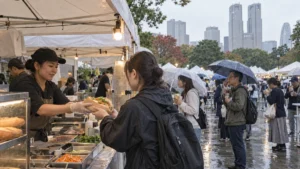
Local food was on offer at the venue too. Home-style mountain cooking — five-color sticky rice, meat smoked over a hearth, and traditional sweets — was served alongside the harvest scenery. What gives this festival its character is how it bundles song, costume, and food around a single agricultural product, the pear, to present "the whole mountain" in one experience.
"Hong Thai Pears": Grown by 164 Households Across 7 Hamlets
Hong Thai pears have grown into a flagship agricultural product of Tuyen Quang Province over the past few years. Harvest peaks in August, and their crisp texture and strong sweetness have become a highlight for souvenirs and tourism alike. The variety name hasn't been publicly disclosed, but locally it's simply known as the "Hong Thai pear," a sweet pear grown on the highland.
Cultivation is supported by 164 households across seven hamlets and more than 90 hectares of pear orchards (figures for Hong Thai, Tuyen Quang Province; some reports put the figure closer to 100 hectares). The growers are mainly ethnic Dao Tien, with Tay and Hmong communities also living in the area. This dual identity — a flower-viewing spot that's also a fruit-producing region — is what makes year-round tourism here possible.
Pears are a fruit where freshness makes a big difference right after picking, so visiting the growing region itself carries real meaning. The concept is similar to pear-picking tourism in Japan, but in Hong Thai's case, the difference is that the ethnic minority hamlets and their way of life themselves become the tourism resource. Buying directly from the families who own the orchards and eating while watching the harvest unfold is an experience you can't recreate on a market or supermarket shelf.
Pears All Through August, Flowers in February–March — About Six Hours by Car From Hanoi
Hong Thai falls within what used to be Na Hang District, and it's about six hours (roughly 240km) by car from Hanoi. Expect winding mountain roads the whole way, so build in extra time. There's no practical way to get there directly by public transport — chartering a car from Hanoi or Tuyen Quang city, or joining a tour heading toward Na Hang, is the realistic option. Japanese travelers should keep "two seasons" in mind: aim for August if you're after the fruit, and February–March if you want the carpet of white blossoms. Because of the elevation, mornings and evenings get cold, so it's worth bringing a light jacket even in summer.
During flower season, the "Hoa Le" (Pear Blossom) Festival runs — in 2026 it was held from February 2 to March 10 — and it's promoted as one of Vietnam's longest pear-blossom routes. The August autumn festival itself wrapped up after August 7–9, but the pear harvest stays in season through the rest of the month. If your dates don't line up, aiming for the flower-viewing season the following February is a realistic next target.
| Item | Details |
|---|---|
| Location | Hong Thai, Tuyen Quang Province (formerly part of Na Hang District) |
| Elevation | About 1,000m (one of the higher-elevation hamlets in the province) |
| Autumn festival | August 7–9, 2026 (harvest peaks on the 8th) |
| Flower-viewing festival | February 2–March 10, 2026 |
| Pear season | August |
| Access | About 6 hours (about 240km) by car from Hanoi |
How Japanese Travelers Can Fit Hong Thai Into a Trip
Rather than making Hong Thai a destination on its own, it fits better as an extra overnight tacked onto a northern mountain route. If you want to walk through rice terraces and ethnic minority villages with more developed tourism infrastructure, there'sour guide to Sapa, the northern highland known for ethnic minority culture and stunning rice terracesat 1,600m elevation. The difference is that Hong Thai leans fully into rustic simplicity and the harvest experience. It suits travelers who want to avoid crowds and experience farm work as part of the trip.
As a highland agricultural product grown by ethnic minority communities, it shares common ground withVietnamese coffee, also grown at around 1,000m elevation, and our thorough guide to its varieties and how to enjoy it. Touring the north with pears and coffee — the bounty of the mountains — as your theme also gives your souvenir shopping a clear focus. If you're planning to combine the north with Ha Long Bay, one option is to useHai Phong, the port city that pairs well with Ha Long Bayas your gateway.
White Blossoms, Sweet Fruit — Visiting the Mountain in Two Seasons
Hong Thai's pears greet travelers with two faces: the blossoms that turn the mountain white in February–March, and the sweet fruit picked in August. This year's autumn festival wrapped up after three days, but the in-season pears stay on the trees through the rest of the month. Miss the blossoms and there's still the fruit; miss the fruit and the blossoms will come again — it's that back-and-forth that keeps this small hamlet at 1,000m elevation standing as a destination year after year.