ベトナム旅行の荷物は、現地で買える物まで詰め込むより、「なくすと旅が止まる物」を先に分けると整理しやすくなります。パスポート、決済手段、薬、通信、充電の5系統を手荷物へ入れ、衣類や日用品は旅程と季節に合わせて足します。
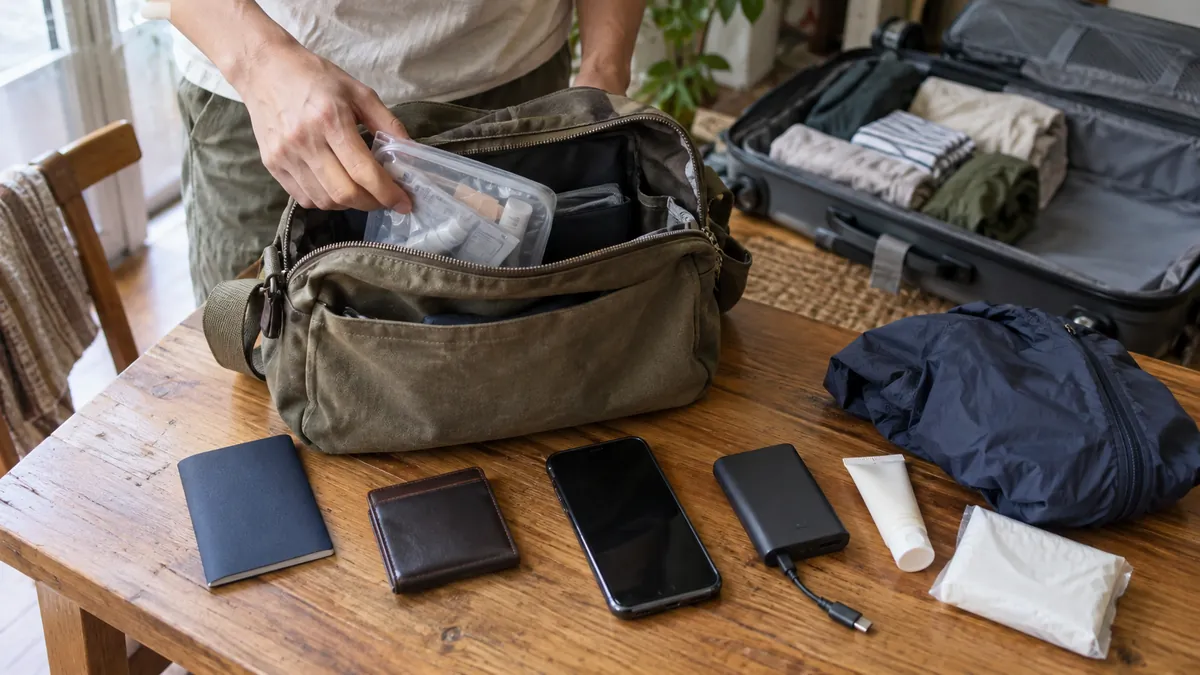
このリストは全部持つためではなく、要不要を判断するためのものです。航空会社の重量・液体・電池ルールは予約クラスでも違うため、最後は利用便の公式手荷物規定で確定してください。
最初に分ける:止まる物と買える物
- 代替しにくい:パスポート、処方薬、カード、スマホ、充電手段
- 現地調達しやすい:水、一般的な洗面用品、傘、Tシャツ
- 機内手荷物:貴重品、薬、モバイルバッテリー、到着初日の着替え
- 預け入れ:刃物、大きな液体、すぐ使わない衣類。ただし貴重品は入れません
Essential items to bring
| Passport and departure ticket | Even with a visa exemption, you may be asked to show a departure ticket |
|---|---|
| Cash (Japanese yen or USD) and an international-brand card | Carry cash for exchange and a card separately |
| Smartphone and charger | Essential for ride-hailing, maps, translation, and QR payment |
| Regular medications | Familiar ones such as stomach medicine and antipyretic painkillers |
| A copy of your overseas travel insurance | Something showing partner hospitals and contacts |
Handy items that add comfort
- A plug adapter (A/C compatible) and a power bank
- Insect repellent and sunscreen—for the sun and mosquitoes
- Wet wipes and tissues—handy at food stalls and markets
- An eco bag—for carrying shopping and souvenirs
- A light layer—against air-conditioned interiors and evening chill
- A stock of masks and hand sanitizer—for travel and crowds
A detailed by-category packing check
Even when you think you've "mostly packed," the smaller items are the easiest to forget. Checking by category reduces oversights.
| Valuables and documents | Passport, departure ticket, cash, cards. Keep a copy or phone photo of your passport and air ticket separately. A note of your travel-insurance policy number and emergency contacts |
|---|---|
| Hygiene and body | Familiar regular medications, adhesive bandages, wet wipes, pocket tissues, hand sanitizer, a toothbrush, lip balm. In case there's no paper at stalls or public toilets |
| Insect repellent and sun protection | Insect-repellent spray, sunscreen, a hat, sunglasses. For countermeasures near mosquito-heavy waters and in the evening |
| Rain gear | A folding umbrella, lightweight rainwear, a waterproof pouch or zip bag to keep your luggage dry |
| Electronics | Smartphone and charging cable, an A/C plug adapter, a charger with many USB ports, a power bank (carry-on). The battery drains fast with ride-hailing, maps, translation, and QR payment |
| Clothing | Light, quick-drying clothes, easy-walking shoes, a light layer, and clothes or a large stole that cover shoulders and knees for temples |
Points to note about clothing
- Choose quick-drying materials—in the heat and humidity you sweat easily, and synthetic-blend quick-drying materials dry faster and are more comfortable than 100% cotton
- Easy-walking shoes—town walks and markets tend to involve long walking distances. Having familiar sneakers, not just sandals, gives peace of mind
- Suitable for temples and religious sites—clothes that cover shoulders and knees are the safe choice. Having one large stole doubles as an air-conditioning shield and a cover-up
- Air conditioning and evening chill—interiors and buses can be heavily air-conditioned, so keeping one light long-sleeve item helps you avoid getting sick
Things that change by season and situation
- Dry season—the sun is strong, so pack a hat, sunglasses, and sunscreen generously
- Rainy season—a folding umbrella, rainwear, and a waterproof pouch for getting wet
- Highlands (Sapa, Da Lat)—it gets cold morning and evening, so add a jacket or long sleeves
- Temples and religious sites—clothing that covers shoulders and knees, and easy on-and-off shoes
Extra checks for women and those traveling with children
- For women—familiar sanitary products, skincare, and makeup remover. You can buy them on the ground too, but bring your preferred ones from Japan. A large stole to limit exposure is handy too
- For those with children—familiar baby items, children's regular medications, spare diapers and changes of clothes, a hat and hydration items for the heat. Small toys and snacks for the plane and travel
- Common—each child needs their own passport. Keeping information such as the maternal and child health handbook and regular medications on hand helps in case of a medical visit
How to think about regular medications and local procurement
For medicine, bringing familiar ones from Japan gives peace of mind. On the other hand, things you can buy cheaply on the ground, like water and tissues, are better not over-packed to keep your luggage light. Deciding in advance where to draw the line and deliberately procure locally instead makes your luggage much lighter.
- Regular medications to bring—familiar ones such as digestive/stomach medicine, antipyretic painkillers, motion-sickness medicine, adhesive bandages, and insect-bite ointment
- Things you can buy on the ground—drinking water, tissues, daily necessities, and simple rain gear can be had cheaply at convenience stores and supermarkets. Bulky and heavy items are lighter to procure locally
- The choice to deliberately not bring things—large bottles of shampoo and the like are often covered by hotel amenities. If unsure, portion them out and bring only the minimum
- Beware of over-packing—on the way back your luggage grows with souvenirs, so leave room on the way there
How to split carry-on and checked baggage
- Carry-on—keep your passport, cash, cards, smartphone, power bank, regular medications, and some changes of clothes on hand
- Liquids 100 ml or less—consolidate items like toner into containers of 100 ml or less, and put large volumes in checked baggage
- Power banks—not allowed in checked baggage. Always carry them on
- Fish sauce, coffee, breakables—wrap liquid or breakable souvenirs in cushioning material and check them
Tips for souvenirs and return luggage
- Wrap breakables and liquids (fish sauce and coffee) in cushioning material and put them in checked baggage
- Prepare a foldable sub-bag since luggage grows on the way back
- Watch the carry-on limits for liquids, and check large volumes
Frequently asked questions
- What are the essentials for Vietnam travel?
-
The basics are a passport and departure ticket, cash and an international-brand card, a smartphone and charger, familiar regular medications, and a copy of your overseas travel insurance. The smartphone is especially important since it's used for ride-hailing, translation, and QR payment.
- Do I need a plug adapter?
-
Vietnam mainly uses A and C types, and Japan's A plug can often be inserted as is, but old buildings in the provinces may be C-only. Having an A/C-compatible plug adapter gives peace of mind.
- What should I be careful about with clothing?
-
The basics are light clothing for the heat, but bring a layer since air conditioning, evenings, and the highlands get cold. At temples, clothing that covers shoulders and knees is the safe choice. In the rainy season, prepare rain gear too.
- What size suitcase is best?
-
For 3–4 days, a carry-on size; for a week or more or if you plan to buy a lot of souvenirs, a checked size gives peace of mind. Luggage grows on the way back, so leaving 70–80% room on the way there makes repacking easier.
Power-related items and seasonal clothing are explained in more detail in separate articles.

まとめ:チェックリストは旅程から削る
都市滞在、ビーチ、高原では必要な物が違います。まず必須品を確保し、天気、移動、洗濯できる日数から衣類を決め、最後に「現地で買える物」を削ってください。帰りのお土産用に容量と重量を残しておくと、復路の追加料金も避けやすくなります。