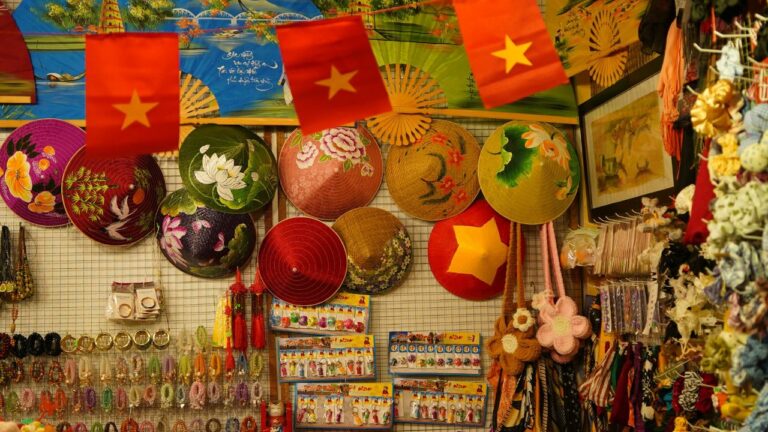

When you hear “Vietnam,” do you picture a coffee powerhouse?
In fact, Vietnam is the world's second-largest coffee producer, behind Brazil. With an enormous annual output of about 1.88 million tons, it has become an indispensable presence in the global coffee market. Let us explore the secret of how this Southeast Asian country achieved such rapid growth in its coffee industry and cultivated a culture all its own.
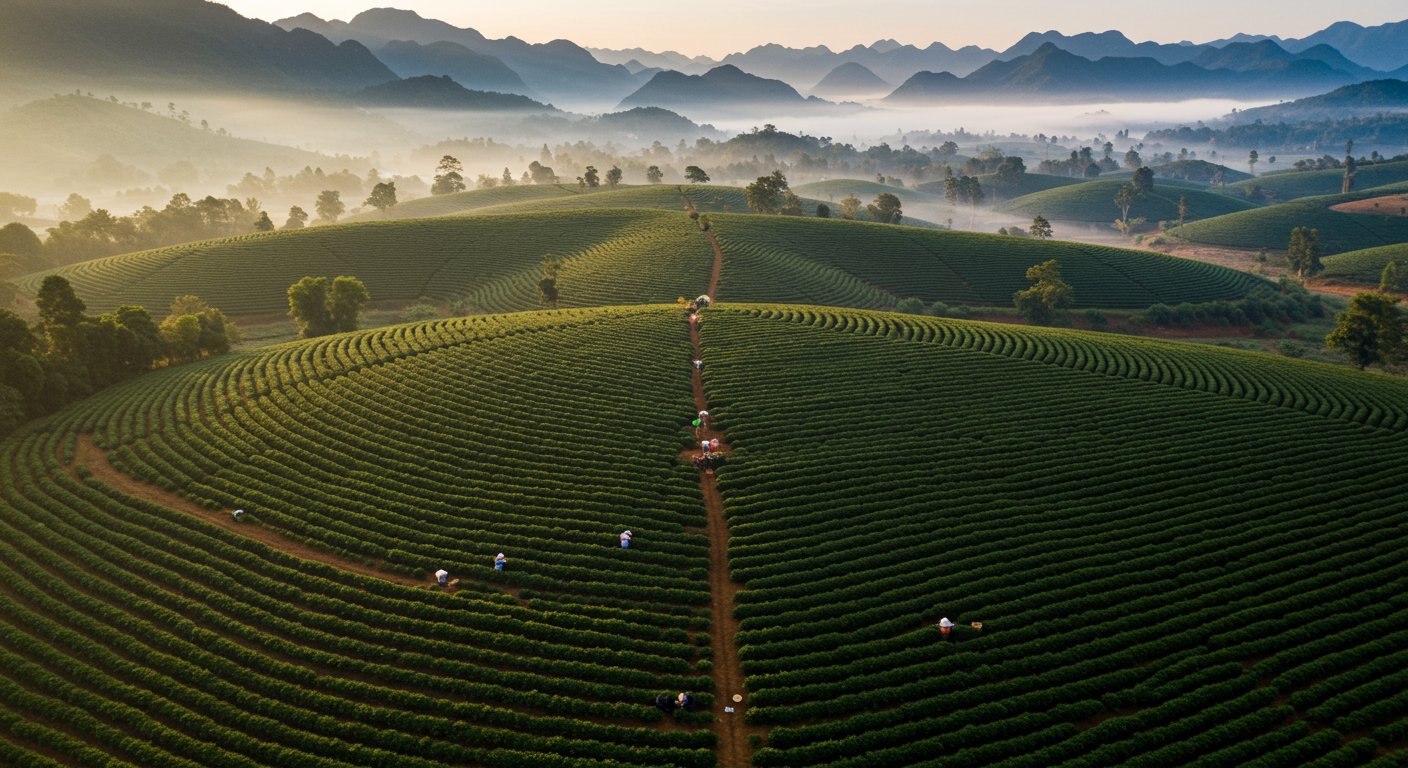
The history of coffee cultivation in Vietnam dates back to the mid-19th century. Coffee growing began in the north during the French colonial era, initially centered on Arabica, but it failed to yield the hoped-for results.
Robusta Powers the Rapid Rise of Vietnamese Coffee
The turning point for Vietnam's coffee industry came in the 1980s. A government-led coffee cultivation program began, and the disease- and pest-resistant Robusta variety was chosen.
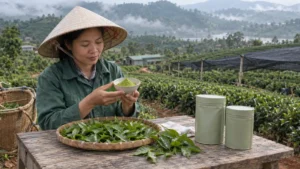
Because the central highlands had climate and growing conditions well suited to Robusta, production increased year after year. Large-scale plantations got underway, and in just about 20 years Vietnam rose to become the world's second-largest coffee producer. Today, Robusta accounts for more than 90% of Vietnam's coffee production.
Compared with Arabica, Robusta has the following characteristics.
- Strong bitterness and high caffeine content – It contains roughly 1.5 to 2 times the caffeine of Arabica, and is characterized by a distinctive strong bitterness and heavy body
- Strong resistance to pests and disease – It is relatively easy to grow and produces high yields
- Low-cost mass production – Its strong price competitiveness is an advantage in international markets
Leveraging these traits, Vietnam has become a major producer supplying roughly 40% of the world's Robusta beans. Exports to Europe and other Asian countries, especially as raw material for instant coffee, are particularly active.
Vietnam's Own Coffee Culture and Ways of Drinking
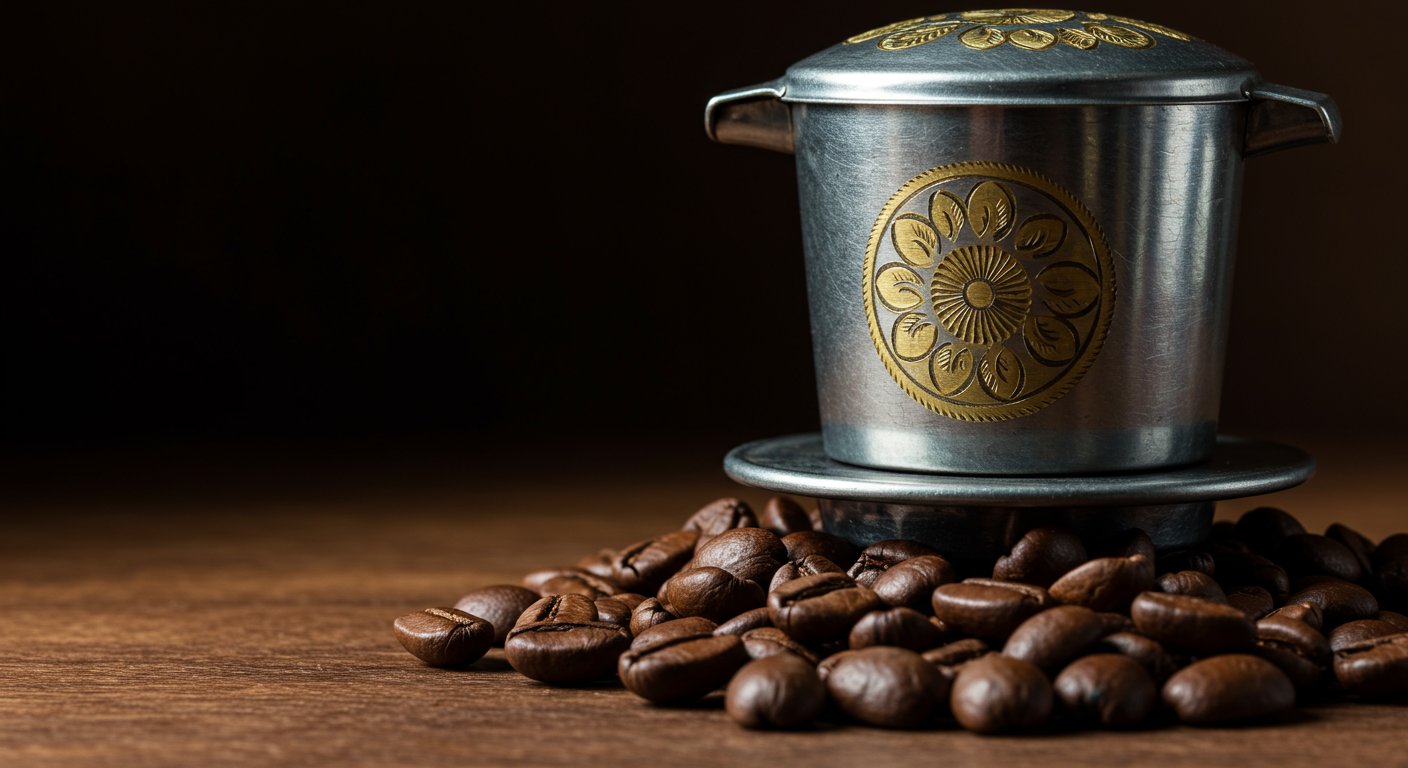
Vietnam's coffee culture, while influenced by the French colonial era, has developed in its own direction. What stands out are the unique brewing tool called the phin and the use of condensed milk.
The phin is a small metal dripper set directly on top of a cup. You add finely ground coffee and pour hot water slowly, and a rich coffee is extracted unhurriedly. This distinctive brewing method is a key element that shapes the flavor of Vietnamese coffee.
Signature Variations of Vietnamese-Style Coffee
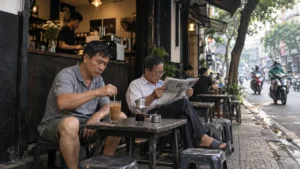
Vietnam has various unique ways of drinking coffee. Its flagship is "cà phê sữa đá." You put plenty of condensed milk at the bottom of the glass and pour coffee brewed with a phin over it.
The strong bitterness of Robusta and the sweetness of condensed milk merge in an exquisite balance, producing a distinctive flavor. The cold version with ice added is especially popular in Vietnam's hot climate.
There are also inventive variations, such as “egg coffee” made by whipping egg yolk and condensed milk, and “coconut coffee” with coconut milk added.

Efforts to Improve Quality and the Push into Arabica
Vietnam swept the global market through mass production, but this also entrenched an image of “cheap and plentiful equals low quality.” That has become a barrier to entering the premium market.
But over the past few years, Vietnam has begun putting effort into raising quality and brand value. Especially noteworthy is the push to expand Arabica production.
Da Lat (Lam Dong Province), a highland town at an altitude of 1,500 m about 300 km northeast of Ho Chi Minh City, is known as a major Arabica-producing area. The Arabica grown here has a good balance of acidity and aroma and is gaining recognition as a high-quality coffee.
Quality Contests and Efforts to Raise International Recognition
Companies such as UCC have held an annual quality contest for Vietnamese-grown Arabica since 2015, aiming to improve the quality of Vietnamese coffee. Efforts like these motivate farmers and promote the production of high-quality coffee beans.
By evaluating and recognizing farmers who grow excellent coffee beans and buying their crop above market price, the program is an attempt to share with producers the idea that “high quality leads to value.”
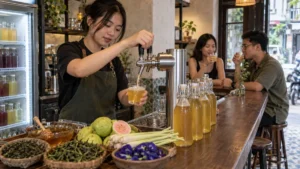
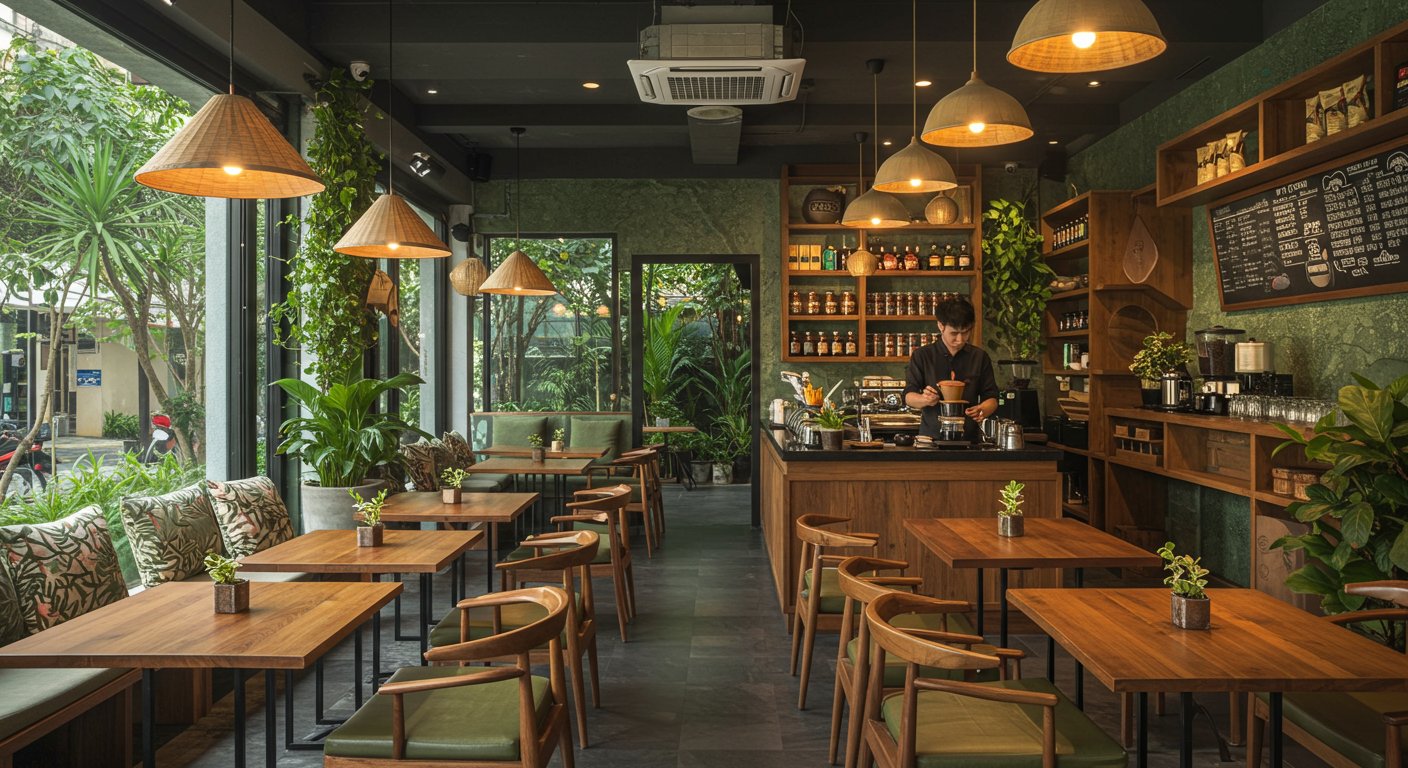
In Hanoi and Ho Chi Minh City, new-wave cafés serving high-quality Arabica are opening one after another, drawing popularity especially among young people. This points to a new development in Vietnam's coffee culture.
Challenges and the Future of Vietnam's Coffee Industry
Vietnam's coffee industry has established its position as the world's second-largest producer, but it also faces several challenges.
Many small-scale farmers are at the mercy of price swings, with unstable incomes and difficult living conditions. And behind the expansion in output, environmental problems such as deforestation, overuse of water resources, and excessive use of pesticides and chemical fertilizers have been pointed out as well.
To address these issues, the number of Vietnamese coffee farms with Fair Trade certification is on the rise. According to Fairtrade International, as of 2022 about 80 producer organizations had obtained certification, contributing to better working conditions for laborers and greater transparency in earnings.
The Shift Toward Sustainable Production
As calls for environmental responsibility grow, the transition to sustainable agriculture is also gaining ground. Efforts such as adopting organic and environmentally conscious production methods and conserving biodiversity have begun.
The push to develop high-quality Robusta, known as “Fine Robusta,” is also drawing attention. It is an attempt to aim for a more refined flavor while leveraging the traditional traits of Robusta.
Vietnam's coffee industry is at a turning point, shifting from quantity to quality. If it can balance quality improvement and sustainability while leveraging its strength as the world's second-largest producer, its future will be even brighter.
Summary: The Appeal of Vietnamese Coffee That Captivates the World
Through a history stretching back to French colonial times and government-led agricultural policy, Vietnam grew into the world's second-largest coffee producer in just a few decades. It has built a coffee culture all its own, from a production system centered on Robusta to a way of drinking that uses the unique brewing tool the phin and an exquisite pairing with condensed milk.
Over the past few years, new challenges have also begun, such as efforts to improve quality, expand Arabica production, and shift to sustainable agriculture. The appeal of Vietnamese coffee lies not only in its distinctive flavor but also in its history, culture, and possibilities for the future.
If you ever get the chance, why not experience the deep flavor of Vietnamese coffee for yourself? A cup brewed slowly through a phin is packed with this country's history and the passion of its people.