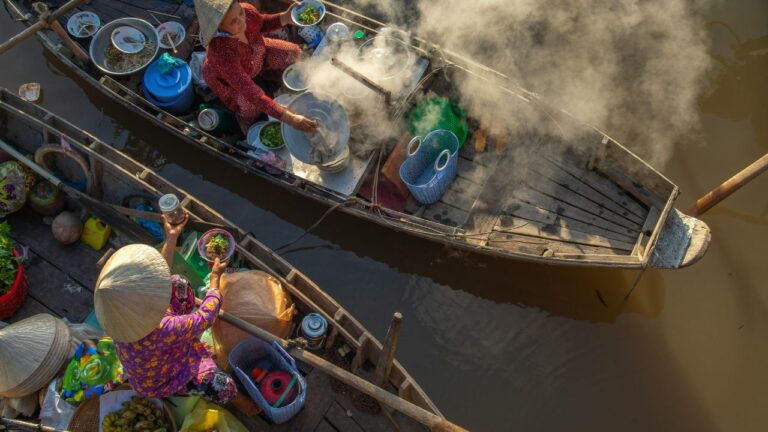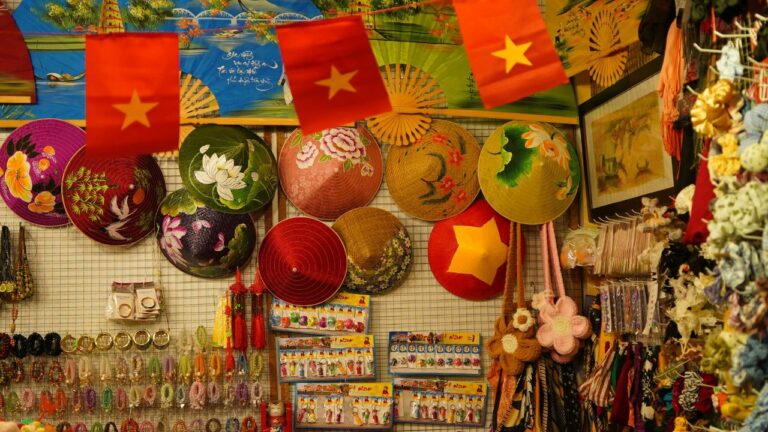


Thinking about traveling to Vietnam but not sure where to go?
For those who want to compare 17 cities in a table and choose by purpose,A purpose-based comparison guide to 17 Vietnamese citiesas well.
Vietnam, stretching long and thin from north to south, is dotted with cities that each have their own distinct appeal. From vibrant big cities to quiet historic towns and beautiful beach resorts. For a first-time traveler, which city to choose is a major decision that greatly affects how satisfying the trip is.
This article introduces ten carefully selected cities, from Vietnam's major cities to hidden gems. By learning each city's features and appeal, you should find the ideal destination that suits your travel style.
What makes traveling to Vietnam appealing?
Right now, Vietnam is one of the most talked-about travel destinations in Asia.
Direct flights from Japan, operating cities, and journey times vary by departure airport and time of year. As Hanoi, Ho Chi Minh City, and Da Nang do not necessarily operate daily or from every airport, check the airline timetable for your travel dates.
Prices cannot be said to be uniformly cheaper than in Japan. The amount you pay varies depending on city center versus resort, imported goods, public holidays, and exchange rates, so estimate accommodation, transport, and meals as a total VND figure. The historic streetscapes registered as World Heritage Sites, beautiful beach resorts, and the warm hospitality of the Vietnamese people continue to captivate visitors.

1. Ho Chi Minh City: a vibrant economic hub
The city's features and appeal
Ho Chi Minh City, Vietnam's largest city.
Ho Chi Minh City's population changes depending on administrative boundaries and the year of the statistics. Rather than using the figure of approximately 13.7 million from older articles as a fixed value, it is introduced here as one of the country's largest metropolitan areas and economic hubs. Out in the city, you are struck by the constant flow of motorbikes and the sight of high-rise buildings and local shops side by side. Alongside modern shopping malls and upscale restaurants, you can also enjoy traditional aspects of Vietnam such as historic markets and pho stalls tucked into back alleys.
French colonial buildings, back-alley eateries, cafe areas buzzing with young people. Each exists at once, and the line between sightseeing and daily life is blurred. Easy to approach even on a first trip to Vietnam, it's chosen by many travelers as a place to feel the city's energy firsthand.
Recommended sightseeing spots
The Reunification Palace is a must.
This building, the presidential palace during the Vietnam War era, is now open to the public as a museum, letting you feel Vietnam's history firsthand. The Notre-Dame Cathedral in the Gothic Revival style and the adjacent Central Post Office are both masterpieces of French colonial architecture.
At Ben Thanh Market, you can immerse yourself in a controlled chaos where the art of haggling comes alive. Colorful fruits and vegetables, spices, clothing, and even souvenirs for tourists, it has everything. Just walking through the market lets you touch Vietnam's varied food culture and crafts.

2. Hanoi: a cultural center with a thousand years of history
The appeal of the old capital
Vietnam's capital, Hanoi, has an appeal that contrasts with Ho Chi Minh City.
As the center of politics and culture, it has a certain calm air. Walk through the Old Quarter and you'll find commerce and daily life packed into narrow streets, with livelihoods carried on across many generations continuing even now. Historic buildings crowd the narrow lanes, spreading out a scene that feels as if time has stopped.
Around the lake, you'll see locals doing morning exercises or out for a quiet stroll. Even as a tourist destination, it feels like everyday life is laid bare, and simply walking the streets gives you a sense of layered history. Kinh Thien Palace, with its remains of the Later Le Dynasty (15th century) royal palace, and Hoan Kiem Lake, the symbol of Hanoi, are also highlights.
Access to World Heritage sites
Hanoi is also known as a gateway to World Heritage sites.
Ha Long Bay is accessible as a day trip. The countless jutting rocks rising from the sea create a dreamlike scene, like the backs of dragons lined up in a row. Take a boat cruise around the bay and the activities are plentiful too, stopping at limestone caves and floating villages or kayaking up close to the rock formations.
The "Trang An Landscape Complex" in Ninh Binh Province is a UNESCO World Heritage Site. Do not refer to the entirety of Ninh Binh as a World Heritage Site; verify your destination, the areas where entry is permitted, and boat service availability.
3. Da Nang: a resort where beach and city merge
A modern resort city
Da Nang, located along central Vietnam's beautiful coastline.
It has developed rapidly in recent years, and its reputation as a beach resort is rising. The long sandy stretches represented by My Khe Beach are a place of relaxation for locals as well as tourists. White-sand beaches spread out, boasting gentle waves and clear water, and the activities like surfing and parasailing are plentiful too.
The city itself is compact and easy to get around, making it well suited to a first stay in the central region. A defining trait is how urban convenience and closeness to nature coexist. Offering untouched beaches within minutes of modern shopping centers and excellent restaurants, this city's infrastructure rivals developed Asian cities with clean streets and efficient public services.
Nearby World Heritage sites
Da Nang is also ideal as a base for touring World Heritage sites.
Travel time from Da Nang to Hoi An varies depending on the starting point and traffic, and 30 minutes cannot be given as a fixed figure. The UNESCO-registered name is "Hoi An Ancient Town"; as it is also a living community, be considerate of noise, photography, and private property even at night. While it is developed as a tourist destination, it lacks excessive flashiness, and you naturally find yourself slowing to a walking pace. Strolling along the river and looking at the old houses and merchant halls, memories of the port town that once thrived on trade come to mind.
Hue can also be visited on a day trip. In the former royal capital of Hue, palaces, temples, and imperial tombs are scattered about, quietly conveying Vietnam's dynastic culture.

4. Hoi An: a World Heritage town lit by lanterns
Go a little further from Da Nang and you arrive in Hoi An, where an entirely different flow of time runs.
The old town is also registered as a World Heritage Site, and at night lantern light envelops the streets. The impression made by the lanterns varies from person to person, and generalizations such as "many times more beautiful" or "many travelers" are not made without basis. As UNESCO describes, Hoi An's architecture reflects a layering of locally distinct elements alongside multiple influences including Chinese, Japanese, and later European.
Since the whole town is a World Heritage site, just walking gives you a nostalgic feeling. Cafes are everywhere in town, and spending a relaxed time at a stylish cafe is a fine choice too. Strolling along the river, gazing at old houses and trading halls, memories of a port town that once thrived on commerce overlap the scene. The way its face changes greatly between day and night is another of the town's charms.
Hoi An has an area that is easy to explore on foot, but the style of travel that suits you is not determined by gender or who you are traveling with. Choose your length of stay based on whether you prioritize historic architecture, food culture, shopping, or photography.
5. Hue: an old capital where you touch quiet history
If you want to feel history more deeply, the former royal capital of Hue leaves a lasting impression.
Palaces, temples, and imperial tombs are scattered about, quietly conveying Vietnam's dynastic culture. It's a tourist site, but overall it's calm, and the more time you take to tour it, the deeper your understanding grows. It's a place to enjoy the negative space and quiet rather than flash.
As the capital of Vietnam's last dynasty, it's dotted with historic structures, making it a valuable place to deeply understand Vietnamese culture and history.
Hue's complex of monuments is registered as a World Heritage site, conveying to this day the glory of Vietnam's dynastic age. It's a special city where, amid quiet moments, you can touch Vietnam's deep history.

6. Nha Trang: a beautiful beach resort
Nha Trang, located in Khanh Hoa Province in southern Vietnam.
Known as a beautiful beach resort, its marine activities are popular. With clear seas and white sandy beaches spreading out, you can enjoy various marine sports like diving, snorkeling, and jet skiing. Resort hotels are plentiful too, letting you savor a relaxed beach-resort stay.
Nha Trang is about a one-hour flight from Ho Chi Minh City, and travel plans combining it with Ho Chi Minh City sightseeing are popular. It's an ideal destination for anyone who wants to enjoy both beach relaxation and city sightseeing.
7. Phu Quoc Island: Vietnam's last paradise
Phu Quoc, Vietnam's largest island, floating in the Gulf of Thailand off the west side of Vietnam.
The island covers about 590 square kilometers, and with its white-sand beaches and beautifully clear, shallow shoreline it's also called "Vietnam's last paradise." Because you can spend relaxed time away from the bustle of the city, many tourists from home and abroad visit for resort purposes.
Its specialty products, fish sauce and pepper, are both reputed to be high quality, making them ideal souvenirs. There are no direct flights from Japan, so a travel plan enjoying both cities via Ho Chi Minh City is recommended. Beyond enjoying the quiet, beautiful natural environment, because it isn't yet very well known as a destination, you can spend relaxed time here.
8. Da Lat: a summer retreat called the city of flowers
Da Lat, a tourist city located in the highlands of central Vietnam.
Despite being in Southeast Asia, its year-round comfortable climate of 18°C to 23°C and its history of being developed as a summer retreat in the French colonial era set it apart. Its flower garden, spanning 7,000 square meters, makes Da Lat worthy of its nickname "the city of flowers."
Popular sightseeing spots abound, such as Linh Phuoc Pagoda, characterized by a distinctive construction blending Chinese and French cultures, and the powerful Datanla Falls. A night market is also held every evening, bustling with locals and tourists. Located about a one-hour flight or a 5- to 6-hour bus ride from Ho Chi Minh City, it's recommended to visit alongside Ho Chi Minh City sightseeing.
9. Mui Ne: a port town where the desert spreads
Mui Ne, a port town located in southeastern Vietnam.
Facing the South China Sea, its development as a beach resort has been active in recent years. Even so, compared with places like Da Nang, a still-idyllic atmosphere remains, and you can catch glimpses of the locals' unpretentious lives.
There are also vast sand dunes, whose grandeur is stunning. You can even enjoy the activity of sledding down the dunes. Beyond that, you can head to the small stream called "Fairy Stream," and the Cham towers and Po Shanu ruins built by the former Champa Kingdom. About a 5- to 6-hour bus ride from Ho Chi Minh City, so a 1- to 2-night short trip in between Ho Chi Minh City sightseeing is recommended.

10. Sapa: a mountain town where ethnic minorities live
Sapa is a mountain village about 300km further north of Hanoi, at an elevation of around 1,600 meters.
Vietnam is a multiethnic nation made up of 54 ethnic groups, and many of the ethnic minorities live in lands far from the cities. Sapa is a town where such minority people gather. Everywhere in town you can see people dressed in vivid ethnic costumes.
The scenery of beautiful terraced rice fields spreading out is stunning, and trekking tours are popular too. Loved by many travelers as a precious place to touch the cool climate, the natural beauty of the mountains, and minority culture. Accessible from Hanoi by train or bus, a travel plan combining it with Hanoi sightseeing is recommended.
Tips for a successful trip to Vietnam
Know the best season
Because Vietnam is a country long from north to south, the best season differs by region.
The most comfortable time to visit varies depending on your purpose—heat, rain, sea conditions, air quality—and the boundaries between months also shift from year to year. Use average figures as a guide when narrowing down your options, and check official forecasts, typhoons, flooding, sea conditions, and AQI just before your trip.
Safety and points to watch
Vietnam's public safety is relatively good, but you need to watch out for pickpocketing and overcharging.
Caution is especially needed in places where many tourists gather. Keep valuables spread across different places, avoid walking alone at night, and observe basic safety precautions. When using a taxi, we recommend always using a legitimate taxi company.
Food and culture
Vietnamese cuisine has distinctive traits by region.
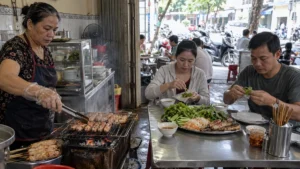
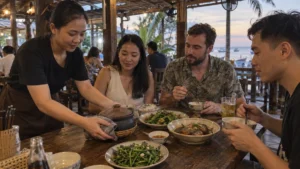
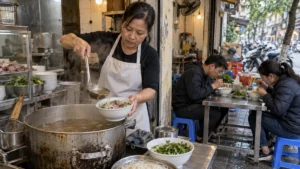
In northern Hanoi there's pho and banh mi, in central Hoi An there's cao lau, and in southern Ho Chi Minh City there's goi cuon (fresh spring rolls), letting you taste dishes distinctive to each region. If you dislike cilantro, telling them in advance can get it left out of your dish. Enjoying food at street stalls and local eateries is also a way to have fun that's unique to Vietnam.
5 Comparison Points for Choosing Among 10 Cities
- Getting there:Total time from home to accommodation, not just whether a direct flight exists
- Season:Not just rainfall, but heat, typhoons, sea conditions, and air quality
- Purpose:Your priorities among history, food, sea, mountains, and shopping
- Physical condition:Walking, stairs, boats, mountain roads, and ease of taking breaks
- Budget:Total cost of flights, accommodation, local transport, and admission fees
Fitting too many cities into a first trip means spending time on airport, station, and hotel transfers. For a 3–4 day trip, narrowing down to one city and its surroundings, or for a week, focusing on one region such as the north, south, or central area, makes it easier to adapt to changes in weather.
Summary: find the Vietnamese city that's perfect for you
Vietnam's cities each show you the country of Vietnam from a different angle.
If you want energy, Ho Chi Minh City; if you want to feel history and daily life, Hanoi; for a balance of nature and city, Da Nang; to savor atmosphere, Hoi An; to touch quiet history, Hue. If you want to enjoy a beach resort, Nha Trang or Phu Quoc Island; to spend relaxed time at a summer retreat, Da Lat; to enjoy stunning desert scenery, Mui Ne; to touch minority culture, Sapa is recommended.
Whichever city you choose, there's no right or wrong answer.
The appeal of Vietnam's tourist destinations lies not in the famous spots themselves but in the daily life spreading around them. The bustle of markets, a single cup of coffee drunk on the roadside, the flow of people that grows toward evening. The form differs by city, but in every town daily life is right next to sightseeing. That closeness is why a trip stays in memory as an experience, not mere movement.
By touring the cities, Vietnam's multilayered appeal gradually comes into three-dimensional view. Choose the city that suits your travel style and savor Vietnam's appeal to the fullest. I hope your first trip to Vietnam becomes an unforgettable memory.