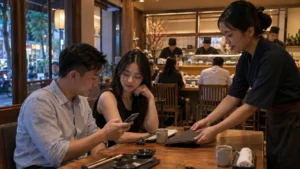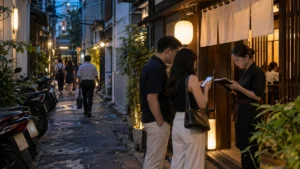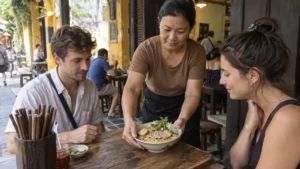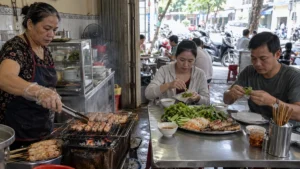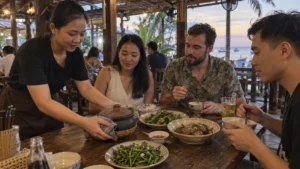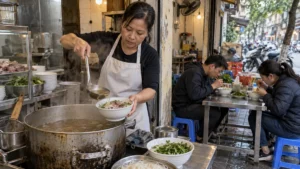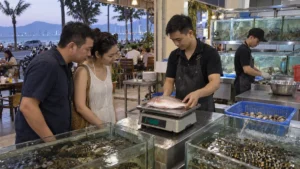
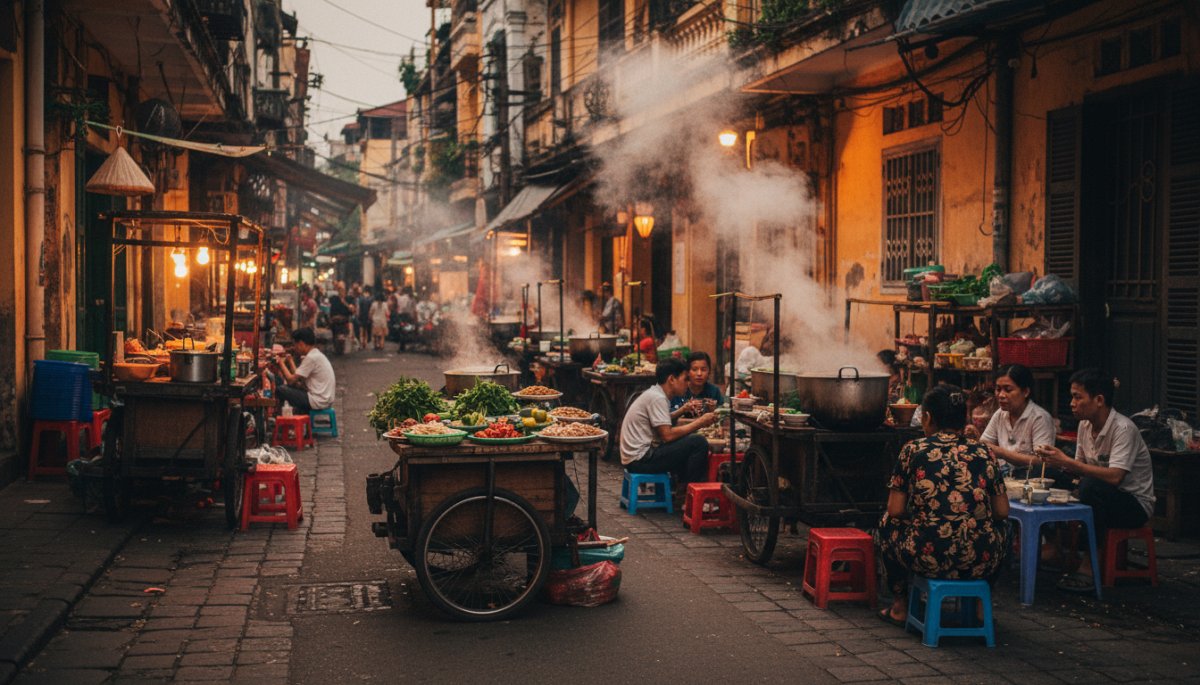
Walking Hanoi's lanes, the smoke of charcoal fires and the scent of spices tickle your nose. Sit down on a plastic stool, watch the food cooked before your eyes, and eat shoulder to shoulder with the locals. This is the true appeal of Hanoi street food.
ベトナムの首都ハノイは、屋台や小規模食堂が多く、料理を通じて街の日常を見やすい都市です。旧市街の細い路地には、何十年も同じ場所で営業を続ける屋台が軒を連ね、それぞれが独自の味を守り続けています。観光地でありながら、生活の匂いが色濃く残るこの街では、食事そのものが文化体験となります。
From staples like pho, bun cha, and banh mi to local stalls only the locals know, Hanoi has countless choices. But for a first-time traveler, it's often hard to know where and what to eat. This article delivers practical information for enjoying Hanoi street food to the fullest, from how to choose a safe shop and how to order to typical prices and recommended areas.
Hanoi's street food culture and its appeal
ハノイの都市史は長いものの、現在見られるすべての屋台文化を「1000年続く」と一括りにはできません。旧市街の商業、移住、戦争、経済改革など複数の時代を経て、今の食風景が形づくられています。
The Old Quarter is also called "36 Streets," and each street has historically specialized in a particular craft or product. Today many streets are lined with stalls serving traditional Vietnamese dishes, letting you enjoy food that's unpretentious, flavorful, and deeply rooted in local tradition. From steaming bowls of pho to crispy banh mi, you can experience an unforgettable culinary journey easily and affordably.
The reason Hanoi street food is so highly regarded lies in its balance of flavors. A perfect harmony of sweet, sour, salty, and bitter is its signature, with all these elements contained in a single plate. And morning markets provide abundant locally grown vegetables, herbs like basil, mint, and coriander, and high-quality meat and seafood, with a commitment to using fresh, local ingredients.
Furthermore, Hanoi cuisine adopts healthy, light cooking methods. Because many dishes are steamed, boiled, or grilled rather than fried, they're less greasy and can highlight natural flavors. Incorporating a wide range of vegetables into every meal also makes for excellent nutritional balance.
In fact, Hanoi is recognized as one of Southeast Asia's and Asia's culinary hubs, and according to the famous travel site TripAdvisor, Hanoi ranked among the world's top 25 food destinations in 2022. Most international tourists consider Hanoi cuisine one of the area's main attractions.
Classic street foods you absolutely must try
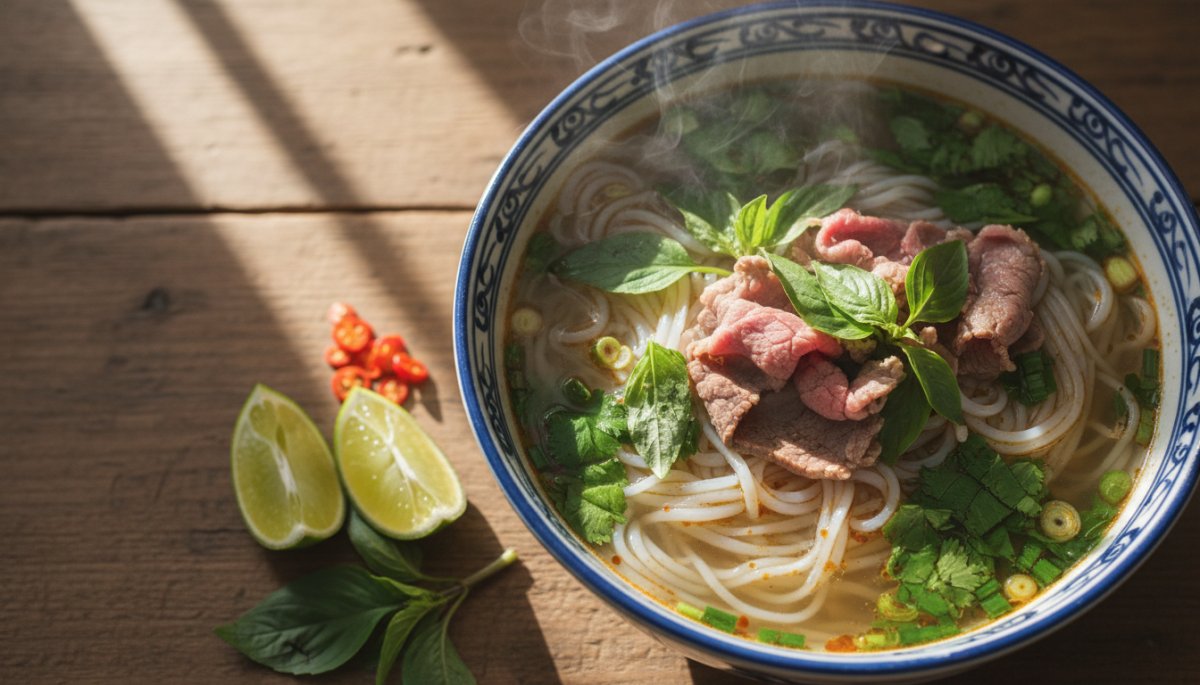
Pho: taste the soul of Hanoi
Pho is a dish you absolutely can't skip when you visit Hanoi.
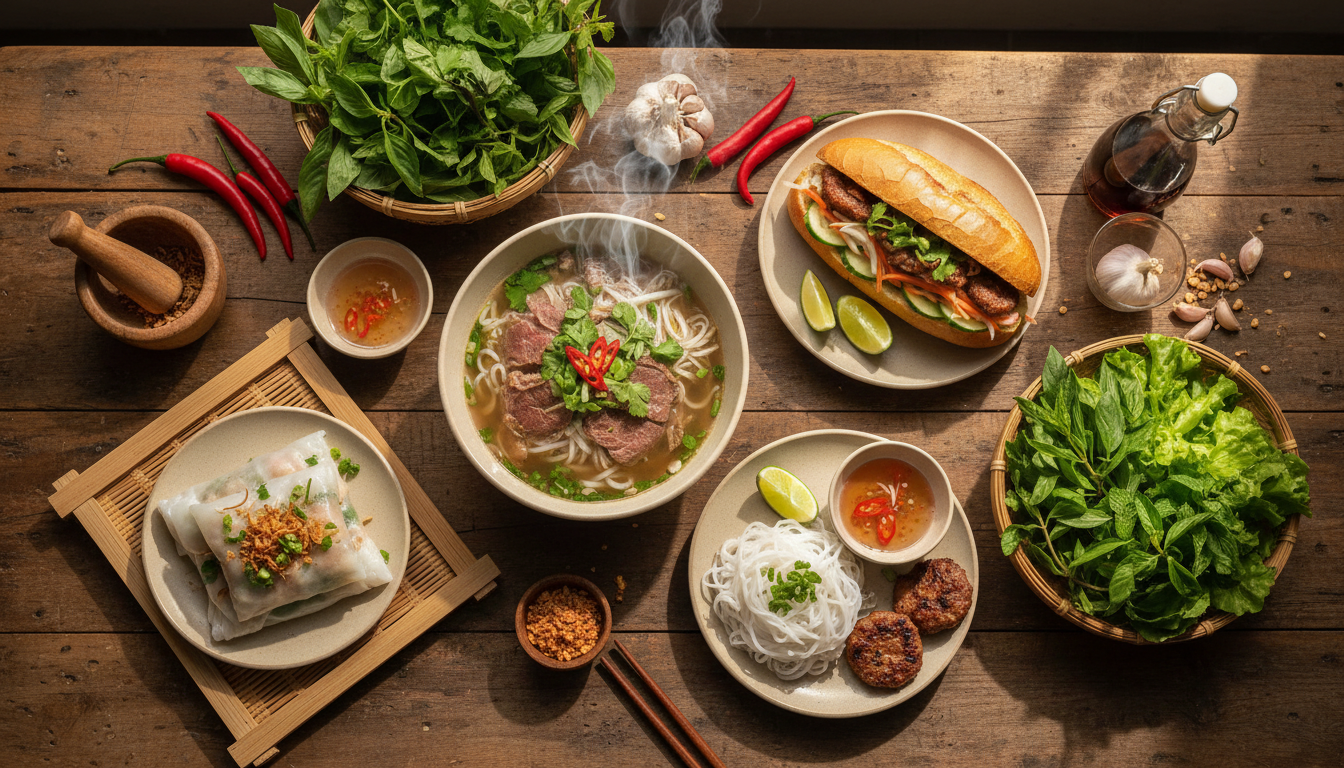
A fragrant, clear broth simmered slowly with beef bones, charred ginger, and spices like star anise and cinnamon, served with silky rice noodles and tender slices of beef. The broth, simmered for hours, develops a deep, aromatic flavor, perfectly complemented by fresh herbs, lime, and chili.
"Pho Gia Truyen" on Bat Dan Street is a legendary shop that has served fragrant beef pho for decades. A shop popular with locals, it bustles with Hanoi's people and lets you savor authentic cooking. Its deep craft shines within a simple dish. To avoid the long line, we recommend arriving early.
Bun cha: the flavor even President Obama loved
Made world-famous when former US President Barack Obama visited in 2016, bun cha is a must-eat in Hanoi. A dish of smoky grilled pork patties placed over rice vermicelli, herbs, and a tangy dipping sauce with papaya, it's beloved as a traditional Vietnamese dish of charcoal-grilled pork and rice noodles served with fresh herbs and dipping sauce.
At "Bun Cha Huong Lien" on Le Van Huu Street, beyond its celebrity reputation, you can enjoy Hanoi's specialty dish with authentic flavor in a casual atmosphere. If you want to recreate Mr. Obama's order, look for the "Obama combo" on the menu.
Banh mi: the art of the Vietnamese sandwich
Banh mi is a famous Hanoi delicacy, made by stuffing a crispy baguette with various fillings like pate, grilled pork, pickled vegetables, fresh herbs, and chili. The Hanoi version of banh mi is characterized by a perfect balance of crispy bread, flavorful fillings, and refreshing pickled vegetables.
Move to Hang Da Street and you'll find a shop where you can enjoy the traditional Vietnamese sandwich "banh mi" with Saigon beer. As world-famous street food, it captivates many travelers with its ease and deliciousness.
Banh cuon: delicate steamed rice rolls
Tucked away on Hang Ga Street, "Banh Cuon Gia Truyen" is a hidden gem serving delicate steamed rice rolls stuffed with ground pork and wood ear mushroom, topped with fried shallots and served with a light fish-sauce dip. This family-run stall offers light street food perfect for breakfast or lunch, letting you savor Hanoi's diverse flavors.
Watching the staff skillfully make the rice rolls before your eyes is enjoyable, like a mini cooking show.
How to find the local stalls that locals frequent
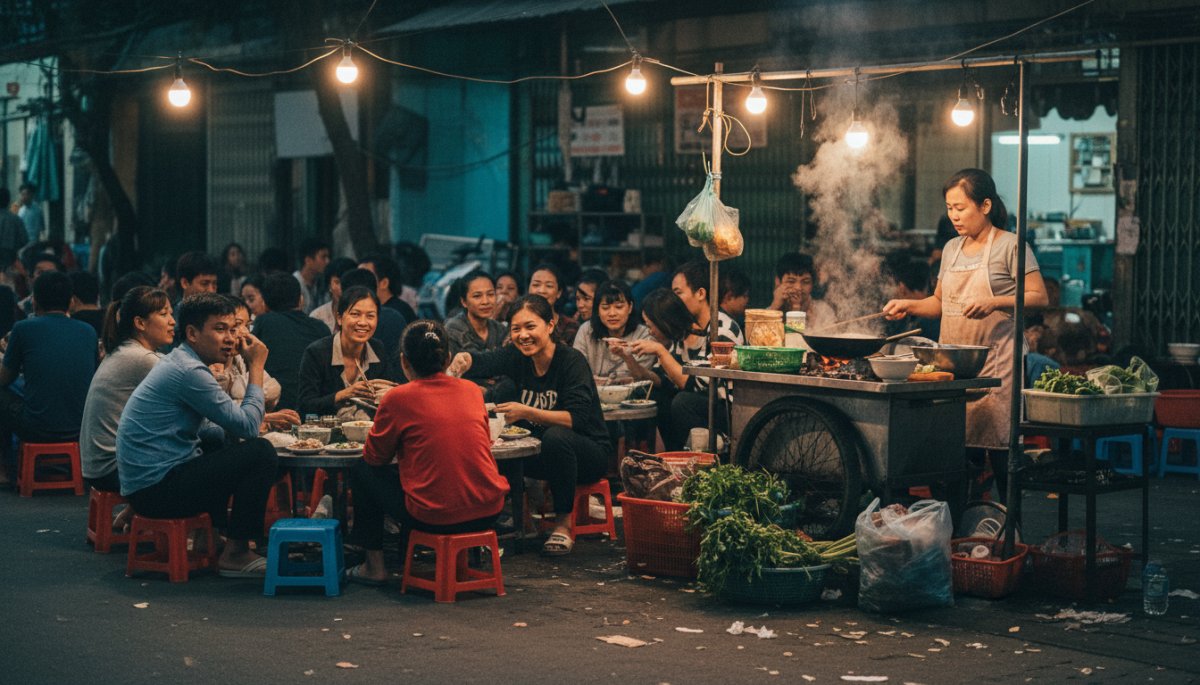
The truly delicious stalls are where the locals gather.
安全で美味しい屋台を見つけるためのポイントは、まず地元の人々で賑わっているかどうかを確認することです。ハノイの人々は食に対して非常にこだわりがあるため、地元客の多さは回転の参考にはなりますが、衛生を保証する証拠ではありません。朝の時間帯や昼食時に特に混雑している店は、新鮮な食材を使用している可能性が高いです。
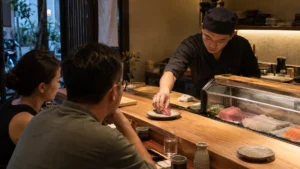
Next, we recommend choosing shops where you can see the cooking process. If you can observe the food cooked before your eyes, you can check the hygiene and freshness of ingredients with your own eyes. Watching meat grilled over charcoal, steaming broths, and the craftsmanship of deftly boiling noodles is an experience you can enjoy as part of the meal.
また、専門店を選ぶことも重要です。ハノイの多くの屋台は一つか二つの料理に特化しており、何十年も同じメニューを提供し続けています。品数が少ない店は注文しやすい一方、熟練度や衛生を自動的に保証するものではありません。加熱、保管、器具、客の回転を個別に見ます。
In the heart of the Old Quarter, especially around Hang Be Street and its surrounding lanes, stalls and small family-run shops crowd together. Known as an area where you can savor Hanoi's signature dishes within walking distance of your hotel.
As for cleanliness standards, rather than expecting perfect cleanliness, it's important to judge whether basic hygiene management is in place. Check things like whether the dishes are properly washed, whether the cooking utensils are organized, and whether the ingredients are stored appropriately.
The basics of how to order and typical prices
Ordering techniques that cross the language barrier
Even at stalls where English doesn't get through, there's no need to worry.
The most effective method is to point at what other customers are eating. Hanoi stalls basically have few menu items and often serve only one or two dishes, so pointing alone communicates fine. Showing the Vietnamese name of the dish on your smartphone is also effective.
As for numbers, Vietnam's currency unit is the dong (VND), and notes like 10,000, 20,000, and 50,000 dong are commonly used. When asking the price, having them show the number with a calculator or your smartphone's calculator app makes it easy to understand.
Typical street food prices
価格は地区、店、具材、観光客向けサービスで差があります。
A bowl of pho typically runs 30,000-50,000 dong (approx. ¥190-310), though prices can be a bit higher in tourist-oriented areas. Bun cha costs around 40,000-60,000 dong (approx. ¥250-370), varying with the amount of pork and whether spring rolls are included. Banh mi is the most affordable, at 15,000-30,000 dong (approx. ¥90-190).
Banh cuon and other light snack-style dishes run around 20,000-40,000 dong (approx. ¥120-250). Drinks are extra, with beer and soft drinks typically 10,000-20,000 dong (approx. ¥60-120).
There's no tipping custom in Vietnam, but if the service was especially good or someone was kind to you, giving a small tip is appreciated. However, since it's not included in the price, it isn't required.
When and how to pay
At many stalls, you pay after the meal. Some shops take payment upfront, so observing the customers around you helps. Cash payment is the rule, and credit cards and electronic payment often can't be used. We recommend preparing plenty of small notes.
Recommended areas and tips for a street food tour
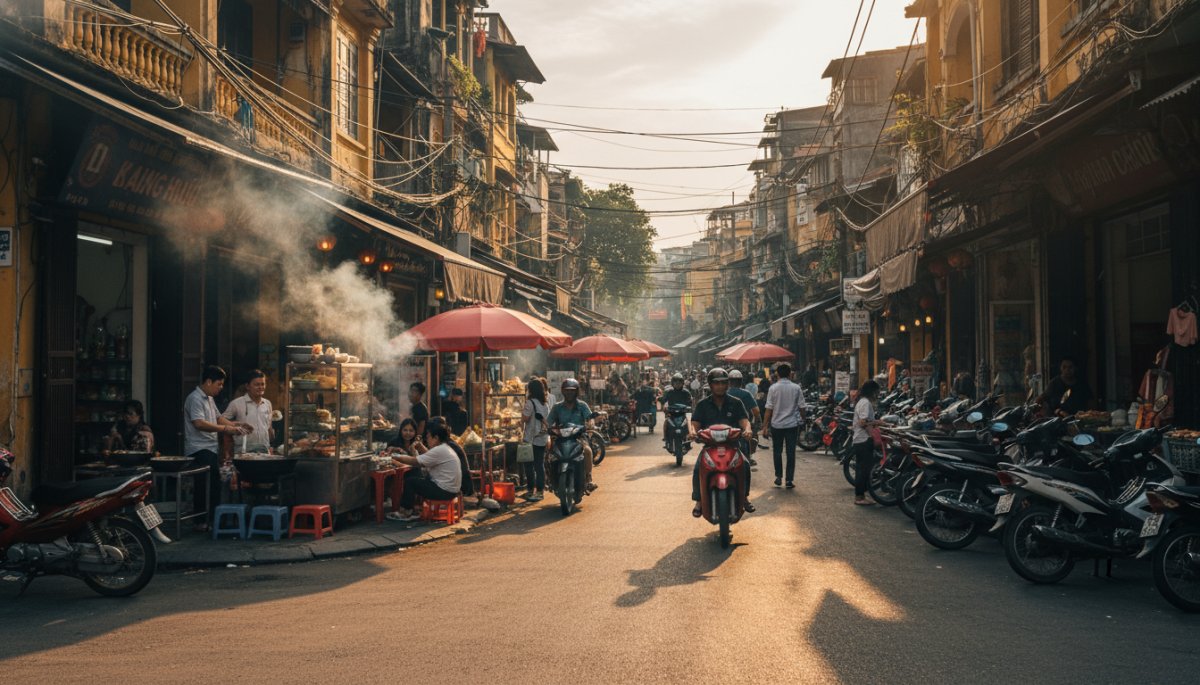
The Old Quarter: the hub of street food
The Old Quarter is the starting point for a Hanoi street food experience.
Narrow lanes weave together in complex ways, each street bearing traces of its specialized trade. The area around Bat Dan Street has a concentration of famous pho shops, bustling with locals from early morning. Hang Ga Street and Hang Be Street have many banh cuon and other light-meal stalls, perfect for breakfast or lunch.
When walking the Old Quarter, it's important not to cram your schedule too full. Rather than efficiently touring the sights, taking plenty of time to walk and pause reveals the essence of this town. Cafes not on any map, lanes you wandered into by chance, each casual scene shapes the city of Hanoi.
Around Hoan Kiem Lake: where sightseeing and food merge
The area around Hoan Kiem Lake is a place that's a tourist attraction yet also an extension of the locals' daily life. Walking around the lake, the town's bustle recedes little by little, and Hanoi's calm side rises into view.
On the north side of the lake, many stalls gather, coming alive especially from evening into night. On and around Le Van Huu Street, you can enjoy various dishes, starting with bun cha. There are shops arranged for tourists, but step a little into the lanes and you'll meet local eateries serving everyday flavors as-is.
Train Street: a new food spot
レトロで可愛いお店やカフェが建ち並ぶハノイの人気観光地のトレインストリートは生活区域であり、線路への立入りや店舗営業が安全対策で制限されることがあります。「地元客が集まる観光地」と決めつけず、警察・鉄道職員の指示に従い、列車撮影のため線路上に立たないでください。線路沿いに並ぶカフェやバーでは、ベトナムビールをのんびり堪能しながら、独特の雰囲気を楽しめます。
Join a street food tour and you can sample refreshing fresh beer at a local brewery, or enjoy "dry pho," a classic dish given a unique twist, on Hang Ga Street. A guided tour has the benefit of letting you efficiently visit multiple shops without worrying about the language barrier.
Recommendations by time of day
For breakfast (6:00-9:00), pho and banh cuon are ideal. Early-morning stalls use fresh ingredients, letting you feel the locals' morning energy. For lunch (11:00-14:00), bun cha and banh mi are recommended, with just the right volume to refuel for afternoon sightseeing.
夕方から夜(17:00-22:00)は、ビールと一緒に楽しむ屋台料理が人気です。夜も旧市街は交通や飲食客で混雑する場所があります。暗い路地、横断、スマートフォンのひったくりに注意し、帰路を決めてから食べ歩きます。夜風にあたりながら歩くと、昼間には気づかなかった音や匂いが際立ち、街との距離がさらに近くなります。
Cautions on hygiene and health management
In enjoying street food, consideration for hygiene is essential.
First, the iron rule is never to drink untreated water. Ice may be made from untreated water too, so avoid it or accept it only at shops you trust. We recommend always carrying bottled water and hydrating frequently.
As for raw vegetables and cut fruit, it's wise to go easy when you don't know how they were washed. Especially on the first day of the trip, your stomach isn't yet used to the local environment, so it's important to acclimate gradually. Choosing mainly cooked dishes keeps the risk to a minimum.
Washing your hands and using sanitizing wipes is also important. Always clean your hands before eating, and carrying wet wipes or sanitizing gel is handy. Since many stalls have limited handwashing facilities, you need to manage your own hygiene.
万が一体調を崩した場合に備えて、整腸剤や下痢止めなどの常備薬を持参することをおすすめします。下痢止めは発熱・血便などで適さない場合があります。自己判断で一律に使わず、経口補水を行い、血便、高熱、強い腹痛、脱水、長引く症状があれば医療機関へ相談してください。
You also need to watch out for overeating. Hanoi street food is delicious and it's tempting to try all sorts of dishes, but eating many kinds at once burdens your stomach. Keeping it to trying 2 to 3 new dishes a day and enjoying it while watching your condition is the trick to savoring it over the long term.
屋台を選ぶときの優先順位
- 注文後に十分加熱し、湯気が立つ料理を選ぶ
- 生肉用と加熱済み食材用の器具が分かれているかを見る
- 氷・生野菜・カットフルーツは水と温度管理が不明なら避ける
- 魚醤、甲殻類、ピーナッツ、大豆、乳のアレルギーを確認する
- 一度に詰め込まず、1回2〜3店と休憩を組み合わせる
人が多い、老舗、専門店という評判より、目の前の衛生状態を優先します。注文前に価格をVNDで確認し、小額紙幣を使い、食後に体調が悪ければ次の店へ無理に進まないことが大切です。
Summary: to enjoy Hanoi street food from the heart
Hanoi street food is an experience beyond mere eating.
Sitting on a plastic stool and eating while listening to the conversations around you brings a feeling closer to staying than to sightseeing. The deep flavor of pho, the smoky aroma of bun cha, the crispy texture of banh mi. Each dish tells the history and culture of the city of Hanoi.
Once you understand how to choose a safe shop, how to order, and typical prices, you can enjoy local flavors across the language barrier. The narrow lanes of the Old Quarter, around Hoan Kiem Lake, Train Street, each area has its own appeal. By savoring the different atmosphere by time of day and eating in the same rhythm as the locals, you can touch the essence of Hanoi.
While being mindful of hygiene, take on new flavors with a spirit of adventure. Not demanding too much perfection, and enjoying the atmosphere of the place and the exchanges with people too, enriches your Hanoi street food experience.
This town doesn't assert itself strongly. Rather, by your stepping toward it, it shows itself little by little. Even after just a few days' stay, by the time you leave, Hanoi's quiet rhythm remains in your body, and even after the sightseeing ends, you recall it at odd moments. That lingering resonance is the greatest appeal the city of Hanoi holds.
Now, sit down on a plastic stool, and before a steaming bowl of pho, why not blend into Hanoi's daily life?