The total number of cafes and coffee shops in Vietnam has surpassed 500,000, according to a survey by the consulting firm Mibrand Vietnam. The figure includes everything from chains to tiny roadside cafe sua da stands, with annual revenue reaching 1.46 billion dollars (about 226.3 billion yen). The compound annual growth rate (CAGR) is 7.56%, and Vietnam's coffee market is showing growth that stands out even in Southeast Asia.
The breakdown of 500,000: the tug-of-war between chains and independents
The figure of 500,000 is Mibrand Vietnam's estimate; a separate survey by iPos.vn puts it at about 317,000 as of the end of 2023. Either way, there's no changing the fact that Vietnam is "one of the world's most cafe-dense countries."
Chains make up only part of the total store count, but they're gaining presence in revenue share. Meanwhile, what sustains Vietnam's coffee culture is the overwhelming majority of independently run cafes. From cafe sua da (condensed milk coffee) drunk on plastic stools in the back alleys to air-conditioned, interior-focused "photogenic cafes," the breadth of formats is a Vietnamese hallmark.
The competitive map by chain
In Vietnam's coffee chain market, domestic brands are overwhelmingly strong. Below is a summary of the store counts of the major chains.
| Chain | Number of locations | Characteristics |
|---|---|---|
| Highlands Coffee | 721 stores | The largest player. Nationwide, centered on airports and commercial facilities |
| Trung Nguyen E-Coffee | 542 stores | A franchise-style long-established brand |
| Phuc Long | About 150 stores | Also strong on tea menus. Has entered the US (since 2021) |
| The Coffee House | About 150 stores | The No. 1 favorite among young people. Withdrew from Da Nang and Can Tho to concentrate on major cities |
| Katinat | Expanding | An emerging chain born in Ho Chi Minh City. A high-quality strategy |
| Cong Caphe | About 100 stores | Military-themed. Has opened in Canada too |
| Starbucks | About 110 stores | Closed its Reserve store in Saigon. Struggling in the Vietnamese market |
| %Arabica (from Japan) | A few stores | A Kyoto-born specialty chain lands in Vietnam |
| Cotti Coffee (from China) | 10-plus stores | Has begun rapid expansion from Saigon |
*Store counts are based on the Mibrand Vietnam survey and Saigoneer reporting. Yen conversion is at about 155 yen to the dollar (as of April 2026).
Market data
| Indicator | Figure | Yen conversion |
|---|---|---|
| Total number of cafes | Over 500,000 | – |
| Annual revenue | 1.46 billion dollars | About 226.3 billion yen |
| Compound annual growth rate (CAGR) | 7.56% | – |
| One cafe sua da (roadside) | 15,000〜25,000 VND | About 90 to 150 yen |
| One cup at a chain | 39,000〜65,000 VND | About 240 to 400 yen |
| One specialty cup | 80,000〜120,000 VND | About 490 to 740 yen |
Local reactions: a split between "too many cafes" and "still not enough"
A food-and-beverage consultant in Ho Chi Minh City says, "Some are surprised by the figure of 500,000, but given Vietnamese people's daily rhythm, it's only natural. Before work in the morning, at lunch break, for an afternoon business meeting, evening time with friends; it's not unusual for someone to drink coffee three or four times a day."
On social media, voices stand out like "there are at least 10 on my street alone" and "the competition is so fierce that many shops close within three months." On the other hand, there are also posts from provincial cities where chains are still scarce, saying, "We're waiting for the Hanoi and Saigon trends to arrive."
On Japan's %Arabica entering Vietnam, reactions are largely favorable, such as "it's interesting for a Kyoto-born brand to take on Vietnam's coffee market" and "the prices are high but the atmosphere is superb."
Impact on Japanese travelers: an era when cafe crawling becomes the star of the trip
In Vietnam, with its 500,000 cafes,an authentic Vietnamese coffee experiencebecomes a major purpose of the trip. Drinking a 90-yen cafe sua da at a roadside cafe, then trying a new fruit coffee at a chain, and in the evening savoring a single origin at a specialty cafe; this "three cafes a day" way of spending time is becoming a staple of Vietnam travel.
Hanoi cafe guideReferring to the Hanoi cafe guide, you might visit the Old Quarter shop where egg coffee originated, and in Ho Chi Minh City,the latest cafes on the youth trendtackling those is fun too.
In terms of prices too,the Vietnam price guideas introduced in the Vietnam price guide, being able to enjoy a cup for 100 to 400-odd yen is a big draw for Japanese travelers.
Ripple effects on the industry: chain shakeout and the entry of overseas players
Even as the market expands, a shakeout is also advancing. The Coffee House withdrawing from Da Nang and Can Tho, and Starbucks closing its Reserve store in Saigon, show the reality that "you can't win just by increasing store counts."
Rising in their place are emerging chains on a high-quality strategy like Katinat, and low-price, mass-opening models like Cotti Coffee (from China). Vietnam's cafe market is expected to split further into "winning on price" versus "winning on experience."
Among Japanese players, following %Arabica, the entry of other specialty brands is also rumored.To Vietnam's coffee culture, which continues from the French colonial era,a new layer is being added.
Practical information: a guide to the Vietnamese cafe experience
| Item | Details |
|---|---|
| Staple menu | Cafe sua da (ca phe sua da) = iced coffee with condensed milk |
| Ordering tips | "Ca phe sua da" gets the point across. If you don't want sugar, say "khong duong" |
| Price range | From 15,000 VND (about 90 yen) at the roadside to 120,000 VND (about 740 yen) for specialty |
| Operating-hours guideline | Roadside cafes: from 6:00 a.m. / chains: 7:00 a.m. to 10:00 p.m. / photogenic cafes: 8:00 a.m. to 11:00 p.m. |
| WiFi | Chains and photogenic cafes are nearly always equipped. Roadside cafes are unreliable |
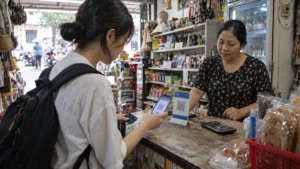
| Payment | Cash is standard. At chains, QR payments like MoMo and ZaloPay are also possible |
| Recommended areas (Hanoi) | The Old Quarter, around Tran Quoc Pagoda, and the West Lake area |
| Recommended areas (HCMC) | Around Nguyen Hue Street in District 1, District 3, and Thao Dien |
Summary
Vietnam, home to over 500,000 cafes, is proving its standing as the world's second-largest coffee producer after Brazil on the consumption side too. The competitive map of chains topped by Highlands Coffee's 721 stores, an annual market of 1.46 billion dollars, and 7.56% growth each year; what the numbers show is the fact that "coffee is Vietnamese daily life itself." For Japanese travelers, a cafe experience starting at 90 yen a cup will be one of the greatest pleasures of a Vietnam trip.