When it comes to northern Vietnam, the name that comes to mind is Sapa. That's the only name that pops into the heads of Japanese travelers, but deeper still within the same Lào Cai province, in the highland town of Si Ma Cai near the Chinese border, a festival built around orchard fruit-picking and ethnic-minority culture is beginning. "Si Ma Cai – Hương Sắc Vùng Cao (Si Ma Cai: Fragrance of the Highlands) 2026" opens on June 26, with the main festival running through the 28th. Alongside it, a "Fruit Week" starring fruit trees continues through July 5. For those who want to walk a part of the northern highlands away from crowded Sapa, it's a development that widens the range of destinations to choose from.
Opening June 26, with orchard fruit-picking as the star
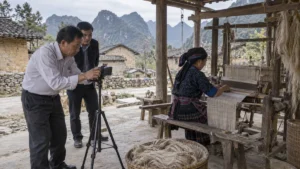
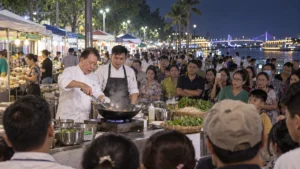
According to the local paper Lào Cai News, this is the festival's fourth year. The dates run June 26–28, and on opening day, the 26th, there will be a group dance of sênh tiền, bonfires and fireworks, and a display of OCOP regional specialty products. The 27th features experiences at Cán Cấu market, local cuisine, traditional folk games, a fruit and offering arrangement contest, and a night market. The 28th flows from a weaving contest and the "Đỉnh Phặng peak climbing challenge" to an awards ceremony and closing.
And running through it all is "Fruit Week." From June 26 to July 5, visitors are invited to visit orchards of pears, plums, and more, and to pick and taste fruit right where it grows. A format that doesn't just let you look at the fruit but has you step into the growing fields and experience the harvest itself is a textbook way of turning farm produce into a tourism resource — overlapping with the "making the production site itself the product" approach Agriture has pursued with dried vegetables and dried pears.
Where is Si Ma Cai?
For Japanese travelers, the first hurdle is how hard the location is to pin down. Si Ma Cai is in the northeastern part of Lào Cai province, in a highland zone near the border with China. Pulling together the guidance from tour operators, it's roughly 100 km northeast of central Lào Cai city, a few dozen km north of the town of Bắc Hà up provincial road DT153, and more than 100 km from Sapa. Since the distance figures vary by source, it's realistic to think of it here as "a remote area a full day's journey from Sapa."
The core of tourism in this area is Cán Cấu market, held only on Saturdays. Ethnic minorities, including the Flower Hmong, gather from the surrounding hills, and indigo-dyed garments, livestock, and farm produce fill the stalls. Unlike Sapa's market, which is tidied up for tourists, it's characterized by a strong feel of a market for daily life. As an article themed on the "markets" of the northern highlands, the report on a market floating in a sea of clouds, coveringthe cloud markets around Bắc Hàis also worth a look. Si Ma Cai and Bắc Hà sit on the same highland route, and touring them together is the standard approach.
Dates and program at a glance
| Item | Details |
|---|---|
| Main festival dates | June 26–28, 2026 |
| Fruit Week | June 26 – July 5, 2026 |
| Location | Si Ma Cai, Lao Cai Province |
| June 26 (opening day) | Group dance of the Xa Pho people / bonfire and fireworks / OCOP product showcase |
| June 27 | Can Cau market experience / local cuisine / folk games / food-plating contest / night market |
| June 28 | Weaving contest / Dinh Phan peak climbing challenge / awards and closing ceremony |
Figures such as monetary amounts and visitor targets are left out here because we could not verify them with a reliable source. As a rough exchange-rate guide, as of late June 1 yen was worth about 160–164 Vietnamese dong, so eating, drinking, and buying fruit on the ground works out to very small amounts in yen.
How locals and those involved received it
Local newspapers describe the event as combining traditional culture, hands-on tourism, and the promotion of local specialties to “bring a culturally rich and appealing festival atmosphere to visitors from within and beyond the province.” Across the guides put out by various tour operators, Can Cau market is repeatedly praised as “more unspoiled than the markets in Sapa—a market that is daily life itself.” The tone plays up the energy of a market that opens before dawn and an atmosphere untouched by mass tourism as its real value.
At the same time, the inconvenience of reaching these remote festivals is itself part of their appeal, flipped on its head. Paraphrasing travelers on social media, posts to the effect of “because it is hard to get to, there are few people and the highlands remain as they were” stand out. In other words, there is a segment of travelers who deliberately go to the trouble of seeking out the simplicity that tends to be lost in exchange for convenience.
What this means for Japanese travelers
What this festival offers Japanese travelers is a chance to shift the fixed idea that “northern Vietnam means Sapa” by a notch. Sapa has well-developed rail and cable-car access, andEnjoying the climb to the summit of Fansipan by cable carit offers an easygoing experience, but crowds in high season grow worse year by year. Si Ma Cai, by contrast, suits people who want an “active trip”—timing their visit to the Saturday Can Cau market and rounding it out with fruit picking and a climbing challenge.
Orchard fruit picking is also a good fit in that it is an experience that works even without a shared language. Choosing fruit in the field and eating it right there needs no translation. For families, and for repeat visitors to Vietnam who have already done the standard routes, the northern highlands can become the next destination. In terms of showing off a region through food, it shares a direction with theJapanese cuisine report, which covers building a Japan–Vietnam bridge through washoku.
The trend of turning farm produce into tourism
The Si Ma Cai festival is one example of “agritourism,” which makes the harvest itself the destination of a trip. Pears and plums do not keep well, and the value of freshness drops the farther they travel from where they are grown. That is precisely why “eating them on the spot” takes on meaning and becomes a force that draws people all the way to the production area. This is the opposite of the idea of adding value through processing and distribution—it sells by sealing the experience together into the production site itself. Harvest festivals like this sit at the point where the regional tourism development advancing across Vietnam meets the branding of local specialties.
Practical information to know before you go
- The main festival runs June 26–28, and Fruit Week continues through July 5. If fruit picking is your goal, it is easy to plan an itinerary that spans the weekend.
- Can Cau market is generally held on Saturdays. If you want to experience the market and the festival in one go, build your plans around a Saturday.
- Bac Ha makes a realistic base. From Bac Ha to Si Ma Cai, head north on provincial road DT153. Since it is some distance from Sapa, plan on the journey taking the better part of a day.
- The highlands get cold morning and night, so bring a layer to throw on. If you plan to watch the climbing challenge, wear comfortable walking shoes.
- Bring plenty of cash (Vietnamese dong). In remote areas there are many situations where card payment is not accepted. With 1 yen worth about 160–164 dong (as of late June), purchases will mostly be small.
Summary
Si Ma Cai’s “Scent of the Highlands 2026” opens another gateway to northern tourism, which tends to concentrate on Sapa. What to do is clear: visit to coincide with the Saturday Can Cau market, pick pears and plums, and touch highland life through weaving and the climbing challenge. If you are planning northern Vietnam next time, consider once a route that uses Bac Ha as a base and ventures all the way to Si Ma Cai. The more you want to walk the unspoiled highlands and avoid the crowds, the more this remote festival should reward you.