In 2026, a contemporary art museum where you can stay overnight, "ANIMA," opened on Ho Tung Mau Street in District 1, Ho Chi Minh City. Different Vietnamese artists produced each floor of the seven-story building in its entirety, and guests get an experience of not "looking at art" but "sleeping inside art." At the adjoining restaurant "ÚNU Eatery & Bar," you can enjoy creative Vietnamese cuisine and cocktails inspired by the world of the artworks. In Ho Chi Minh City, where direct flights from Japan are increasing, it's worth exploring this new form of travel that fuses art and lodging.
"Where does the soul live?" — ANIMA's concept and how it came to be
ANIMA means "soul" in Latin. At the foundation of the hotel is the question "Where does the soul live?" A heritage building at 43-45 Ho Tung Mau Street was renovated into an interior where eclecticism and brutalism intersect. Exposed ceilings and textured walls create an "industrial chic" space, and within it Vietnamese contemporary art comes alive.
The heart of the concept is "one floor = one artist." Seven emerging artists each curated an entire floor, turning the guest room walls, shared corridors, and even the lighting into their own artistic worlds. Rather than "viewing" as in a museum, guests get an experience in which the very space they wake and sleep in is an installation.
The world of each floor colored by seven artists
The seven Vietnamese contemporary artists taking part in ANIMA finished each floor with different media and sensibilities.
| Artist | Year of birth | Medium | Characteristics of style |
|---|---|---|---|
| Hoàng Nam Việt | 1985 | Painting (portrait) | Simple portraits based on memories of friends and family, quietly expressing inner life |
| Đặng Quang Tiến | 1992 | Watercolor | Adds depth to the space with delicate layers of color |
| Mzung Nguyễn | 1982 | Sculpture, painting, installation | Crosses multiple media, turning the whole space into a work of art |
| Phạm Xeen | 1994 | Abstract painting | Paints emotion directly onto the walls with bold planes of color |
| Bách Vũ | 1993 | Black-and-white painting | Creates a serene air through monochrome contrast |
| Lê Phi Long | 1988 | Colorful memorial works | Ties memory and place together with vivid color |
| Tuýp Trần | 1988 | Mandala and traditional paper art | Repositions Vietnam's traditional materials in a contemporary context |
From the youngest, Phạm Xeen (born 1994), to the oldest, Mzung Nguyễn (born 1982), the generations and modes of expression vary widely, so each time you move between floors you feel as if you've stepped into a different museum. What I find notable is Tuýp Trần's floor. It's fascinating how it reinterprets Vietnamese craft within the context of an "art hotel" using mandalas and traditional paper materials.
Room types and rates
| Room type | Size | Bed | Characteristics | Reference price (per night) |
|---|---|---|---|---|
| Artist Hideaway | 17㎡ | Queen | With interior window, compact | From about 117 USD (from about 18,000 yen) |
| Artist Retreat | 21㎡ | Queen | With interior window | From about 130 USD (from about 20,000 yen) |
| Artist Refuge | 22㎡ | King | Courtyard view | From about 140 USD (from about 21,500 yen) |
| Artist Haven | 25㎡ | King | City view + bathtub | From about 160 USD (from about 24,500 yen) |
| Artist Escape | 64㎡ | 2 bedrooms | Penthouse, city view + bathtub | Inquire |
Breakfast and Wi-Fi are free on all plans. The rooftop pool, jacuzzi, steam room, sauna, and fitness gym are also free for guests to use. The 64㎡ penthouse "Artist Escape" has a two-bedroom layout, accommodating group trips of three to four people. For Japanese travelers, the location is also appealing — a 5-minute walk to Notre-Dame Cathedral, 7 minutes to the Independence Palace, and 10 minutes to Ben Thanh Market.
The adjoining "ÚNU Eatery & Bar" — a dining experience that translates artists' memories into flavor
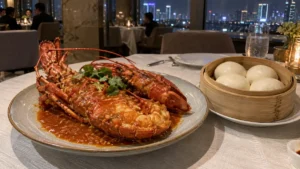
"ÚNU Eatery & Bar," adjoining the ground floor of ANIMA, is a restaurant that brings the hotel's artistic world straight to the table. The interior is set with bold paintings, installations, and sculptures, a space where rough textures, natural light, and greenery blend together.
The menu is creative cuisine built around local Vietnamese ingredients. It can be used for lunch, dinner, high tea, or cocktails to suit the occasion. There's also live music on weekends, and non-guests can drop by casually too. Just as Ho Chi Minh City'sCieL Dining entered the world's TOP 10,Saigon's dining scene is maturing rapidly, and ÚNU is drawing attention within that trend as well.
Reactions from guests and the media
In TripAdvisor reviews, high praise concentrates on the immersion of the art concept, the quality of breakfast, and the staff's hospitality. One guest described their stay as "a creative, personal, and deeply considered space."
The response from travel media is favorable too. It has been named on lists of "Ho Chi Minh City's Best Boutique Hotels 2026" and introduced in hotel guides for remote work. It is praised for differentiating through the added value of art while being fully equipped as a four-star hotel.
On the other hand, Japanese-language reviews are still few, giving it a hidden-gem quality. Anyone who has stayed at a Japanese art hotel (such as BnA Alter Museum in Kyoto) will immediately get ANIMA's "one floor = one artist" concept.
Impact on Japanese travelers — more choices for "art × lodging"
Direct flights from Japan to Ho Chi Minh City are served by JAL, ANA, VietJet, and others, with a flight time of about six hours. Located in central District 1, ANIMA is easy to use as lodging on your first or last day of arrival.
In Japan, facilities that fuse art and lodging, such as BnA hotels and the art floor of the PARK HOTEL, are increasing. ANIMA can be called a Southeast Asian version of that, and at about 18,000 yen a night it is more affordable than Japan's art hotels.A hideaway resort in Hoi Ancombined with it makes for an interesting "Vietnam art & culture trip" as well.
Ho Chi Minh City's art hotel competition and the ripple effect on the industry
District 1 of Ho Chi Minh City is a fierce battleground for luxury hotels. Amid major players like the Park Hyatt, The Reverie Saigon, and the Caravelle Hotel, ANIMA differentiates itself with the clear position of an "art-focused boutique."
Vietnam's contemporary art market has grown rapidly since entering the 2020s, and infrastructure has taken shape too, such as Saigon Art Week and The Factory Contemporary Arts Center. Art hotels like ANIMA function not only as lodging but also as venues for young artists to present their work. Just as Vietnamese coffee became a cultural icon,Egg coffeeVietnamese contemporary art has entered a stage of being recognized as a tourism resource.
Access and practical information
| Item | Details |
|---|---|
| Address | 43-45 Ho Tung Mau, Saigon Ward, District 1, Ho Chi Minh City |
| Nearest landmark | Notre-Dame Cathedral (5-min walk), Independence Palace (7-min walk), Ben Thanh Market (10-min walk) |
| Number of cabins | All 7 floors, 5 types |
| Reference price | From about 117 USD/night (from about 18,000 yen) |
| Breakfast | Free (for all guests) |
| Adjoining restaurant | ÚNU Eatery & Bar (lunch, dinner, high tea, cocktails) |
| Wellness | Rooftop pool, jacuzzi, steam room, sauna, gym |
| Phone | (+84) 83 388 1010 |
| info@animasg.vn | |
| Official site | animasg.vn |
Summary
ANIMA is a hotel to which the phrase "a museum you can stay in" applies exactly. Each floor, crafted by seven Vietnamese artists, has an immersive quality from the moment you open the guest room door. A prime location in District 1, an ample rooftop pool and wellness facilities, the dining experience at ÚNU, and a price range starting around 18,000 yen a night. If you're looking for "one more memorable experience" on a trip to Ho Chi Minh City, ANIMA is a strong option.