What are Vietnamese fresh spring rolls, "goi cuon"?
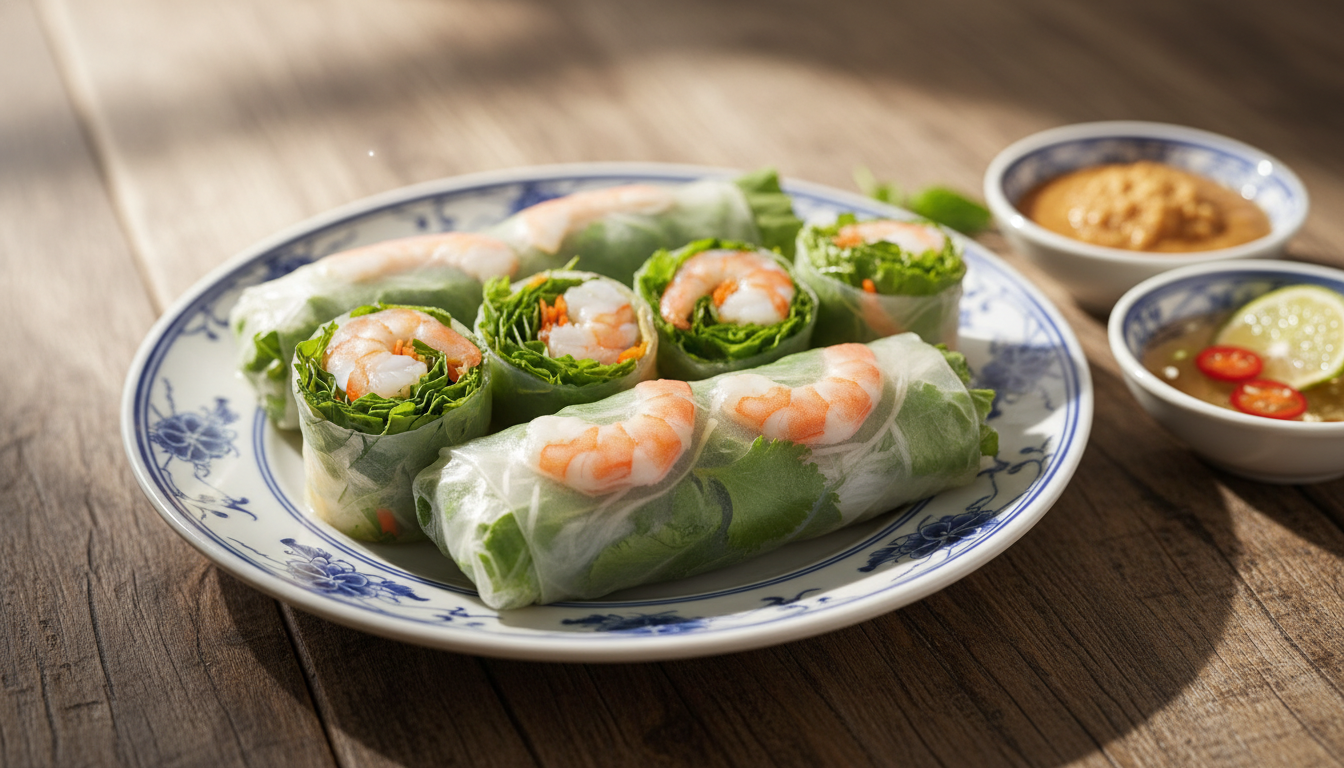
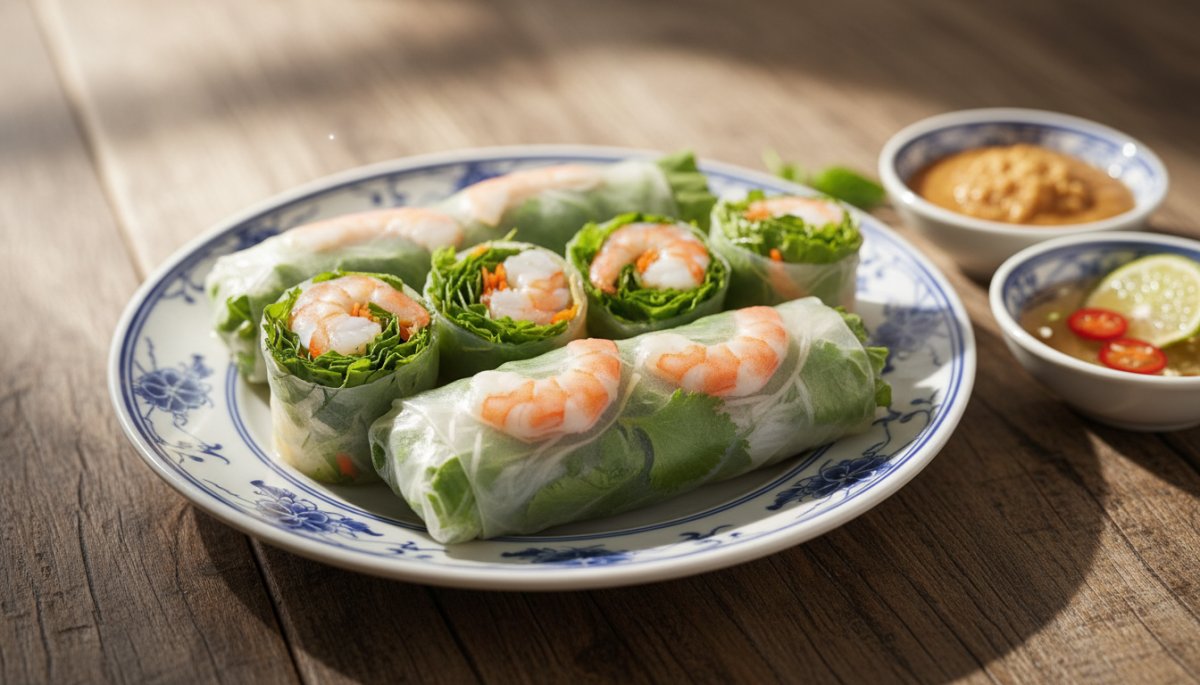
Colorful fillings showing through translucent rice paper.
The refreshing flavor woven by plump shrimp and fresh herbs. Fresh spring rolls, a dish that represents Vietnamese cuisine, are called "goi cuon" (Goi cuon) locally. Alongside pho, they've become a popular Vietnamese menu item and are now served at many restaurants in Japan too.
生春巻きは揚げない料理ですが、カロリーや栄養は大きさ、麺、肉、たれで変わり、「1本86kcal」とは一律に言えません。野菜だけでなく、たんぱく質、炭水化物、たれの糖分・塩分を含めて一食全体で考えます。もちもちとしたライスペーパーの食感と、シャキシャキの野菜、プリプリのエビが口の中で調和する瞬間は、至福のひとときです。
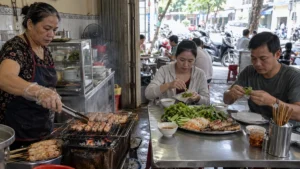
In their home country of Vietnam, they're eaten daily even at home. In the south they're also enjoyed as a street-stall snack, loved by locals as well as tourists.
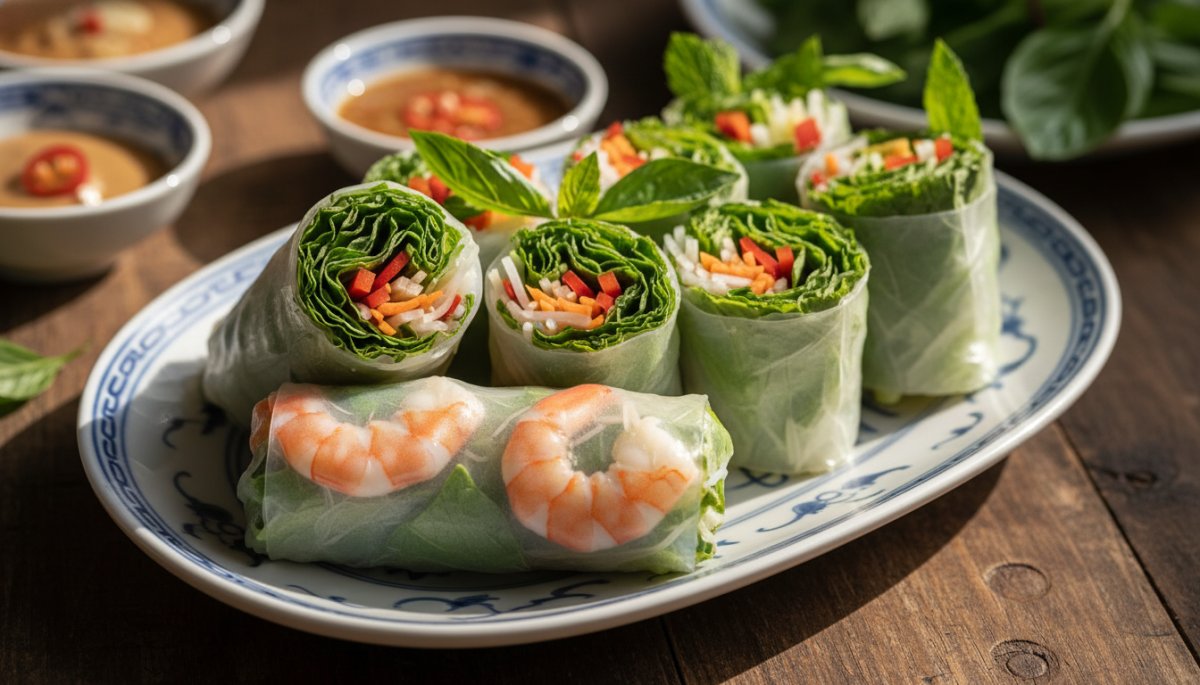
How fresh spring rolls are eaten in Vietnam
In Vietnam, the way to enjoy fresh spring rolls differs by region.
Types of dipping sauce and when to use each
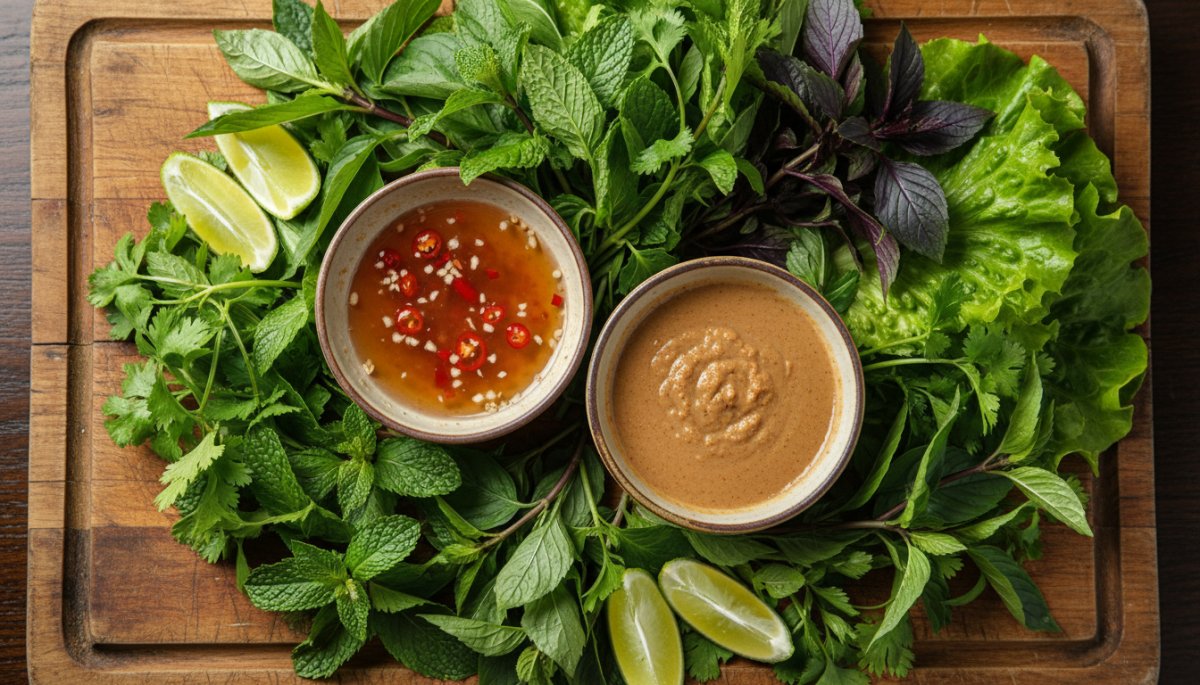
生春巻きに欠かせないのが、タレです。魚醤ベースのnước chấmや、相醤(tương)を使う濃いソースなど、たれは店・家庭・地域で異なります。日本の赤味噌とピーナッツクリームは家庭で作りやすい代用例で、ベトナム全体の標準レシピとは分けて紹介します。魚、ピーナッツ、大豆のアレルギーにも注意してください。
Peanut miso sauce is made by mixing 2 tablespoons of red miso, 1 tablespoon of peanut cream, 2 tablespoons of water, and 1/4 teaspoon of salt. Heating it until it thickens gives a rich, deep flavor. Store-bought sweet chili sauce is also an easy and tasty option.
The local-style "hand-rolled fresh spring rolls"
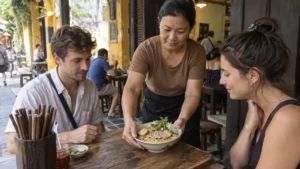
現地のレストランでは、乾いたライスペーパーと具材が別々に運ばれてくることがあります。自分で巻く盛り合わせには、bánh tráng cuốn thịt heoなど複数の料理があります。「ネルネイ」という一般的な料理名は確認できないため削除し、注文時は写真と具材で確認します。
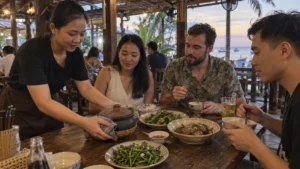
You place herbs like basil and cilantro, shredded vegetables, meat or fish, and chili as you like onto rice paper that's as stiff as a plastic sheet, then roll. The moisture from the fillings gradually softens the rice paper, making it easy to eat. At the popular Hoi An restaurant "Bale Well," you can enjoy this hand-rolled style.
Tips for making fresh spring rolls at home
Fresh spring rolls are easy to make at home too.
That said, keeping a few points in mind is the key to success.
How to soften rice paper
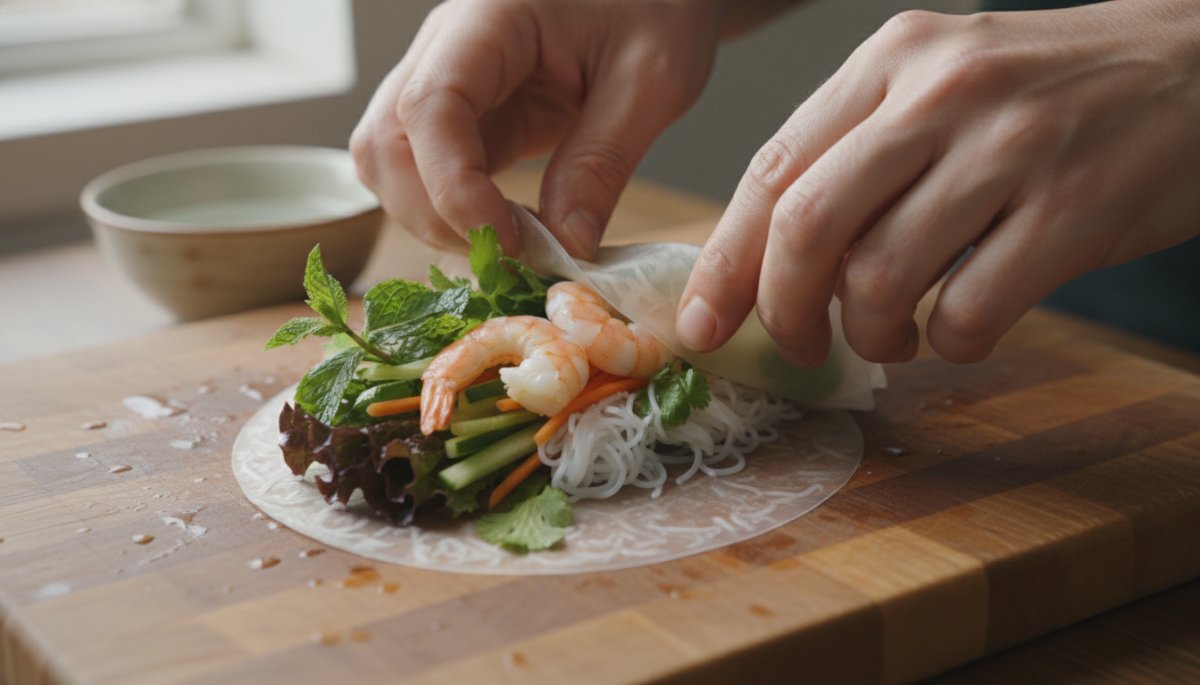
Rice paper is softened in water before use, but soften it too much and it turns mushy. Dip each sheet of rice paper, one at a time, into a pan or bowl filled with lukewarm water at about 40°C. The trick is to pull it out while it still feels slightly firm. Since it keeps softening even after you take it out of the water, taking it out early is important.
Dipping several sheets at once makes them stick together, so always soften them one at a time. Until you get the hang of it, we recommend softening them in cool water rather than lukewarm. Since it softens more slowly, the work is easier.
Prepping the fillings is the key to success
Most causes of rice paper tearing come down to the fillings. Rolling hard parts like thick cucumber or lettuce cores can poke holes. Cut the cucumber as thin as possible and remove the tough core of the lettuce. Careful prep leads to a beautiful finish.
エビは殻と背ワタを取り除き、時間だけに頼らず中心まで白く不透明になるまで加熱します。生のエビに触れた器具や手を洗い、加熱後のエビを戻さないでください。春雨は清潔な別の湯で商品表示どおりに戻し、食べやすい長さにカット。にんじんは千切りに、パクチーは5cm程度にカットします。サニーレタスは食べやすい大きさにちぎっておきましょう。
Rolling technique
Spread the rice paper rough-side up on a cutting board or a tightly wrung cloth. Leave a little space at the starting edge, and place the core fillings below center and the fillings you want to show above center.
Make one roll as if wrapping around the core fillings and pull it firmly toward you. Fold the dough on both ends inward, tuck in some chives, and roll to the end with a feeling of pulling slightly toward you. Rolling while pulling toward you tightens the whole thing, so it holds together even when cut.
That said, rolling too tight causes tearing, so aim to tighten it moderately. Placing the garnish fillings toward the far side means fewer overlaps of rice paper when rolled, giving a translucent finish.
Regional variations of fresh spring rolls
Vietnam is a country long from north to south. The style of fresh spring rolls also differs by region.
Northern Hanoi's fresh spring rolls
北部にも多様な生春巻きや巻き料理があり、大きさや具材を地域だけで固定するのは難しいため、店ごとの料理名と中身を確認します。ハノイではフォー・クオンなど別の米皮巻きもあり、ゴイクンと同じものとして扱わない方が分かりやすいです。
Central Da Nang and Hoi An's fresh spring rolls
中部でも豚肉、魚介、香草など巻く具材は店と料理で変わります。「海が近いからエビが主流」「中部は南部系」と単純化せず、ダナンやホイアンでは豚肉をライスペーパーで巻く料理なども別名で注文します。
Southern Ho Chi Minh City's fresh spring rolls
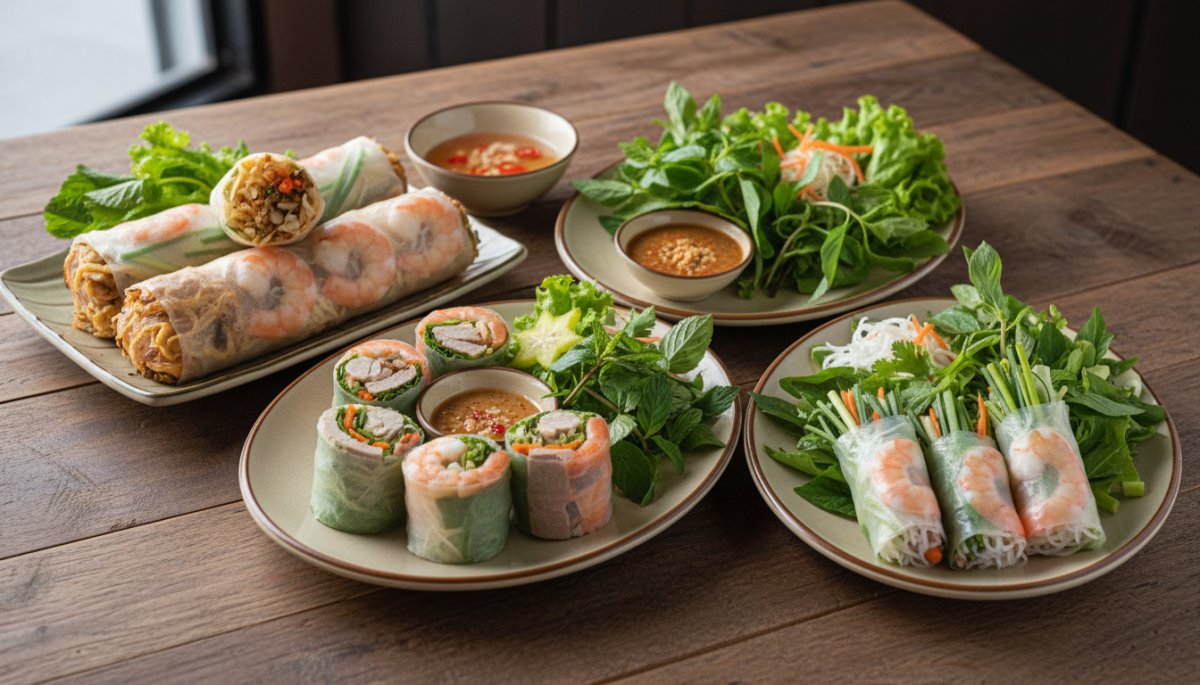
南部でよく見るゴイクンには、ゆでたエビ、薄切りの豚肉、米麺、香草を巻く例がありますが、具材や大きさは一定ではありません。エビと豚肉を必ずミンチにするわけでもなく、たれも魚醤系・相醤系などがあります。屋台のおやつとしても親しまれており、気軽に楽しめます。
In the south, fried spring rolls called "cha gio" are also popular. Bite-sized rolls of fillings wrapped in rice paper and fried, their crispy texture is the draw. Eating them with sunny lettuce and herbs is the Vietnamese way.
Filling ideas that go well with fresh spring rolls
Beyond the basic fillings, all kinds of variations are possible.
Adding steamed chicken or boiled pork bumps up the volume. Use steamed chicken shredded thin, and keep it soaking in the steaming juices until just before use for a moist finish. Adding avocado or green mango brings a creamy texture or a refreshing tartness, for a whole new flavor.
For herbs, try not just cilantro (rau mui) but also spearmint, mitsuba, water dropwort, watercress, and whatever else you like. In Vietnamese cooking, using a variety of aromatic herbs is common. Tucking chives in partway through the roll gives a stylish finish.
Lately, "fruit fresh spring rolls" wrapping fruit and cream are also popular. It's a new style you can enjoy like a dessert. Keeping the translucency of the rice paper in mind, why not make them with your favorite fruit?
作ってから食べるまでの衛生ポイント
- 生野菜と香草は流水で洗い、水気をよく切る
- 生の肉・魚介用と、加熱済み食材用で器具を分ける
- エビは中心まで不透明に、豚・鶏も十分に加熱する
- 常温に長く置かず、すぐ食べない分は冷蔵する
- 魚醤、甲殻類、ピーナッツ、大豆のアレルギーを確認する
Summary: enjoying Vietnam's food culture through fresh spring rolls
Fresh spring rolls are a dish that symbolizes Vietnam's rich food culture.
Colorful fillings showing through translucent rice paper, the scent of fresh herbs, a chewy texture. All of these harmonize to create a one-of-a-kind flavor. Once you know the authentic way to eat them and master the tricks for making them at home, anyone can enjoy genuine fresh spring rolls.
How to soften rice paper, prepping the fillings, rolling technique. Just keeping these points in mind gives you a restaurant-quality finish. Trying the styles that differ by region, or customizing with your favorite fillings, is fun too.
When you visit Vietnam, try comparing the fresh spring rolls each region is proud of. And after you get home, recreate the authentic flavor at home. If you want to know more about Vietnam's food culture, be sure to check this out too.
Learn more about Vietnam's travel information and coffee culture