![]()
The appeal of Ho Chi Minh City's local markets
The moment you step into a local market, its clamor may overwhelm you.
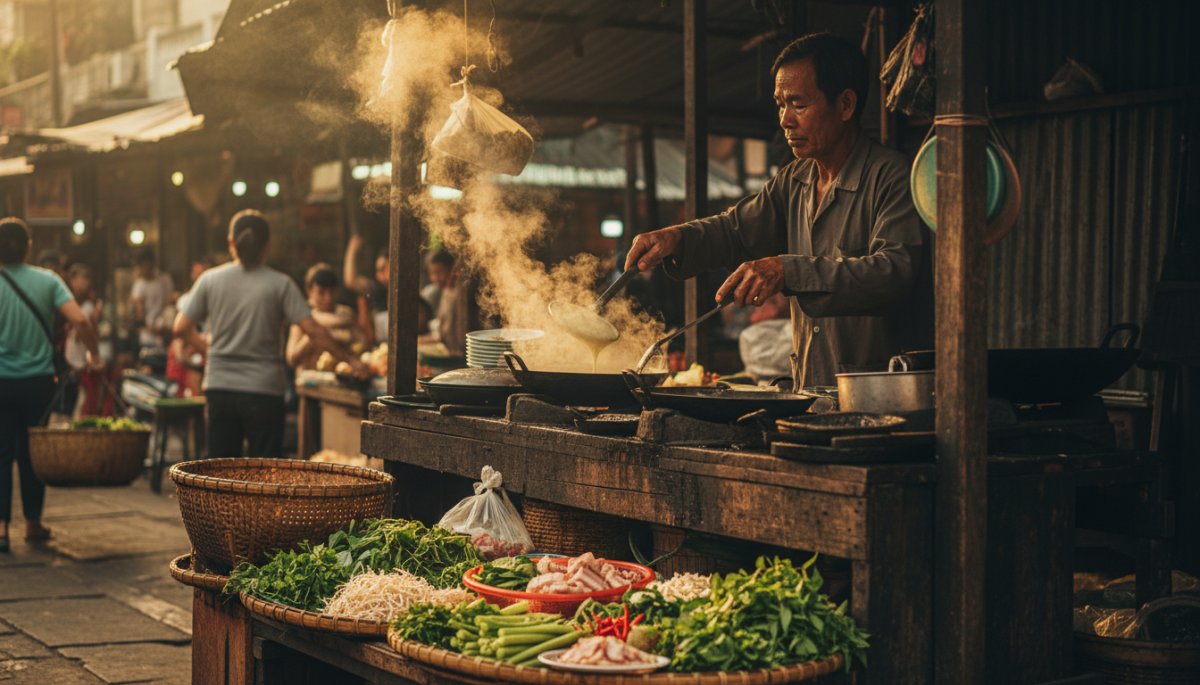
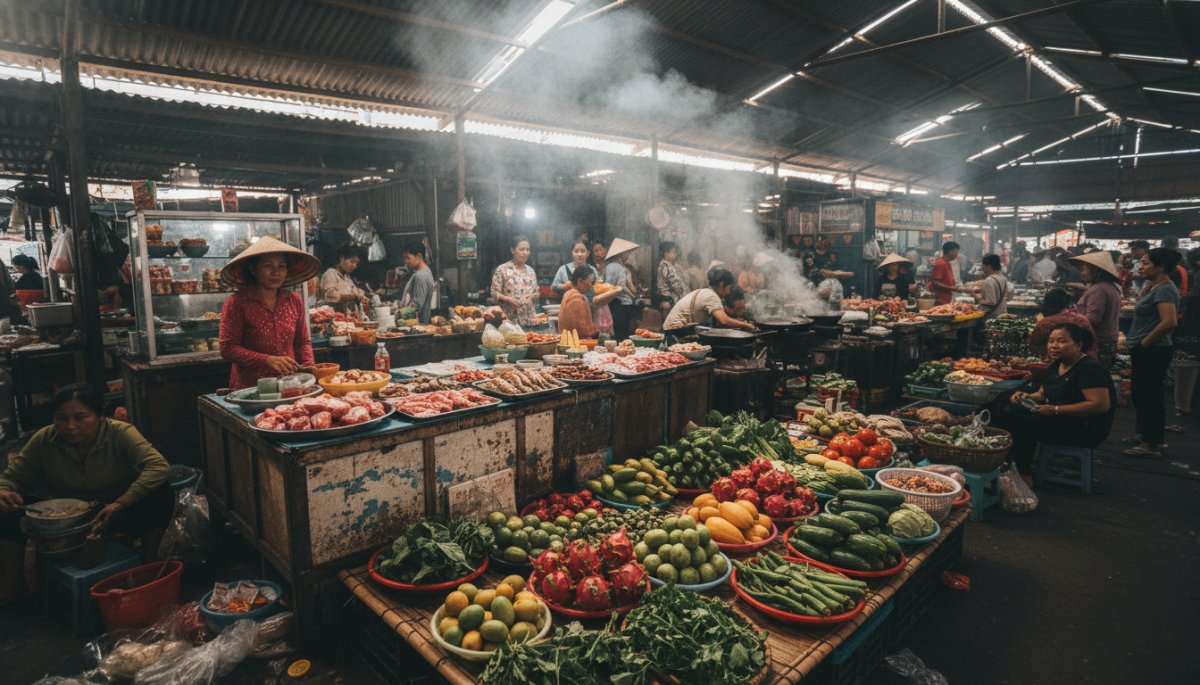
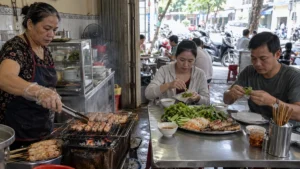
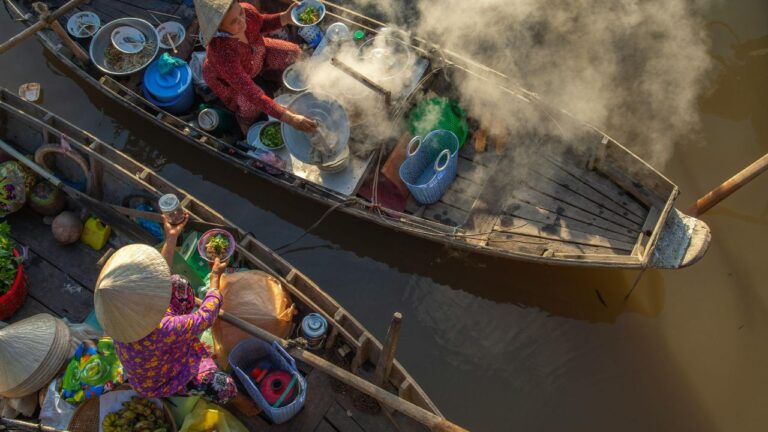
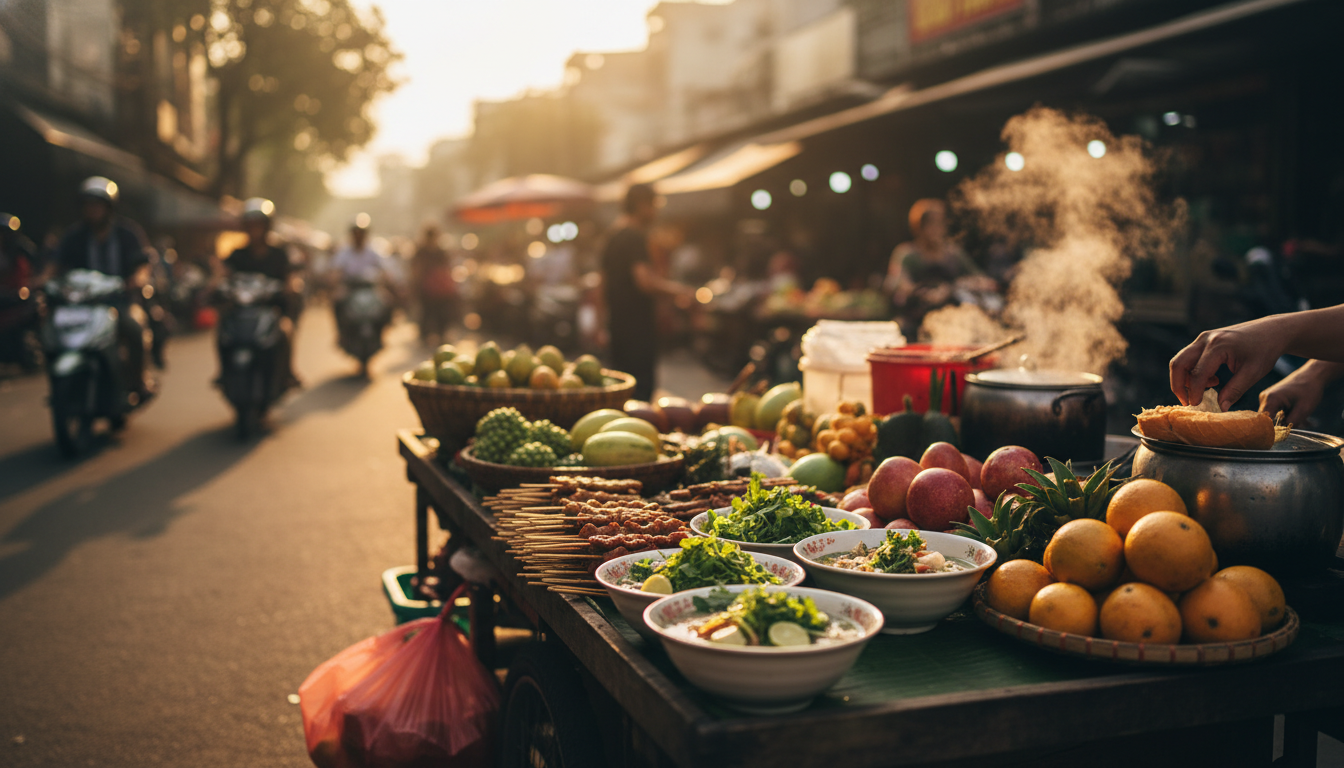
The engine sounds of bikes, the steam rising from stalls, the vibrancy of people coming and going. Ho Chi Minh City's local markets are not places arranged as tourist destinations but spaces where life itself breathes. At the foot of high-rises, people eating seated on small plastic chairs line up, while a few meters away a refined café operates. In this city where new and old, local and global exist at once, if you want to experience true Vietnamese food, heading to the market stalls is essential.
In local markets like Ben Thanh Market, not only souvenirs for tourists but eateries and stalls that locals frequent daily line up. Head to a local market a little off-center and everyday life unrelated to tourism spreads out as is, with people choosing ingredients, people chatting, and people carrying goods by bike coming and going. The market is a crossroads of life, and just walking conveys this town's body heat.

5 standard local foods locals love
Pho: the rice-noodle soup that colors Vietnam's morning
The first thing you'll want to eat when you come to Vietnam is pho.
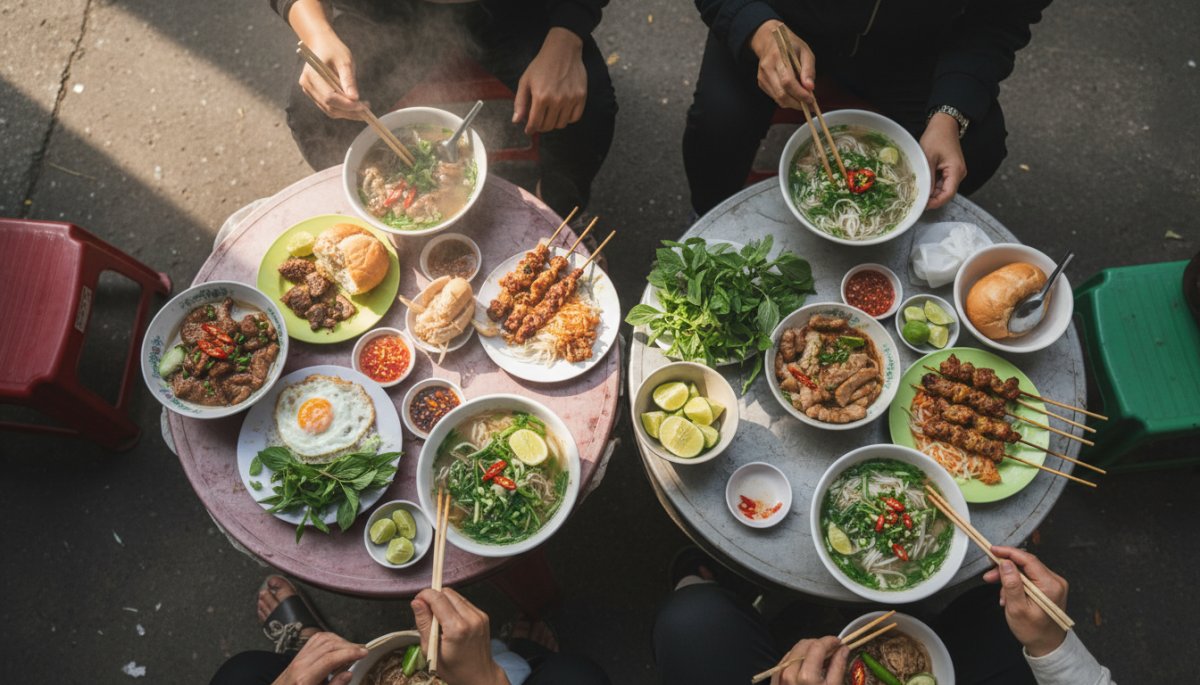
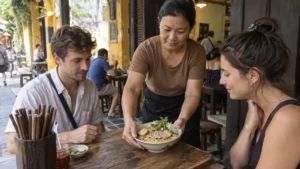
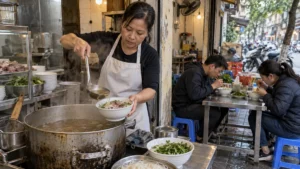
This bowl, where slippery flat noodles made of rice flour entwine exquisitely with a clear broth and plenty of herbs, has a simple yet deep flavor loved by locals and tourists alike. The standards are chicken-stock-based "pho ga" and beef-bone-based "pho bo." In Ho Chi Minh City it's enjoyed daily as breakfast or lunch, and it's not rare for queues to form at local eateries open from early morning. Adjusting the taste to your liking with lime, chili, and nuoc mam (fish sauce) is the local way.
Being able to casually enjoy it everywhere, from town stalls to stylish café-style restaurants, is also the appeal of Ho Chi Minh City food. At a reasonable 40,000 to 100,000 dong (about 240 to 600 yen) a bowl, the value is outstanding.
Banh mi: a crisp French-bread sandwich
A specialty you'll want to eat at least once when visiting Ho Chi Minh City is "banh mi." A Vietnamese-style sandwich packed with pate, pickled vegetables, roast pork, egg, cilantro, and other fillings in a crisply baked French bread.
Cherished across Vietnam as a light meal or breakfast, its appeal is being casually savorable anywhere, from local stalls in Ho Chi Minh City to popular chains. At a stall it's a very good-value casual eat at 20,000 to 30,000 dong (about 120 to 180 yen) a piece, popular with Japanese tourists too. "Nhu Lan," right near the Bitexco Financial Tower, is a shop introduced as having delicious banh mi, with an eatery operating next to the kiosk too.
Com tam: broken-rice rice topped with pork
The royal road of "topped rice" packed with southern character is com tam.
Com tam means "broken rice." In southern Vietnam, this dish was born as a way to eat, deliciously and without waste, the rice grains broken in the milling process. On cooked broken rice a charcoal-grilled pork grill is plonked, with pickled vegetables, cucumber, a fried egg, fried scallion, and sometimes Vietnamese-style meatloaf added. To finish, pouring a sweet-savory sauce over and eating while mixing the whole is the local way. The balance of the crisp, toasty meat, the well-cooked rice, and the refreshing vegetables is exquisite.
Hu tieu Nam Vang: a pork-and-seafood rice-noodle soup
Hu tieu Nam Vang is a southern-style "jumbled savory soup noodle." Rooted in the Phnom Penh-style (Nam Vang) noodle of Cambodia, mixed with the culture of Chinese immigrants, it's a dish that achieved its own evolution in Ho Chi Minh City. A sweetish broth with plenty of fillings — rice noodles, minced pork, boiled shrimp, liver, quail eggs, and more.
Light yet with the savoriness of pork and seafood dissolved densely in, the broth has a gentle flavor that makes you want to drink it up. You can often choose soup or no-soup, and it's cherished as a local standard for breakfast or lunch. "Hong Phat," founded in 1975, is a long-established renowned spot selected for the Michelin Bib Gourmand, and the beautiful plating served in a clear glass bowl is also well regarded.
Banh xeo: a Vietnamese-style savory pancake
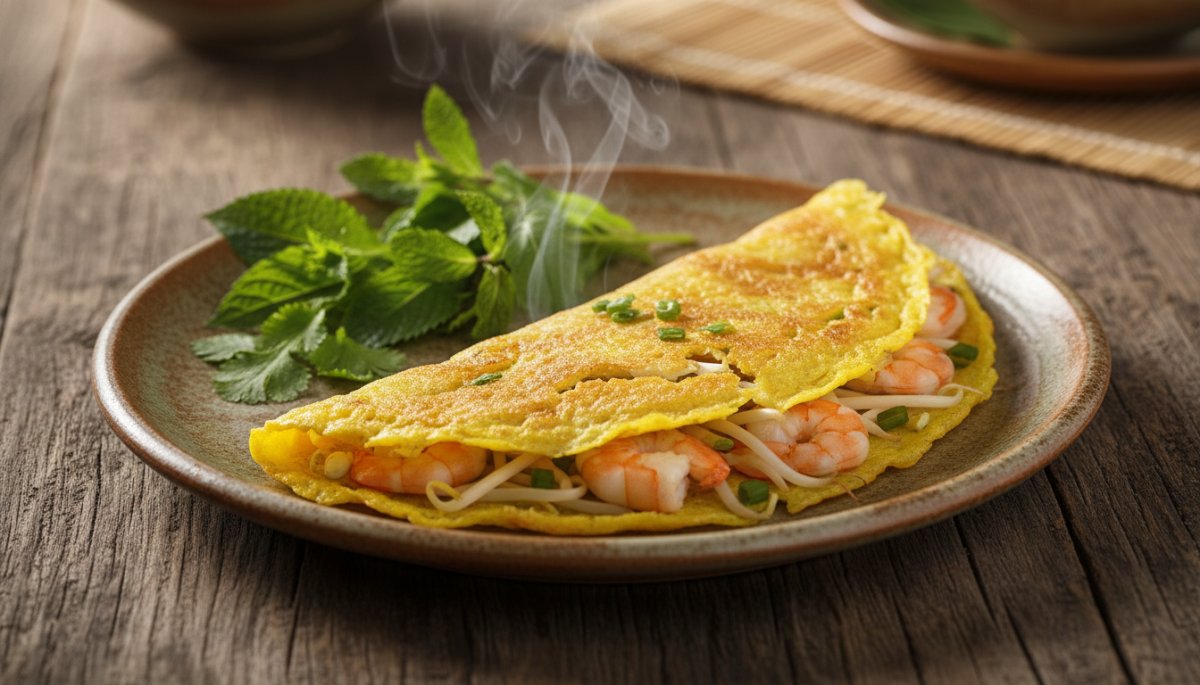
"Banh Xeo 46A," hugely popular with tourists and always crowded. A Vietnamese savory pancake packed with shrimp, pork, and bean sprouts, incredibly delicious. Since several kinds of leaves like lettuce and mustard greens come out in abundance, wrap the banh xeo, cut into bite-size pieces, in a leaf to eat.
Even one serving is quite large and makes you super full. There's a photo-included, English-annotated menu too, so ordering is reassuring. There are also fresh spring rolls and various other menu items. As of 2024, banh xeo is 110,000 dong for the regular and 180,000 dong for the extra size.

Hidden specialty dishes and challenge menu items
Banh canh cua: crab tapioca noodles
An item where the broth is truly delicious!
The super-rich broth steeped in crab flavor matches exquisitely with springy tapioca noodles. Packed with crab meat and pork, it's fully satisfying to eat. This shop on Nguyen Thi Minh Khai street can be enjoyed for about 40,000 dong (about 200 to 250 yen) a bowl. You can also order Chinese fried dough (quay), and putting the fried dough in the soup is very tasty too, so be sure to try it. But note it's only open until about 4 p.m. on weekdays.
Bun thit nuong: grilled-pork tossed noodles
The southern Vietnamese specialty "bun thit nuong" is a truly delicious dish. A hearty item generously topped with grilled pork, crisp fried spring rolls, pickled vegetables, and peanuts. On the table there's soup in a plastic container, and you eat it by pouring one ladle over.
The strongly Vietnamese, sweetish soup is addictive. At a reasonable 30,000 dong. It's on Nguyen Thi Minh Khai street and open on weekends too, but since it operates until evening, watch the time. Incidentally, until 11 a.m. only "banh cuon," a steamed spring roll, is offered as a morning menu. Packed with plenty of minced meat inside, with a chewy, smooth wrapper, this is very tasty too.
Chim cut chien bo: butter-fried quail
日本では珍しいですが、比較的チャレンジしやすい「ウズラ」の料理を紹介します。「CHIM CÚT CHIÊN BƠ」という料理で、ウズラという鳥をバターで揚げた料理です。1羽のサイズは大人の手の平くらいで、価格は2万ドン(約120円)/1羽と激安。
Since it's cooked so the bones are tender, small bones can be chewed through without problem. Since it's already seasoned, it's good eaten as is, and dipping it in sauce boosts the savoriness. The most recommended part is the head, which is tender, without even feeling the harshness of the brain, far easier to eat in taste and texture than it looks. It's in District 10 of Ho Chi Minh City, about 5 km from central District 1, taking around 20 minutes by taxi.
Banh khot: tapioca-flour mini savory pancakes
The banh khot at "Banh Khot Ba Hai," famous in Vung Tau, is an item made using plenty of oil. Living up to being likened to Japanese takoyaki, the batter's texture, especially the surface, is close to takoyaki, though the taste is a little different.
It's made using quite a lot of oil, but when you eat it there's no tempura-like oiliness, finished crisp only on the surface. Wrapping it in a leaf and eating it dipped in a nuoc-mam-based sauce is the local way. It's the kind of banh khot where a man can easily manage two or three plates alone — with this, you feel you could eat any number of plates.
A new-sensation version of fresh spring rolls
"NUONG CUON BANH TRANG," eaten at "Quan cua Ma," is a new-sensation fresh spring roll where a pork paste is wrapped in a rice-noodle wrapper, then wrapped in plenty of raw vegetables and eaten dipped in chili sauce. An item to recommend to fresh-spring-roll lovers, letting you enjoy the different textures of the meatball, the wrapper, and the nuts.
The shop is hard to find, so asking locals to search it out is recommended. It's on Vinh Vien street in District 10, open 11 a.m. to 9 p.m.
Xoi ga: the standard sticky rice
Xoi ga means sticky rice. A dish of sticky rice heaped on a plate topped with chicken is xoi ga, an eatery and stall dish well regarded by Japanese people too. The slightly firm glutinous rice is well steeped in flavor and delicious.
"Xoi Ga Number One" is less than a five-minute walk from Ben Thanh Market. Xoi ga comes in various kinds too, so be sure to try several.

How to order and haggle at a local market
Basic pointing-order technique
Even those who can't manage Vietnamese or English have no problem.
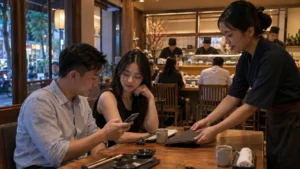
Since Ho Chi Minh City's local markets have many foreign tourists too, the shop staff are used to dealing with foreigners. At shops with a sign reading "Com Binh Dan," if you choose what you like from the roughly ten side dishes lined up in the showcase, they'll carry a plate of rice and side dishes over. Many shops have photo-included menus too, so pointing at whatever catches your eye is fine.
Some shops have big photos out at the work counter, so pointing there to order is effective too. At Vietnamese local shops it's common to drop food scraps and such on the floor and no one minds, so drop bones and the like on the floor without worry.
How to gauge a fair price
Local-eatery prices are very reasonable. Pho goes for 40,000 to 100,000 dong (about 240 to 600 yen), and banh mi for 20,000 to 30,000 dong (about 120 to 180 yen). Com tam and hu tieu are in a similar price range.
However, around Ben Thanh Market right in the middle of the tourist area, prices may be set somewhat higher. Even at a market, heading to a local market a little off-center lets you enjoy authentic flavors at cheaper prices. Shops with many bikes parked have a high probability of being a "hit" where locals gather, so using that as a guide is recommended too.
Cautions and manners when ordering
At Vietnamese local shops, leaving the trash from eating on the table tends to be frowned upon. Plates are also cleared quite quickly, so having them cleaned up right after you finish eating is common.
Also, when eating at a stall or on street chairs, there may be a trash bin placed at your feet for shrimp and crab shells. There are voices recommending going in black clothes so it's fine if soup splashes on them (though it comes out with a neutral detergent, so it's okay).
How to spot shops you can trust on hygiene
Choose shops frequented by foreigners
On a first Ho Chi Minh City trip, local eateries where locals usually go are a bit worrying on hygiene, right?
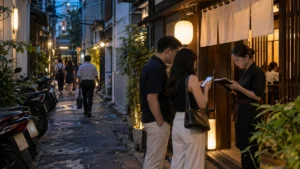
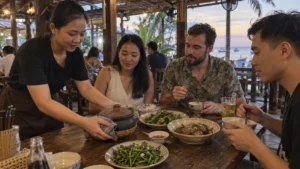
So choosing a local eatery frequented by foreigners is reassuring. A shop many foreign office workers working nearby also frequent can be called a trustworthy shop. Around the Bitexco Financial Tower there are many various shops, and many eateries for foreigners you can drop by while strolling. "Bun Dau Ngo Nho Pho Nho," operating within an alley off Pasteur street, is a fairly high-cleanliness shop among eateries, where you often see travelers and residents too.
Target Michelin-listed shops
2023年、2024年とミシュラン・ビブグルマンに連続掲載されている店は、品質と衛生面で一定の基準をクリアしています。フーティウの「ホンファット」は1975年創業で、ミシュラン・ビブグルマン選出の老舗名門。コムタムの「コムタム・バーギエン(Cơm Tấm Ba Ghiền、フーニュアン区ダンヴァングー通り84番)」も、1日3000食以上を売り上げる日もあるという驚異の名店で、ミシュラン・ビブグルマンに連続掲載されています。
Since such shops maintain a clean environment considerate of foreign tourists too, they're also ideal for a first local-food experience.
Check hours and how crowded it is
Many local eateries are commonly open from morning to past noon, or until evening. The banh canh cua shop is open until about 4 p.m. on weekdays, and the bun thit nuong shop operates until evening too, so watch the time.
Come lunchtime, many shops get bustling as you can see, so if you want to eat leisurely, going outside lunchtime is recommended. Conversely, a crowded time slot is also proof of that much local support. A shop with a wide bike parking lot and several staff in charge of arranging bikes is proof of a popular shop.

A practical plan for touring Ho Chi Minh City markets
A one-day plan based at Ben Thanh Market
Ben Thanh Market is easy to understand as Ho Chi Minh City's entry point, with a full range of souvenirs and local food. Since the stalls start moving from early morning, enjoying pho or banh mi for breakfast is recommended. While strolling inside the market, casually drop by any stall that catches your eye.
At midday the office district and the market mix, and local office workers come for meals. This time slot is crowded, but you can enjoy a lively atmosphere. At night the town shows another face, and stalls that appear only at night pop up in the alley across from Ben Thanh Market. You can savor Vietnam's night — an assorted platter of offal and more — while gazing at Ben Thanh Market after it's closed up.
Extend a little further to a local market
About a 10-minute walk from Ben Thanh Market is "Hung Ky," a Chinese eatery popular in Cholon. The cozy interior is full of Chinese-eatery atmosphere, and mapo tofu, fried rice, and, for noodles, "mi trung vit" — egg noodles topped with duck meat — is the most popular. Being open until 11 p.m. is an appeal too, so try dropping by to cap off a night of sightseeing.
Head to a local market a little off-center and everyday life unrelated to tourism spreads out as is. Turn one street off the main road and laundry flutters, children play, and the smell of meals drifts. The less a place is arranged as a tourist destination, the more concentrated the Ho Chi Minh City-ness. You may be puzzled at first, but walk a while and that jumble comes to feel comfortable.
Value the time to take a breather at a café too
Walking Ho Chi Minh City, the first thing that catches your eye is the abundance of cafés. In Vietnam, a café is not a mere eatery but a part of life. Before work, between tasks, an evening break, a nighttime rendezvous — different people gather by time of day.
Options are wide-ranging, from simple sidewalk cafés to hideaway-like shops renovated from old buildings, and wherever you enter there's a sense of blending into a part of the town. Just taking a breather at a café between sightseeing naturally settles Ho Chi Minh City's tempo into your body. Fragments — the time you fled into a café worn out by the heat, the eatery you reached after getting lost, the short conversation exchanged at a shop you entered by chance — pile up and become the memories of the trip.
Summary: to enjoy Ho Chi Minh City's local food
Ho Chi Minh City's local markets are a city to place yourself in, not a city to look at.
Even if you don't move as planned, there are unexpected discoveries. Trying to understand it perfectly feels hard, but once you accept staying without fully understanding it, it suddenly becomes comfortable. Even just staying a few days, by the time you leave, this town's rhythm remains within you.
From standards like pho, banh mi, com tam, hu tieu, and banh xeo to hidden specialties like banh canh cua, bun thit nuong, and chim cut chien bo, Ho Chi Minh City's local food is diverse. Pointing to order is no problem, and many shops are used to foreigners, so you can enjoy it with peace of mind even without speaking Vietnamese or English.
If you're worried about hygiene, choosing shops frequented by foreigners or Michelin-listed shops is recommended. Shops with many bikes parked have a high probability of being a "hit" where locals gather, so using that as a guide is good too. Base yourself at Ben Thanh Market and extend a little further to a local market. While valuing the time to take a breather at a café, enjoy Ho Chi Minh City's local food to the fullest with a sightseeing style that values feeling over efficiency.
Even after the trip is over, you recall it in idle moments. That lingering resonance is the greatest appeal the city of Ho Chi Minh holds.