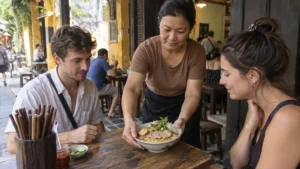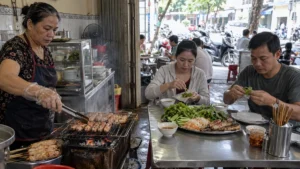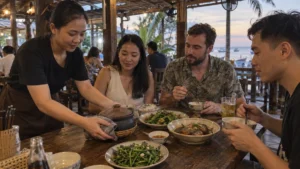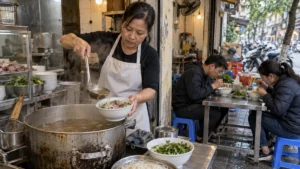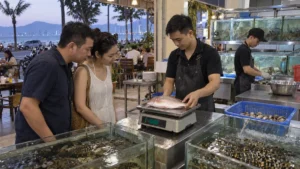
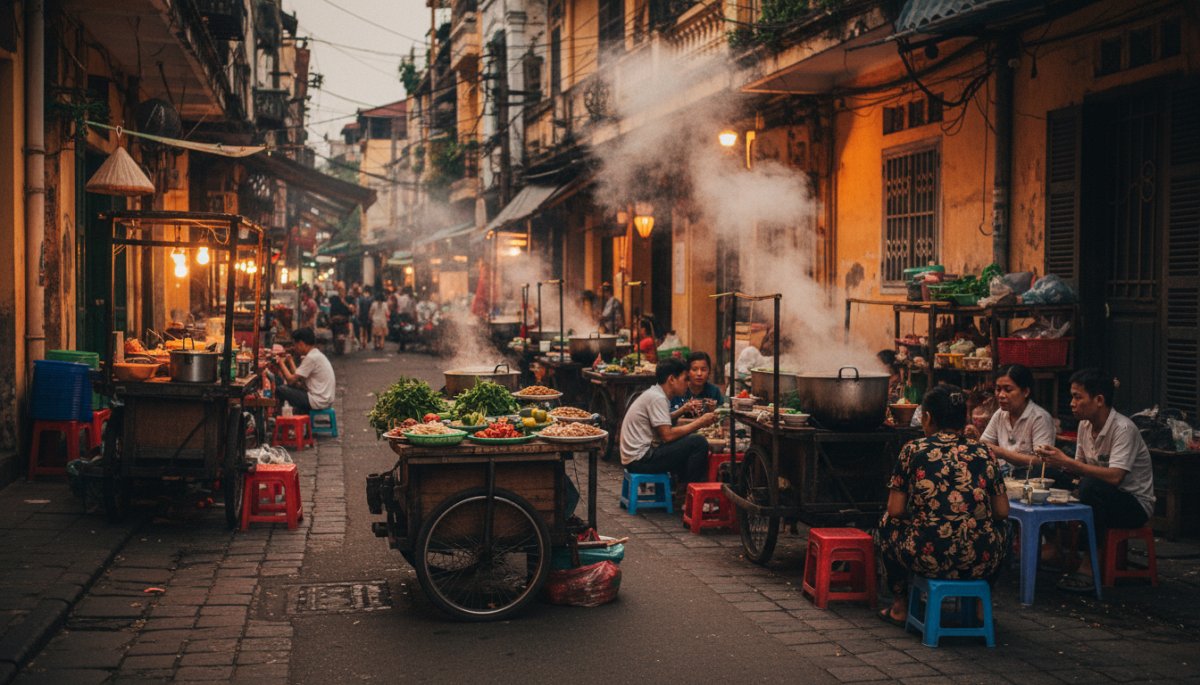
Walking Hanoi's lanes, the smoke of charcoal fires and the scent of spices tickle your nose. Sit down on a plastic stool, watch the food cooked before your eyes, and eat shoulder to shoulder with the locals. This is the true appeal of Hanoi street food.
Hanoi, Vietnam's capital, is a city with many street stalls and small eateries where it is easy to glimpse everyday life through food. In the narrow alleyways of the Old Quarter, stalls that have operated in the same spot for decades line the streets, each preserving its own distinct flavors. In this city, which remains a tourist destination while retaining a strong sense of daily life, a meal itself becomes a cultural experience.
From staples like pho, bun cha, and banh mi to local stalls only the locals know, Hanoi has countless choices. But for a first-time traveler, it's often hard to know where and what to eat. This article delivers practical information for enjoying Hanoi street food to the fullest, from how to choose a safe shop and how to order to typical prices and recommended areas.
Hanoi's street food culture and its appeal
Although Hanoi has a long urban history, it is not accurate to lump all of the street food culture seen today under the label of "1,000 years of tradition." The current food landscape has been shaped by multiple eras, including the Old Quarter's commerce, migration, war, and economic reform.
The Old Quarter is also called "36 Streets," and each street has historically specialized in a particular craft or product. Today many streets are lined with stalls serving traditional Vietnamese dishes, letting you enjoy food that's unpretentious, flavorful, and deeply rooted in local tradition. From steaming bowls of pho to crispy banh mi, you can experience an unforgettable culinary journey easily and affordably.
The reason Hanoi street food is so highly regarded lies in its balance of flavors. A perfect harmony of sweet, sour, salty, and bitter is its signature, with all these elements contained in a single plate. And morning markets provide abundant locally grown vegetables, herbs like basil, mint, and coriander, and high-quality meat and seafood, with a commitment to using fresh, local ingredients.
Furthermore, Hanoi cuisine adopts healthy, light cooking methods. Because many dishes are steamed, boiled, or grilled rather than fried, they're less greasy and can highlight natural flavors. Incorporating a wide range of vegetables into every meal also makes for excellent nutritional balance.
In fact, Hanoi is recognized as one of Southeast Asia's and Asia's culinary hubs, and according to the famous travel site TripAdvisor, Hanoi ranked among the world's top 25 food destinations in 2022. Most international tourists consider Hanoi cuisine one of the area's main attractions.
Classic street foods you absolutely must try
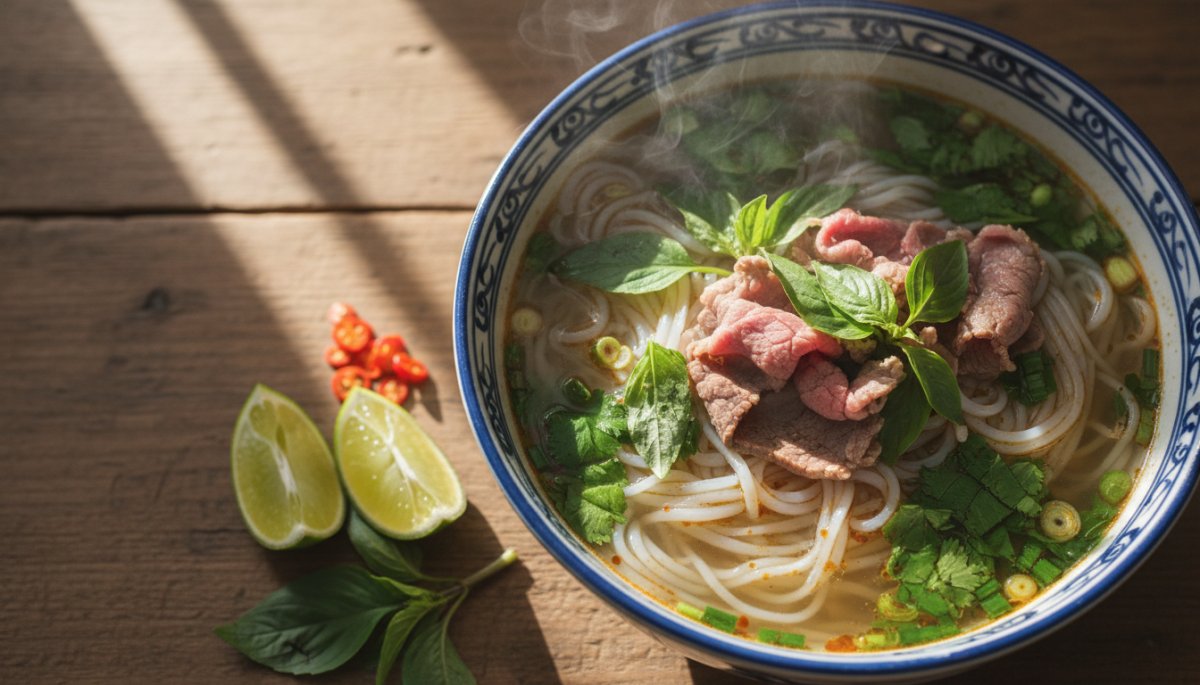
Pho: taste the soul of Hanoi
Pho is a dish you absolutely can't skip when you visit Hanoi.
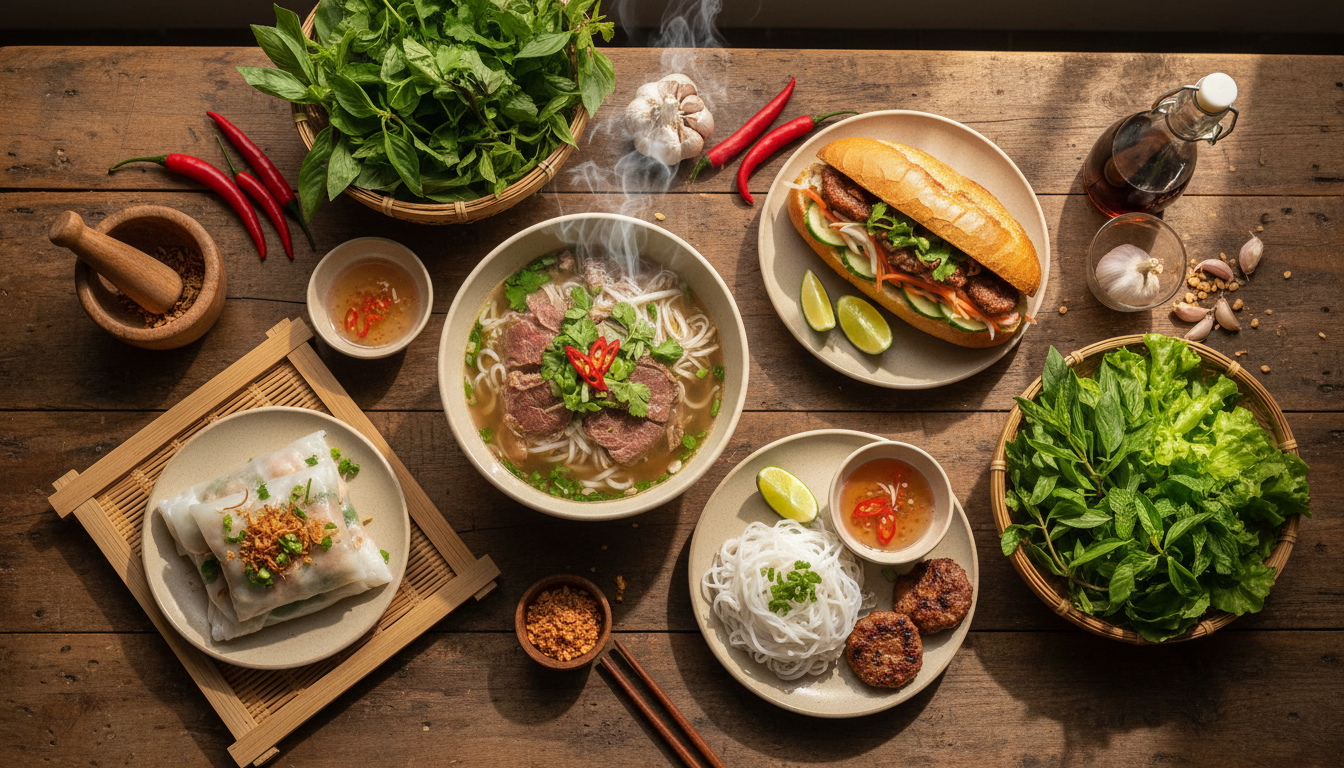
A fragrant, clear broth simmered slowly with beef bones, charred ginger, and spices like star anise and cinnamon, served with silky rice noodles and tender slices of beef. The broth, simmered for hours, develops a deep, aromatic flavor, perfectly complemented by fresh herbs, lime, and chili.
"Pho Gia Truyen" on Bat Dan Street is a legendary shop that has served fragrant beef pho for decades. A shop popular with locals, it bustles with Hanoi's people and lets you savor authentic cooking. Its deep craft shines within a simple dish. To avoid the long line, we recommend arriving early.
Bun cha: the flavor even President Obama loved
Made world-famous when former US President Barack Obama visited in 2016, bun cha is a must-eat in Hanoi. A dish of smoky grilled pork patties placed over rice vermicelli, herbs, and a tangy dipping sauce with papaya, it's beloved as a traditional Vietnamese dish of charcoal-grilled pork and rice noodles served with fresh herbs and dipping sauce.
At "Bun Cha Huong Lien" on Le Van Huu Street, beyond its celebrity reputation, you can enjoy Hanoi's specialty dish with authentic flavor in a casual atmosphere. If you want to recreate Mr. Obama's order, look for the "Obama combo" on the menu.
Banh mi: the art of the Vietnamese sandwich
Banh mi is a famous Hanoi delicacy, made by stuffing a crispy baguette with various fillings like pate, grilled pork, pickled vegetables, fresh herbs, and chili. The Hanoi version of banh mi is characterized by a perfect balance of crispy bread, flavorful fillings, and refreshing pickled vegetables.
Move to Hang Da Street and you'll find a shop where you can enjoy the traditional Vietnamese sandwich "banh mi" with Saigon beer. As world-famous street food, it captivates many travelers with its ease and deliciousness.
Banh cuon: delicate steamed rice rolls
Tucked away on Hang Ga Street, "Banh Cuon Gia Truyen" is a hidden gem serving delicate steamed rice rolls stuffed with ground pork and wood ear mushroom, topped with fried shallots and served with a light fish-sauce dip. This family-run stall offers light street food perfect for breakfast or lunch, letting you savor Hanoi's diverse flavors.
Watching the staff skillfully make the rice rolls before your eyes is enjoyable, like a mini cooking show.
How to find the local stalls that locals frequent
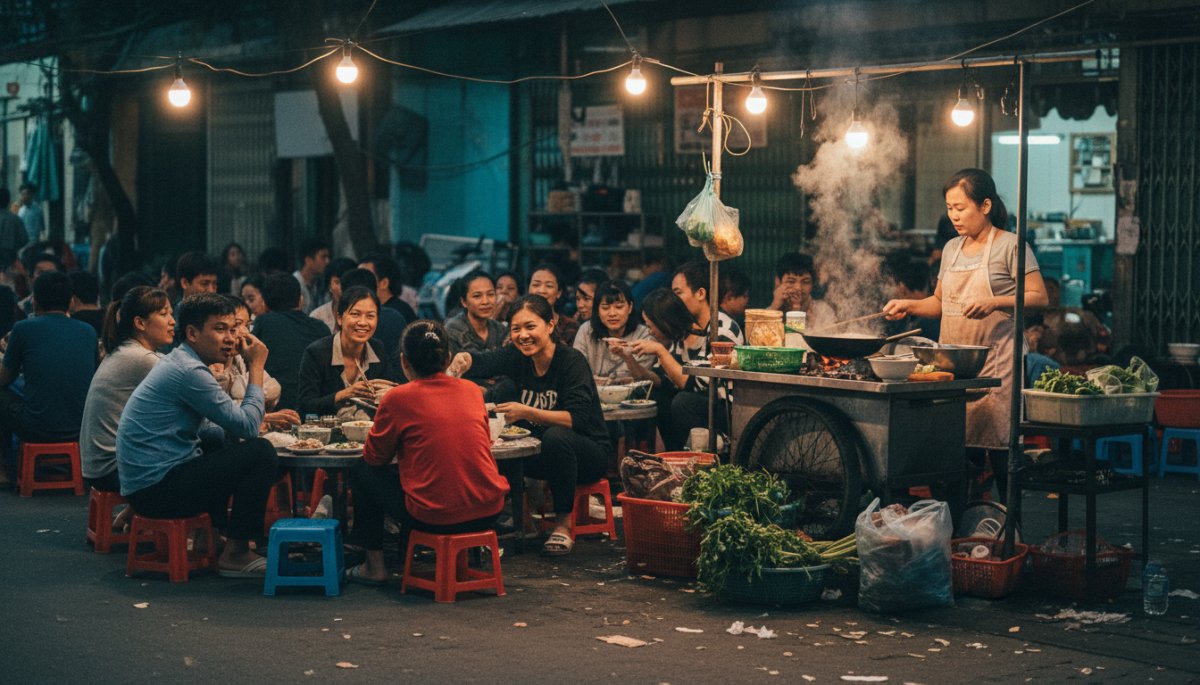
The truly delicious stalls are where the locals gather.
The key to finding safe and delicious street food is first to check whether the stall is busy with locals. Because Hanoi residents are very particular about food, a high number of local customers is a reference point for turnover, but it is not proof of hygiene. Stalls that are especially busy during the morning or at lunchtime are more likely to be using fresh ingredients.
Next, we recommend choosing shops where you can see the cooking process. If you can observe the food cooked before your eyes, you can check the hygiene and freshness of ingredients with your own eyes. Watching meat grilled over charcoal, steaming broths, and the craftsmanship of deftly boiling noodles is an experience you can enjoy as part of the meal.
It is also important to choose specialist stalls. Many stalls in Hanoi focus on one or two dishes and have been serving the same menu for decades. Stalls with a limited menu are easier to order from, but that does not automatically guarantee skill or hygiene. Assess cooking, storage, utensils, and customer turnover individually.
In the heart of the Old Quarter, especially around Hang Be Street and its surrounding lanes, stalls and small family-run shops crowd together. Known as an area where you can savor Hanoi's signature dishes within walking distance of your hotel.
As for cleanliness standards, rather than expecting perfect cleanliness, it's important to judge whether basic hygiene management is in place. Check things like whether the dishes are properly washed, whether the cooking utensils are organized, and whether the ingredients are stored appropriately.
The basics of how to order and typical prices
Ordering techniques that cross the language barrier
Even at stalls where English doesn't get through, there's no need to worry.
The most effective method is to point at what other customers are eating. Hanoi stalls basically have few menu items and often serve only one or two dishes, so pointing alone communicates fine. Showing the Vietnamese name of the dish on your smartphone is also effective.
As for numbers, Vietnam's currency unit is the dong (VND), and notes like 10,000, 20,000, and 50,000 dong are commonly used. When asking the price, having them show the number with a calculator or your smartphone's calculator app makes it easy to understand.
Typical street food prices
Prices vary by district, stall, ingredients, and tourist-oriented services.
A bowl of pho typically runs 30,000-50,000 dong (approx. ¥190-310), though prices can be a bit higher in tourist-oriented areas. Bun cha costs around 40,000-60,000 dong (approx. ¥250-370), varying with the amount of pork and whether spring rolls are included. Banh mi is the most affordable, at 15,000-30,000 dong (approx. ¥90-190).
Banh cuon and other light snack-style dishes run around 20,000-40,000 dong (approx. ¥120-250). Drinks are extra, with beer and soft drinks typically 10,000-20,000 dong (approx. ¥60-120).
There's no tipping custom in Vietnam, but if the service was especially good or someone was kind to you, giving a small tip is appreciated. However, since it's not included in the price, it isn't required.
When and how to pay
At many stalls, you pay after the meal. Some shops take payment upfront, so observing the customers around you helps. Cash payment is the rule, and credit cards and electronic payment often can't be used. We recommend preparing plenty of small notes.
Recommended areas and tips for a street food tour
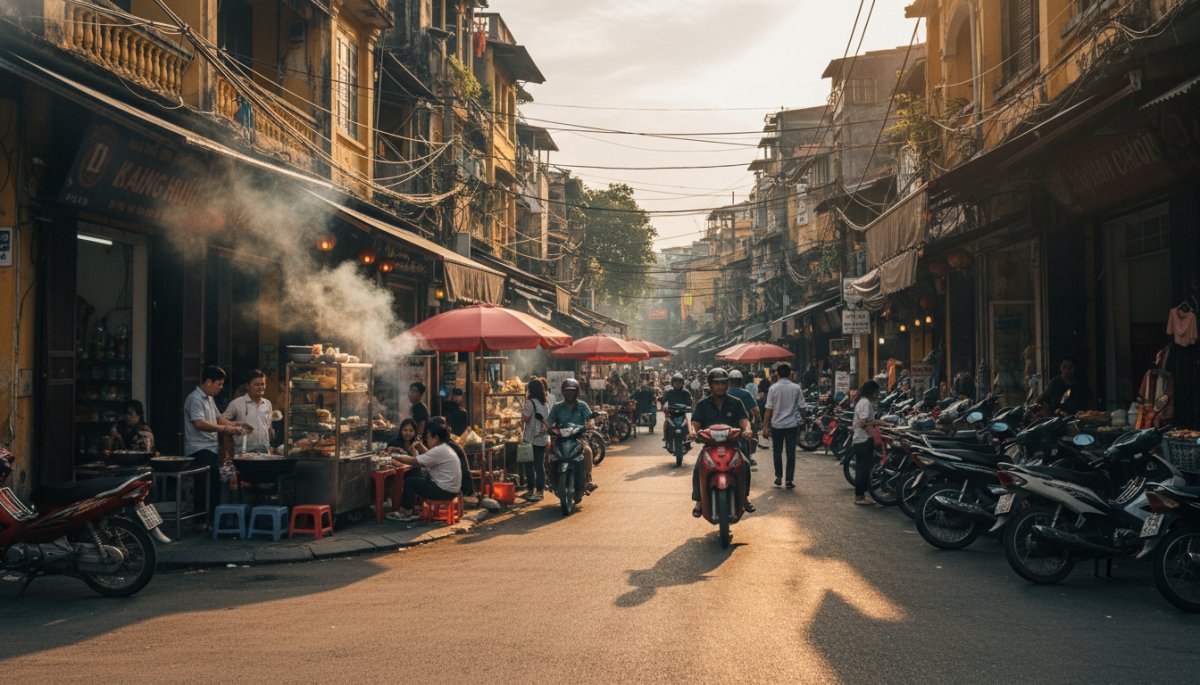
The Old Quarter: the hub of street food
The Old Quarter is the starting point for a Hanoi street food experience.
Narrow lanes weave together in complex ways, each street bearing traces of its specialized trade. The area around Bat Dan Street has a concentration of famous pho shops, bustling with locals from early morning. Hang Ga Street and Hang Be Street have many banh cuon and other light-meal stalls, perfect for breakfast or lunch.
When walking the Old Quarter, it's important not to cram your schedule too full. Rather than efficiently touring the sights, taking plenty of time to walk and pause reveals the essence of this town. Cafes not on any map, lanes you wandered into by chance, each casual scene shapes the city of Hanoi.
Around Hoan Kiem Lake: where sightseeing and food merge
The area around Hoan Kiem Lake is a place that's a tourist attraction yet also an extension of the locals' daily life. Walking around the lake, the town's bustle recedes little by little, and Hanoi's calm side rises into view.
On the north side of the lake, many stalls gather, coming alive especially from evening into night. On and around Le Van Huu Street, you can enjoy various dishes, starting with bun cha. There are shops arranged for tourists, but step a little into the lanes and you'll meet local eateries serving everyday flavors as-is.
Train Street: a new food spot
Train Street in Hanoi, a popular tourist spot lined with retro and charming shops and cafés, is a residential area, and access to the tracks and shop operations may be restricted for safety reasons. Do not assume it is simply "a tourist spot where locals gather"; follow the instructions of police and railway staff, and do not stand on the tracks to photograph trains. At the cafés and bars along the tracks, you can relax with a Vietnamese beer and enjoy the unique atmosphere.
Join a street food tour and you can sample refreshing fresh beer at a local brewery, or enjoy "dry pho," a classic dish given a unique twist, on Hang Ga Street. A guided tour has the benefit of letting you efficiently visit multiple shops without worrying about the language barrier.
Recommendations by time of day
For breakfast (6:00-9:00), pho and banh cuon are ideal. Early-morning stalls use fresh ingredients, letting you feel the locals' morning energy. For lunch (11:00-14:00), bun cha and banh mi are recommended, with just the right volume to refuel for afternoon sightseeing.
From evening into night (17:00–22:00), street food enjoyed alongside beer is popular. At night, parts of the Old Quarter can be congested with traffic and diners. Watch out for dark alleyways, road crossings, and smartphone snatching, and decide on your route home before you start eating and walking around. As you stroll in the evening breeze, sounds and smells that went unnoticed during the day stand out, and you feel even closer to the city.
Cautions on hygiene and health management
In enjoying street food, consideration for hygiene is essential.
First, the iron rule is never to drink untreated water. Ice may be made from untreated water too, so avoid it or accept it only at shops you trust. We recommend always carrying bottled water and hydrating frequently.
As for raw vegetables and cut fruit, it's wise to go easy when you don't know how they were washed. Especially on the first day of the trip, your stomach isn't yet used to the local environment, so it's important to acclimate gradually. Choosing mainly cooked dishes keeps the risk to a minimum.
Washing your hands and using sanitizing wipes is also important. Always clean your hands before eating, and carrying wet wipes or sanitizing gel is handy. Since many stalls have limited handwashing facilities, you need to manage your own hygiene.
It is advisable to bring basic medications such as digestive aids and anti-diarrheal medicine in case you feel unwell. Anti-diarrheal medicine may not be appropriate in cases involving fever or bloody stools. Do not use it indiscriminately based on your own judgment; instead, stay hydrated with oral rehydration, and consult a medical facility if you experience bloody stools, high fever, severe abdominal pain, dehydration, or prolonged symptoms.
You also need to watch out for overeating. Hanoi street food is delicious and it's tempting to try all sorts of dishes, but eating many kinds at once burdens your stomach. Keeping it to trying 2 to 3 new dishes a day and enjoying it while watching your condition is the trick to savoring it over the long term.
Priorities When Choosing a Street Stall
- Choose dishes that are thoroughly cooked to order and are steaming hot
- Check whether utensils for raw meat and cooked ingredients are kept separate
- Avoid ice, raw vegetables, and cut fruit if water quality and temperature management are unknown
- Check for allergies to fish sauce, shellfish, peanuts, soy, and dairy
- Do not try to cram everything in at once; combine 2–3 stops per outing with breaks
Prioritize the hygiene conditions in front of you over a reputation for being busy, long-established, or a specialist shop. Confirm prices in VND before ordering, use small bills, and if you feel unwell after eating, do not push on to the next stall.
Summary: to enjoy Hanoi street food from the heart
Hanoi street food is an experience beyond mere eating.
Sitting on a plastic stool and eating while listening to the conversations around you brings a feeling closer to staying than to sightseeing. The deep flavor of pho, the smoky aroma of bun cha, the crispy texture of banh mi. Each dish tells the history and culture of the city of Hanoi.
Once you understand how to choose a safe shop, how to order, and typical prices, you can enjoy local flavors across the language barrier. The narrow lanes of the Old Quarter, around Hoan Kiem Lake, Train Street, each area has its own appeal. By savoring the different atmosphere by time of day and eating in the same rhythm as the locals, you can touch the essence of Hanoi.
While being mindful of hygiene, take on new flavors with a spirit of adventure. Not demanding too much perfection, and enjoying the atmosphere of the place and the exchanges with people too, enriches your Hanoi street food experience.
This town doesn't assert itself strongly. Rather, by your stepping toward it, it shows itself little by little. Even after just a few days' stay, by the time you leave, Hanoi's quiet rhythm remains in your body, and even after the sightseeing ends, you recall it at odd moments. That lingering resonance is the greatest appeal the city of Hanoi holds.
Now, sit down on a plastic stool, and before a steaming bowl of pho, why not blend into Hanoi's daily life?