Vietnam's major banks are rolling out new or revised fees on accounts and cards starting in August, one after another. BVBank's account maintenance fee, BIDV's card issuance and failed-transaction fees, and new rules at VietinBank and ACB — the amounts are all small, but the kind that quietly add up each month if you're not paying attention. Most can be avoided by keeping a minimum balance or adjusting settings. For residents and business travelers with accounts in Vietnam, here's a rundown of what's changing from August, with ways to avoid each fee.
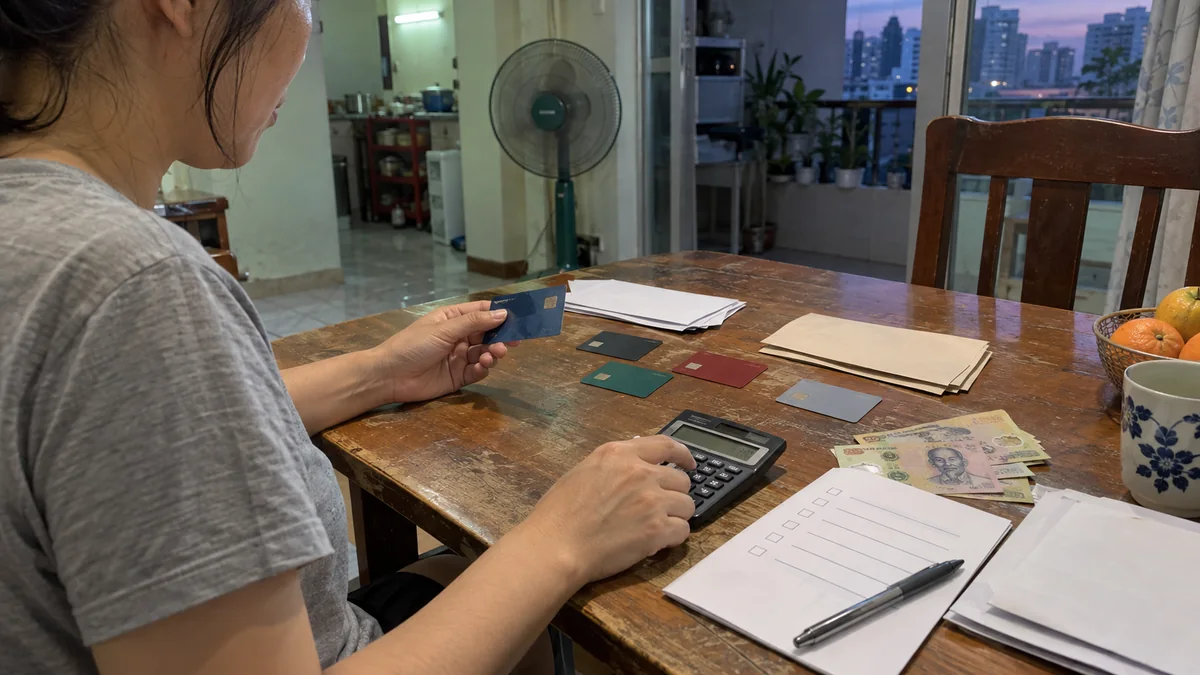
Key changes taking effect in August
What stands out is that small fees are starting to appear on basic services that used to be free. BVBank will begin charging a monthly account maintenance fee of 10,000 dong from August 26, waived if the average monthly balance is 500,000 dong or more. Digital accounts are exempt for the first 180 days after opening. BIDV introduced physical card issuance fees (100,000 dong for credit, 50,000 dong for debit) from August 20, along with a failed-transaction processing fee of 9,000 dong per transaction (the first two failures each week are waived, and private banking customers are exempt).
From August 17, VietinBank switched to automatically deducting card-related fees from the payment account, and from October 5, 2026, any unpaid fees will lock the account's funds. From August, ACB may charge 5,500 dong per transaction when a debit card's overseas online payment is declined (this applies to cases of repeated small overseas payment attempts being declined in a short period). Separately, as reported earlier,OCB's discontinuation of balance SMS notifications (switching to free app notifications)also falls under this same trend of reviewing free services.
| Bank | Change | How to avoid / conditions |
|---|---|---|
| BVBank(8/26〜) | Account maintenance fee: 10,000 dong/month | Waived with average monthly balance of 500,000 dong or more / digital accounts exempt for 180 days |
| BIDV(8/20〜) | Card issuance fee (credit 100,000 / debit 50,000 dong) / failed transaction 9,000 dong each | First two failures each week waived; private banking customers exempt |
| VietinBank(8/17〜) | Card fees auto-deducted from account / from 10/5, unpaid fees lock funds | Keep enough balance and avoid unpaid fees |
| ACB (from August) | Declined international debit transaction: 5,500 dong each | Avoid repeated declines / review your usage |
Why the wave of fee revisions is happening now
Behind this is a shift for Vietnamese banks, which have long attracted customers with free transfers and free accounts, now needing to rebuild revenue streams. QR payments and app-based transfers have become part of daily life, prompting a rethink of the cost of counter service and paper notices. The move from SMS to app notifications is a typical example, and the "free by default" assumption is gradually changing for users. Even small amounts add up for residents who hold multiple accounts.
What residents and business travelers should do
Many of these changes can be neutralized through settings and balance management. As with the digitalization of administrative procedures (consolidating documents via VNeID) knowing the system and acting ahead of time avoids the burden.
- For your everyday account, keep the balance above the waiver threshold (for example, BVBank's monthly average of 500,000 dong).
- Close cards or accounts you're not using. Issuance and maintenance fees can accrue simply for "having" them.
- VietinBank locks funds for unpaid fees. Keep some balance margin and leave notifications turned on.
- Even if SMS notifications stop, turning on push notifications in the bank app lets you track your balance for free.
- If you use international transactions (overseas subscriptions, ad spend), repeated declines can trigger fees. Check your card's usage settings.
The end of the "free era," and how you hold your accounts
This series of revisions signals a turning point for Vietnam's banking industry. Over the past several years, banks competed for new customers with free transfers and free accounts, driving cashless adoption forward all at once. As a result, QR payments and app transfers have spread even to street stalls, but banks now face the challenge of how to generate revenue from customers acquired for free. The new fees are part of that search for an answer. The lesson for residents is clear: we've entered an era where simply holding an account can generate cost. Keep your main salary or living-expense account above the waiver threshold, and close accounts you don't use. Leaving accounts open with the Japanese mindset that "more accounts are more convenient" lets small fees pile up across multiple accounts. Fintech-style digital banks tend to have longer initial waiver periods, so using different banks for different purposes is one option. A moment of institutional change like this is a good opportunity to take stock of your own account setup.
Summary
The fee revisions at Vietnamese banks from August are each small on their own, but they mark a shift where the "free by default" assumption is breaking down. Even so, most can be avoided by maintaining a minimum balance, closing unused accounts, and reviewing notification settings. Residents and business travelers should take stock of the conditions at the banks they use and set up their accounts so they don't fall below the waiver threshold.
Sources
· CafeF, "Trong tháng 8, loạt quy định mới sẽ áp dụng với người dùng tài khoản BIDV, VietinBank, ACB, OCB, BVBank" (August 24, 2026)
https://cafef.vn/trong-thang-8-loat-quy-dinh-moi-se-ap-dung-voi-nguoi-dung-tai-khoan-bidv-vietinbank-acb-ocb-bvbank-188260824104900774.chn