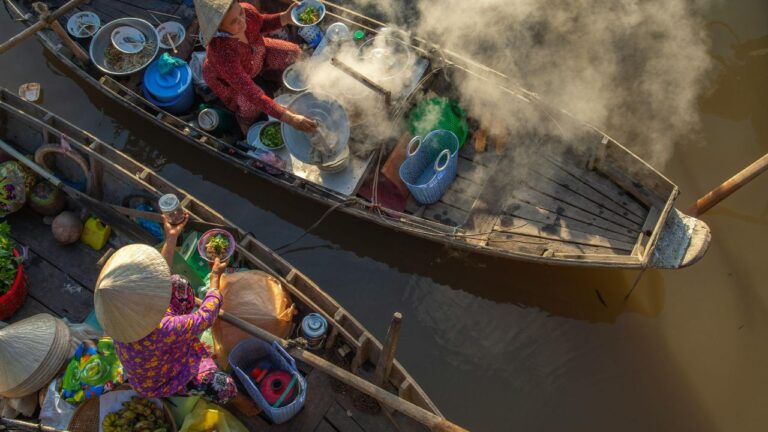
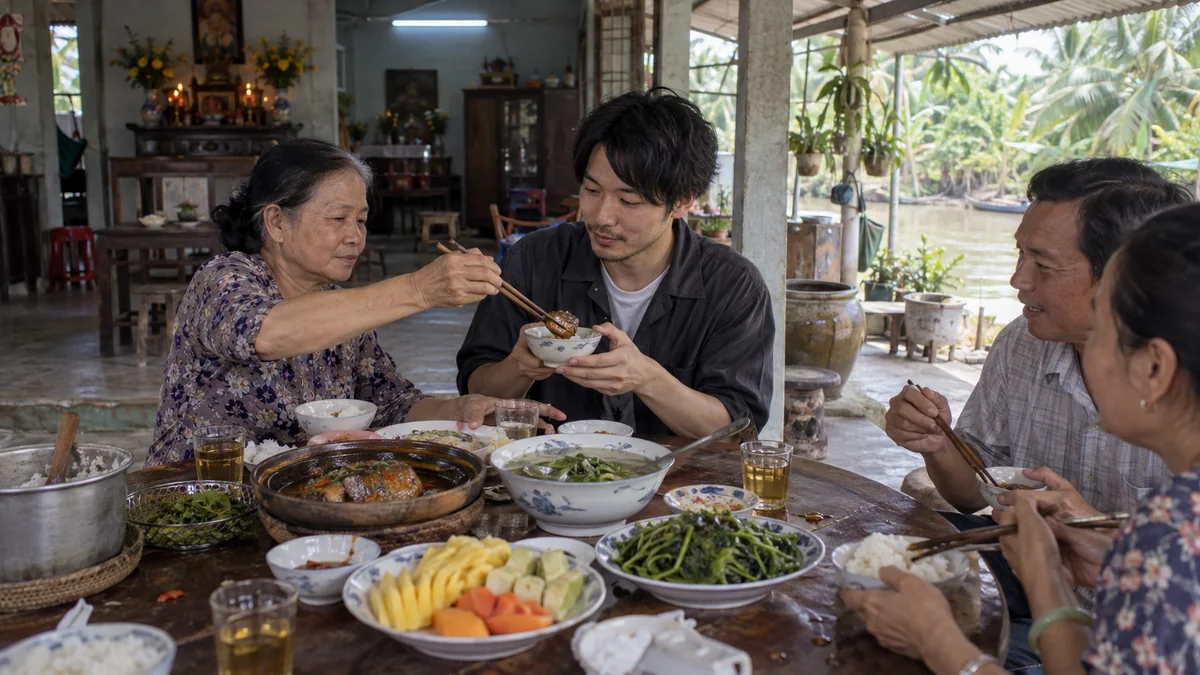
Pulling a stranger into a memorial feast, refilling their plate again and again, giving up the coolest spot in the house — accounts of foreigners stunned by local hospitality in the Mekong Delta keep piling up. In southern villages like Tien Giang, Ben Tre, An Giang, Ca Mau, and Can Tho, the simple gesture of pulling out a chair and pouring tea, even without a shared language, is rewriting travelers' memories of the trip. For travelers seeking “time with people” over sightseeing spots, the Mekong is now a rare place where you can taste that hospitality firsthand.
Invited to a Feast, Offered a Nap in a Hammock
The reported accounts are specific. Naoki Okamura, 31, a Japanese traveler in Tien Giang Province, was invited by local residents in June to a “đám giỗ” — a feast marking an ancestor's death anniversary. “I was pulled to a table full of food, given the coolest seat in the house, and had my plate refilled again and again,” he recalls. In a rural village in Ben Tre Province, Marcel Reynaerts, 55, from the Netherlands, was offered a hammock, fruit, and local liquor. “Most of the farmers don't speak English, but the gesture of pulling out a chair and pouring tea was enough to dissolve the language barrier.”
In An Giang Province, a Hungarian backpacker who'd planned to pitch a tent was instead given dinner and a free place to stay by a local family, and even ended up tagging along to the neighbor's wedding. In Ca Mau Province, Kyril Whitaker, 29, from the UK, was treated to noodles by an elderly shop owner, and at a guesthouse in Can Tho, staff reportedly brought porridge and cared for a guest running a fever like family.
Why Do Mekong Locals Open Up This Much?
This hospitality isn't just a matter of temperament. More than 300 years ago, settlers who moved into this land from central and northern Vietnam faced harsh conditions and danger, forcing them to help one another regardless of status or origin. A web of canals nurtured a riverside trading culture and made contact with strangers a daily occurrence. The custom of welcoming a stranger into your home is also a manner this land honed in order to survive.
| Region | Stories Told |
|---|---|
| Tien Giang | Invited to and welcomed at a đám giỗ (ancestor's death anniversary feast) |
| Ben Tre | Treated to a hammock, fruit, and local liquor |
| An Giang | Given dinner and free lodging, joined the neighbor's wedding |
| Ca Mau / Can Tho | Treated to noodles by a shop owner / cared for with porridge while running a fever |
Demand Is Growing for Travel That Steps Into Local Life
Thuy Linh, who heads a travel agency in Ho Chi Minh City, says “bookings from Europe and Asia have risen two to three times since the start of the year.” What travelers want isn't a tour of famous sights — it's an immersive stay in local life.Vietnamese cuisine being voted the world's best in an international readers' pollis one example of how food's appeal serves as the entry point — and from there, “who you ate with” becomes the heart of the trip.The north's Ninh Binh and Ha Giang being celebrated for their sceneryis a different axis entirely — the south draws travelers through the closeness of its people.
Tips for Japanese Travelers to Enjoy the Hospitality
This kind of experience is open to anyone, given the right mindset. But knowing a bit of etiquette as “the one being hosted” makes it more pleasant for everyone involved.
- Don't arrive empty-handed if you're invited. A small gift like fruit or sweets smooths the relationship.
- Don't force yourself if you're pressed hard to drink. Saying with a smile that you don't drink won't cause offense.
- Ask before taking photos, especially at a memorial feast or gathering — check that it's okay to shoot.
- Even without a shared language, a translation app and a smile go a long way. There's no need to be overly guarded.
- If you're given free lodging or a meal, show your gratitude in some tangible way, even a small one — just keep it from feeling like an imposition.
Southern Tourism in an Era Where “Quality of Experience” Wins Travelers Over
Why this hospitality experience is drawing attention now can't be separated from a shift in what travelers want. From trips built around photographing famous sights to trips that step into local life — more travelers worldwide are choosing destinations based on “quality of experience.” The Mekong Delta can't compete with big cities on luxury resorts or polished urban experiences, but it holds an irreplaceable resource: closeness with people. Homestays, farm stays, and tours where you cook a meal alongside a local family are ways of turning that resource into something travelers can actually experience. Bookings rising two to three times is solid evidence that a growing number of travelers are seeking out the hospitality itself, not luxury. At the same time, keeping this kind of experience sustainable also requires consideration for the people hosting it. Not leaning too hard on their generosity, and showing gratitude in some tangible way for lodging or a meal — even a small one — helps protect the welcome the next traveler receives.
Summary
The star of a Mekong Delta trip isn't the scenery — it's the people. A memorial feast, a hammock, a bowl of porridge while you're unwell: hospitality that transcends language becomes the finest souvenir no guidebook lists. With immersive, experience-driven travel on the rise, if you're heading to the south from Japan, consider building in a day to simply sit down in a village chair rather than rushing between sights.
Sources
· VnExpress International, “Mekong Delta hospitality leaves foreign visitors amazed” (August 23, 2026)
https://e.vnexpress.net/news/life/trend/mekong-delta-hospitality-leaves-foreign-visitors-amazed-5104924.html