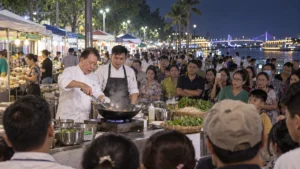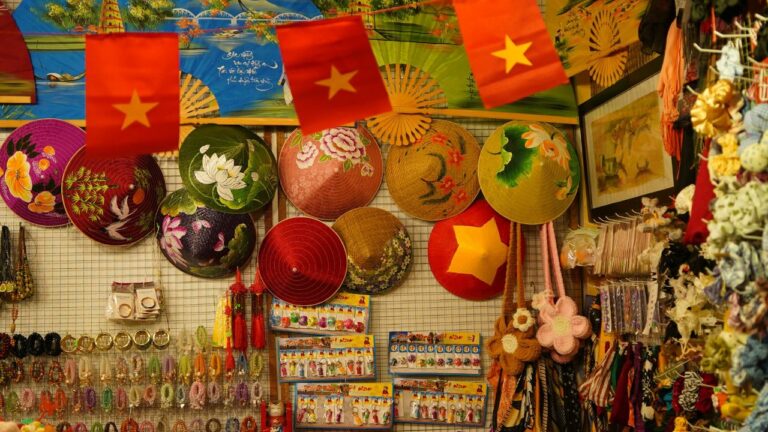
In a working-class part of Ho Chi Minh City, there's a café that generated a huge line just by wrapping a yellow "talisman"-style paper around its coffee cups, and was pushed into a temporary closure barely a month after opening. The shop's name is Đắc Phúc ("gaining fortune"). Local paper Dân trí reported it on July 2, 2026, and on social media it keeps spreading under the nickname "cultivation café." All it used was a single sheet of paper, with virtually zero capital investment or advertising cost. This article sorts out the sequence from the reporting and the shop's social media, then covers why the gimmick worked, what Japan's independent shops can take away, and - if travelers actually want to visit - when to go.
130 cups in an hour — the sudden force of a buzz that hit a shop just a month old
According to Dan Tri's reporting, Dac Phuc is a new shop that opened just over a month ago at 45 Huynh Man Dat, Thanh My Tay ward, in Ho Chi Minh City's former Binh Thanh District. Making use of an old Chinese-style house, it lines up retro goods and puts a vinyl duck on the roof — a small shop with about five or six tables. It's open only in the morning, from 7 a.m. to noon, run by the owner and one staff member.
The turning point came in late June. When a photo of the yellow paper wrapped around the cups spread on social media, customer numbers jumped to two or three times the usual. Lining up the reported figures gives a good sense of the scale.
| Period | Number sold (per reports) |
|---|---|
| Normal times | About 50 to 60 cups over the whole morning's business |
| The weekend after it went viral | About 120–130 cups in just the hour between 8 and 9 a.m. |
| First day of reopening (July 2) | About 100 cups |
For a small shop, this jump was a threat as much as a joy. The owner said, "We're a small shop, originally meant for regulars from the neighborhood. We couldn't handle a sudden crowd,"Deliberately closing the shop to avoid a drop in service qualitymakes the decision. After a closure, it reopened on the morning of July 2 and sold about 100 cups on that first day too.
It started with "so your hands don't get wet" — the lucky paper from the wife's family home
The mastermind is owner Bui Huy Hoang (Bùi Huy Hoàng), born in 1996. He started wrapping the cups in yellow paper about 10 days before the reports, in late June.
The trigger was almost anticlimactically practical. So that hands wouldn't get wet from the condensation on cold drinks, since he was going to wrap them anyway, he might as well make it look good - that was all. The paper he used was yellow paper printed with Chinese characters, placed at the home of his wife's family - Vietnamese of Chinese descent - to pray for luck and wealth. He simply repurposed what was already in the house onto the cups.
Hoang repeats that it was “pure coincidence — I never meant to create a trend,” and even after the buzz he holds his stance of curbing output: “I have no intention of selling more at the cost of the coffee’s quality.” He adds, “This is like a stroke of luck. I want to keep operating while maintaining quality.” The coffee is brewed slowly one cup at a time with a phin (a Vietnamese drip filter), and he also serves cocoa, matcha, and Hong Kong-style milk tea.
Red characters on yellow paper — the cultural meaning the 'talisman' carries
There is a cultural foundation to why the paper on the cups looks like a "spirit talisman." A Taoist talisman is yellow paper marked with characters or designs in red or black, pasted at a doorway or carried to ward off evil and invite fortune; in Vietnamese it is called "bua" (bùa). Ho Chi Minh City has deep-rooted Chinese culture, centered on the Cholon district, and papers and ornaments praying for good fortune are still part of daily life. Many people also recall the charms a Taoist priest slaps on a jiangshi's forehead in 1980s–90s Hong Kong films, or the props of "cultivation" novels depicting the path to immortality, and that sense of déjà vu fueled the spread. In entrusting wishes to paper and characters, the idea overlaps with Japan's shrine ofuda and omamori. Note that Dac Phuc's paper is not a formal talisman but a repurposed good-luck design paper.
"A comedian pretending to be a café"—reactions locally and on social media
According to Dân trí, after it spread, young customers streamed to the shop and lined up to photograph the "charm-wrapped cup." The morning storefront, once for regulars, was filled with first-time visitors there for the photo.
The economic outlet CafeBiz, borrowing terms from xianxia fiction, jokingly described it as “one cup to refine qi, two cups to build the foundation,” conveying how the nickname “cultivation café” spread. It’s a play on words layering the stage names of immortal cultivation onto the number of cups, and this single phrase now circulates as the shop’s very catchphrase.
Reactions on social media are even freer. On Threads, a post calling it 'a genuine comedian disguised as a cafe — the feed is nothing but duck quacks, quack, quack' took off, enjoying the shop's loose handling of its official account. After the vinyl duck on the roof, a nickname punning on the English 'duck' and the shop's name — 'Duck Phuc' — was even born. When it reopened, the shop itself announced 'We're open!' on Threads, and local food pages followed by spreading that 'the immortal-cultivation cafe is back.'
Why a near-zero-cost buzz happened — what Japan's independent shops can learn
The core of this case is that the device driving the buzz isn't the product itself, butThe thing customers carry out of the shoplay in the fact that it was built into the cup. A cup is a “walking advertisement” that customers photograph, carry in hand, and post on social media. Because what was wrapped around it was not a logo but a symbol that could tell its origin at a glance, each and every post functioned as promotion for the shop.
What worked next was the backing of a story. Because there was a true account — a custom from the wife's family home — those posting could speak not only to the 'interesting look' but to 'why it came to be this way.' Gimmicks that are merely eccentric can't answer 'why?' and tend to fizzle, but a gimmick with cultural context spreads along with its explanation. And the owner's motive was practical: preventing condensation. Not a buzz engineered on purpose, but a small decision to give a practical device a look all its own, which ended up being the biggest advertisement of all.
The same pattern keeps recurring in Vietnam.A congee shop in Hai Phong whose Mbappé-lookalike owner drew nightly lineslike this, where a single strong sign - whether a person or an object - comes to represent the memory of the whole shop; Đắc Phúc's talisman cup is the latest example.
The lesson has a shadow side too. When demand surged two- to threefold at a shop run by two people, quality couldn’t be maintained, leading directly to the opportunity loss of closing. A buzz is an advance investment in awareness, not in sales, and without operations to catch it, a hard-won tailwind can turn into a loss of trust. In that sense, Hoang’s choice of maintaining quality and closing over ramping up output makes sense for an individual shop meant to last.
What Japan's independent cafes and eateries can take away is one thing: 'putting a distinctive design that can tell a story onto the touchpoints customers carry out of the shop — cups, paper bags, chopstick sleeves.' Building individuality without spending money is something Vietnam's cafes excel at, as with the shop that dropped background music over copyright fees and reinvented itself by playing spoken-word readingsHanoi cafés, examples of turning constraints and coincidence into character keep coming.
How to get there and the reopening status—aim for first thing on a weekday morning
Đắc Phúc has already reopened as of July 2. But its popularity continues, and the nimble two-person setup hasn't changed. Judging from the reported figures, the crowd peaks on weekend mornings between 8 and 9. If you want to sit and relax, right after opening on a weekday (in the 7 o'clock hour) or around 11, near midday closing, is realistic.
| Item | Details |
|---|---|
| Shop name | Dac Phuc (Đắc Phúc Cà Phê) |
| Address | 45 Huynh Man Dat, Thanh My Tay (former Binh Thanh District) |
| Area | Near the Thi Nghe market. Just east of District 1, where a Grab bike is handy |
| Hours | 7:00–12:00 (mornings only) |
| Price range | 20,000-35,000 dong per cup (about 120-210 yen, converted at 10,000 dong = about 60 yen) |
| Menu | Phin-drip coffee, cocoa, matcha, and Hong Kong-style milk tea |
| Seats | Five or six tables |
| Markers | The plastic duck on the roof |
Before visiting, it's safest to check that day's hours on the shop's Threads account (@dacphuccaphe). That it's a shop that closes when too many customers gather is proven by this very episode.
Mornings in Ho Chi Minh City are a time to enjoy the hits and misses of these independent shops and all.A regional-noodle shop that sells out by 9:30 a.m.as with this, there's a cup in every alley that only early risers get to meet. To work it into your itinerary, try devoting the first one or two morning hours to this neighborhood before sightseeing in District 1. Coffee in a talisman cup in hand, a photo with the duck on the roof — that should make for a keepsake shot that feels like Ho Chi Minh City this summer.