Neither banh beo nor banh xeo could be born without the "flour" that makes them. The one that has supported the underside of Vietnamese cuisine for half a century is the flour brand "Tai Ky (Tài Ký)." Beginning from a family business that peddled flour sacks piled on an old bicycle around markets, it now, 50 years since founding, reaches 34 countries and regions, even the strictly regulated EU. The story of "flour," which stays out of the spotlight, lights Vietnam's food from a different angle. The article was published on June 24, 2026.
1976, from a corner of a market
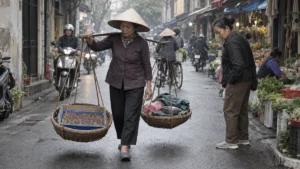
Tai Ky's beginning was in 1976, a small manufacturing shop at Thu Nghe market in Ho Chi Minh City. The founder packed flour into sacks and peddled it by bicycle from market to market. From there, half a century, marking 50 years since founding in 2026.
Initially rice flour was the mainstay, but now it has widened its lineup to cornstarch, glutinous-rice flour, crisp frying flour, and premix flour for cakes.
Exported to 34 countries, and to the EU too
Tai Ky's flour is now exported to 34 countries and regions across four continents — Asia, Europe, the Americas, and Oceania. The EU in particular is positioned as the "strictest" market, and clearing its standards testifies to the brand's strength.
| Item | Details |
|---|---|
| Brand | Tai Ky (Tài Ký) |
| Founded | 1976 (a manufacturing shop at Thu Nghe market) |
| Milestone | 50 years since founding (1976-2026) |
| Original sales channel | Peddling by bicycle |
| Export destinations | Four continents, 34 countries/regions (EU included) |
| Main products | Rice flour, cornstarch, glutinous-rice flour, crisp flour, cake premix |
Tai Ky's flour is used in countless home dishes and sweets — banh duc (steamed cake), banh bot loc (tapioca cake), banh xeo (savory pancake), che troi nuoc (glutinous-rice-ball sweet soup), banh bo (honeycomb cake), banh cot (mini pancakes), banh da lon (layered steamed sweet), and more.
The pride of being the "unseen adhesive"
Tai Ky describes its own role as "the adhesive that quietly binds the flavors of other ingredients to make one complete dish." The star ingredients shine because the quality of the foundational flour is stable. It stays out of the spotlight, yet it's a presence that determines the completeness of the flavor.
Its journey of building value through brand and quality over half a century, rather than selling raw material as is, overlaps with the "selling through story" movement advancing across Vietnam's food industry. Like the challenge of overseas Vietnamese recreating the taste of home abroad (Related articles), it's the story of an inconspicuous but essential maker.
A discovery for Japanese readers and souvenir demand
For those who make Vietnamese food at home in Japan, "which flour to use" greatly shapes the result. If you make banh xeo or banh beo yourself, a specialist brand's flour like Tai Ky is a reassuring ally. It's worth remembering as a marker when searching at Vietnamese grocery stores or online.
From a souvenir standpoint too, "flour" that lets you recreate local home cooking is a practical item, distinct from sweets or seasonings. Now that convenience-store banh mi is enjoyed in Japan (Related articles), turning your attention one step ahead to "flour for making at home" is interesting too.
Summary
From peddling by bicycle to 34 countries and the EU over 50 years. Tai Ky's story shines a light on the "flour" that supports Vietnamese cuisine's flashy stars from behind. Precisely because it stays out of the spotlight, knowing its quality and journey changes how you see a plate. If you make Vietnamese food at home, there's great value in choosing such a specialist brand's flour.
A presence supporting Vietnam's "flour-based" food culture
Vietnamese cuisine has a strong image of noodles and fresh spring rolls, but it's in fact a treasure trove of "flour foods" using rice flour, glutinous-rice flour, and tapioca flour. Many home dishes — banh beo (steamed cake), banh xeo (savory pancake), banh bot loc (tapioca cake), che (sweets) — have their results shaped by the quality of the flour. That a specialist brand like Tai Ky has continued for half a century is because there was demand quietly supporting such everyday food.
How to choose when making it at home is useful to know too. Even for the same "rice flour," there are products optimized by use — turmeric-added premix for banh xeo, crisp flour for frying, glutinous-rice flour for mochi sweets. A specialist brand's flour has a stable formulation, so following the recipe means fewer failures. For those who want to recreate Vietnamese food at home, it's a reassuring ally.
From a souvenir standpoint too, "flour" has a practicality distinct from sweets or seasonings. It's a material that lets you recreate a local home's taste in a Japanese kitchen, and it's light and long-keeping. As a gift for a cooking lover, it's an item that also makes a good conversation starter.
Frequently asked questions
What kind of brand is Tai Ky?
Founded in 1976, it's a Ho Chi Minh-born flour brand. It makes rice flour, cornstarch, glutinous-rice flour, frying flour, cake premix, and more.
Where can you buy it?
It's mainly Vietnamese grocery stores and online. It's currently exported to 34 countries and regions.
What is the flour used for?
It's used in Vietnam's "flour foods" such as banh beo, banh xeo, and banh bot loc.
Sources
Thanh Niên: Tai Ky, quietly supporting home flavors for half a century