
Saily is a travel eSIM that, on compatible devices, can be set up before you arrive in Vietnam. However, whether it is "recommended" does not depend on the brand name alone. First confirm whether your device supports eSIM and is SIM-unlocked, whether you need a local number, whether your itinerary is centered on cities, and how much data you are likely to need.
This article contains advertising links, but rather than assuming a purchase, it explains the conditions under which Saily is a good fit and those under which a local SIM or Wi-Fi may be more suitable. Plans, prices, and the availability of calls and SMS change, so always prioritize what is shown on the purchase screen on the day.
Bottom line first: 5 things to check before buying
- Your device supports eSIM and is not carrier-locked
- Whether data-only is sufficient, or whether you need a Vietnamese phone number
- Number of days, data allowance, and conditions after the speed cap is reached
- Number of devices you plan to tether and estimated data usage
- Can you prepare the app, QR code, and support information in Japan before activation?
What is Saily? An overseas eSIM from the company behind NordVPN
Saily is an eSIM for international travel provided by Nord Security, the company behind the well-known VPN service NordVPN. It offers plans for more than 200 destinations, and you can set up the eSIM by selecting a country and data amount through the dedicated app. No physical SIM swap is required, but you need to check your device's compatibility and confirm that SIM lock has been removed beforehand. True to its roots as a security-focused company, Saily also pays attention to communication safety.
Does it actually work in Vietnam?
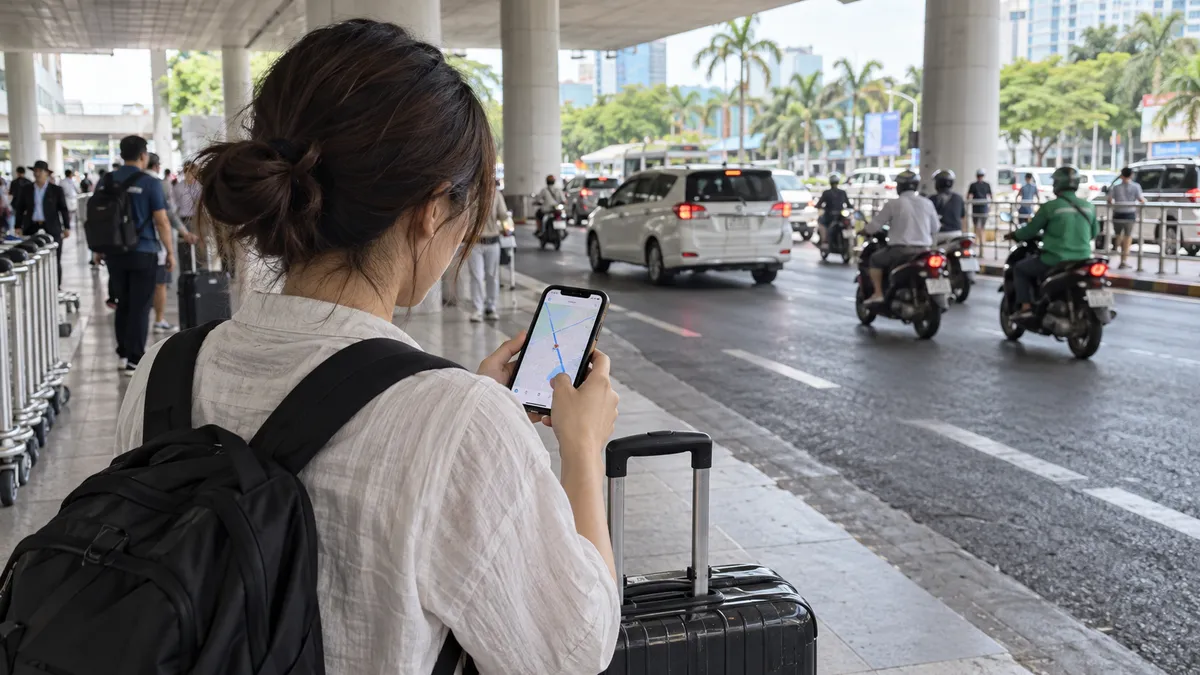
Saily covers Vietnam, connecting through major local networks. It is designed for use in urban areas such as Ho Chi Minh City, Hanoi, and Da Nang, as well as major tourist destinations, though actual speeds and connections vary depending on the time, location, partner network, and congestion. Maps and ride-hailing apps use relatively little data, while video calls consume more speed and capacity. In mountainous areas and remote islands with weak signals, speeds may drop just as they would with a local carrier. That said, most areas travelers visit are covered, so if your trip is centered on cities and major attractions, you are unlikely to have problems.
From purchase to activation to checking your remaining balance, it's all in one app. You're online the moment you land in Vietnam. You can pick just the amount you need for a short trip, and the price is reasonable too.

Saily's advantages
Its biggest strength is the ease of doing everything in the app. Purchase, activation, checking your balance, and topping up all happen in a single app, and you can see at a glance how much you've used. A big plus is that if you set it up while still in Japan, you're online the moment you land in Vietnam. Since you can run two lines while keeping your Japanese SIM, you can also keep using your Japanese phone number and LINE as is. And if you choose an Asia-roaming plan, it works as-is in Thailand and Cambodia too, sparing you the hassle of buying a new one in each country.
Saily plans available for Vietnam
Saily's plans for Vietnam come in two types: a "data plan" chosen by data volume, and a "calls & text plan" for local calls and SMS.
The data planlets you choose by length of stay and data amount, from 1GB (for short trips) up through 3GB, 5GB, 10GB, and 20GB. A small allowance is enough if you mainly use maps and social media; a larger one is reassuring if you'll tether or watch video.
The calls & text plancovers calls and SMS within Vietnam, available in tiers from 5 minutes/5 SMS up to 50 minutes/50 SMS. Both outgoing and incoming use the plan's minutes. In other words, Saily isn't strictly "data only" — you can add calls and SMS as needed. If data alone is enough, go with just a data plan; if you also want to make calls locally, add calls & text.


*Plan lineup and pricing change. Check the latest volumes and prices in the official Saily app.
Points to watch out for
Saily centers on data, but in Vietnam you can also add a calls and SMS plan, which covers local calls and SMS (within the plan's minutes and message count). However, if you need to receive calls on a Vietnamese number or get SMS verification sent to a Japanese number, a local SIM or your Japanese SIM is the better fit. You'll also need an eSIM-compatible phone, so before you leave, check that you can add an eSIM under "Settings → Cellular." "Unlimited" plans may throttle speeds past a certain amount, so if you watch a lot of video, it's worth checking how much high-speed data is included.
Who it's good for / who it's not for
Saily is a good fit forshort- to mid-length travelers who mainly stick to cities、people who want to handle setup and balance management smartly through an app、people who'll also tour other parts of Asia beyond Vietnam. Conversely, forpeople who must receive calls or verification on a local numberandpeople using a device that doesn't support eSIM、people on a long stay who put down deep local roots, a local SIM or a rental WiFi unit suits better. Choose based on your own travel style.
Setup and use in 3 steps
(1) Buy a plan for Vietnam (or Asia roaming) in the app. (2) Register the QR/eSIM shown, while still in Japan, under "Settings → Cellular → Add eSIM." (3) After arriving in Vietnam, turn on the eSIM you added and enable "Data Roaming." That gets you online. The trick to avoiding mishaps is finishing the setup in Japan where there's Wi-Fi.
For how to choose between Vietnam's SIM, eSIM, and WiFi overall, our definitive guide compares them in detail 👉 Which SIM is right for Vietnam? A thorough comparison of local SIM, eSIM, and WiFi
From purchase to activation to checking your remaining balance, it's all in one app. You're online the moment you land in Vietnam. You can pick just the amount you need for a short trip, and the price is reasonable too.
Summary: Choose based on phone number needs, data capacity, and device requirements rather than convenience alone
Saily is an option for short city-focused trips where you want to arrange data connectivity before leaving Japan. If you need to receive calls or verification codes on a local phone number, have a device that does not support eSIM, or want to choose a carrier in rural areas, compare local SIM options as well.
After purchasing, install the eSIM while connected to Wi-Fi in Japan and confirm that data roaming on your primary line is turned off. In case you cannot connect on arrival, save your hotel address, booking number, and support procedures offline for peace of mind.